Musikpromotion
How to Release An EP in 2026: The Last Guide You’ll Ever Read

Nadav Peleg
Aktualisiert · 13 Min. Lesezeit
You don't know how to release an EP? In this guide, I'll share 5 easy steps to help you release your next EP so that it gets the recognition it deserves.


You want to release an EP, but you're not sure how to do it the right way?
If I were in your place, I would be dealing with the same thing. After all, all the friends, musicians, and the information you get from YouTube really messes up with the mindset.
This guide is different because it is coming from my years of experience as a CEO and Founder at SoundCampaign.
I have seen enough music campaigns doing well and going down the drain. So, I know what works and what doesn’t.
In this guide, I will show you how to make the right tracks, marketing channels, and a releasing strategy for your EP.
The best part is I will give you reasoning for everything that I mention here. So, you won't have any double thoughts. You will have a clear roadmap.
But before we go deep into each step, below is the fast-mode EP release roadmap. Think of it as the big picture. We’ll break down each part in detail as we go.
|
Release Phase |
What You Can Do |
|---|---|
|
Weeks 1–2 (Pre-Release) |
Research viral-style tracks from underrated artists, finalize high-potential songs, lock masters, choose a distributor, prepare core assets, upload the first single, and start audience warm-up. |
|
Week 3 (Launch Week for each release) |
Release the single or EP, drive traffic through pre-saves and socials, push short-form content, and capture early listener reactions. |
|
Weeks 4–6 (After each Release) |
Continue waterfall releases, pitch to Spotify editorial, promote each track individually, run targeted playlist and paid campaigns, and double down on what performs. |
Step 1: Create Songs That Have Potential to Get Noticed
I am sure you already have some tracks. But the thing is, the marketing starts before you even start creating your tracks.
Here are some lists of things that I suggest every artist do before they even think about creating a masterpiece.
First, go to Spotify charts and see what kind of music is ranking up there. Remember it must come from underrated artists. The popular ones are ranking there because they are already popular. It doesn't matter for them whether their music is great or not.
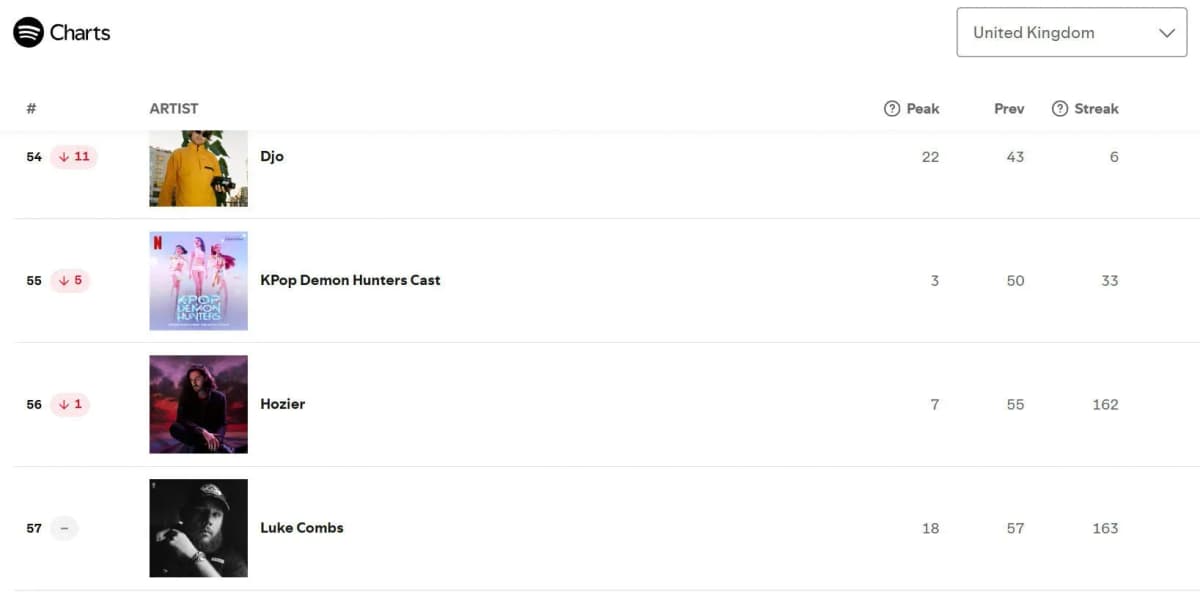
I am sure you might know some of these artists, or might not know at all. In my case, I don't know some from this list, so that's a good starting point. They actually did something to get up there.
Second, check YT Music charts and see what music is trending there. The same logic applies here. Aim for only underrated artists and see what kind of music they are making to rank up there.
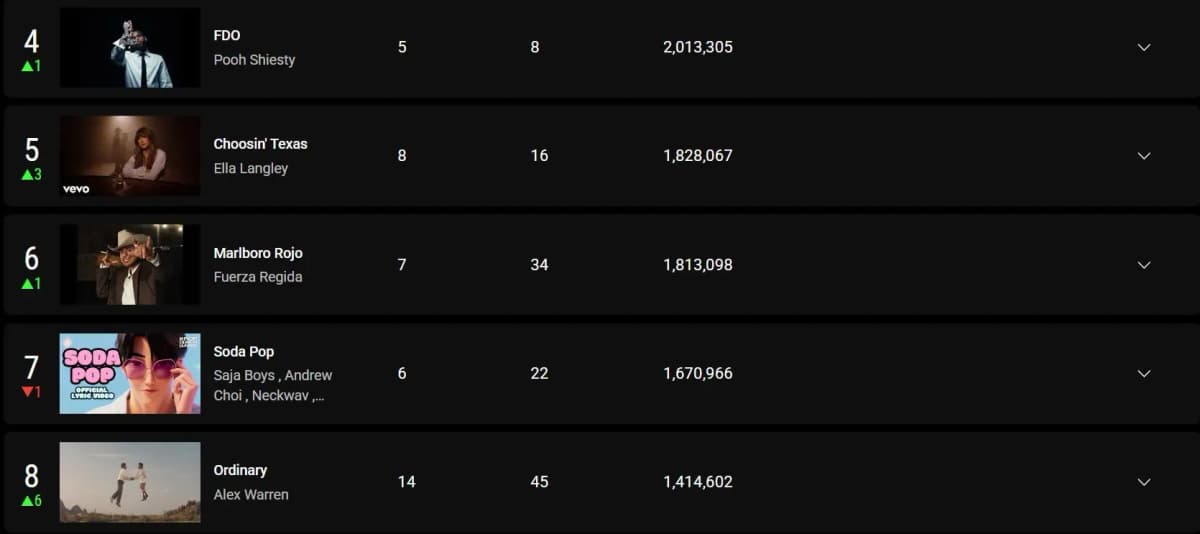
Apart from this, you can also check socials, like Instagram or TikTok, and see what kind of trend is going on there.
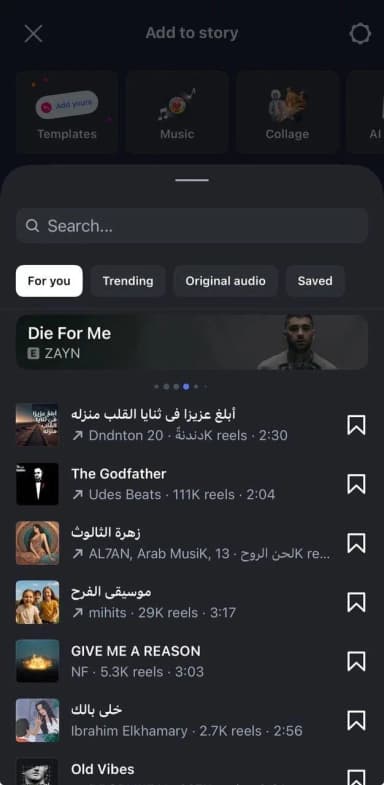
When you do that, I will also suggest that you should only pick songs that are related to your niche. And if you are someone who's into multi-niche, then you can definitely pick anything.
Now, after you are done making a list of those tracks, I would suggest that you should just break down the kind of music they are making, the beats they have selected, the lyrics, the story, the angle, anything you can break down.
Once you have everything, take inspiration from all that work and try to steal it like an artist, and make something of your own.
Remember, making something of your own is the toughest part here because when you are looking at a lot of work, you have to make sure that your music sounds original too.
With practice, you will definitely be able to pull it off. To be honest, that's how most famous artists start. Everyone has an inspiration.
That's it, that's how most labels think. That is the way they make their artists profitable.
Anyways…
Now that you have the core ideas to make songs that have potential to go viral, let me give you some additional tips that you need when you are creating and finalizing your tracks.
- Write more songs than you need (aim for 6-7 tracks if you need only 4)
- All your tracks must follow a consistent style, recurring themes, or a mood.
- Try to connect the dots or story.
- Leave hints for your audience inside the tracks (This works best in songwriting)
Step 2: Record, Mix, and Master Like a Pro
When you listen to the tracks you got inspiration from, I'm sure you must have noticed what kind of mixing they have done. Great, that's where you can start from.
Always have an end goal in mind. Visualize what you need in the end.
Most artists take recording, mixing, and mastering for granted, and that's where they ruin everything.
Let me tell you how to do it all correctly.
Recording
This takes a lot of trial and error. There are artists who get it right in their first attempt. And then there are artists who take like 100 attempts to record a song.
Most artists in their early journey think that they are not real artists if they are not able to do it in a couple of takes. But professional ones always deliver the best product they can because once the music is packaged and gets delivered, there is no going back. You cannot do anything to change what you have created.
I have quite an interesting story to back this up. Check out this video where Logic is trying to record 44 more. You won't believe how many takes he had to take to record it.
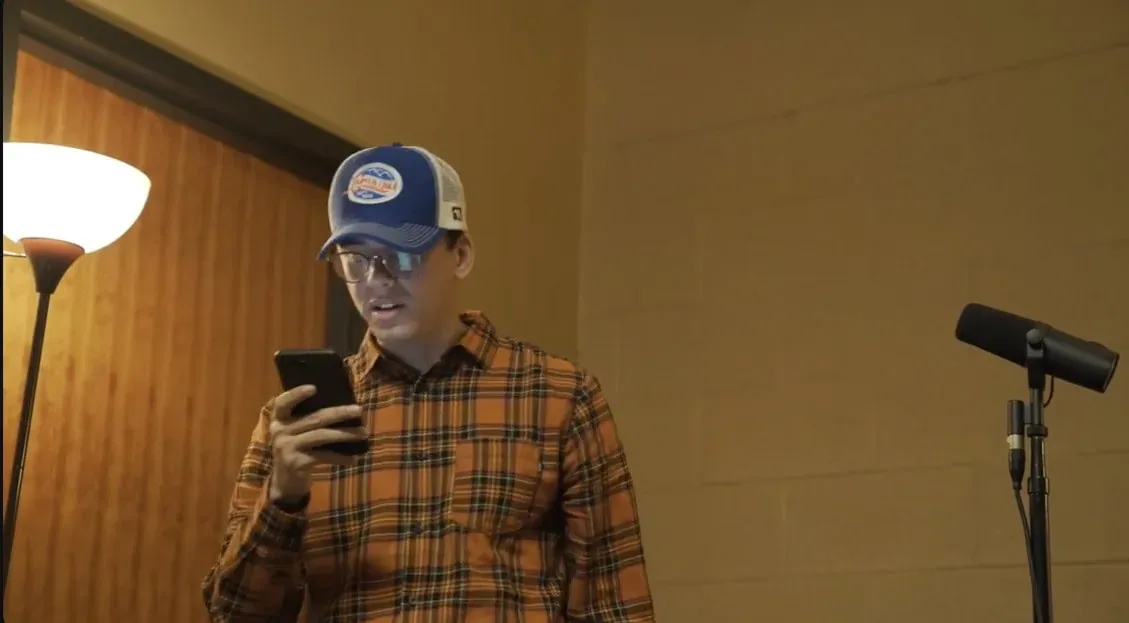
Take as many takes as you want so that when you get down to mixing, you have the best possible takes of your vocals.
Mixing
This is the part that you can entirely skip or work hard on it.
When I first started mixing my tracks, I had to spend like 12-13 hours on it in one go. From figuring out the mechanism behind mixing to installing a lot of plug-ins like Waves or Fabfilter, it really took a lot of time and there is a strong learning curve.
Just in case you are more focused on writing and recording the vocals, I would suggest hiring a great mixing engineer for yourself.
Trust me, your EP will sound like it's recorded on a mobile phone if you don't know how to mix it properly.
In my early days, someone literally said, "Are you recording your songs on a mobile phone?" In reality, I used a professional condenser mic at that time.
It was my mix that was bad.
I'm sure you don't want to release an EP that sounds like it's recorded on a mobile phone.
Mastering
Mastering is for those who haven't missed your track earlier. This is the reason why most artists don't pick the same person for their mixing and mastering.
If you have been mixing yourself, I would suggest going for someone who knows mastering. Not because that person has more skills than you, but he hasn't listened to the tracks 500 times like you did.
And if you haven't mixed it yourself, you can either master it or hire another person for it. In this case, the guy who mixed for you would have listened to it 500 times and cannot differentiate and tell what is going wrong.
Note: When you are creating your tracks solo or with your team, I would suggest that you should record videos of yourself to document your journey. Some snippets taken from these videos can help you warm up your audience and let them know that something is coming soon.
Step 2: Choose a Distributor
I'm sure you're aware of the fact that you need a distributor to release your songs on Spotify, Apple Music, Tidal, and other platforms.
I guess you already have a distributor. Just in case you don't, here are some of the best music distributors I reviewed in the past.
I'm sure it can help you make a decision and pick the best one for yourself.
One thing I would suggest is that you should have distributors who can handle ISRC codes and UPC barcodes correctly.
The reason being you will get a chance to release your entire EP in chunks. Yes, you can release one by one, and still have the EP in your catalog on Spotify without tampering with anything.
This is called waterfall releasing strategy. I will show you in a few minutes why it can be an effective way to release your
Step 3: Prepare Your Pre-Release Assets
Your music is not the only thing that goes out there when you plan to release your EP.
This also includes
- Cover artwork in right size (3000X3000 px max)
- Photos of the artist
- Visual and colored theme planning
- Ready clips from behind-the-scenes
- Some reels from your own song
- Some pitches for press release
- Strong track descriptions if your distributor supports them
- Pre-defined genre, sub-genre, and mood tags
- A simple landing page
- Lyrical videos for YouTube
- Pre-release links
Basically, I have an EPK (electronic press kit) ready.
Step 4: Have a Proper Release Strategy
Here comes the interesting part where most people mess up. They either release singles and give up on the EP. If not that, they release their entire EP in one go.
All the smart artists I know go for the third way. And that is the waterfall style release.
Here is how it is done:
- You release the track as a single and save the ISRC code somewhere
- Release another track of your EP and put the same ISRC code there that you used before
- Now release another and use the same ISRC
When you release the 4th track, reupload all the tracks using the same ISRC code. Make sure your metadata, audio file, track title, and everything remains the same.
Once you are done doing this, your DSPs (Digital Service Providers) will see that those three songs are the same as your new upload in your EP.
Don't panic if you see duplicates. That's normal. It will either merge together on its own, or you can manually delete the tracks that were coded as singles. All your streams will be merged into the EP.
There are more than one benefits of releasing like this. Let’s talk about that next.
Note: Start uploading tracks on your distributor before the planned release date to avoid any delays. Of course, a lot of artists are releasing music every day. No matter how great a distributor is, you will definitely have some delays once in a while.
Step 5: Promote Your EP (Free + Paid methods)
Free EP Promotion Strategy
The key benefit of adapting a waterfall-style release strategy is that you can pitch to Spotify editors multiple times.
I don't know if you know this, but Spotify only allows you to pitch only one track from your EP. This way you can create the system.
Plus, you can do separate promotions for every single track, not just the EP. I guess now you have a clear idea why some artists release only one track from their EP every week.
It's like you release one track on Monday, and all the way to Saturday you can share behind-the-scenes, stories, or maybe a live or acoustic version of your song on social media like TikTok, Instagram, and YouTube Shorts.
So in a nutshell, you can do:
- Spotify editorial pitching
- Post stuff related to your tracks across your social media channels
Paid EP Promotion Strategy
Back in 2018, I have seen one major issue with playlist pitching. On Spotify, you can’t get into editorial playlists that easily.
A lot of factors are involved in it. Your social signals, the kind of playlist you are already into, overall listeners' skip rate, etc.
And getting into community playlists is something that requires a lot of precision because a lot of people are making playlists with bots these days. Plus, you don't know which playlist is relevant to your music. What's the point of getting into a playlist that barely has the type of listeners that your music needs?
So seeing all of this, I came up with the idea of SoundCampaign.
We help artists find real playlist curators along with genuine feedback.
Our algorithm matches the genre you selected with the right playlist.
That way, you get a chance to get into those playlists where listeners are most likely to listen to the type of music you are making. This means a low skip rate, more retention, and shares for your music.
So far, SoundCampaign has helped so many artists get traction like this. Also, this is a little love from our community.

In fact, getting into the right playlist is not the only thing we do for artists.
We also help you launch your release on TikTok with a proper marketing strategy using one of the greatest influencers that are out there.
Here is a little overview of one of the artists who has used our TikTok services in the past.
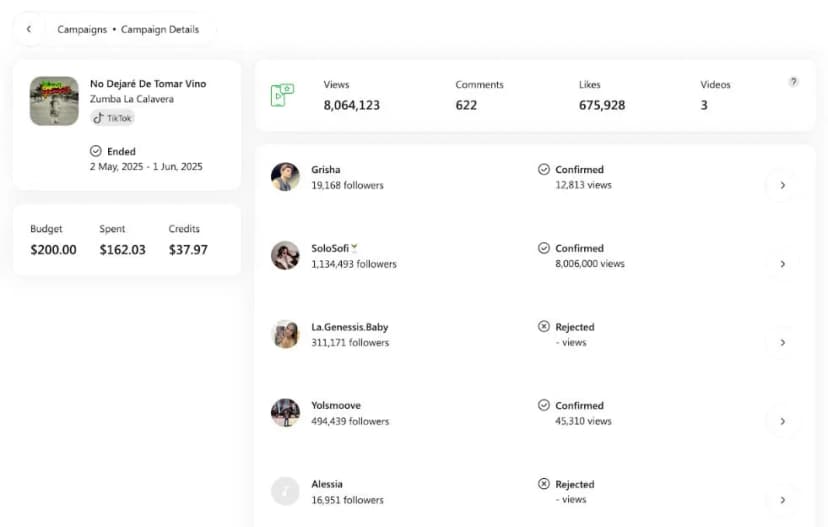
In addition to this, we have recently launched a Meta Ad Service program that helps you create ads very easily. Our in-house experts create the right kind of campaign for you that reaches the right audience.
Along with Meta campaign, these days we are also providing free videos for your promotion.
SoundCampaign - Create a new campaign
FAQ
How many songs should an EP have?
Stick to 4–6 tracks. Anything under 4 usually gets treated as a single. Anything over 6 starts creeping into album territory. Also, keep the total runtime under 30 minutes. Once you cross that, platforms and listeners mentally reclassify it.
How much does it cost to release an EP?
It depends on how hands-on you are. A DIY EP can cost $200–500 if you’re recording at home, using online mastering, and paying a basic distributor fee. A professionally produced EP usually lands around $2,000–5,000+, once you factor in recording, mixing, mastering, artwork, and distribution. The biggest variable is production quality. Everything else is relatively predictable.
How long does it take to release an EP?
Once the music is finished, plan 4-6 weeks for a proper release. The creative phase varies for everyone, but the release pipeline itself needs at least 4–5 weeks. Distributors need processing time, and playlist pitching requires lead time. Rushing this part is how good music gets buried.
Should I release singles before my EP?
Yes. Releasing 1–2 singles before the full EP builds anticipation, gives you more playlist pitching opportunities, and creates multiple promotional moments.
Do I need a record label to release an EP?
No. Independent artists can distribute an EP to all major platforms using services like DistroKid, TuneCore, or CD Baby for a small fee.
What is the best day to release an EP?
Friday is the industry standard because streaming platforms reset weekly charts on Fridays. Avoid weeks with major competing releases.
Conclusion
Releasing an EP is not about luck or shortcuts. It is about making intentional music, packaging it professionally, and releasing it with a system that gives every track a real chance to win.
Follow the roadmap, stay consistent, and treat your EP like a product launch, not a hope-and-pray drop. Do it right once, and everything after gets easier.

Gründer & CEO von SoundCampaign
Ich bin Nadav. Bevor ich das hier aufgebaut habe, habe ich selbst Musik gemacht, und genau daher kommt mein Interesse an Marketing. Am liebsten beschäftige ich mich mit den Analytics: woher Streams kommen, was sich bewegt hat und was nicht. Ich habe SoundCampaign gegründet, um Artists echte Reichweite zu geben. Das hat deutlich mehr Zeit und Aufwand gekostet, als ich geplant hatte, und daran hat sich bis heute nicht viel geändert.
Bewirb deine Musik
Echte Playlist-Platzierungen, TikTok-Videos & Meta-Anzeigen

Vertraut von 100.000+ Künstlern & Labels
Keine Bots, niemals.
Echte Case Study
Wie SoundCampaign Grant Knoche vor 460.587 Hörer für WOOHOO brachte
Ganze Geschichte lesen
Bereit, mit deiner Musik gehört zu werden?
Schließe dich Tausenden unabhängigen Künstlern an, die mit SoundCampaign echte Playlists, Creator und Fans erreichen, mit ehrlichem Feedback bei jedem Schritt.
- Keine Bots, niemals
- KünstlerschutzprogrammWenn ein Kurator oder Creator deinen Track nicht bewertet, erstatten wir dir dein Guthaben. Dein Budget ist immer geschützt.
- Behalte 100% deiner TantiemenWir sind ein Promotion-Service, kein Label. Wir behalten niemals einen Anteil deiner Streams oder Tantiemen ein.