Promozione Spotify
Spotify Discovery Mode Strategy: An Independent Artist's Guide for 2026

Azfar
Aggiornato · 15 min di lettura
Learn how Spotify Discovery Mode works, its pros and cons, and the best strategy for independent artists to grow streams without hurting royalties.


On this page
- What is Spotify Discovery Mode?
- Pros and Cons of Spotify Discovery Mode for Artists
- Spotify Discovery Mode Strategy: When It Makes Sense
- How Spotify Discovery Mode Impacts Royalties and Long-Term Growth
- Discovery Mode vs Playlist Pitching: What’s the Better Strategy?
- How to Combine Spotify Discovery Mode with SoundCampaign
- Spotify Discovery Mode Strategy for Independent Artists (Step-by-Step)
- 5 Common Spotify Discovery Mode Mistakes to Avoid
- Conclusion
As an independent artist myself, I can say Spotify’s discovery tools can be confusing. Each option promises growth, but each also has clear limits.
Spotify Discovery Mode offers more exposure through algorithmic recommendations, but it is important to understand what that exposure really looks like before you select your tracks for it.
In this guide, I’ve explained how Discovery Mode works, where it fits inside Spotify’s system, and how it compares to other growth options.
Once you finish reading this page, you will know how smart artists leverage Spotify Discovery Mode.
What is Spotify Discovery Mode?
How Spotify Discovery Mode Works
Spotify Discovery Mode works by adding an artist priority signal into Spotify’s recommendation system.
Normally, Spotify recommends music based on listener behavior. This includes skip rate, completion rate, saves, playlist adds, and listening history. Discovery Mode does not replace these signals. It adds one additional input.
Artist intent.
When an artist enables Discovery Mode for a track, Spotify marks that song as a priority candidate. The algorithm then considers this priority when deciding whether to surface the track to listeners, alongside existing engagement data.
Algorithmic Boosting in Radio and Autoplay
Discovery Mode only affects algorithmic listening environments, where listeners expect discovery.
The two primary contexts are Spotify Radio and Autoplay.
In Spotify Radio, recommendations are based on how songs sound and how similar listeners have engaged with related tracks.
Audio characteristics and behavioral data work together. Discovery Mode increases the likelihood that an opted-in track is tested in these Radio sessions when it fits the listener’s taste profile.
In Autoplay, Spotify selects what plays next after a song or playlist ends. These selections depend on the finished track, the listener’s preferences, and recent behavior.
With Discovery Mode enabled, opted-in tracks receive priority during this selection process, provided the listener profile aligns.
Discovery Mode doesn’t guarantee placement. It increases exposure opportunities. If listeners skip the song or don’t show any interest, the algorithm reduces further distribution.
Priority Placement Mechanics
Discovery Mode works through a ranking system inside Spotify’s recommendation engine.
When a track is selected for Discovery Mode, Spotify marks it as a priority option. During recommendation decisions, this increases the chance that the track is chosen over similar songs for the same listener.
This priority only applies to algorithmic contexts such as Spotify Radio, Autoplay, and personalized mixes. It does not affect editorial playlists, user playlists, or manual placements.
Listener engagement still determines outcomes. Skip rate, completion rate, and save-to-stream ratio decide whether a track continues circulating or gradually fades out.
Spotify doesn’t charge artists upfront to use Discovery Mode. Instead, it takes a 30% cut only from streams generated through Discovery Mode placements.
If a listener hears your song through Radio or Autoplay because of Discovery Mode, Spotify keeps 30% of that stream’s royalty and you receive the remaining 70%.
If the same listener later plays your song from their own playlist, library, or by searching your profile, you earn the full royalty on those streams.
In simple terms, Discovery Mode gives a track more chances to be tested. The listener's response decides how far it goes.
Discovery Mode Eligibility Requirements
Before you add your track to Spotify Discovery Mode, make sure you meet a few basic requirements. These rules make sure the track already shows some listener activity and is being managed through a verified artist account.
|
Requirement |
What It Means |
|---|---|
|
Spotify for Artists Access |
Must have an active Spotify for Artists account to access Discovery Mode. Enrollment and track selection are managed directly within the Spotify for Artists dashboard, making artist verification a core requirement. |
|
Minimum Stream Thresholds |
Only tracks that have reached Spotify’s minimum streaming benchmarks are eligible for Discovery Mode. While Spotify does not publicly disclose exact thresholds, the goal is to ensure participating songs already show consistent listener interest and engagement. |
|
Label & Distributor Support |
Discovery Mode availability can vary based on an artist’s label or distributor. Some distributors require opt-in at the account level or agreement to promotional royalty rate adjustments. Independent artists should confirm distributor support before planning campaigns. |
Here’s a list of licensors through which your music must be distributed to qualify for Spotify Discovery Mode eligibility.
|
Amuse |
CD Baby |
CmdShft |
|
DistroKid |
EmuBands |
EVEARA |
|
Feiyr |
Horus Music |
LANDR |
|
Lanzadera Music |
MyMusic Sp |
OFFstep |
|
Rebeat Digital |
recordJet |
Repost Network |
|
Soundrop |
SoundOn |
Stem |
|
UnitedMasters |
Venice Music |
Vydia |
Where Discovery Mode Affects Listener Behavior
Discovery Mode shapes listening habits mainly in passive, algorithm driven settings. These are moments when listeners are open to music they didn’t search for and let Spotify decide what plays next. The goal is to keep sessions going while introducing new artists in a natural way.
Its strongest impact appears in Radio and Autoplay. In these spaces, your tracks are chosen based on similarity, listening history, and real time engagement signals. Listeners here focus less on who the artist is and more on whether the song matches the mood or style they are already enjoying.
Discovery Mode can increase first-time listens and reach new audiences as exposure occurs during lean-back listening. However, sustained listener behavior, such as saves, repeat plays, and profile visits, all of it still depends on how well the track resonates once it is surfaced.
Pros and Cons of Spotify Discovery Mode for Artists
Spotify Discovery Mode can be a useful discovery tool for independent artists, but it comes with trade-offs that should be weighed carefully before opting in.
|
Pros |
Cons |
|---|---|
|
Increased exposure in algorithmic surfaces such as Radio and Autoplay |
Reduced promotional royalty rate on Discovery Mode streams |
|
Opportunity to reach new listeners beyond existing followers |
No guaranteed increase in streams or followers |
|
Useful for testing track performance with minimal setup |
Results depend heavily on listener engagement signals |
|
Can support long-tail streaming for back-catalog releases |
Limited impact without complementary promotion strategies |
Benefits of Using Discovery Mode
Expanded Algorithmic Reach
Discovery Mode gives your tracks a better chance of appearing in automated listening environments. This exposes your music to listeners who might never actively search for it, broadening your potential audience.
Audience Growth Beyond Followers
By surfacing your songs to people outside your current fanbase, Discovery Mode can introduce your work to entirely new listener segments. Over time, this helps build a more diverse and engaged audience.
Low-Barrier Promotion Tool
The feature allows you to test exposure without a significant investment. Independent artists can experiment with different tracks to see which resonate most with new audiences.
Catalog Revitalization
Older releases don’t have to fade away. Discovery Mode can reintroduce past tracks to fresh ears, extending their lifespan and keeping your catalog relevant between new releases.
Data-Driven Insights
Even without direct promotion, Discovery Mode provides insight into which songs perform best in algorithmic spaces. These insights can inform your future releases and overall strategy.
Drawbacks Artists Need to Understand
Reduced Royalty Rate
Streams earned via Discovery Mode pay less than standard streams. For artists focused on maximizing income, this is an important consideration when deciding which tracks to enroll in.
No Guaranteed Results
Boosted algorithmic placement doesn’t equal guaranteed engagement. Listener behavior ultimately dictates whether a track succeeds in gaining attention.
Algorithm-Dependent Exposure
Your track’s visibility is controlled entirely by Spotify’s internal systems. This means you can’t directly target specific audiences or guarantee consistent placement.
Limited Fan Relationship Building
Discovery Mode streams rarely convert casual listeners into dedicated fans. Without additional marketing or engagement strategies, it may generate temporary exposure rather than lasting support.
Not Ideal for Every Release
Tracks that lack distinct identity or clear appeal may underperform. Experimental or niche songs may see minimal benefit from algorithmic boosting alone.
Spotify Discovery Mode Strategy: When It Makes Sense
Ideal Scenarios for Discovery Mode
Tracks With Proven Engagement
Songs that already capture listener attention, through high completion rates or repeat plays, are better positioned for algorithmic amplification.
Back-Catalog Promotion
Older tracks can be reintroduced strategically, giving them another chance to connect with audiences without major marketing campaigns.
Genre-Fit, Algorithm-Friendly Music
Tracks that clearly fit established genres or moods perform better in Radio and Autoplay environments. For example, upbeat pop songs, lo-fi chill tracks, indie folk, electronic dance music (EDM), or mellow R&B are more likely to be recommended as their style aligns with listener expectations and algorithmic patterns.
Limited Marketing Budget Releases
Discovery Mode can act as a cost-effective supplement for releases where traditional promotion isn’t feasible, helping smaller artists extend reach.
Testing Listener Response
Use the feature as a low-risk way to gauge audience reaction. The data you collect can guide decisions about future releases or promotional strategies.
When Discovery Mode Can Hurt Your Growth
Early-Stage or Unproven Tracks
Songs with little prior engagement may struggle to gain traction, potentially wasting algorithmic exposure without building meaningful listener interest.
Low-Quality or Mismatched Releases
Tracks that feel out of place or fail to meet listener expectations can trigger high skip rates, which may reduce future algorithmic opportunities.
Revenue-Focused Campaigns
The reduced per-stream payout can conflict with short-term financial goals, making Discovery Mode less ideal if immediate income is a priority.
Lack of Supporting Promotion
Without additional marketing or social media efforts, Discovery Mode alone rarely converts listeners into engaged fans or playlist followers.
Inconsistent Release Strategy
Using Discovery Mode without a clear schedule or plan can dilute its effectiveness. For best results, it should complement other release strategies rather than function in isolation.
How Spotify Discovery Mode Impacts Royalties and Long-Term Growth
Understanding the Royalty Trade-Off
What does “promotional royalty rate” mean
Discovery Mode streams are paid at a lower rate than standard streams, reflecting Spotify’s treatment of the feature as a form of in-platform promotion rather than organic discovery.
How per-stream earnings are reduced
When a track is streamed through Discovery Mode placements, the artist receives a discounted payout for those specific streams, while non-Discovery Mode streams remain unaffected.
Why Spotify frames this as a marketing cost
Spotify positions the reduced rate as a trade-off for increased algorithmic exposure, similar to paying for advertising, but with the “cost” deducted only if streams are generated.
Selectivity and track-level control
Artists can selectively enroll individual tracks, allowing them to apply the royalty trade-off strategically instead of across their entire catalog.
No impact on listener pricing or fan experience
Discovery Mode does not affect subscription pricing or how listeners interact with the music, keeping the trade-off entirely on the artist's side.
Data ownership and transparency
Artists can monitor Discovery Mode performance inside Spotify for Artists, making it easier to evaluate whether the reduced rate is justified by gains in reach and engagement.
Long-Term Growth Potential
Increased reach and listener discovery
Discovery Mode exposes tracks to new listeners, increasing early awareness of the artist.
Effects on algorithmic momentum
Strong listener response can reinforce positive signals, improving a track’s chances of continued recommendation beyond Discovery Mode placements.
Potential downstream benefits (saves, playlist adds, followers)
Increased exposure may lead to saves, playlist adds, follows, and repeat listens, which are not discounted and contribute to broader artist growth.
How growth can offset lower per-stream payouts over time
While individual Discovery Mode streams pay less, sustained audience growth can increase total streams, engagement, and future release performance, potentially outweighing short-term revenue reductions.
Discovery Mode vs Playlist Pitching: What’s the Better Strategy?
Algorithmic Exposure vs Human-Curated Playlists
Discovery Mode: Algorithmic Exposure
Discovery Mode relies on Spotify’s recommendation systems to place tracks in passive listening environments like Radio and Autoplay. Songs are surfaced based on listener behavior and similarity, not editorial judgment. The focus is reach and discovery rather than context.
Editorial Playlists: Human Curation
Editorial playlists such as Fresh Finds and New Music Friday are curated by Spotify’s editorial team. Tracks are placed alongside other releases to create a specific listening experience. This context often leads to more intentional engagement and stronger credibility.
Community Playlists: Listener Driven Discovery
Community playlists are created by listeners and independent curators. These playlists are usually built around personal taste or niche genres. While reach can vary, placements here often feel more organic and can lead to highly engaged listeners.
Which one is better?
Algorithmic exposure tends to deliver steady, ongoing discovery. Editorial playlists usually create faster but shorter spikes in listeners.
Community playlists sit in between, offering slower growth with more personal listener connection.
Why Playlist Pitching Often Delivers Better ROI
Higher Engagement and Save Rates
Editorial playlist listeners are often more engaged. They’re choosing a curated experience, which increases the likelihood of saves, follows, and repeat plays compared to passive algorithm hits.
Credibility Through Curated Support
Placement on respected playlists like Fresh Finds can elevate an artist’s credibility beyond streams, building industry recognition and audience trust, as seen with artists such as Remi Wolf.

So far, artists using SoundCampaign have generated 157.2M+ estimated streams through Spotify playlist pitching alone. These case studies show how different artists used this approach to reach new listeners and build momentum.

Editorial Exposure Pays Standard Rates
Unlike Discovery Mode, editorial playlist streams are paid at the full royalty rate, making them financially stronger per spin.
Case Studies of Editorial Breakthroughs
Artists like Laufey, Remi Wolf, Megan Moroney, Omar Apollo, Clairo, and Doechii built early momentum through editorial playlists such as Fresh Finds. These placements not only boosted streams but also helped expand their fanbases and create new opportunities for growth.
For example, Laufey currently has over 25 million monthly listeners on Spotify, and after early editorial exposure, she went on to achieve mainstream success, including prestigious placements and broader audience traction.
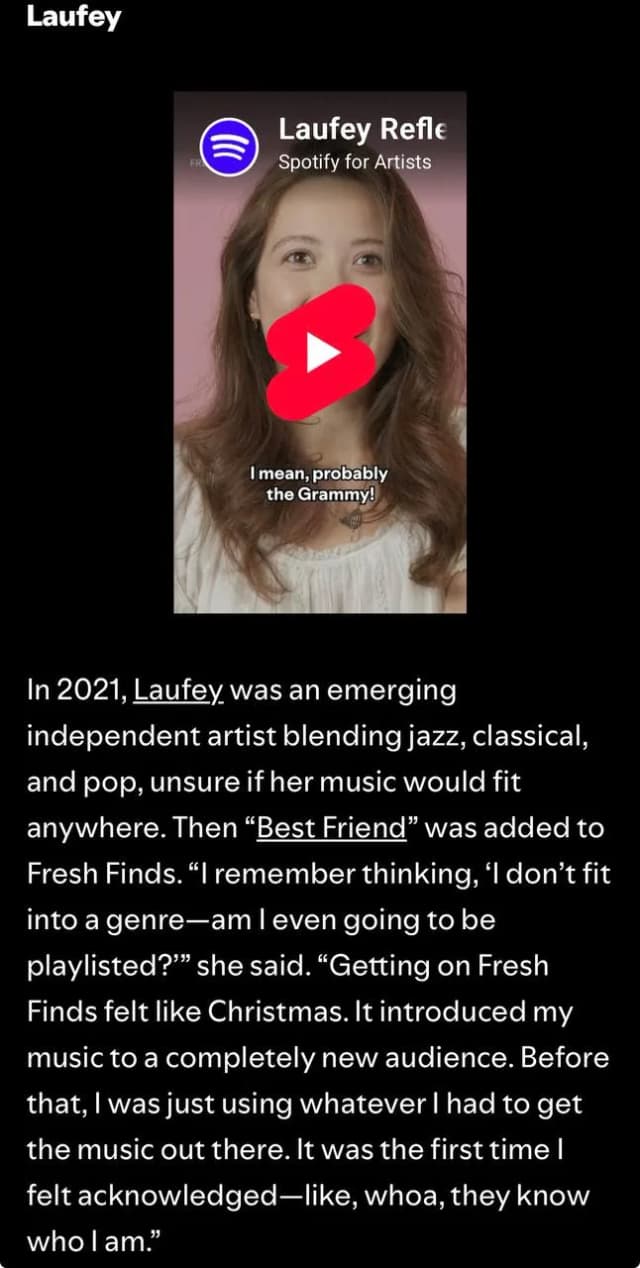
Megan Moroney has around 8.8 million monthly listeners on Spotify and has translated early discovery into critical acclaim, winning several major country music awards such as Breakthrough Female Video of the Year and New Female Artist of the Year at the ACMs.
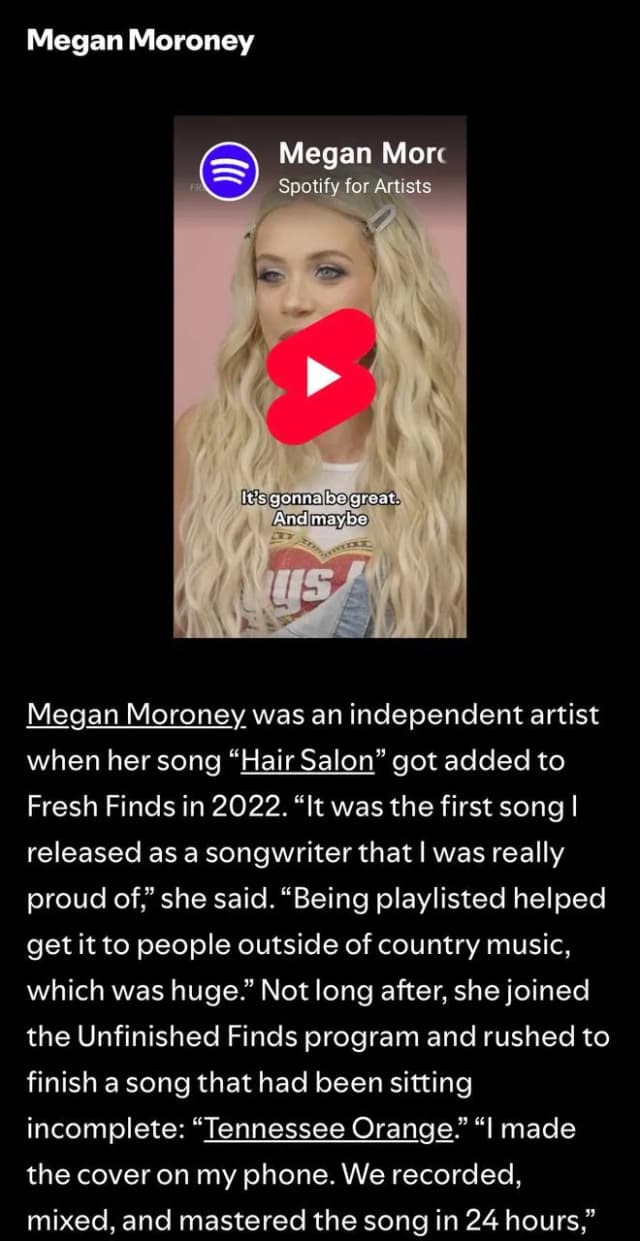
Wet Leg currently sits at roughly 2.9 million monthly listeners, and early placement on Fresh Finds contributed to their breakout success and Grammy nominations.

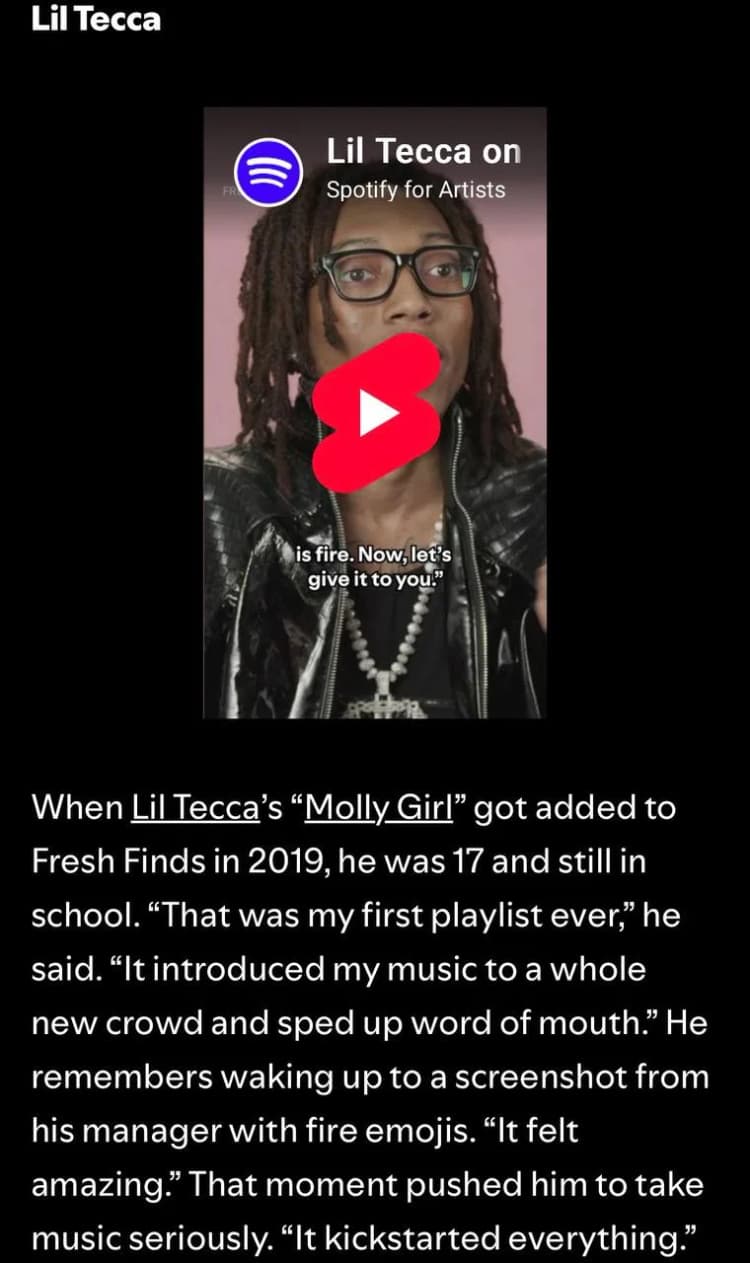
Lil Tecca reaches about 35.7 million monthly listeners, with playlist support in his early teens helping drive wider discovery and streaming momentum.
Algorithmic Amplification After Playlisting
Editorial success often triggers algorithmic recommendation boosts. Placement in Fresh Finds can lead to added placements in Release Radar, Discover Weekly, and other algorithmic surfaces, compounding impact beyond the initial playlist.
How to Combine Spotify Discovery Mode with SoundCampaign
Discovery Mode works best when it supports momentum that already exists. It’s not a launch strategy on its own. The smartest approach is to pair it with a Spotify playlist pitching service like SoundCampaign so algorithms catch on real listener interest instead of guessing.
Want to find out a hack that most artists don’t even know? It’s actually reverse psychology for algorithms.
Use Discovery Mode as a Supplemental Tool
Most artists try their best to get into Discovery Mode as soon as they release their tracks. But, that’s not going to work.
Discovery Mode works best as a support tool, not a starting point.
First, focus on building real engagement through playlist pitching with SoundCampaign. Once a track shows strong numbers, you can use Discovery Mode to extend its reach.
The reason is simple. Spotify’s algorithm responds faster to tracks that already perform well.
Placements on relevant community playlists through SoundCampaign can put your track in front of listeners who actually want to listen to your track.
Those signals increase the chances of your track being picked up and recommended more widely through Discovery Mode.
Spotify Discovery Mode Strategy for Independent Artists (Step-by-Step)
Step 1: Analyze Your Track Performance
Review streams, save rates, skip rates, and listener sources in Spotify for Artists to identify tracks with healthy engagement.
Step 2: Confirm Eligibility and Readiness
Ensure the track meets Discovery Mode eligibility requirements and that your distributor supports participation.
Step 3: Define Your Discovery Mode Goals
Decide whether your priority is audience growth, catalog longevity, algorithm testing, or discovery, not short-term revenue.
Step 4: Select the Right Tracks
Choose songs with proven listener response, clear genre alignment, and low skip rates rather than brand-new or experimental releases.
Step 5: Enable Discovery Mode Strategically
Select only best-performing tracks and avoid enabling your entire catalog at once for best results.
Step 6: Monitor Performance Metrics
Track changes in streams, listener reach, saves, and algorithmic sources during the Discovery Mode period.
Step 7: Evaluate Royalty Impact
Compare increased stream volume against reduced per-stream payouts to assess overall financial impact.
Step 8: Optimize or Disable Based on Results
If engagement improves, continue or expand selectively; if skips rise or growth stalls, disable the track.
Step 9: Support With External Promotion
Pair Discovery Mode with playlist pitching, social content, or release announcements to convert passive listeners into fans.
Step 10: Document Learnings for Future Releases
Record what worked, track type, timing, and audience response, to refine Discovery Mode use for future campaigns.
5 Common Spotify Discovery Mode Mistakes to Avoid
Enabling Discovery Mode Too Early
Opting in before a track has strong engagement signals can lead to high skip rates, limiting algorithmic exposure and future recommendations.
Using Discovery Mode on Every Track
Enrolling an entire catalog at once makes it difficult to measure impact and can dilute results across weaker songs.
Ignoring Engagement Metrics
Focusing only on stream counts without monitoring saves, skips, and listener retention can mask poor performance.
Expecting Guaranteed Growth or Revenue
Discovery Mode increases opportunity, not outcomes; results depend entirely on how listeners respond to the track.
Running Discovery Mode Without Supporting Promotion
Relying on Discovery Mode alone may generate passive listens but misses the chance to convert discovery into long-term fans.
Conclusion
Spotify Discovery Mode is not a shortcut. It works best when used intentionally, not by default. It increases opportunity, but listener behavior decides what lasts.
For independent artists, the real advantage comes from sequencing. Playlist pitching helps build early engagement and context. Discovery Mode can then extend that momentum through algorithmic exposure.
Use Discovery Mode when the data supports it. Measure engagement, not just streams. When treated as part of a broader release strategy, it can support sustainable growth without compromising your goals.

Mente da marketer, cuore da scrittore, anima da musicista. In SoundCampaign mi occupo di SEO, sblocco qualsiasi collo di bottiglia di marketing e scrivo i contenuti che aiutano davvero gli artisti ad andare avanti. Sono anche musicista, quindi quasi tutto ciò che scrivo nasce da entrambe le prospettive. Quando non faccio niente di tutto questo, sono nel mio studio improvvisato a scrivere e produrre, ancora alla ricerca di un suono che un giorno potrebbe arrivare in classifica.
Promuovi la tua musica
Posizionamenti reali in playlist, video TikTok e annunci Meta

Scelto da oltre 100.000 artisti ed etichette
Mai bot.

Caso reale
Come SoundCampaign ha messo Grant Knoche davanti a 460.587 ascoltatori con WOOHOO
Leggi la storia completa
Pronto a far ascoltare la tua musica?
Unisciti a migliaia di artisti indipendenti che usano SoundCampaign per raggiungere playlist reali, creator e fan, con feedback sincero a ogni passo.
- Mai bot
- Programma di tutela dell'artistaSe un curatore o un creator non recensisce il tuo brano, ti restituiamo il credito. Il tuo budget è sempre protetto.
- Mantieni il 100% delle tue royaltySiamo un servizio di promozione, non un'etichetta. Non prendiamo mai una percentuale sui tuoi stream o royalty.