음악 프로모션
Patreon for Musicians: 6 Steps to Building a Sustainable Income

Nadav Peleg
업데이트됨 · 11분 읽기
Tired of unpredictable music income? Discover how Patreon for musicians works and follow these 6 steps to build steady, reliable revenue from your biggest fans.


On this page
- Patreon for Musicians Starts Before Patreon
- The Patreon Math Most Musicians Avoid
- Patreon Tiers for Musicians: Build a Product, Not a Donation Page
- Patreon Content for Musicians: Songs Open the Door, Process Keeps People Paying
- Promote Patreon to Warm Fans, Not the Internet
- Patreon Fees for Musicians This Year
- Common Patreon Mistakes Musicians Keep Repeating
- FAQ
- Do This Before You Launch
A lot of SoundCampaign artists have sent me a DM in the past asking whether they should start a Patreon.
What I see in most of them is the same setup. A few thousand Spotify listeners, no email list, no real community, and a hope that Patreon will fix their income problem.
It will not. Trust me.
Streaming and merch don’t fail artists because fans don’t care. They fail because most of their listeners never become real fans.
Patreon only works when you already have those die hard fans. That is exactly why so many musicians launch it too early and quit two months later wondering what went wrong.
In this blog, I’ll show you how Patreon for musicians can be a great addon to your income and what could be the right way to leverage it as an artist.
Patreon for Musicians Starts Before Patreon
An artist I know had around 35K YouTube subscribers. He said YouTube ads brought in about $250-$300 a month, while Patreon brought in about $2,200 a month from roughly 324 paid members.
He started when he had around 14,859 YouTube subs, not a million.
Another artist had the opposite story. Around ~60K monthly Spotify listeners. Thirty years in music. Lesson based Patreon at $5 a month.
This guy never even had the chance to go over 15 subscribers. That is the whole game.
Most musicians obsess over audience size. Patreon cares more about audience depth.
Streaming listeners know the song. Patrons usually need to know the person, the process, or the utility around the music.
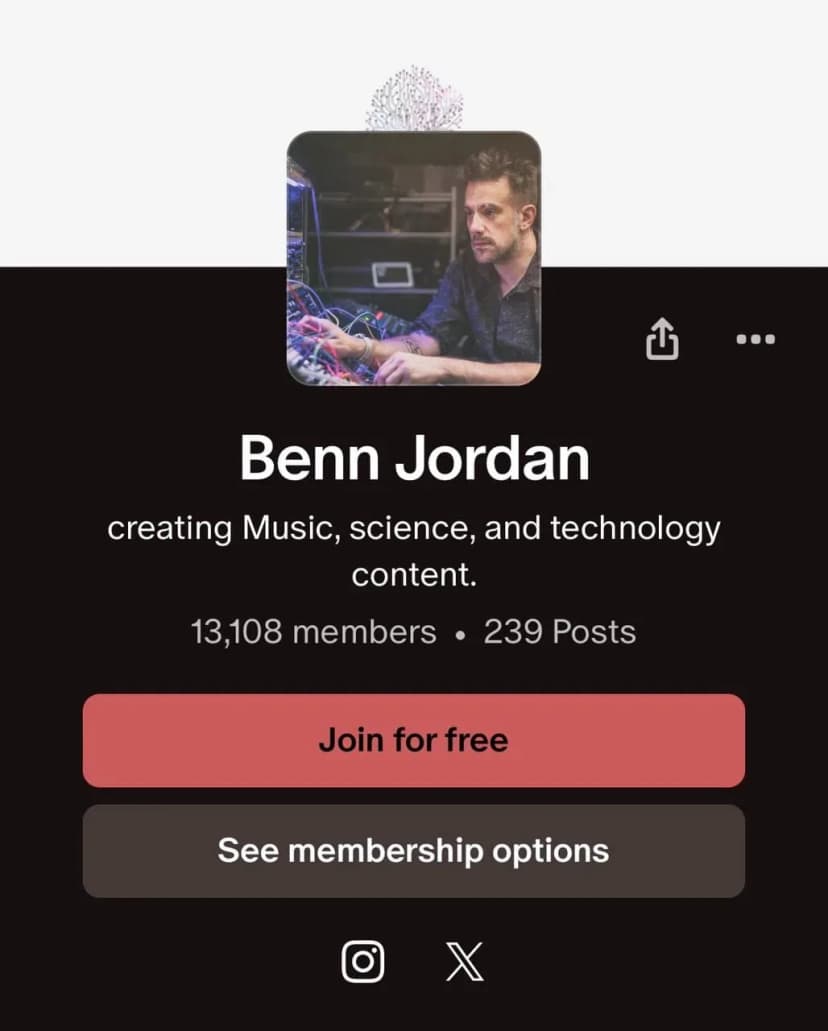
Benn Jordan is the bigger proof. He built a 150,000 subscriber YouTube audience around music, gear, and creator commentary, then turned that into 6,162 paid Patreon members.
Yes, Patreon discovery is better than it used to be. Patreon says 60% of new signups now come from inside the network. Useful. Not magical.
Even on Reddit, I saw someone saying: "These things work best when you already have an audience. Don't expect to grow your fanbase on these platforms."
If fans already reply to your emails, show up to livestreams, ask how you made something, or buy tickets without being dragged there, Patreon can work. If most of your audience only knows your latest release and nothing else, Patreon is early.
The Patreon Math Most Musicians Avoid
Here is the stat most people don’t want to agree with.
Graphtreon tracks 17,645 paid music creators on Patreon, 545,917 paid memberships, and $750,073 in visible monthly payouts for the music category.
That works out to about $42 a month in visible earnings per music creator. Hidden earnings mean the real average is higher. The point still stands. The middle of this market is not glamorous.
Also, "music creator" is not one clean business model.
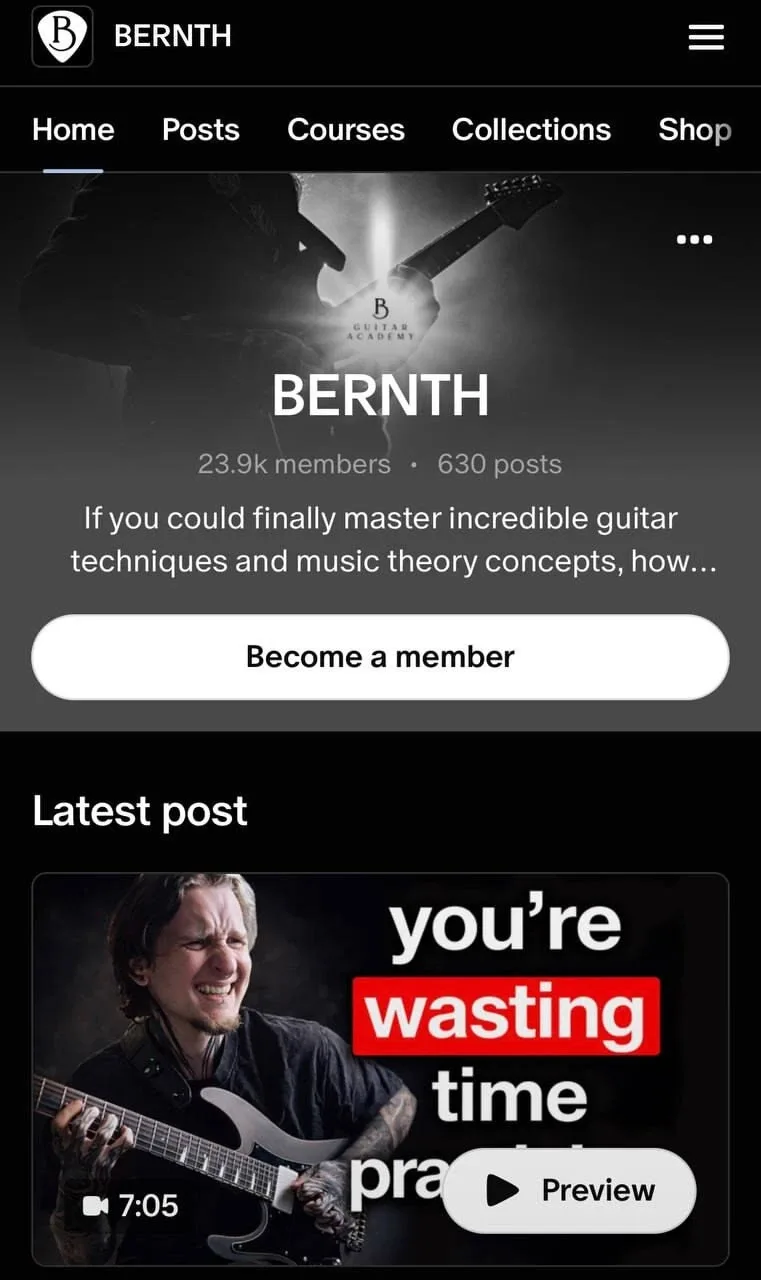
BERNTH is selling guitar mastery.
Todd in the Shadows sells criticism.
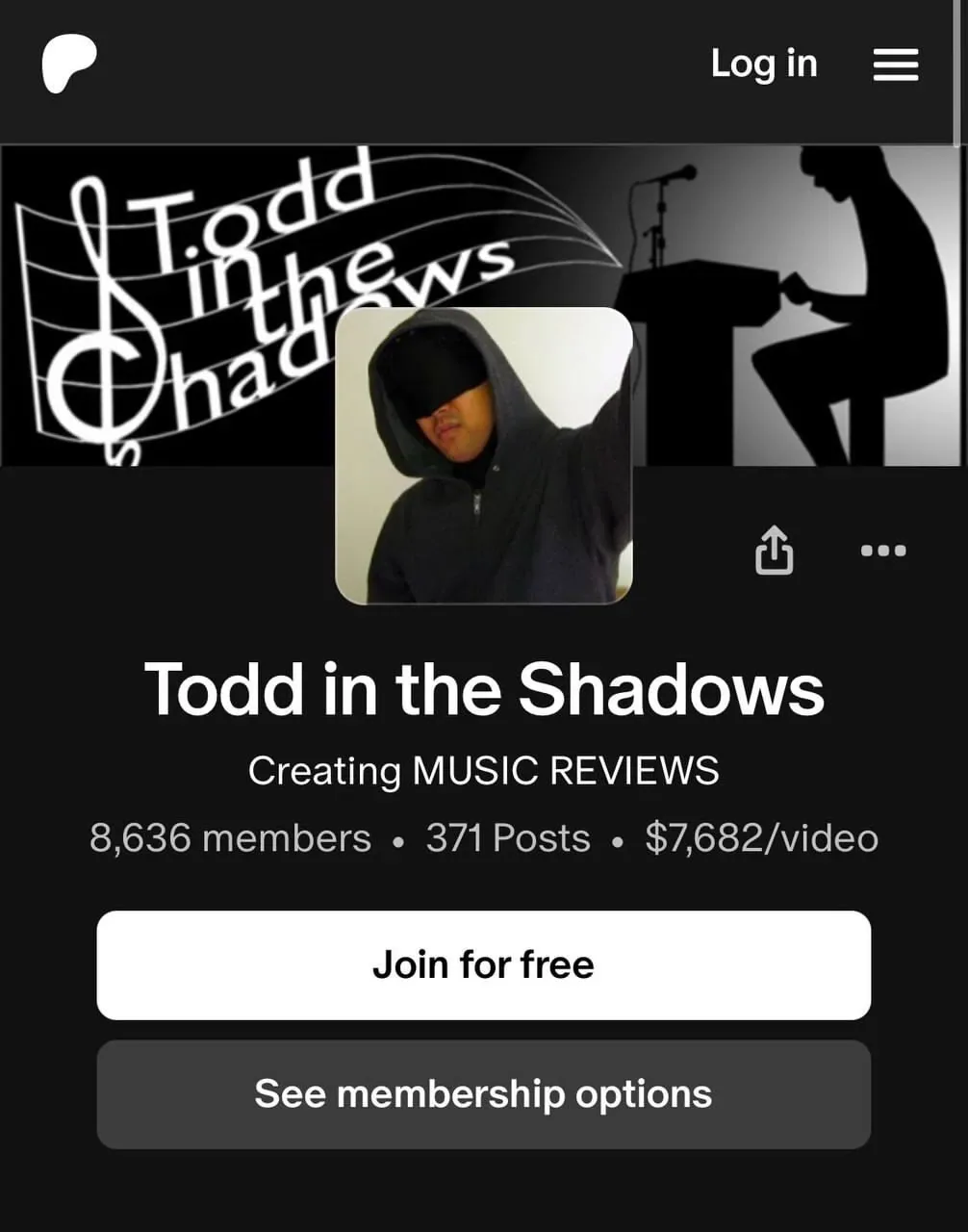
Benn Jordan sells music, gear, and commentary. If you are only offering unreleased songs, you are not competing on the same economics.
Across the entire creator economy, only about 4% of creators earn above $100K a year. That is not a Patreon stat. It is a creator economy wide.
Even older Patreon platform data tells the same story. In 2017, only about 2% of Patreon creators across the whole platform cleared federal minimum wage. Different year. Different platform mix. Same lesson. Membership income concentrates hard.
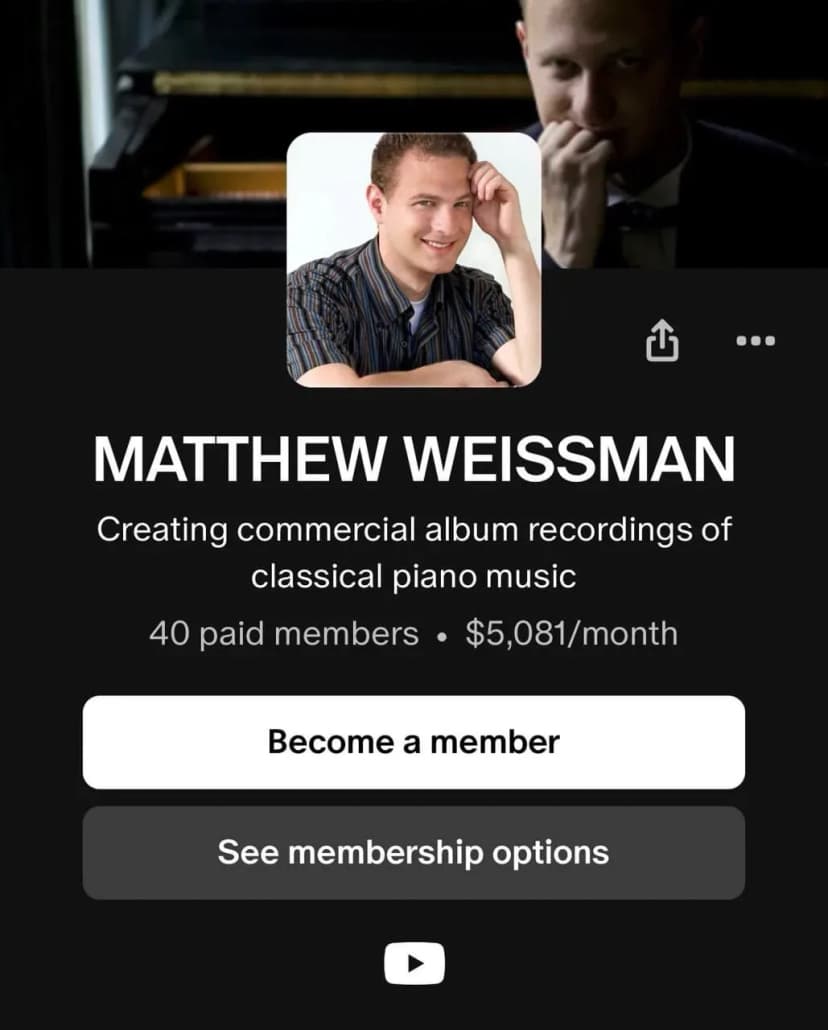
The outlier that makes this easier to understand is Matthew Weissman. He earns about $5,081 a month from just 40 patrons. That is roughly $127 per patron.
This is a tiny audience, but they’ve got a high willingness to pay.
So no, the goal is not always "get more patrons." The goal is to build the right offer for the right fans.
Then do the boring math.
|
Monthly income goal |
At $5 memberships, about $4.05 take home |
At $10 memberships, about $8.41 take home |
|---|---|---|
|
$500 |
124 patrons |
60 patrons |
|
$1,000 |
247 patrons |
119 patrons |
|
$2,000 |
494 patrons |
238 patrons |
That is before payout fees, currency fees, and taxes.
This is not an anti Patreon. It is an anti delusion.
Patreon Tiers for Musicians: Build a Product, Not a Donation Page
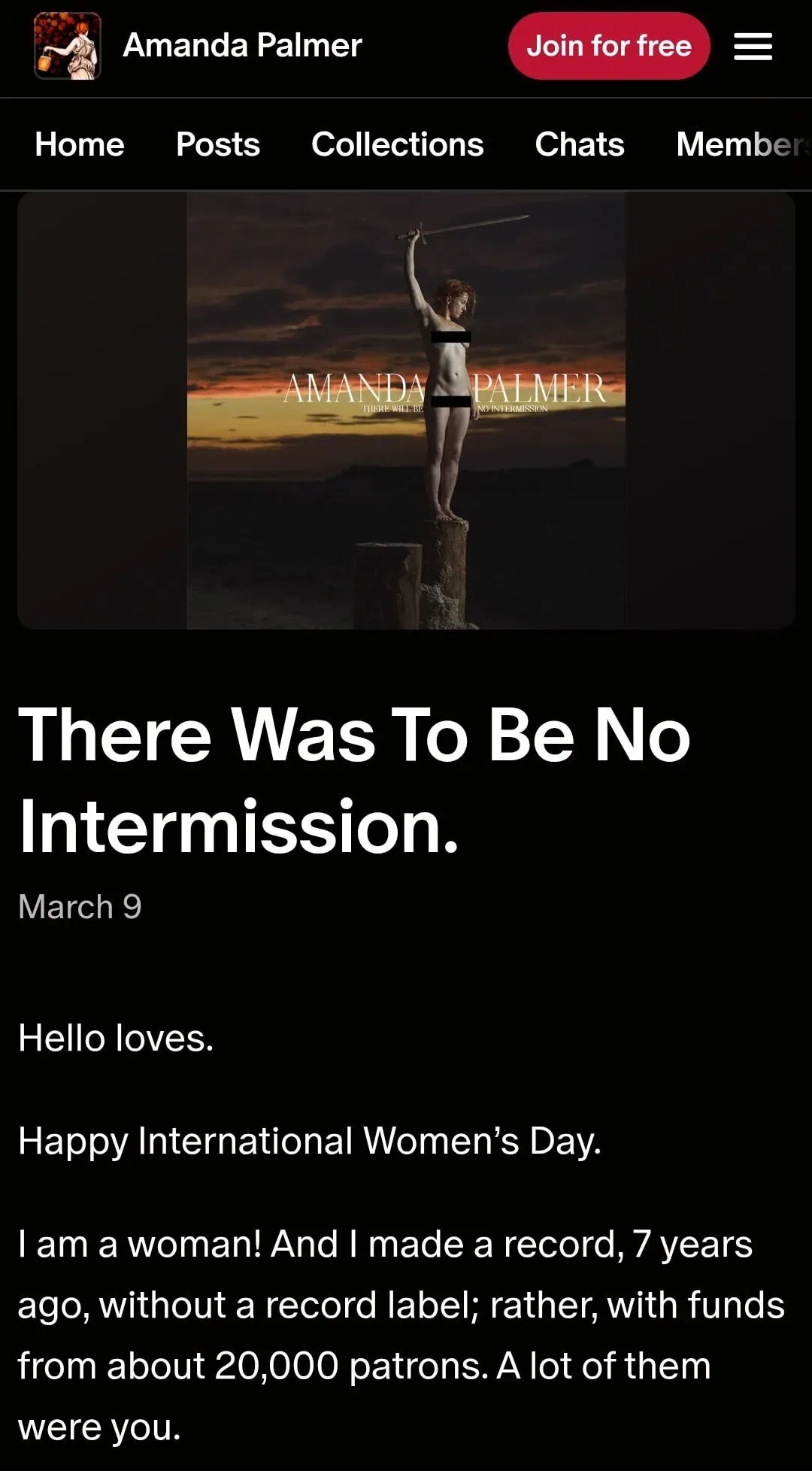
Amanda Palmer didn’t build a glorified tip jar. She built a funding engine around the creative process. In her first three years, over 20,000 patrons helped generate about $1.58 million.
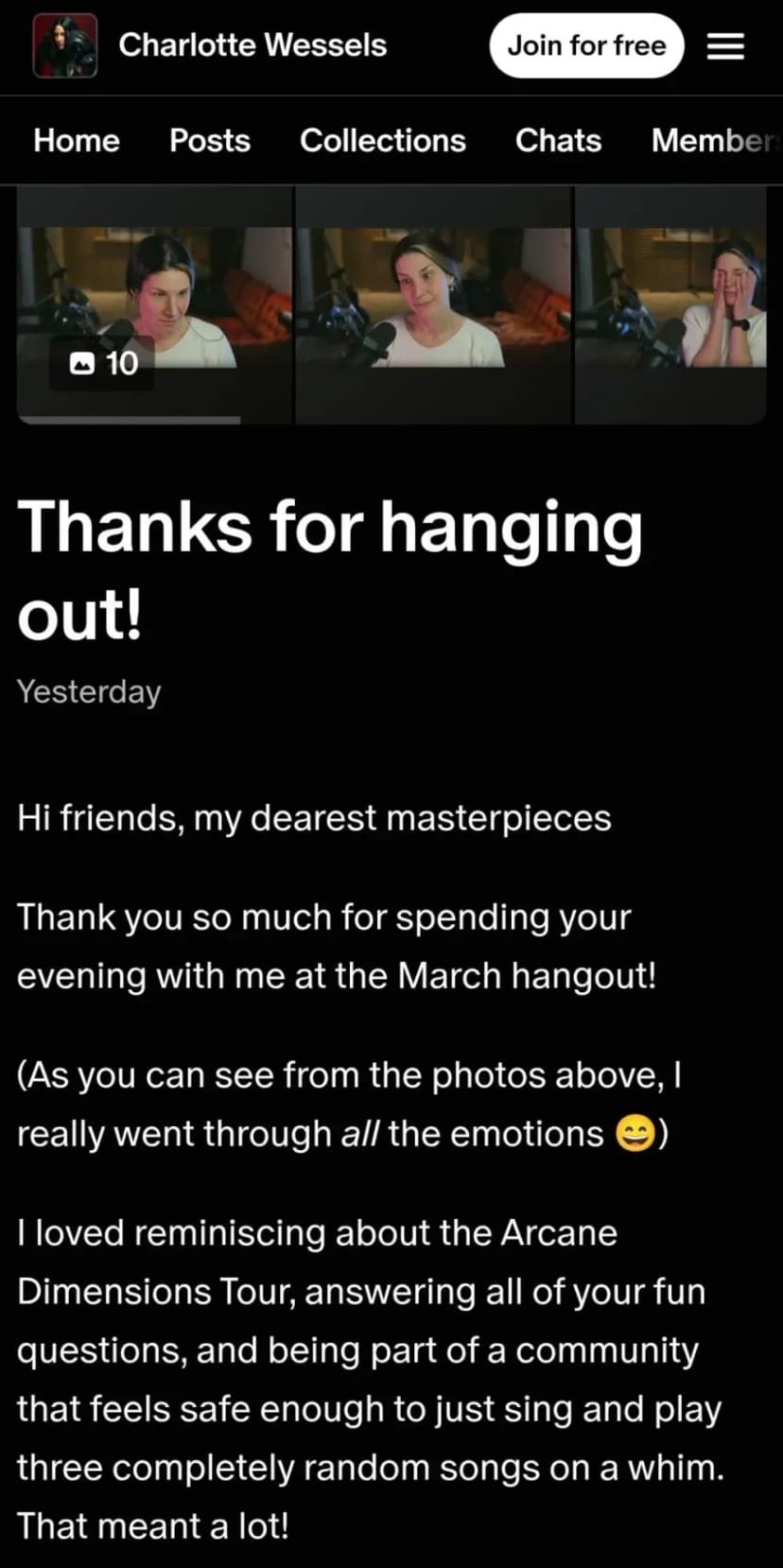
Charlotte Wessels used Patreon to survive a band split, the pandemic, and the chaos that came with it by releasing a song every month and letting fans into the making of it.
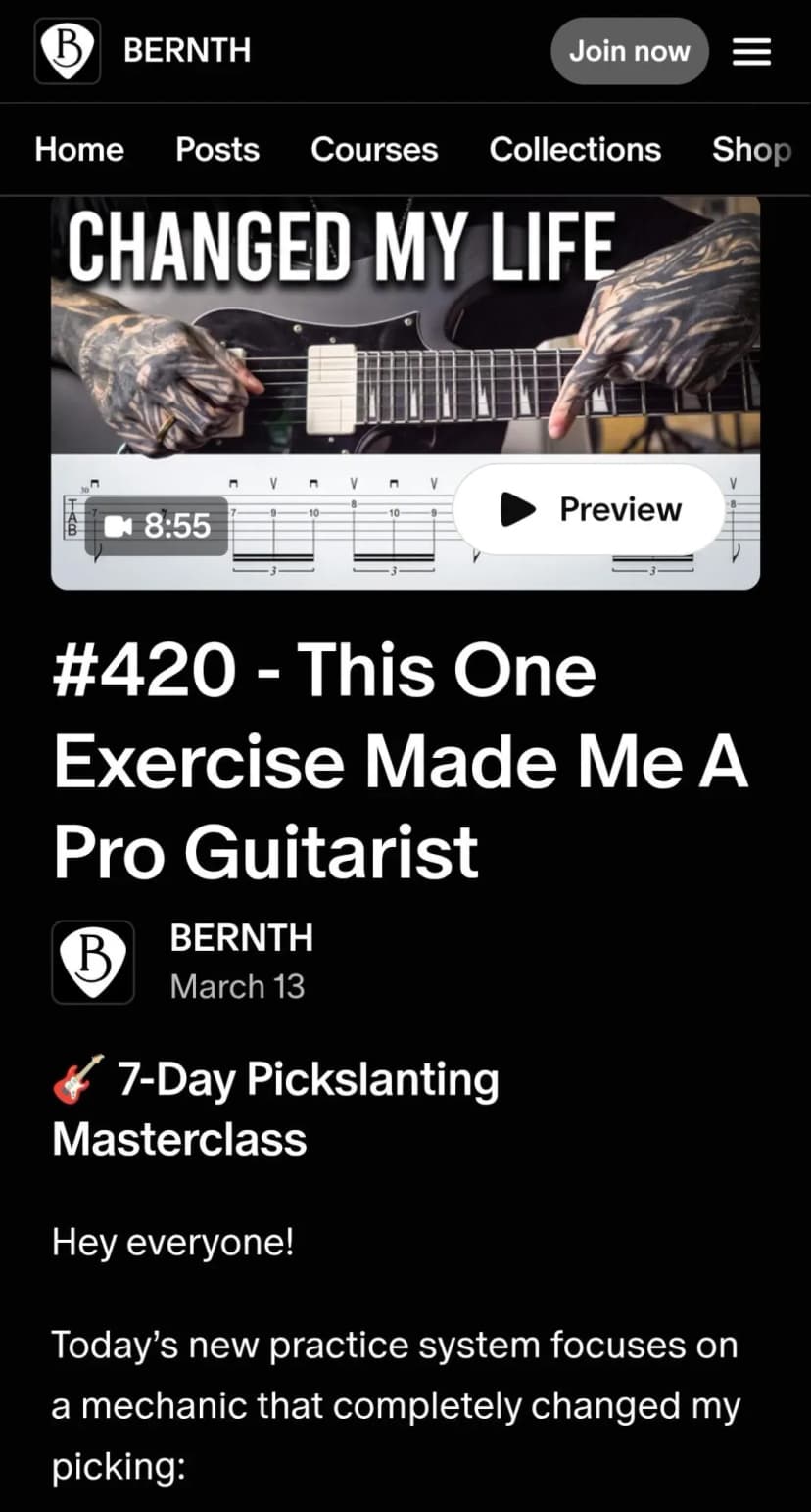
BERNTH built one of the strongest music Patreons on the platform by turning guitar education into recurring utility for more than 8,000 paid members and an estimated $46,000 a month.
See the pattern?
The offer is not "please support my art." The offer is "here is what you get closer to."
For most musicians, that means three buckets:
- Access: Early listening, chats, livestreams, closer contact.
- Process: Demos, studio notes, unfinished songs, writing sessions, voting.
- Utility: Tabs, presets, stems, breakdowns, tutorials, lessons.
The best starting structure is boring on purpose.
|
Tier |
Price |
What belongs here |
|---|---|---|
|
Free |
$0 |
Public previews, best posts, a low friction way in |
|
Supporter |
$5 |
Early access, rough demos, community posts |
|
Core |
$10 |
Studio breakdowns, deeper process, livestreams |
|
Superfan |
$25+ |
Feedback, credits, capped hangouts, premium access |
Free matters more than most musicians think. Patreon says free membership tiers can drive about 3X more community growth without reducing earnings. That makes the free tier a funnel, not a waste.
What you don’t want is a reward factory.
Molly Lewis, known for her ukulele covers on YouTube, ended up owing nearly 100 limericks, 40 sonnets, and 30 videos after her Patreon launch blew past expectations. That’s far more than she had budgeted for.
Glass Beach gave the cleanest warning: lose two $50 patrons in one month and you will feel it.
I have watched too many artists build a Patreon page that is really just guilt with prettier buttons. If your tier looks like a restaurant menu, you already messed it up.
Patreon Content for Musicians: Songs Open the Door, Process Keeps People Paying
When your music gets attention, that doesn’t mean you’ll get retention too.
Across Patreon as a whole, video is the biggest earning content type at about $5.65 million a month.
Music and songs bring in about $1.2 million. Fans watched 80 million hours of video on Patreon in 2024.
That is platform wide data, not a music only conversion stat. Still, the message is hard to miss. People pay for formats that feel ongoing, intimate, and useful.
BERNTH is not winning because fans are waiting for one mysterious exclusive track. He is winning because the value is obvious every month.
Benn Jordan said the Patreon lets him keep doing the work even when YouTube itself loses money.
The strongest musician Patreon content usually lives in a simple mix:
One useful post. Tabs, presets, breakdowns, lessons, gear notes.
One personal or process post. Demo, rehearsal clip, song note, livestream, vote, update.
That rhythm compounds. Patreon data says new patrons start around $3.78 a month on average and climb to $8+ after three years. That means retention matters more than launch week hype. A steady useful page beats a dramatic dead page every time.
Promote Patreon to Warm Fans, Not the Internet
Aubadour, also known as Daven Tillinghast on the platform, said all of his supporters came from people who knew him from live shows and real life.
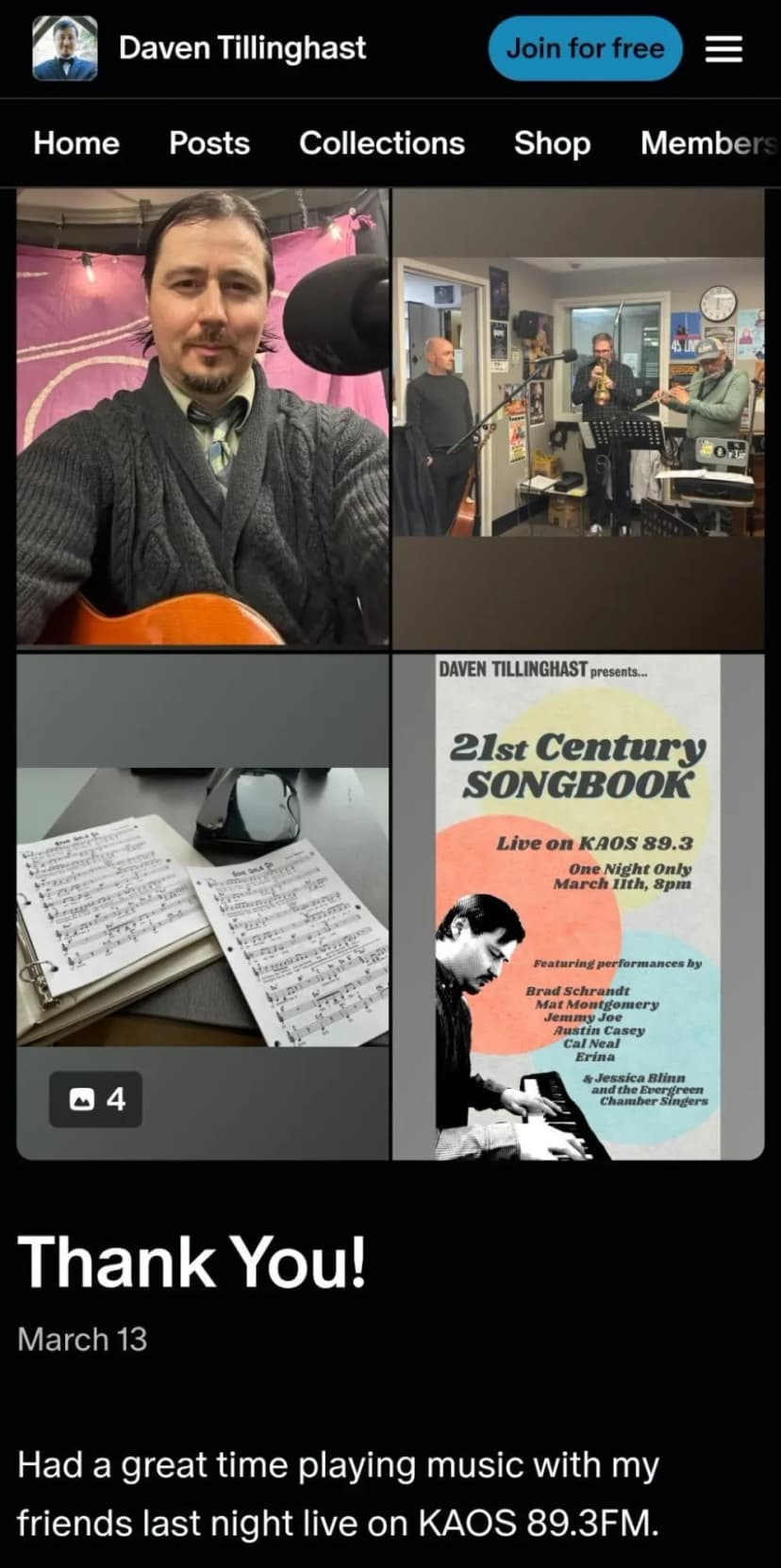
That should tell you how this works. Patreon converts relationships.
This is why the lazy launch flops. One Instagram story, a link in bio, and an embarrassed caption. Then silence.
Glass Beach had the better advice: "When you launch don't just tweet out 'hey, i guess we've got a patreon now.' Launch that sucker!"
In other words, go all in with it and be bold.
Megan Slankard uses deadlines and special offers. They give fans a reason to act now instead of later.
Patreon says more than 700K free members convert to paid each month. Again, useful. But the real move is still the same: start with people who already care.
Here is the launch flow I would use:
- Open a free tier first.
- Attach the paid launch to a real event, like a demo drop, breakdown, private livestream, or behind the scenes series.
- DM or email the warmest 50 people individually. The ones who already reply, already buy, already show up.
Broad reach looks sexy. Warm reach converts.
Patreon Fees for Musicians This Year
For new creators after August 4, 2025, Patreon charges a standard 10% platform fee.
For memberships above $3, standard processing is 2.9% plus $0.30. A $5 membership usually lands around $4.05 before payout fees, currency conversion, and taxes.
A $10 membership lands around $8.41.
Small tiers feel accessible. They also get chopped harder by fixed fees.
That is why a $3 tier can work as a low friction entry point, but it usually shouldn’t be the whole business. If your entire Patreon strategy depends on hundreds of tiny pledges, run the math before you build the page.
If you are comparing platforms, the split is simple.
|
Platform |
Best use |
Typical take home |
|---|---|---|
|
Patreon |
Recurring memberships and community |
About 81% to 87% after fees |
|
Ko-fi |
Tips, small memberships, lighter setup |
Usually higher than Patreon |
|
Bandcamp |
Direct music sales |
About 80% to 85% per sale |
Bandcamp is better for selling music. Ko-fi is lighter for tips. Patreon is stronger when the real product is ongoing access, process, and community.
Common Patreon Mistakes Musicians Keep Repeating
Mistake 1: Launching to passive listeners
If your audience only knows the song, asking for monthly support will feel awkward on both sides. A music marketing consultant documented a 2018 launch for an artist with 100K social followers and 300K monthly Spotify listeners. They couldn’t cross 50 patrons in the first few months. Analysis of Graphtreon data backs it up: 96% of music Patreons never reach 100 patrons. The audience was there. The relationship was not.
Mistake 2: Selling songs only.
Brian Hazard found many of his patrons were not even there for the rewards. They wanted to support the person and stay close. Even among the artists I know, I’ve learned that presets outsold songs. The product is usually the world around the music, not the mp3 or wav files.
Mistake 3: Building a fulfillment prison.
Signed merch, custom songs, monthly calls, physical mailers. Sounds premium. Feels horrible by month four. The more reward-heavy your tier sheet, the faster Patreon stops feeling like a creative business and starts feeling like a second job with no upside.
Mistake 4: Mistaking Patreon for your community hub
Patreon alone is horrible as a community builder/social media platform." It holds paying members. It doesn’t build the relationship that gets them there. That job belongs to YouTube, Instagram, TikTok, Spotify, etc.
Mistake 5: Reading gross revenue like net income.
Twenty $5 members looks like $100. With proper maths, that looks like $81 before payout fees and taxes. That gap matters when you start promising yourself rent money.
FAQ
Is Patreon worth it for musicians?
Yes, if you already have real fans and a repeatable content habit. No, if you are hoping Patreon will create the audience for you.
How many fans do I need before launching Patreon?
There is no magic number. The better question is this: do you have at least 50 to 100 warm people who already reply, buy, ask questions, or show up? If not, build depth first.
What should I post on Patreon as a musician?
Start with access, process, or utility. Early songs, demos, studio notes, livestreams, tabs, presets, stems, or breakdowns beat "exclusive music only" for most musicians.
How much does Patreon take from a $5 membership?
For new creators on the standard 10% plan, a $5 membership usually lands around $4.05 before payout fees, taxes, and currency conversion.
Is Patreon better than Bandcamp or Ko-fi for musicians?
Patreon is better for recurring community revenue. Bandcamp is better for direct music sales. Ko-fi is lighter for tips and smaller memberships.
Can Patreon replace touring or streaming income?
Sometimes. Usually not at the start. For most musicians it works better as a stabilizer first, then a bigger revenue layer later.
Do This Before You Launch
Do these three things before you start a Patreon as an artist:
- Write down the 50 people most likely to care right now.
- Decide the monthly promise you can keep for six straight months.
- Run the fee math at $5 and $10 so you know what success actually means.
If you can’t do those three things yet, wait.
If you want help building the kind of audience that can actually convert before you launch Patreon, that is exactly the kind of work we do at SoundCampaign.
In fact with our Meta Ads campaign, you can put your songs out there in relevant groups. Once you have an audience who loves your tracks coming to your Instagram, you’ll build a cult of your own. Eventually, those fans will pay for your Patreon.

SoundCampaign 창립자 겸 CEO
저는 나다브입니다. 지금의 회사를 만들기 전에는 음악을 만들었고, 마케팅에 관심을 갖게 된 것도 거기서 비롯됐습니다. 제가 가장 좋아하는 부분은 분석 쪽입니다. 스트림이 어디서 오는지, 무엇이 움직였고 무엇이 움직이지 않았는지 보는 일이죠. 아티스트에게 진짜 의미 있는 노출을 주기 위해 SoundCampaign을 창업했습니다. 예상보다 훨씬 많은 시간과 노력이 들었고, 그 점은 지금도 크게 다르지 않습니다.


당신의 음악을 알릴 준비가 되셨나요?
매 단계마다 솔직한 피드백과 함께 실제 플레이리스트, 크리에이터, 팬에게 다가가는 수천 명의 인디 아티스트와 함께하세요.
- 봇은 절대 사용하지 않습니다
- 아티스트 보호 프로그램큐레이터나 크리에이터가 트랙을 리뷰하지 않으면 크레딧을 돌려드립니다. 당신의 예산은 항상 보호됩니다.
- 저작권료의 100%를 그대로 유지하세요저희는 레이블이 아닌 프로모션 서비스입니다. 스트림이나 저작권료의 일부도 가져가지 않습니다.