음악 산업
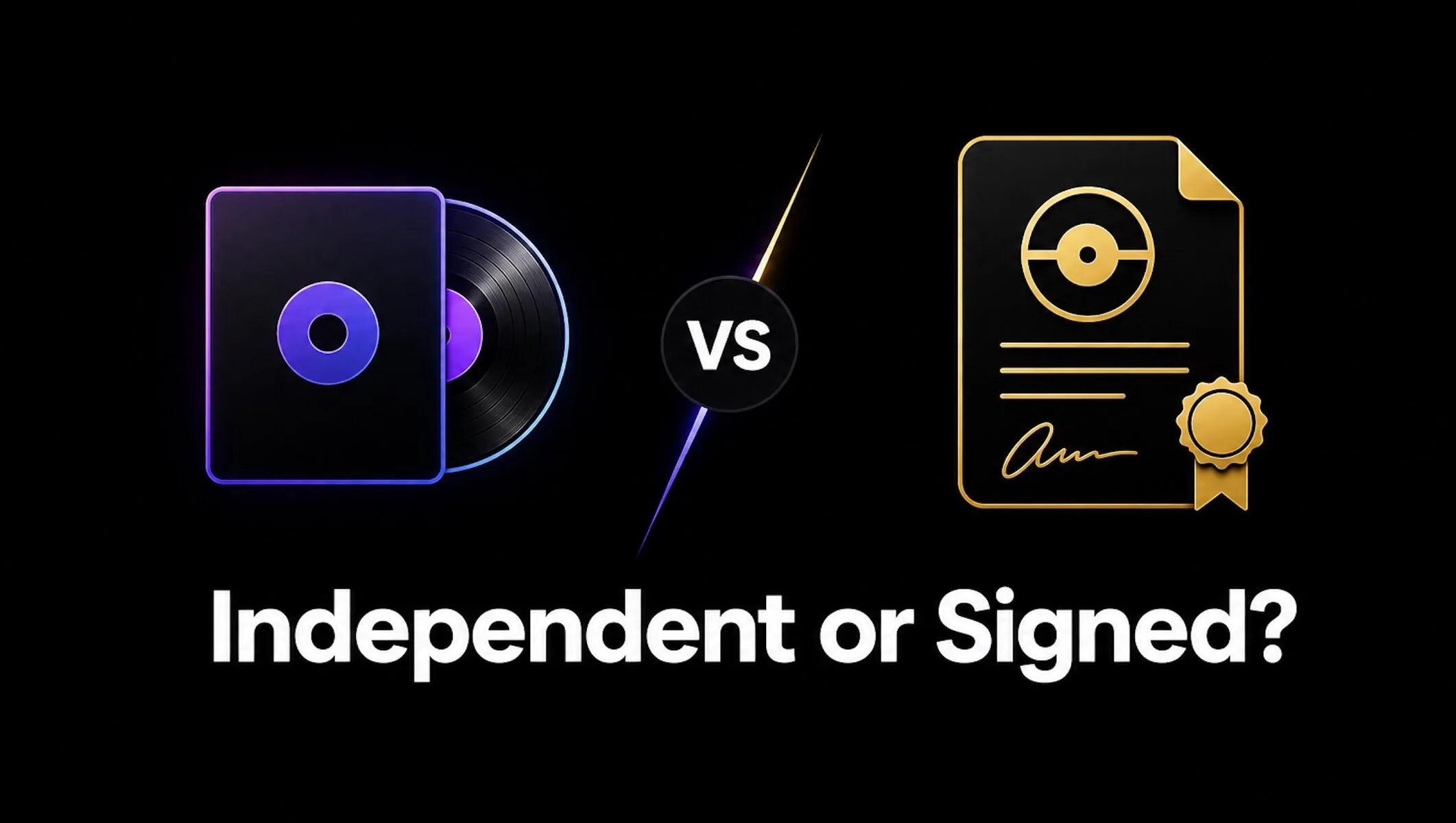
Pros and Cons of Signing to a Record Label

Nadav Peleg
업데이트됨 · 16분 읽기
Should you sign to a record label? Explore the pros, cons, risks, and indie alternatives so you can choose the right path for your music career.


On this page
Both signed and independent artists have had their own setbacks and perks. Just look at both angles:
Billie Eilish signed to Interscope at 14, kept full creative control, and swept the top four Grammys at 18.
Chance the Rapper won three Grammys that same year without a record deal at all.
It doesn't always go that way though. JoJo signed a seven-album deal at 12 and lost almost eight years to a collapsed label. And 88% of indie tracks in 2025 earned nothing under Spotify's demonetization rule.
Same industry. Completely different outcomes.
Major record labels still bring funding, radio reach, and distribution muscle most independent artists can't match. That's why artists sign. But streaming, TikTok, and $20-a-year distribution have also given artists a chance to rise without labels.
In this article, I'll go deeply into each scenario. You'll see the pros and cons of signing to a record label and whether you should sign one.
What does a record label do?
A record label handles funding, production, marketing, PR, and distribution in exchange for rights and revenue. This is how the the entire labels system looks like:
- Major labels (Universal, Sony, Warner) handle all of it at scale. They have the biggest budgets and deepest industry connections in exchange for the masters and roughly 80-85% of revenue on traditional new-artist deals.
- Independent labels (XL Recordings down to one-person operations) cover the same functions at a smaller scale with better royalty splits (often 50/50) and more creative freedom in exchange for smaller marketing budgets.
- DIY distribution (DistroKid, TuneCore, CD Baby) skips the label entirely and gets your music onto streaming for under $30 a year, letting you handle everything else.
Pros of signing to a record label
1. Financial backing
Generally, a major label deal comes with an advance of $50K to $350K for new artists. Sometimes more for priority singing. This also includes budgets for production and marketing.
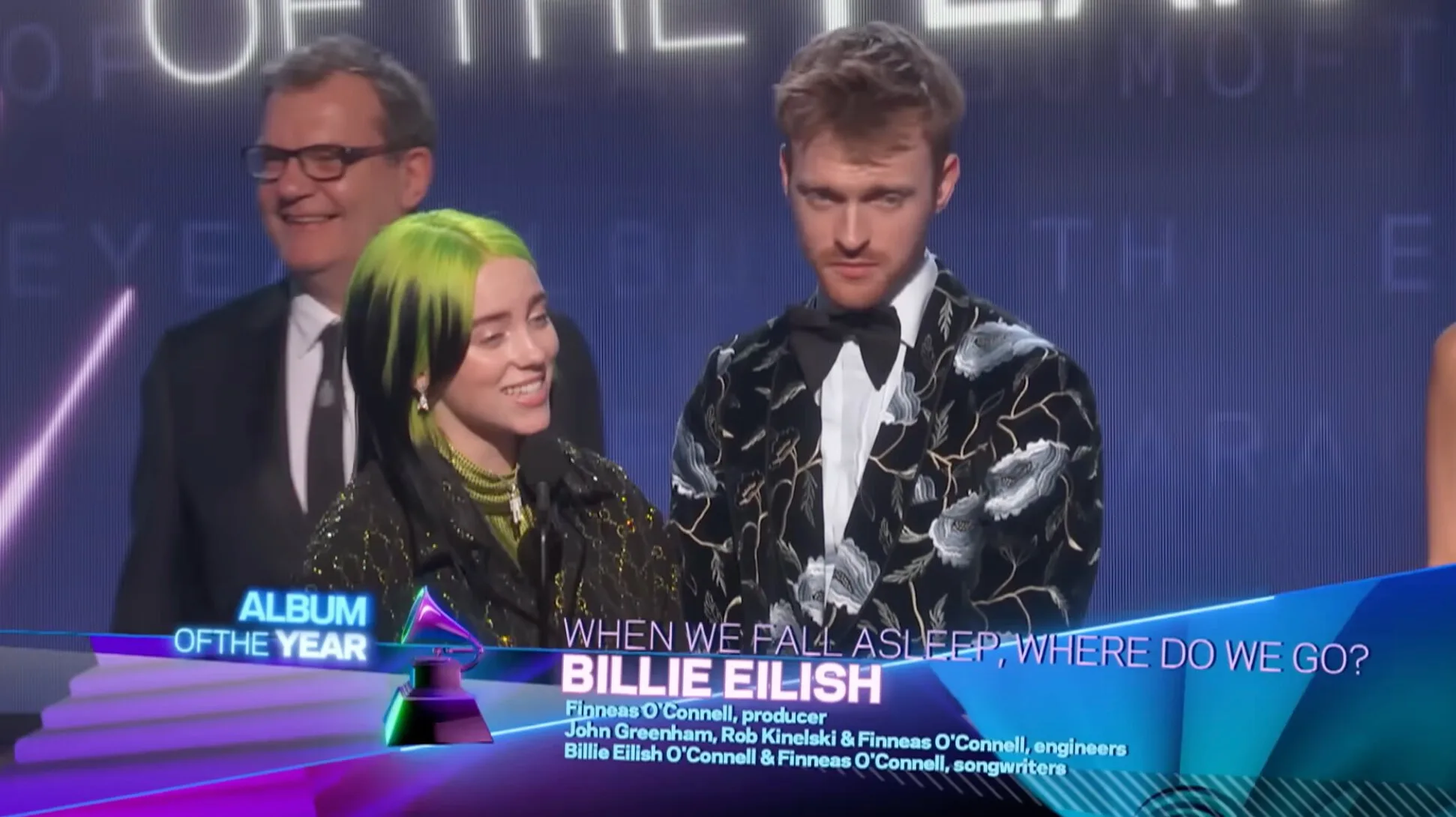
Billie Eilish recorded her debut at home with her brother after signing to Interscope/Darkroom in 2016, but the label paid for the rollout that turned a SoundCloud upload into Album of the Year by 2020.
2. Industry connections
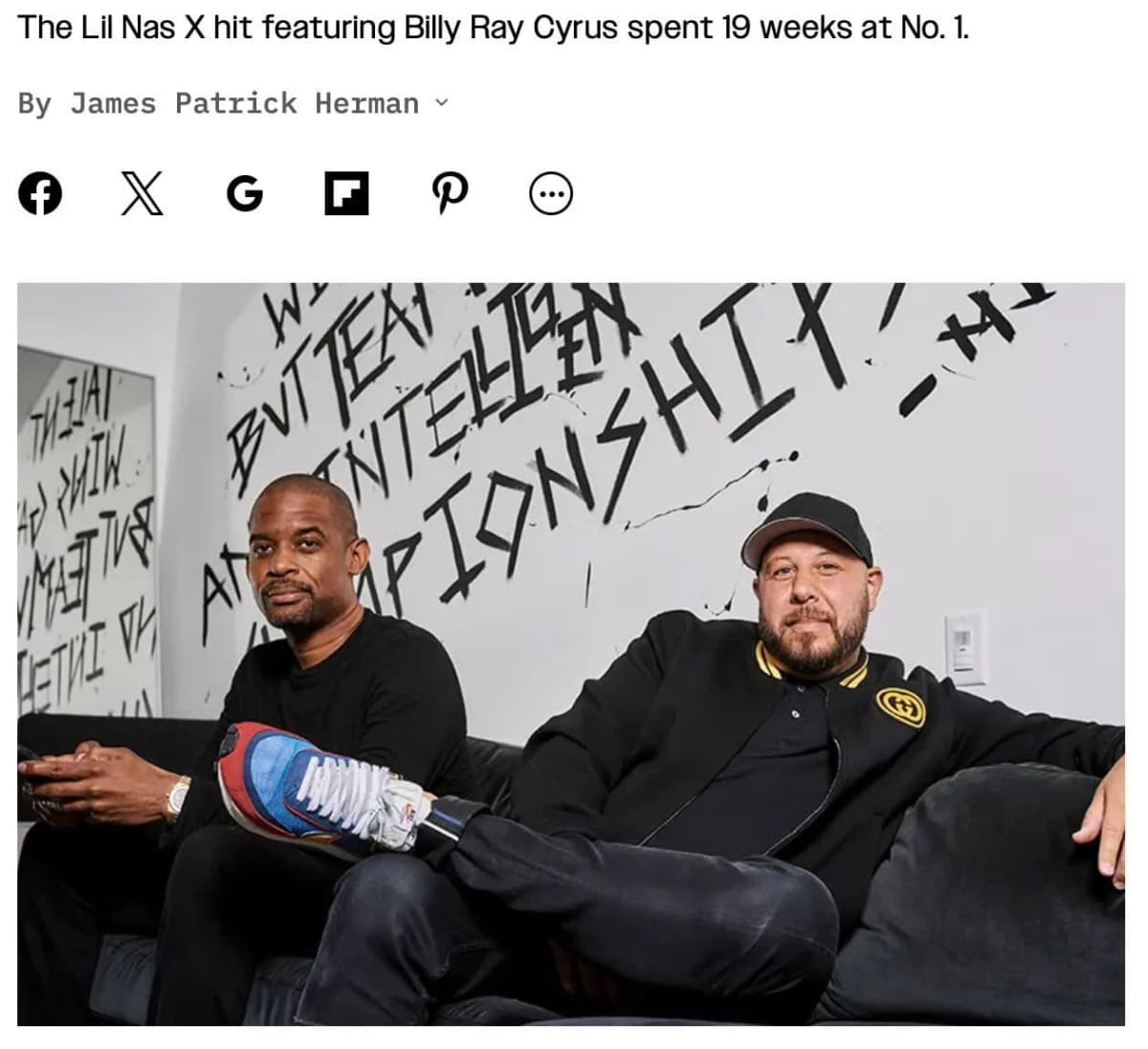
Labels plug artists into networks that take decades to build. Lil Nas X self-released "Old Town Road" on a $30 beat in December 2018.
Three months later he signed to Columbia, and when Billboard pulled the song from its Hot Country chart, Columbia CEO Ron Perry personally called his manager to suggest a Billy Ray Cyrus remix.
The remix spent 19 consecutive weeks at #1 on the Hot 100, the longest run in chart history, on the back of a phone call no unsigned artist could make.
3. Marketing and PR power
The three major labels (Universal, Sony, and Warner) control roughly 65% of global recorded music revenue, which funds in-house teams for press, social campaigns, music videos, and influencer deals.
A single major-label rollout can outspend what most independent artists put toward PR in an entire career.
4. Distribution at scale
Streaming, sync, and physical retail still favor major-label priority. The Big Three's market share gives them direct pitch lines to Spotify editors and standing relationships with sync supervisors at TV and ad agencies. Meanwhile, 88% of tracks uploaded in 2025 got fewer than 1,000 plays.
5. Credibility
Being signed to any of the three major labels signals to managers, booking agents, sync supervisors, and journalists that an industry player with standing has already bet on you. That credibility opens doors at every downstream conversation, and helps with getting signed to a bigger record label later if you move on.
Cons of signing to a record label
1. Loss of creative control
When you sign a traditional record deal, the label gets the final say on which songs you release.
Kelly Clarkson learned this in 2007, when Clive Davis (then head of RCA) tried to block her self-written third album "My December" by using his contractual right to approve what gets released.
After that, she publicly said Davis "completely sabotaged" the project, "My December" sold 836,000 copies, down from "Breakaway's" 6.3 million.
2. Revenue splits
When you sign to a major label, your royalty is typically around 20-25% of recording revenue, with roughly 25% the average for streaming-era deals. Older recording contracts ran lower, around 15-20%. The label takes the rest and recovers its advance first.
That means recording, marketing, and video costs all get repaid before you see a single dollar. Most never reach that point, which is around 80% of major-label artists stay unrecouped.
These Toni Braxton's first two albums grossed roughly $170 million.
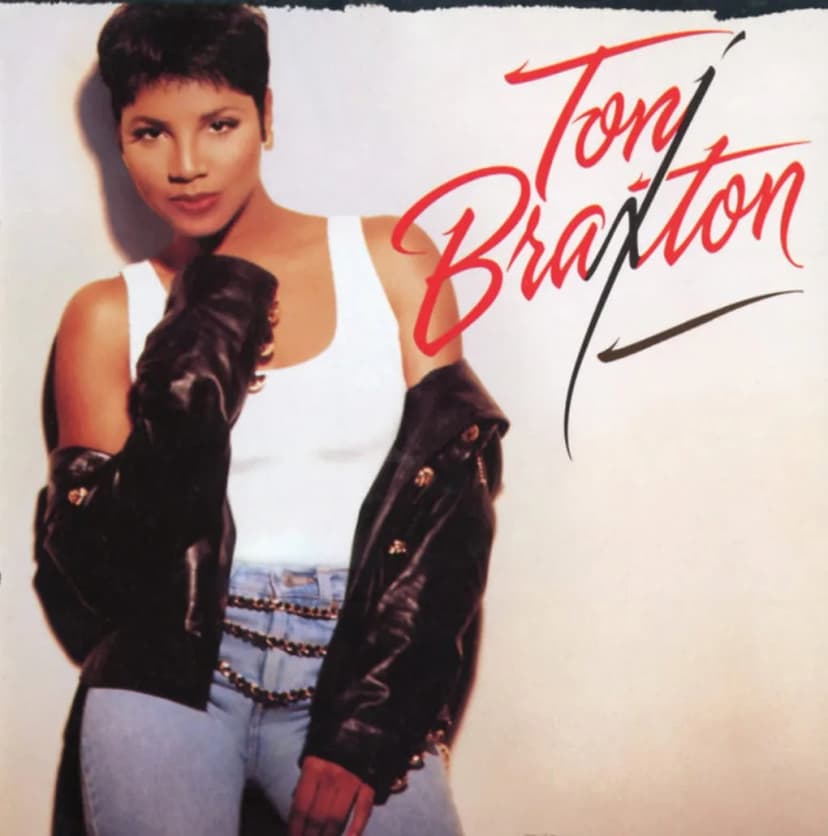
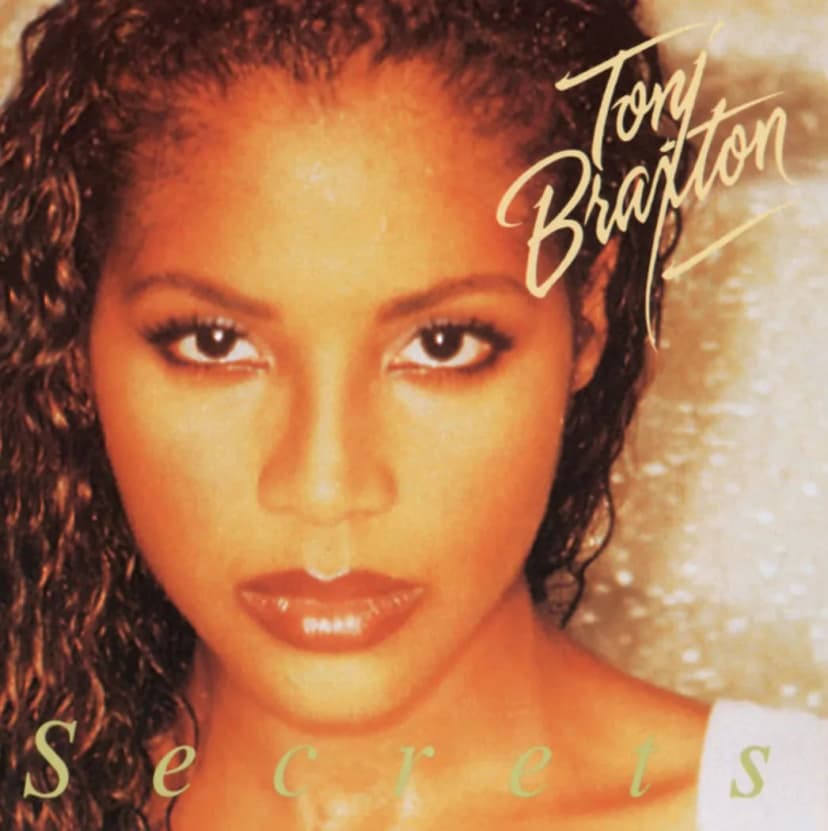
That sounds good on paper. Her royalty rate at LaFace was about 35 cents per album.
By the time she filed for bankruptcy in January 1998, she had personally received only about $5 million.
This is the main reason why most artists we work with at SoundCampaign build their streaming audiences before considering a deal.
An artist who comes in with 50,000 monthly listeners and growing playlists negotiates from a completely different position than one who signs on hope alone. The numbers you grow stay yours. So does the music.
3. Long-term contracts
Traditional major deals lock the artist into multi-album commitments with options on every future release.
JoJo signed a seven-album deal with Blackground at age 12, releasing her platinum debut in 2004. She had to file lawsuits before finally being released in January 2014, after the label held her entire prime career.
4. Master ownership
With most major deals, the label owns your master recordings. In some cases, that's forever.
Big Machine owned the masters to Taylor Swift's first six albums. In 2019, the label sold them to Scooter Braun's company, Ithaca Holdings.
Swift said she was never offered the chance to buy them herself. She found out when the sale went public.
So she fought to get them back. It took nearly six years. Along the way, she re-recorded much of her catalog, the "Taylor's Version" albums you've probably heard.
Then in May 2025, she bought her masters back from Shamrock Capital, the company that had bought the catalog in 2020.
Most artists never get that chance. She had the fame and the money to buy her way out. You probably won't.
5. Deprioritization risk
Once signed, you compete with every other artist on the roster for marketing budget, radio promo, and A&R attention.
Labels can also shelve releases to keep artists contractually locked when they try to renegotiate.
Megan Thee Stallion signed with 1501 Certified Entertainment in February 2018. When she tried to renegotiate in 2020, the label allegedly blocked her album "Suga."
She had to sue and win a same-day restraining order just to force the release. Then sued again in 2022 before finally settling in October 2023.
Independent artists vs signed artists: What's changed?
Streaming, TikTok, direct-to-fan tools, and playlist networks have rewritten what an artist can do without a label.
Today an independent artist can compete with a major-label release for streaming audience, viral moments, and playlist real estate. All they need is the right tools and strategy.
Since 2020, four big things have changed.
1. Streaming changed who pays artists
In Q1 2026, Spotify had 761 million monthly users and 293 million paying subscribers. The platform paid over $11 billion to the music industry in 2025. About half went to independent artists and labels.
Apple Music also crossed an estimated 100 million subscribers. For the first time, an unsigned artist gets paid directly by the same platforms paying Drake.
2. TikTok rewrote discovery
In 2024, 84% of songs that entered the Billboard Global 200 had already gone viral on TikTok before charting.
Ice Spice released "Munch (Feelin' U)" unsigned in August 2022. After the track went TikTok viral, she signed a reported $2 million deal with 10K Projects two months later and earned a Best New Artist Grammy nomination within 18 months.
The path from bedroom to chart no longer runs through a label's contacts.
3. Direct-to-fan changed who owns the relationship
Bandcamp has paid artists $1.73 billion since 2008. In fact, they have paid $220 million last year alone.
Artists keep about 82% of every sale. Patreon takes 5% to 12% commission. The artist who builds a real fan list keeps that audience even if the label conversation never happens.
4. Playlist ecosystems opened a new amplification system
Spotify's Fresh Finds program has surfaced 70K+ emerging independent artists over the past decade. More than 1,600 of them are now earning over $100K a year on Spotify.
The path used to require a label's playlist team. Now an indie artist can pitch directly, and tools like SoundCampaign automate that pitching at scale.
The independent path now rewards the artist who builds the audience first. The label conversation, if it ever happens, comes later.
When does it make sense to sign to a label?
Music attorney Donald Passman, author of "All You Need to Know About the Music Business," said in a November 2024 Business Insider interview that to reach worldwide superstar status, "nobody's really done it without a label."
That's the honest case for signing. But for most working artists in 2026, the more useful question is when staying independent is worth it.
Let me show you 4 different artists who loved being independent deliberately and what exactly happened with them.
Full ownership of your music
Master recordings, publishing, and the audience itself stay with you when you stay independent.
After Acid Rap blew up, Chance the Rapper was thinking about getting signed. He met with all three major labels but didn't do it. He realized signing would mean losing control over how he released his music.
He won three Grammys in 2017 including Best New Artist without a label. He believes that an artist can be "the upper management" of their own business. If ownership matters most, the math is simple. Don't sign.
Niche or digital-first artist
Artists who don't fit a clean genre or who built their audience online know that labels are not for them.
Laufey built her TikTok audience singing jazz standards during the pandemic. Later, she turned a major-label bidding war into a deal with AWAL that let her keep ownership.
Within a year, she had a Grammy for Best Traditional Pop Vocal Album.
Her deal with AWAL is a good example. For artists with niche or online audiences, that kind of indie partnership usually works better than a traditional major.
Skilled at marketing or audience building
With the right set of marketing skills, I don’t think any artist will ever need a label unless he wants to reduce the headache that comes with it.
Russ released 11 mixtapes independently and put out a song a week on SoundCloud for two and a half years.
By the time he signed with Columbia in late 2016, he was already earning over $100,000 a month through TuneCore. The audience he built before any deal is what gave him the position to sign on his terms.
Use the modern toolkit fluently
Artists have reached a new era where playlisting, TikTok, direct distribution, fan platforms, and promotion services like SoundCampaign exist.
DistroKid or TuneCore puts you on Spotify and Apple Music within a few days. Discovery happens on TikTok. Bandcamp and Patreon take a smaller cut than any label deal.
Stacked together, these pieces replace what a label rollout would cost you in royalty splits and ownership.
In my experience, being independent is a deliberate choice. For artists who fit any of these 4 profiles, the math favors staying that way.
Alternatives to record labels for music promotion
Every function a major label provides has at least one independent system that now matches or beats it. These 5 stacked together let an artist build a career without ever signing.
Playlist promotion
Spotify's flagship editorial playlist Today's Top Hits has more than 34 million saves as of May 2026, and that's just one of many. Spotify for Artists lets you submit unreleased music to the editorial team within 7 days before release.
Chappell Roan's "Good Luck, Babe!" did roughly 7 million streams in its first week on editorial and algorithmic playlists, crossing 2 billion Spotify streams by early 2026. Consistent curator outreach is where most indie artists make progress.
Influencer and TikTok marketing
TikTok's "Add to Music App" has driven 6 billion track saves into streaming services as of April 2026. Influencer Marketing Hub's 2026 rates put a typical micro-creator post (10K to 100K followers) at $200 to $800.
Sombr released "Back to Friends" as a 19-year-old indie artist in December 2024. The track went viral on TikTok over 2025, hit #1 on Spotify's Global Streaming Charts by July 2025, and earned him a 2026 Grammy nomination for Best New Artist.
Music blogs and PR
The blog and critic ecosystem still creates careers. Cindy Lee's "Diamond Jubilee" released March 29, 2024 exclusively on YouTube and a personal website (no Spotify or Apple Music) and earned a Pitchfork 9.1 Best New Music score, then took Pitchfork's #1 Album of 2024 slot.
All this happened without streaming or any label. As much as I know about this industry, I’d say active indie-friendly outlets worth pitching include:
- Pitchfork
- Stereogum
- Brooklyn Vegan
- FADER
- Consequence
- Pigeons & Planes
Just in case you’re looking for the best indie PR firms, I can vouch for:
- Pitch Perfect PR
- Big Hassle Media
- Force Field PR
- Riot Act Media
Social media growth strategies
YouTube Shorts average more than 70 billion daily views.
Instagram Reels surpassed 200 billion daily plays across Instagram and Facebook.
Mk.gee released "Two Star & the Dream Police" in February 2024 and broke through almost entirely on cross-platform word of mouth, landing on year-end best-of lists from Pitchfork, Billboard, FADER, and NPR with no TikTok dance trend in sight.
Direct fan engagement
Substack hit more than 4 million paid subscriptions across creators in late 2024 and launched a $20 million fund to recruit creators away from Patreon.
Discord reached 200 million monthly active users by February 2026.
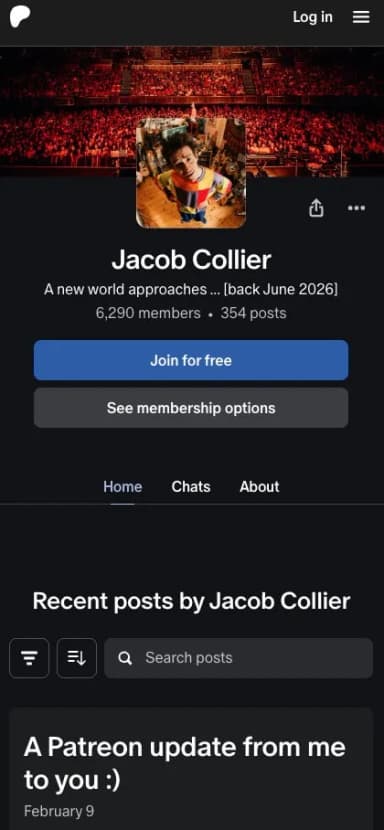
Artists are putting all of this together in real ways. Jacob Collier, for example, runs a complete direct-to-fan business across Patreon, Bandcamp, and an active fan Discord called The Hideaway. None of that revenue gets split with a label.
How to decide what's right for you as an artist
The right answer depends on at what stage you are in your career, your bank balance, ambitions, and what you vibe on.
Run yourself through these 5 honest questions before you sign anything.
1. Career stage
A young, undeveloped artist signing too early is the most common avoidable mistake in the modern industry.
Chappell Roan signed with Atlantic at 17 in 2015, was dropped in 2020 with one EP to show for it, and didn't break through until 2024 as an independent at age 26.
This is 9 years between her first major deal and breakthrough. Without real streams, a real audience, or a clear sound, you'll likely end up like Chappell Roan. Dropped after one EP, forgotten by the label, and left to start over on your own.
2. Financial situation
Of the 12 million people who uploaded music to Spotify in 2024, only about 71,200 (around 0.6%) earned $10,000 or more in royalties that year.
Spotify's 100,000th-ranked artist earned just $7,300 in 2025.
Going indie means you’re taking care of the recording, distribution, marketing, PR, and music video yourself. If your day job covers it, that makes sense. If it doesn't, a label advance might be the only realistic funding path for you.
3. Creative priorities
You need to be honest with yourself about how much you care about having that creative control. Artists who want full say over their music often end up in the same fights as Kelly Clarkson. The right partner can still work for an artist who trusts a team to scale their work.
4. Long-term goals
Think about what you want your career to look like in ten years. Raye signed a four-album deal with Polydor at age 17 in 2014.
Polydor refused to release her debut, finally letting her go in 2021. She released "My 21st Century Blues" independently and swept the 2024 Brits with six wins, the most in a single night by any artist.
Spotify's 2026 Loud & Clear data shows DIY artists took home more than half of all royalties paid to artists who debuted in the past decade.
5. Willingness to handle marketing
Grammy-winning songwriter Dan Wilson told Music Business Worldwide in April 2024 that artists today "work for Instagram making short movies" instead of music.
MIDiA Research's October 2024 report found 87% of non-major labels say cut-through is getting harder. Non-major labels collectively spent $1.5 billion on marketing in 2023.
The indie path means doing that yourself. If TikTok and Instagram aren't for you, a label's marketing team may be worth the royalty split.
In my experience, most artists don’t need to make this decision in a hurry. The ones who do best take the time to build an audience first, then decide whether they want to use it.
Summary
The pros and cons of signing to a record label come down to one question. Have you built something a label can benefit from?
Signing works for artists who have done that work. It terribly fails for artists hoping a label will do it for them.
In some cases, signing still makes sense. For radio access at scale or global superstar ambitions with serious funding behind them, a major-label partnership remains the most reliable route.
For everyone else, staying independent is the smarter path. Russ, Chance the Rapper, Chappell Roan, Laufey, and Raye all show what that can look like.
In my experience, signing too early is the worst decision an artist can make. Without an audience and a clear sense of the career they want, the deal almost always backfires.
FAQs
What is a record label?
A record label is a company that funds, produces, distributes, and markets music in exchange for rights and revenue.
What does signing to a record label mean?
Signing to a record label means entering a contract that gives the label specific rights to your music (including master recordings under traditional new-artist deals) in exchange for an advance, recording budget, marketing, and distribution. The artist trades revenue percentages and creative control for label resources.
How do I get signed to a record label?
Build an audience first. Labels today sign artists who already have streaming traction, social engagement, and a clear sound. They don't develop artists from scratch anymore. Also, make sure you get a music attorney involved before signing anything.
How long does a record deal last?
Traditional major new-artist deals commit the artist to multiple albums (often four to seven) with the label holding options on each release, often meaning a decade or more of obligation. Modern label-services and distribution deals are shorter and per-release. Always have a lawyer review the option structure before signing.
Is signing to a record label worth it?
In my experience, it depends entirely on your career stage, goals, and what specifically you need a label to do. Signing is worth it when you need something specific a label provides at scale, such as radio access, funding for global superstar ambitions, or relationships you can’t build yourself. For artists who have an audience and want to keep ownership, independence is the better decision.

SoundCampaign 창립자 겸 CEO
저는 나다브입니다. 지금의 회사를 만들기 전에는 음악을 만들었고, 마케팅에 관심을 갖게 된 것도 거기서 비롯됐습니다. 제가 가장 좋아하는 부분은 분석 쪽입니다. 스트림이 어디서 오는지, 무엇이 움직였고 무엇이 움직이지 않았는지 보는 일이죠. 아티스트에게 진짜 의미 있는 노출을 주기 위해 SoundCampaign을 창업했습니다. 예상보다 훨씬 많은 시간과 노력이 들었고, 그 점은 지금도 크게 다르지 않습니다.

당신의 음악을 알릴 준비가 되셨나요?
매 단계마다 솔직한 피드백과 함께 실제 플레이리스트, 크리에이터, 팬에게 다가가는 수천 명의 인디 아티스트와 함께하세요.
- 봇은 절대 사용하지 않습니다
- 아티스트 보호 프로그램큐레이터나 크리에이터가 트랙을 리뷰하지 않으면 크레딧을 돌려드립니다. 당신의 예산은 항상 보호됩니다.
- 저작권료의 100%를 그대로 유지하세요저희는 레이블이 아닌 프로모션 서비스입니다. 스트림이나 저작권료의 일부도 가져가지 않습니다.