Musikpromotion
What is Payola in Music? This is What it Looks like in 2026

Nadav Peleg
Aktualisiert · 14 Min. Lesezeit
You're wondering what is payola in music and how can it help you grow? Well, don't get into that rabbit hole until you go through this page.


You dropped a track. It’s good. Maybe your best yet. But the streams aren’t shooting like you hoped.
Then the DMs start rolling in:
“10k streams for $100,”
“Guaranteed three playlist placement within 3 days”
“Get heard fast.”
Tempting, right?
You’ve worked hard. You’re tired of shouting into the void.
And if spending a little cash can finally get you noticed, why not?
That’s where payola comes in.
And if you’re seriously considering it, this post is for you.
Let’s just first understand what is payola in music and how deep this rabbit hole goes.
🎬 Understanding Payola: The Dark Shortcut Dressed as Marketing
🔍 What is Payola, really?
Paying to get your song played or playlisted, without being honest about it is what payola is.
Back in the day, it was radio DJs slipping records into their rotations for a little under-the-table cash.
Today, it’s DMs that look like this:
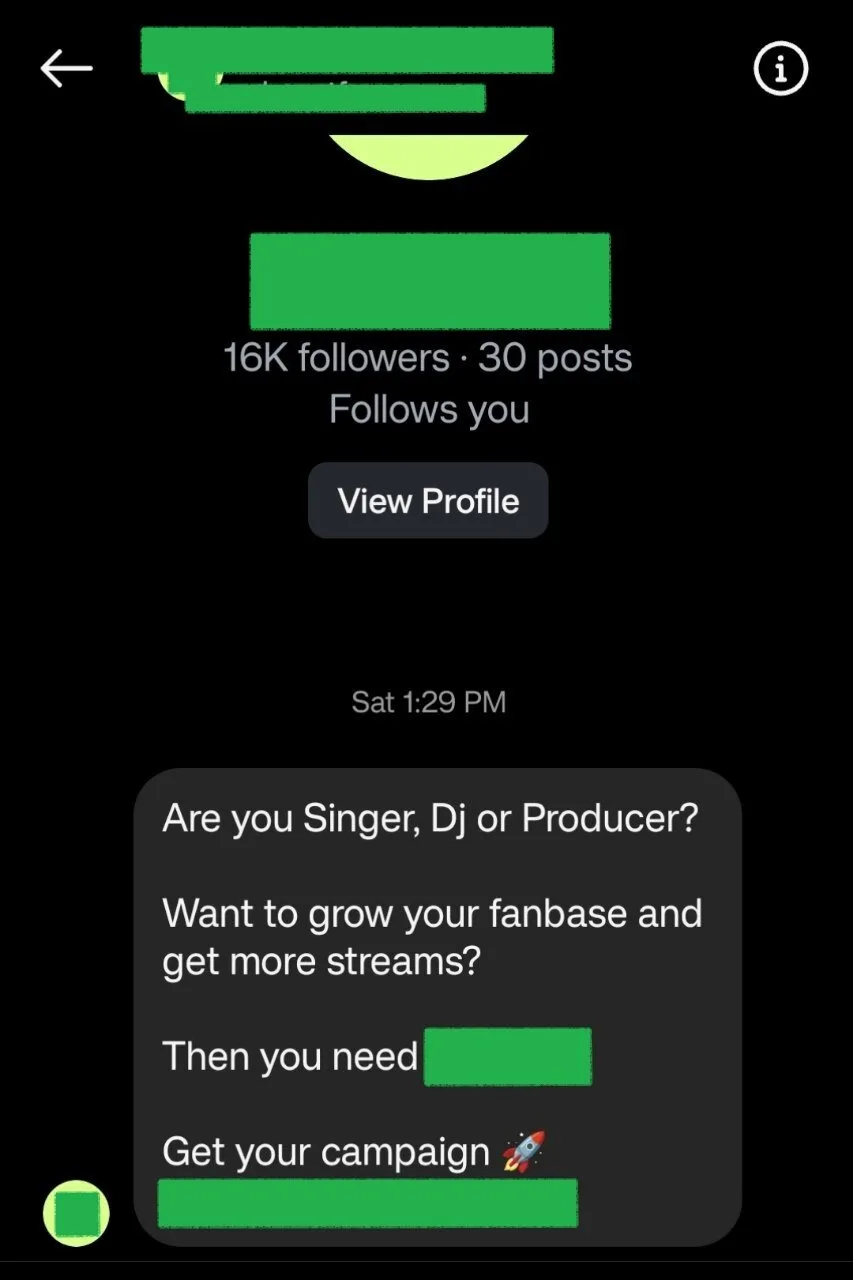
I get such DMs every week.
Or emails claiming they know a “Spotify curator” who can “boost your track overnight.”
If someone’s selling you placement for money alone, not for real strategy or work, that’s just payola in a modern outfit.
It’s not a marketing strategy. It’s a hidden transaction.
And trust me, there’s a big difference between paying for a proper strategy and paying for placement.
⚖️ Why is it illegal (and why no one’s stopping it)?
In the U.S., there’s actually a law for payola. If someone is being paid to promote music, they have to disclose it.
That means radio stations, influencers, even playlist curators, they’re supposed to be transparent.
But most of the time, they’re not.
And streaming platforms like Spotify don’t really crack down unless it’s super obvious or causing legal drama.
So the line stays blurry. People keep crossing it.
And the system stays broken.
As a result, artists with money “buy buzz,” while talented ones get buried.
🎭 The Fallout: What Payola Really Gets You
Let’s say you go for it. You pay someone for “guaranteed” placement. And sure, the streams take off.
But before you celebrate, take a closer look.
Most of those streams come from dead playlists. Bots, ghost accounts, or listeners who couldn’t care less.
They skip your track halfway through.
They don’t save it.
They don’t follow you.
And they’re never coming back.
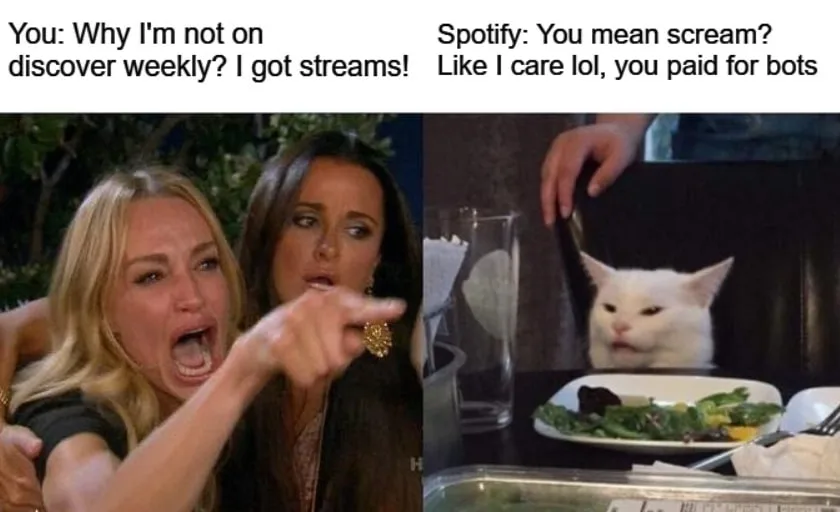
Trust me, this won’t get you featured anywhere or build any real fan following.
📉 What the algorithm sees
Spotify’s algorithm isn’t just counting your streams. It’s watching ‘what people do’ after hitting play.
If listeners skip your song too fast, Spotify marks it as “low quality.”
If no one’s saving or finishing the track, it’s a red flag. That certainly proves that you’ve fallen for the Spotify payola scam.
So eventually your stream count goes up, but your chances of real exposure actually go down.
🚫 What real curators think
Good curators can spot payola a mile away. If they see someone pushing a track through shady playlists, they won’t touch it.
There have been times when artists get rejected by our SoundCampaign Spotify curators. The reason being? Those artists have already been using shady tactics.
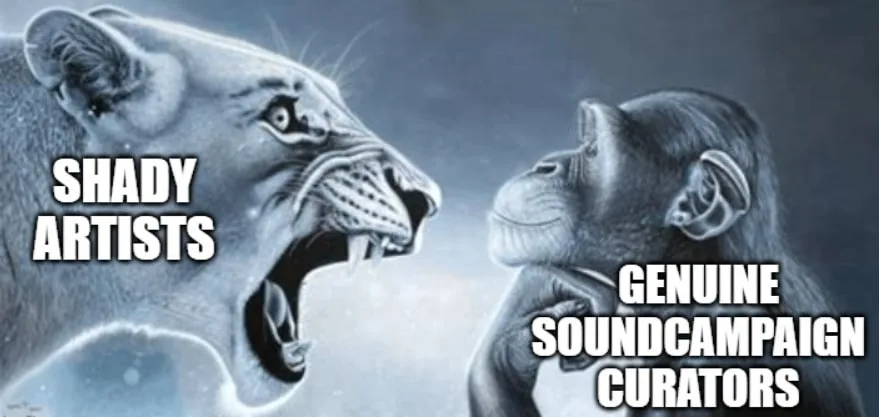
The Spotify algorithm hates a certain group of artists and genuine playlist curators never want to be a part of that circus.
And just like that, every gate slams shut for such artists from every possible way.
🫥 What fans actually remember
Real fans don’t come from shortcuts.
They come from hearing your song in the right place. From a place where it fits and resonates with whatever you’re going through.
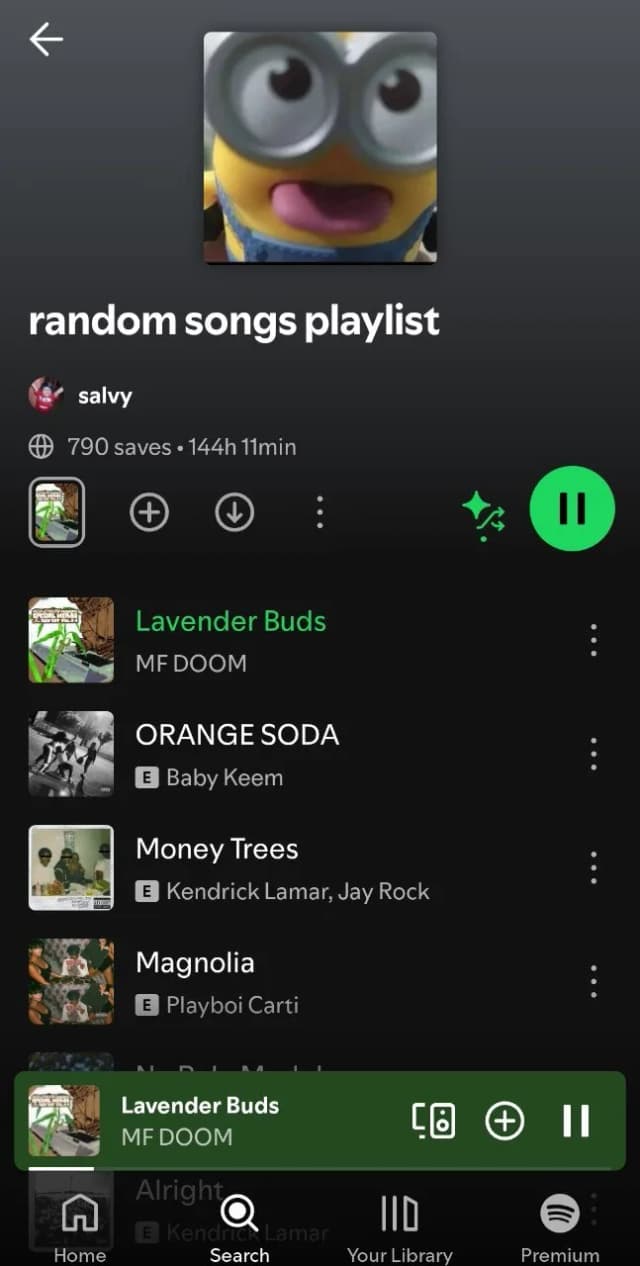
When your music shows up in a random playlist like this one with 60 tracks of unrelated stuff, it doesn’t stick.
You’re just background noise. You get forgotten in seconds.
🧨 The illusion of momentum
Payola makes it look like you’re gaining traction.
But behind the scenes, it’s messing up your data, hurting your reputation, and disconnecting you from real opportunities.
So while you’re feeling good about 10k streams, enjoy it while it lasts because the algorithm, curators, and listeners are all quietly stepping away.
Not worth it.
🧱 Payola isn’t Just a Bedroom Artist Problem
You think payola is only a trap for up-and-coming artists? Think again. Even top-tier musicians have found themselves entangled in its web.
Let's explore some notable instances:
Sabrina Carpenter: The Autoplay Theory That Broke Reddit
In mid-2024, listeners started noticing something strange. Sabrina Carpenter’s track “Espresso” kept playing automatically after all kinds of songs, even when it didn’t match the vibe.
I saw a guy on Reddit post this:
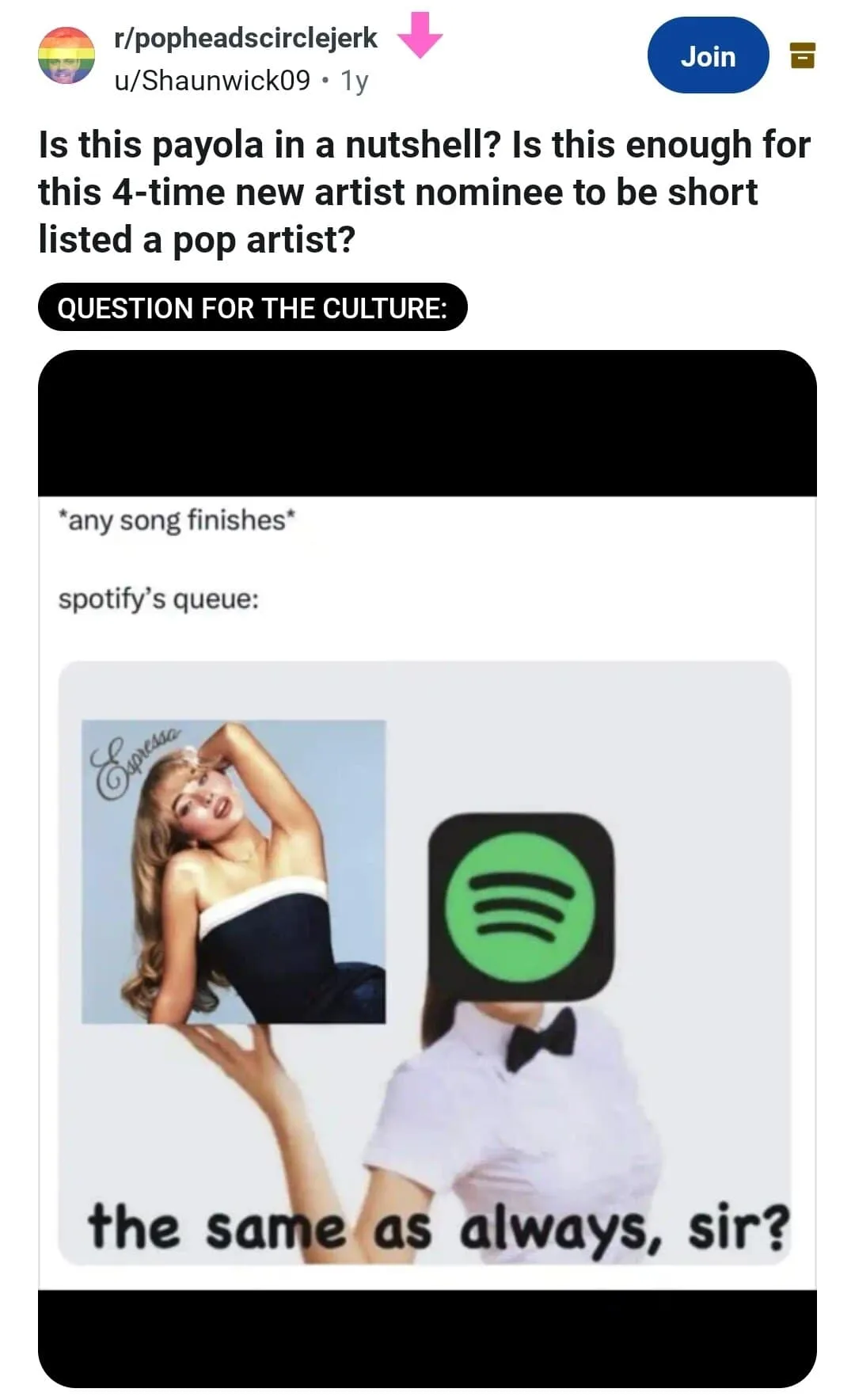
In that same thread, people were talking about blocking Sabrina completely. Some even said they were blocking Taylor Swift too.
Yep, Taylor was reportedly doing something similar.
This led to speculation that her label was quietly influencing Spotify’s algorithm to push the track.
There wasn’t any hard proof. But the timing felt too perfect. And it kicked off a big conversation about what counts as fair promotion in the streaming era.
Drake & iHeartMedia: Legal Disputes Over Alleged Payola
In late 2024, Drake filed a legal petition against iHeartMedia.
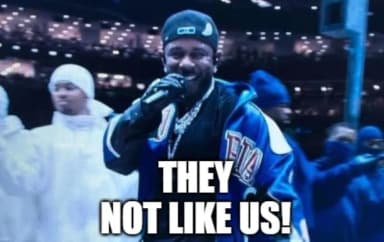
He claimed the radio giant accepted covert payments to promote Kendrick Lamar’s diss track “Not Like Us.” The song called Drake a predator, and he believed it was pushed to go viral with the help of money.
Drake also accused his own label, Universal Music Group (UMG), of planning the whole thing. According to him, UMG paid platforms like iHeart to boost the track without telling listeners. That’s payola.
He wanted iHeartMedia executives to testify. But before it could go further, iHeart shared documents claiming they had done nothing wrong. Drake dropped the petition after that. Both sides called it a mutual resolution, but Drake’s team later said iHeart hadn’t actually provided any documents.
That part ended quietly, but the bigger case is still active.
Drake also sued UMG for defamation. He said they approved and promoted a song they knew contained false and dangerous claims about him. He said the rollout led to threats, harassment, and real-world safety concerns.
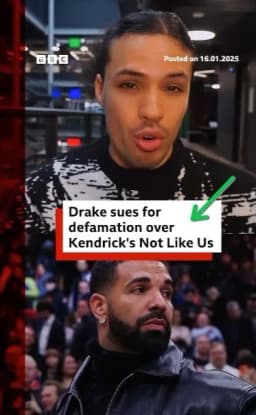
And while all this was happening, Kendrick performed “Not Like Us” at the Super Bowl. The track now has over a billion streams.
If you think payola is just a small-time scam, remember this: it caused legal chaos between some of the biggest names in music. The impact doesn’t stop at chart numbers. It cuts into trust, reputation, and careers.
Cardi B: Addressing Payola Accusations Head-On
When Cardi B’s song “Up” hit No. 1 on the Billboard Hot 100 in 2021, people didn’t just celebrate, they started pointing fingers.
Accusations of payola popped up online.
Cardi clapped back hard. She shared stats showing “Up” had way less radio play than other songs in the top 10 at the time.
Just 24% of its chart momentum came from radio, while songs like “Driver’s License” had over 50%.
Her message was clear:
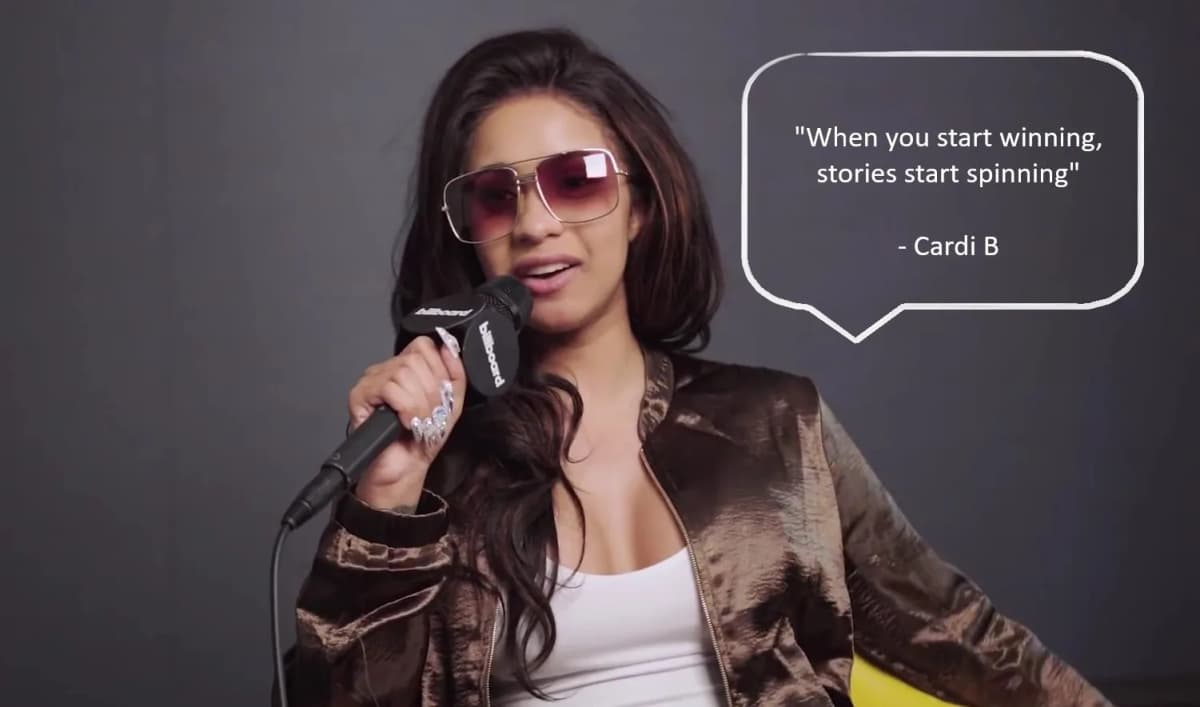
She credited the success to TikTok, fans, and the wave her music created. Not shady deals.
But that wasn’t the first time she had to address this.
Back in 2018, after her feud with Nicki Minaj got heated, Nicki said on Queen Radio that Cardi built her career on “sympathy and payola.”
Cardi’s team responded, calling the claims “absolutely false.”
They said her manager at the time, Klenord “Shaft” Raphael, pushed hard to get her on the air, but never crossed the line.
Still, some radio personalities, including Funk Flex, backed Nicki’s claims.
They said there was pressure behind the scenes to spin Cardi’s records.
So what’s the truth? It depends on who you ask.
But when the same word keeps showing up in different places, people start paying attention.
One accusation can feel like hate. Two starts looking like something worth watching.
Either way, it shows how fast the payola label can get thrown around, and how messy things can get, even at the top.
HYBE & K-pop: Chart Manipulation Allegations
For years, fans have celebrated HYBE artists for their massive numbers.
BTS, TXT, SEVENTEEN, ENHYPEN, and their millions of albums sold in week one. Charts shattered. Records broken.
But in 2024, those numbers came under fire.
Korea’s Ministry of Culture confirmed it received an official complaint about chart manipulation involving BTS and their label, HYBE.
The accusation was about sajaegi, a serious issue in K-pop that means inflating chart numbers through bulk buying or fake accounts.
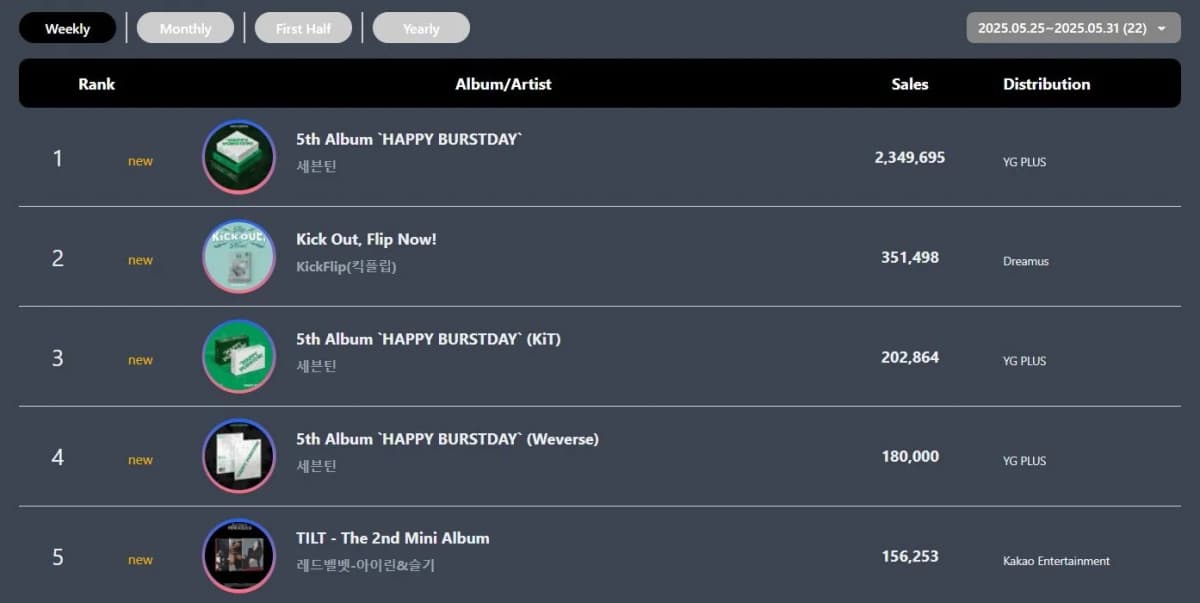
Btw, I'm not defaming any song on this chart.
All I'm trying to say here is: If you're ranking on any chart like this using bots or fake accounts, that means you fall under Sajaegi.
You wanna learn more about this term?
Well, here you can learn all about it: The REAL Truth Behind Chart Manipulation in K-Pop
These claims first came up in 2017. Back then, someone threatened to expose HYBE’s internal practices.
Now the investigation has been reopened. KOCCA, the Korean Creative Content Agency, is looking into it.
HYBE has denied the accusations every time. They said BTS’s rise came from real fans, not artificial boosts.
But while that case was picking up speed, HYBE’s COO admitted something else. He confirmed that some staff had used return-based album sales to inflate launch numbers.
Here’s how it worked. Distributors would receive more albums than they ordered. Whatever didn’t sell could be returned later. This made it look like the album sold more than it actually did during the first week.
HYBE said it was just a small percentage of total sales and promised to stop doing it. Still, the damage was already done.
Because chart manipulation, whether proven or not, affects trust. It affects award shows, sales targets, and even how fans see the artists.
Once questions are raised, they’re hard to ignore. And the bigger the name, the louder the fallout.
Alan Freed: The 1950s Payola Scandal
If you ever thought payola was a recent hustle, let me take you back to the 1950s.
Alan Freed wasn’t just any DJ. He was the guy who coined the term “rock and roll” and used his platform to push Black and white artists on the same stage, during a time when that was rare.
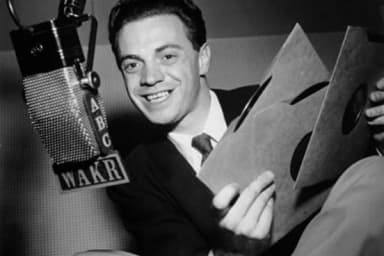
He helped turn the genre into a movement. But in 1960, he became the fall guy for the first major payola investigation in U.S. history.
Back then, radio DJs had serious power. Labels would pay them under the table to play certain records more often. Freed was one of the most influential names in music. He was also one of the most public about his role in promoting artists.
That worked against him.
When Congress started investigating the music industry, Freed refused to deny he had ever accepted payments. He wouldn’t sign a statement saying he hadn’t taken bribes.
Other DJs cleaned up their image, played polite, and got to keep their careers.
Freed didn’t.
He lost his radio shows, his reputation, and eventually everything else.
He died just a few years later, broke and blacklisted from the very industry he helped build.
But the legacy of that moment still lives on.
The scandal led to a change in U.S. law. Since 1960, anyone being paid to promote music must legally disclose it. That’s the same law people are skating around today when they take money for playlist placement without transparency.
Freed’s downfall was a warning shot and it still matters now.
Because whether you’re a DJ in the 50s or an influencer, pay-for-play without disclosure isn’t just risky. It can cost you your career.
✅ The Smarter Route: Pitching, Not Paying
If you want to grow through playlists, you have two options:
- Pay for numbers
- Build a real audience
Let’s break it down.
🎯 The Payola Route
This is what the quick-fix sellers push.
- You pay to be placed, no matter what the song sounds like
- There’s no real curation
- You end up on ghost playlists with bots or random listeners
- Your numbers go up for a few days, then disappear
You don’t get fans.
You don’t get saves.
And your algorithm data gets messy.
✅ The Real Route
Here, you’re not paying for placement.
You’re paying for access to real curators.
They actually listen. If your track fits, they add it. If it doesn’t, they pass.
There’s no guarantee. But if it lands, it lands with the right people.
And those people might follow you.
They might check your artist page.
They might stick around for the next release.
That’s the kind of growth that lasts.
Remember this:
Payola is a transaction.
Real marketing is a connection.
If you want a spike, pay for exposure. You gotta earn it.
🧠 Things That Actually Builds Your Audience (No Payola)
#1 - Pitch Like a Pro and Stay Consistent
Pitching isn’t a one-time thing. It’s a habit.
If you’re sending one pitch and hoping for magic, you’re already behind. The artists who win treat pitching like part of their job.
Start small. Aim for five solid pitches a week.
Keep it short. Personal. Respectful.
💡 Here’s a template for you that actually works:
“Hey [curator name], loved the energy of your playlist. Just dropped a track that I think could fit the vibe. Would love if you gave it a listen.”
[Spotify link]
You keep doing it like this, and you’ll build momentum in a few days. Curators will start noticing you and something like this leads to good relationships.
#2 - Let SoundCampaign Handle it for You
You could spend hours researching emails. But at some point, constant pitching starts to look desperate when people already know you because of your music.
Sure, pitching works great early in your career. But later on, it can tamper with your image more than help it.
That’s where SoundCampaign helps you submit a track to genuine Spotify playlist curators. This is how it works:
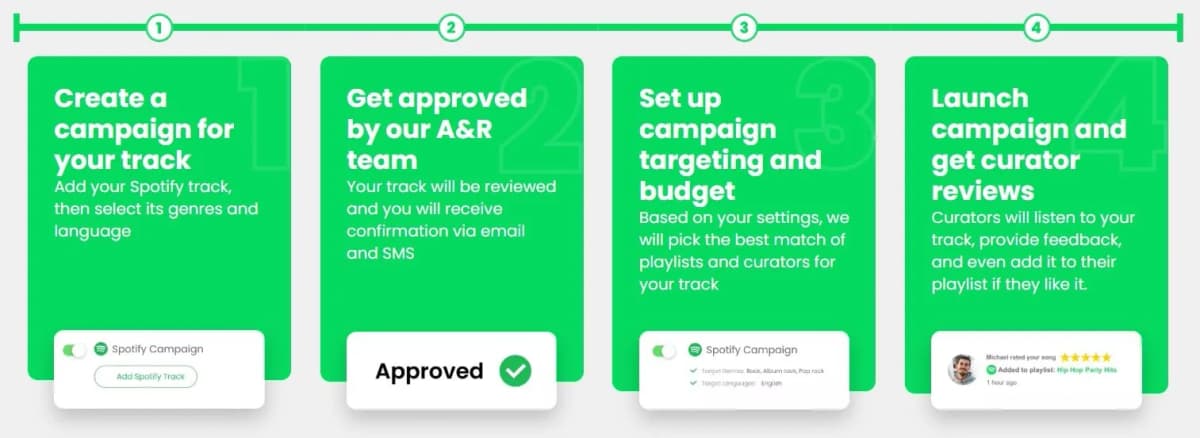
In other words, we talk to the curators on your behalf. They listen. If it fits and they really like what you’re cooking, they’ll definitely add it. If not, you still get feedback.
So there are no bots or practice of payola involved.
It’s not pay-for-play, it’s pay for access. And access leads to traction.
You get it now why we’re different from payola? What Kendrick said?
#3 - Turn Every Playlist into a Moment
This is where most artists miss the mark. They get added to a playlist and move on. But every single placement is a story.
Turn it into content:
- Thank the curator publicly
- Post a clip of the playlist scroll
- Add it to your Highlights
- Link it in your bio
- Send a DM to your followers with the playlist link
People don’t remember streams. They remember how you showed up.
#4 - Train the Algorithm
Spotify’s algorithm doesn’t care about your genre. It cares about listener behavior.
If people skip your song after ten seconds, it doesn’t matter how many streams you purchased. But if people finish the song, save it, and come back?
That’s algorithm gold. And something like that only happens naturally.
So build smarter. Use playlisting (especially with SoundCampaign) to target the right audience, not just big playlists.
The goal is to train Spotify who your fans are, so it can send more your way.
That’s how you make radar playlists, get on Discover Weekly, and long-term traction.
#5 - Think Like a Founder, Not Just an Artist
You’re not just dropping songs. You’re building a system.
Every release is a mini launch. Every pitch is a cold email. Your branding, your visuals, your profile, that’s your website.
When you start thinking like a founder, things shift:
- You build with intention
- You measure what matters
- You optimize your next drop
- You stop needing luck
This is where real growth happens. Not in “going viral,” but in building a machine that moves with or without the hype.
🧭 Final Word: The Best of Both Worlds
Here’s the truth most people don’t want to hear:
Good music isn’t enough. But bad music with great marketing won’t work either.
You need both.
Joji didn’t blow up just because he had talent. He made something people felt.
And then, he dropped it where people were already looking for new music. Spotify, YouTube, social media, etc.
That’s the balance.
You don’t need to fake streams or chase shortcuts. You just need songs that hit, paired with a strategy that respects the listener.
So make the best music you’ve ever made. Then go all in on getting it heard the right way.
Because when you combine art with execution, you’re ready to kill the scene.

Gründer & CEO von SoundCampaign
Ich bin Nadav. Bevor ich das hier aufgebaut habe, habe ich selbst Musik gemacht, und genau daher kommt mein Interesse an Marketing. Am liebsten beschäftige ich mich mit den Analytics: woher Streams kommen, was sich bewegt hat und was nicht. Ich habe SoundCampaign gegründet, um Artists echte Reichweite zu geben. Das hat deutlich mehr Zeit und Aufwand gekostet, als ich geplant hatte, und daran hat sich bis heute nicht viel geändert.
Bewirb deine Musik
Echte Playlist-Platzierungen, TikTok-Videos & Meta-Anzeigen

Vertraut von 100.000+ Künstlern & Labels
Keine Bots, niemals.
Echte Case Study
Wie SoundCampaign Grant Knoche vor 460.587 Hörer für WOOHOO brachte
Ganze Geschichte lesen
Bereit, mit deiner Musik gehört zu werden?
Schließe dich Tausenden unabhängigen Künstlern an, die mit SoundCampaign echte Playlists, Creator und Fans erreichen, mit ehrlichem Feedback bei jedem Schritt.
- Keine Bots, niemals
- KünstlerschutzprogrammWenn ein Kurator oder Creator deinen Track nicht bewertet, erstatten wir dir dein Guthaben. Dein Budget ist immer geschützt.
- Behalte 100% deiner TantiemenWir sind ein Promotion-Service, kein Label. Wir behalten niemals einen Anteil deiner Streams oder Tantiemen ein.