Promotion Musicale
What is A&R Meaning in Music - Do You Still Need It in 2026?

Nadav Peleg
Mis à jour · 7 min de lecture
A&R stands for Artists and Repertoire. Learn what A&R means in music, how its role changed, and whether independent artists still need it.


A&R meaning stands for Artists and Repertoire. It's the team inside a record label that finds and signs new artists. For decades, getting an A&R to notice you was the main way to build a career.
That's no longer true. Streaming and TikTok now let artists drive their own discovery, and many build real audiences with no label at all.
Let me show you what A&R actually means today, and whether you still need it.
What Is A&R in Music?
A&R, short for Artists and Repertoire, is the division of a record label that scouts new talent and develops it into a commercial act. The role really comes down to two jobs:
- A filter that decides who the label bets on
- A support system that shapes what those artists put out
For most of the music industry's history, A&R was the limitation. After all, they used to decide who gets the label's money and resources.
The role goes well beyond signing a name on a contract. A typical music A&R rep juggles several things at once:
- Scouting and signing talent, the part most people picture
- Artist development: turning a raw act into a finished one
- Producer and songwriter matchmaking, getting the right collaborators in the room
- Commercial direction, from song selection to release strategy
It's also where labels park serious money. According to the IFPI's Global Music Report 2026, record companies invested roughly $8.1 billion globally in A&R and marketing in 2024, spending the IFPI describes as central to how labels back their artists. That budget is the real reason A&R carried so much weight. A yes didn't just mean approval, it meant funding, a team of your own, and an actual push.
How Did A&R Work in the Traditional Music Industry?
In the traditional model, A&R was the primary filter between an artist and an audience. If you wanted to reach listeners at any real scale, a label had to pick you first, and an A&R rep was the person making that call. Their yes was the on-ramp to the studio budget, the distribution, the radio play, and the press push behind a release.
Discovery ran on relationships and gut. A&R reps found talent the analog way, scouting live shows and leaning on industry contacts. A strong demo could break through too, but most signings came from someone the label already trusted. There was no public dashboard of streaming numbers to check, so the call came down to a rep's taste and track record.
This is because labels controlled the few channels that reached listeners. Radio play and record sales both ran on label money. So did the music television of that era.
An independent artist had almost no way in. The development work A&R is known for only kicked in after a label had already let you in. That work shapes a raw act into something ready for the market.
How Has A&R Changed in the Streaming Era?
A&R survived the streaming era, but it moved downstream. Discovery used to start with a scout's instinct. Now it starts with platform data, and the label often shows up only after an artist has already proven demand.
The filter still exists, the audience just reaches it first. Streaming and short-form video are the reason behind it. Discovery now runs through platforms like Spotify, TikTok, and YouTube instead of a label's front office. Spotify alone hit 761 million monthly active users in early 2026, and TikTok and Luminate reported that 84% of the songs entering the Billboard Global 200 in 2024 had gone viral on TikTok first. A room full of demos can't compete with that kind of signal.
Platforms like SoundCampaign handle part of what A&R once did. This includes getting your music to curators and listeners early. Labels follow the numbers and we deliver it.
A former major-label staffer, in an r/musicindustry AMA, summed up the new logic:
How does a new artist really break into the scene? How does one send music to labels in an affective way
View original comment on Reddit ›To be real, there isn't much point in sending major labels your music. It communicates that you need them and labels don't want artists that need them. Labels wanna discover artists that are already doing their thing.
Put yourself in an A&R's shoes: you're on year 2 of a 3 year contract with a label, there's huge...
Now the traction comes first and the deal follows. That same shift has let a wave of independent artists skip labels altogether, building audiences on their own terms.
That early traction without a label or A&R is the gap that most modern music promotion platforms like SoundCampaign filled.
Do Artists Still Need A&R in 2026?
It depends on what you're building because A&R is no longer the only path to success. Some artists grow without ever pitching a label, while others still gain a lot from one. The real divide isn't major versus independent, it's whether an artist is funded or not. Talent rarely runs out. Runway does.
This clearly explains it:
Why artists still need a record label in 2026 (and why most don't realize it)
In 2026, artists don't need record labels to upload music, but they still need them to scale. Funding, marketing, visuals, ads, PR, touring, playlist relationships, priority pitching, coordinated release strategies, data, analytics, storytelling, and industry relationships all create the real divide: not major vs. independent, but funded vs. unfunded.
When is A&R still worth it?
A&R still earns its place when the goal is scale. One artist in that thread put it plainly: even now, you "still need them to scale." That logic holds for acts chasing a major-label deal or building toward a large, lasting career. It also applies when a release needs high-budget development, the studio time, music videos, and touring support that's hard to self-fund.
A label with a strong reputation can push a record through a crowded market as well. For anyone trying to break into the music industry at that level, A&R and the money behind it still makes sense.
When can you skip A&R?
You can skip A&R when you're releasing independently and growing through channels you already control, where the momentum comes from your own posting and the curators who pick you up. This route fits independent releases, DIY marketing, social-media-first growth, and playlist-driven discovery. In one r/musicindustry discussion, a Redditor who used to manage artists said:
View original comment on Reddit ›It REALLY REALLY REALLY depends on the label. I've seen some who do it really well and I've seen others who completely drop the ball. What I mean by "it" is market and promo. When I was managing artists, the best labels had a marketing team and we had meetings with them to plan the release. The worst labels had no one and didn't do shit to push the release...
What Replaced Traditional A&R?
When A&R stepped back, discovery spread out across new channels. The job of finding and validating new music is now split across playlists, algorithms, short-form video, and fans, with no single gatekeeper required. Each piece does some of what a scout once did.
Playlists are the clearest replacement. Spotify's editorial and independent curators surface artists at a scale no A&R team could match. According to Spotify's Loud & Clear data, its Fresh Finds program alone has helped fans discover more than 70,000 artists from over 100 countries, and more than 1 in 10 artists now earning over $100,000 a year on Spotify were first playlisted there. Getting onto Spotify playlists has become a real way to put your releases out there.
Algorithms carry much of the rest. Spotify's Discover Weekly, Release Radar, and Radio, and YouTube's recommendation, push music to listeners automatically. Here's an interesting thread where you can witness the real potential of these platforms:
How I Got to 20k Monthly Listeners and Triggered the Spotify Algorithm
Last year I peaked around 5k monthly listeners. Right now I'm sitting around 21k monthly listeners and most of it came from just 4 releases. More importantly: most of my streams are now coming from Spotify's algorithmic sources (Radio, Discover Weekly, Release Radar, etc.) instead of playlists. That's the key difference...
TikTok does a lot of the rest. Most of today's chart hits blow up there first, and fans pass songs around on their own. By the time labels notice, the audience has usually already decided.
How Do Independent Artists Grow Without A&R Today?
They do it themselves, one release at a time. Finding the sound and building an audience used to be the A&R's job. Now it's the artist's, and plenty pull it off without ever signing a thing. The playbook is consistent across most of them:
- Release consistently. Drop something every few weeks and the algorithm keeps getting fresh data to chew on. Go quiet for months and it forgets you fast.
- Lean on streaming and playlists. Those first streams matter most, since early plays and playlist adds tell Spotify who to show you to.
- Treat each release as a test. Every drop shows what really connects before you spend time and money on the next one.
- Let short-form video do the early lifting. A lot of acts find their first real traction on TikTok, Reels, and YouTube Shorts, long before any label is watching. The right music marketing tools keep that grind from eating your whole week.
- Own the relationship with your fans. A label can rent you an audience. An email list and a real community are yours to keep.
Is A&R Dead?
A&R is alive, just no longer the center of gravity. Labels still sign and develop artists, with real money behind them, so the function isn't going anywhere.
What's changed is its position. A&R now sits later in the process, validating the traction platforms surfaced rather than discovering it first.
Discovery itself has scattered across playlists, algorithms, short-form video, and direct fan communities. That spread is what gives independent artists more control than they've ever had. You can build an audience and prove demand on your own, then decide whether a label even fits your plan.
The takeaway is simple. Success today runs on visibility, the systems that put your music in front of real listeners and let the response speak for itself. A label's approval is one route to that, no longer the only one.

Fondateur et PDG de SoundCampaign
Je suis Nadav. Je faisais de la musique avant de construire tout ça, et c'est vraiment de là que vient mon intérêt pour le marketing. Ce que je préfère, c'est la partie analytique : d'où viennent les streams, ce qui a bougé et ce qui n'a pas bougé. J'ai fondé SoundCampaign pour donner aux artistes une exposition réellement authentique. Ça m'a pris bien plus de temps et d'efforts que prévu, et ça n'a pas vraiment changé depuis.
Promouvoir ta musique
Vrais placements en playlist, vidéos TikTok et publicités Meta

La confiance de 100 000+ artistes et labels
Jamais de bots.
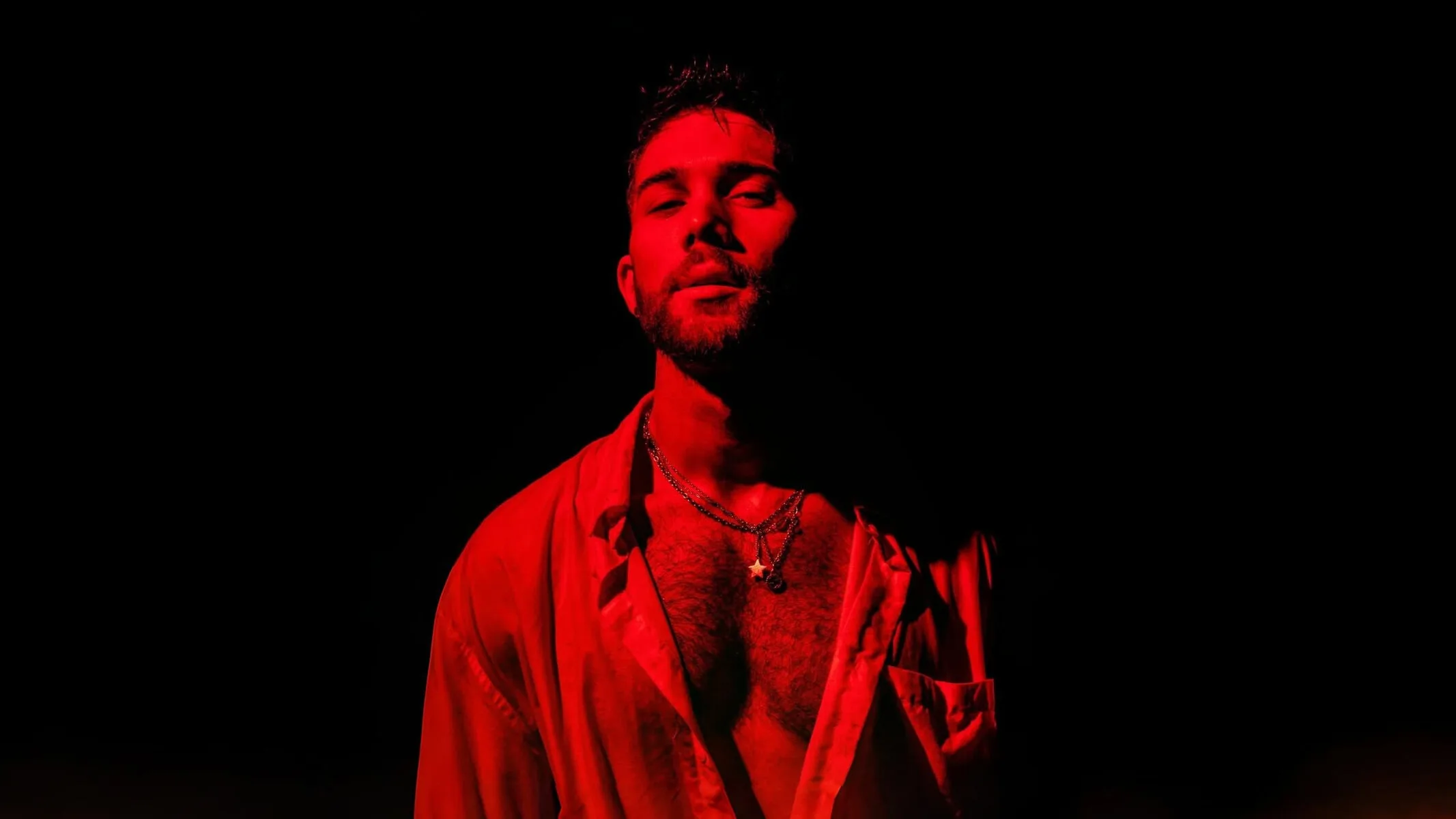
Étude de cas réelle
Comment SoundCampaign a mis Grant Knoche devant 460 587 auditeurs pour WOOHOO
Lire l'histoire complète
Prêt à faire entendre ta musique ?
Rejoins des milliers d’artistes indépendants qui utilisent SoundCampaign pour atteindre de vraies playlists, des créateurs et des fans, avec un retour honnête à chaque étape.
- Jamais de bots
- Programme de protection des artistesSi un curateur ou un créateur n’écoute pas ton titre, on te crédite en retour. Ton budget est toujours protégé.
- Garde 100% de tes royaltiesOn est un service de promotion, pas un label. On ne prend jamais de commission sur tes streams ou tes royalties.