Promozione Musicale
Music Promotion Scams to Avoid: Industry's Truth Revealed

Nadav Peleg
Aggiornato · 9 min di lettura
I've watched many good artists get burned by the same pitch. So, I know what music promotion scams to avoid in the industry. Let me tell you how it works.


On this page
- How can you tell if a music promotion service is a scam?
- What are the most common music promotion scams in 2026?
- Can fake music promotion hurt your Spotify profile?
- What should you look for in a legitimate music promotion platform?
- How does SoundCampaign help artists avoid music promotion scams?
- What is the safest way to promote music?
- Summary
I've watched too many good artists get burned by the exact same pitch. So, I know what music promotion scams to avoid in this industry.
Let me tell you how it starts.
A DM lands. A playlist placement gets offered. The price is low enough to feel like a no-brainer. You agree. Three weeks later, the streams disappear, the analytics are cooked, and the "curator" won't respond.
The damage runs deeper than the money. Fake streams poison your Spotify data and can get your track pulled entirely. So before you spend a dollar on promotion, read this.
How can you tell if a music promotion service is a scam?
You can spot a scam the moment a music promotion service guarantees a specific outcome. This is what I saw in one of my friend's DM a couple weeks ago. Even though this is an AI generated image, don't trust it even if it's beautifully designed with the same figures and promises.
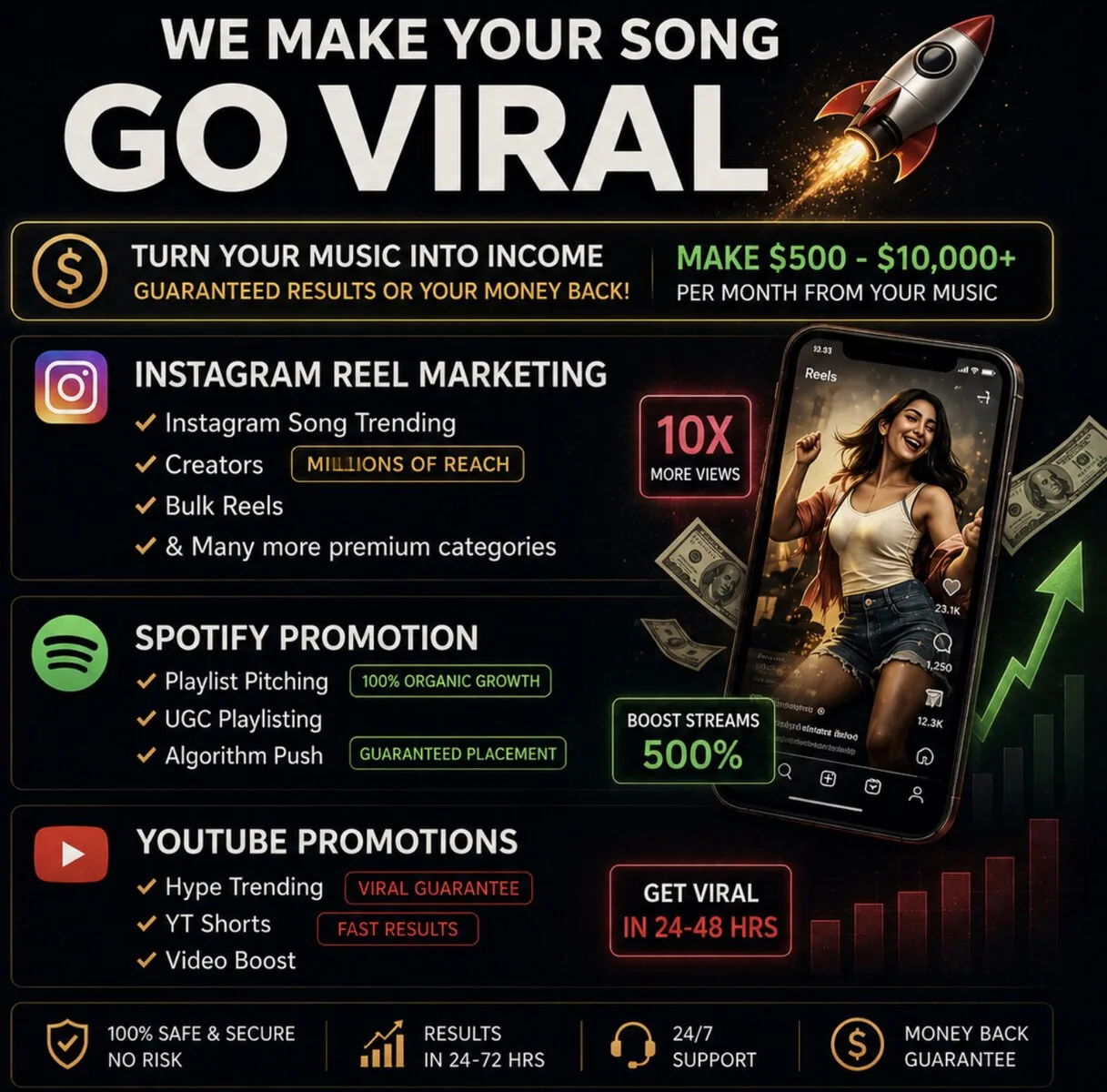
Most scams I've observed in my career look like this:
- Guaranteed streams or followers. Real exposure can't be sold by the unit
- "Viral in 30 days." Virality is an outcome you can't buy off a shelf
- Vague answers about how the promotion actually works
- No named playlists or curators you can click and verify
- Testimonials you can't trace to a real artist or profile
- High-pressure tactics including countdown timers, "prices go up tonight," limited spots
Knowing how to avoid scams in music promotion mostly comes down to one habit. Just slow down and verify before you pay.
Here's the gut-check I run on any offer:
What are the most common music promotion scams in 2026?
The most common music promotion scams fall into four buckets: guaranteed streams, fake playlist placements, streaming-bot campaigns, and fake PR.
Are guaranteed Spotify streams a scam?
Guaranteed Spotify streams are almost always a scam. Spotify itself warns artists away from any third party that guarantees streams or placements, and says those streams are typically artificial. When a seller promises 50,000 streams for a flat fee, those streams come from bots or click farms instead of fans.
The risk lands on you, not the seller. In 2026, Spotify's policy is getting more brutal. Streams it flags as artificial earn no royalties, don't count toward your public numbers, and won't help your recommendations.
A real way to grow streams is getting into genuine playlists or Spotify's Discovery Mode that works inside its own system.
Are fake playlist placements worth paying for?
Fake playlist placements are never worth paying for, even when the price seems like a good deal. A fake playlist carries a big follower count and almost no real listeners, so your song lands somewhere nobody hears.
You can catch one in seconds. Click the playlist's creator: if the profile has no picture and a handful of followers, it's a front for fake streams. One artist documented spending close to $1,000 chasing placements, then watched Spotify quietly remove most of them from his analytics weeks later.
...Spent $1,000 On Spotify Playlist Placements This Past Month And This Is The Results...
I spent $915 on Spotify Playlists total + the $77 with the dude above for $992. $315 of that being me basically setting my money on fire because I was scammed. So I spent about $700, for a total of about 20,000 REAL Spotify streams, about a 1,000 total song saves and exactly 17 new Spotify followers. I bought 15 total Spotify Playlist placements, and only 6 of them ended up being legit.The engagement gives it away too. A real placement brings saves, follows, and people who finish the song. A bot placement brings a spike of streams and silence after.
How do streaming bot campaigns work?
Streaming bot campaigns work by running fake accounts and scripts that stream your track on repeat, usually through cheap proxies. Spotify defines exactly that, any stream from automated processes like bots or scripts, as artificial streaming.
I'm not sure if you've experienced those spikes before, but they look like this:
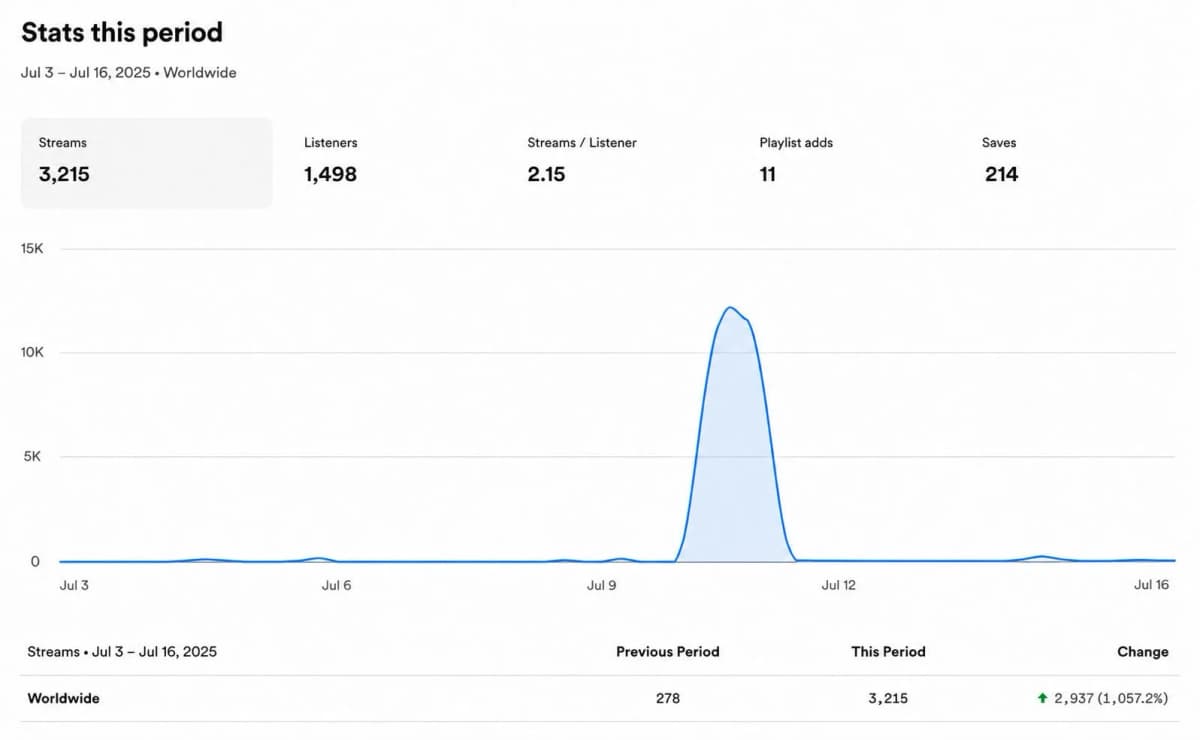
Recently, detection has gotten sharp. A 2023 study by France's Centre National de la Musique, using 2021 data, found that 1 to 3 percent of all streams in the French market were fraudulent, with most long-tail fraud coming from automated bots.
The long-term cost is what makes bot campaigns so dangerous. As of 2026, a track needs at least 1,000 genuine streams in a rolling 12 months before it earns any royalties on Spotify, and distributors can be charged a per-track penalty (reported at the time as 10 euros) just in case artificial streaming is detected.
In the year before September 2025, Spotify removed more than 75 million spammy tracks. Bots don't just fail to help. They put a target on your release.
Are fake music PR services a scam?
Plenty of music PR is legitimate. This is exactly why the fake versions hide so well. A scam PR service sells you "guaranteed" blog features, magazine write-ups, or radio spins that never appear, or that land on sites no real reader visits.
The tells are specific. They show you a giant media list but won't name one editor who has agreed to anything. They blast identical automated pitches to thousands of inboxes and call the bounce-backs "outreach." BMI has warned songwriters about exactly these solicitations. Real PR sells effort and relationships, and no honest publicist promises a headline.
Can fake music promotion hurt your Spotify profile?
Fake music promotion can quietly damage your Spotify profile, even when you never bought a single bot yourself. Artificial streams distort the data Spotify uses to read your audience. Once your stats fill with bots, the recommendation system cannot tell who really connects with your music. So it stops pushing your songs to real listeners.
Detection is a real risk too. Spotify publishes monthly artificial-streaming reports and shares them with distributors. Flagged streams get stripped from your totals and royalties. Sometimes a third party drops your track into a bot playlist without your knowledge. You still take the hit.
One artist on r/musicmarketing had an entire album pulled for artificial streams after promoting only through Spotify's own paid tools.
Spotify removed my album and I'm devastated. I only promoted through Spotify.
I released an album last year. The only promotion I paid for was through Spotify official platforms (Showcase, Marquee) it got around 80k plays. Today they removed it due to artificial streams. I have no label, no manager, no ‘team’, I DID NOT submit to any playlist service of any type. The entire album was taken down.
It gets worse when a distributor steps in. Another artist in the same thread was told to pay $50 per song to keep his music live after a "botted streams" flag he disputed, a demand that vanished once a lawyer got involved.
View original comment on Reddit ›Did Spotify remove it or did your distributor? I had a similar occurrence happen, except Distrokid emailed me informing me that my streams were "botted" (they definitley weren't, we had over 50k monthly at that point, and haad that number for like 4 months lol, and I don't spend money anywhere for music promo). They told me I need to pay 50 bucks per song affected (12 ssong x $50 = $600) to keep my music up. They claimed Spotify was threatening, but some quick research showed that Distrokid was doing this internally, not Spotify. Long story short, I had my lawyer send them a letter and it all magically disappeared.
Now you must be wondering, can anyone ruin your Spotify like that? Of course, until or unless you don't have any friends or enemies. The only way to protect your presence is being alert. Whenever you find your song on a suspicious playlist, don't let it go. Just go ahead and report it as fast you can. Spotify lets you flag artificial playlists directly, and acting early limits the damage.
Otherwise, you'll go through this loop:
What should you look for in a legitimate music promotion platform?
Look for a platform built on four things: real curators, a transparent process, honest feedback, and results based on audience fit instead of guarantees.
Does the service work with real playlist curators?
A legitimate platform connects you with real, named curators who choose whether to add your song. Click through to their playlists and check for real followers and engagement. If you can't find a human behind the playlist, assume there isn't one.
Is the promotion process transparent?
A trustworthy platform shows you exactly how your campaign runs. You see where your song goes and who reviewed it. Hidden methods and vague "proprietary networks" are where fake streams live.
Do artists receive honest feedback?
The best platforms hand you honest curator feedback, even when it stings. A "no" with a reason is worth more than a thousand bot streams, because it tells you something real about the song.
Are results based on audience fit rather than guarantees?
Real results come from matching your song to the right audience rather than chasing a guaranteed number. For independent music promotion that compounds as audience fit beats raw volume every time. If you're planning a release, my guide on how to promote your music walks through the legitimate channels that worth your time.
|
Feature |
Legitimate platform |
Scam service |
|---|---|---|
|
Curators |
Real, named curators who opt in |
Anonymous accounts or bot playlists |
|
Process |
Transparent, you see where your song goes |
Hidden "proprietary" methods |
|
Guarantees |
None, built on audience fit |
Guaranteed streams, followers, virality |
|
Feedback |
Honest reviews, even a no |
None, or fake testimonials |
|
Results |
Real saves, follows, finished listens |
Play spikes that vanish |
|
Your profile |
Stays safe and clean |
Risks takedowns and penalties |
How does SoundCampaign help artists avoid music promotion scams?
I started SoundCampaign in 2018 because I kept watching artists get trapped. Payola and fake stream guarantees had taken over the market, and there was nothing built specifically to protect artists from them.
Every playlist in the network went through a waiting list and manual review before joining. The moderation team checks each one for genuine followers, real engagement, and a genre focus that actually matches what's on it. A playlist that doesn't clear that bar stays out. That review happens before your track or your money enters the picture.
When you run a campaign, a matching algorithm connects your track to curators by genre, language, and audience profile. You choose the track, set the genre, and the system finds the right match.
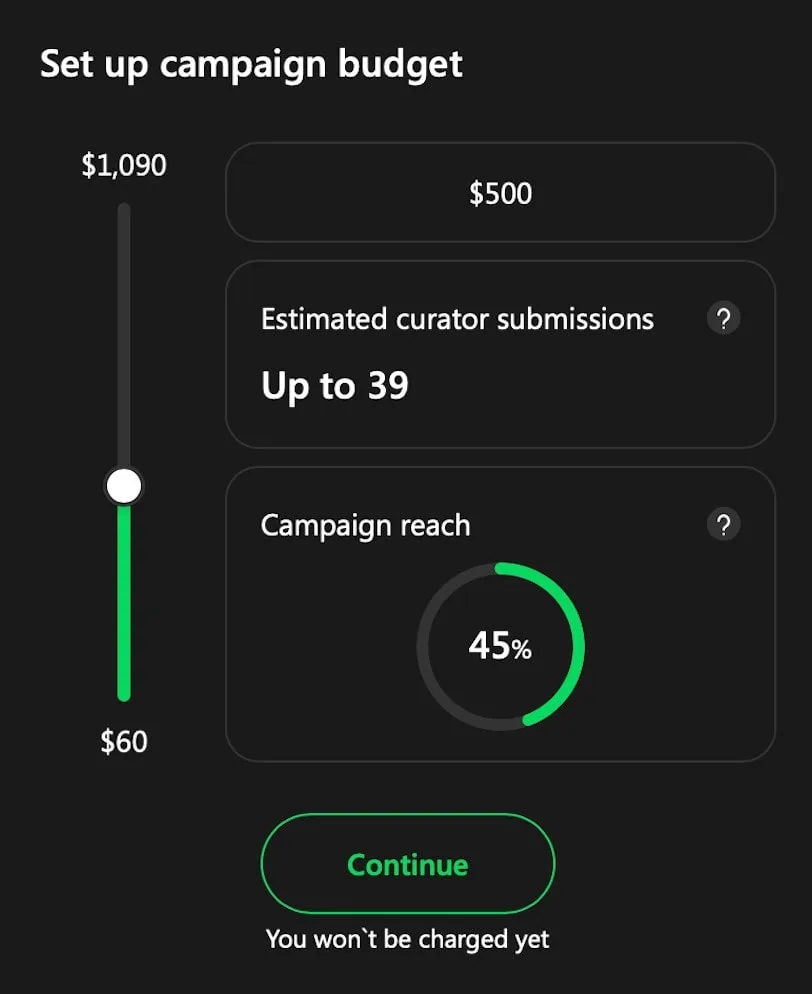
They listen. They add it or pass. When they pass, they write you why. That curator note is what separates this from every fake service in this article, because bots don't have opinions about your song.
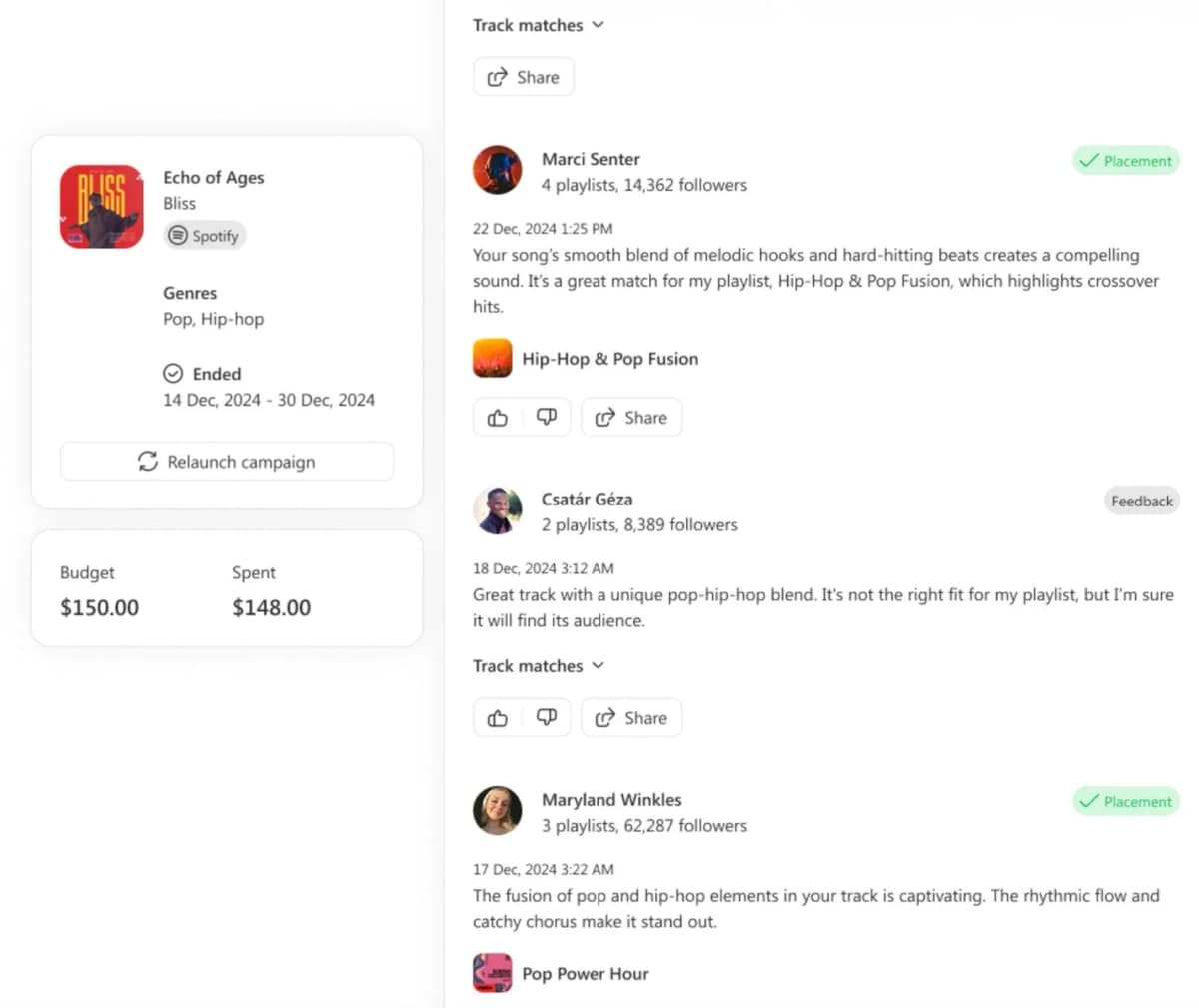
There are no guaranteed placements. No honest service can promise those as curators make their own calls. What SoundCampaign promises is that real people hear your track. If a curator takes your submission without leaving feedback, our Artist Protection Program refunds those credits automatically.
What is the safest way to promote music?
Verify every service before you pay, and chase real listeners over raw numbers. Scammers count on you skipping the homework.
Search the service name alongside the word "scam" and read what real artists report. Click through to the playlists and verify real followers and engagement. Walk away from any guarantee of streams, followers, or virality. Judge results by saves, follows, and finished listens rather than raw stream counts. Diversify your channels instead of betting everything on one platform. Only work with services that are upfront about how they work. Do that, and most scams fall apart before they reach your wallet.
Summary
Music promotion scams survive on one thing. The hope that you can buy your way past the hard part. You can't, and the people selling that hope know it.
Real growth is slower. You make something worth hearing, put it in front of real curators and real listeners, and watch who actually sticks. Keep your data clean and your reputation intact, and every future campaign works better for it.
So the next time a DM promises 10,000 streams for $50, you'll know exactly what it is. Close it, and go find the real thing.

Fondatore e CEO di SoundCampaign
Sono Nadav. Facevo musica prima di costruire tutto questo, ed è proprio da lì che nasce il mio interesse per il marketing. La parte che preferisco è quella analitica: da dove arrivano gli streaming, cosa si è mosso e cosa no. Ho fondato SoundCampaign per dare agli artisti un'esposizione davvero reale. Mi è costato molto più tempo e impegno di quanto avessi previsto, e questa parte non è cambiata molto.
Promuovi la tua musica
Posizionamenti reali in playlist, video TikTok e annunci Meta

Scelto da oltre 100.000 artisti ed etichette
Mai bot.
Caso reale
Come SoundCampaign ha messo Grant Knoche davanti a 460.587 ascoltatori con WOOHOO
Leggi la storia completa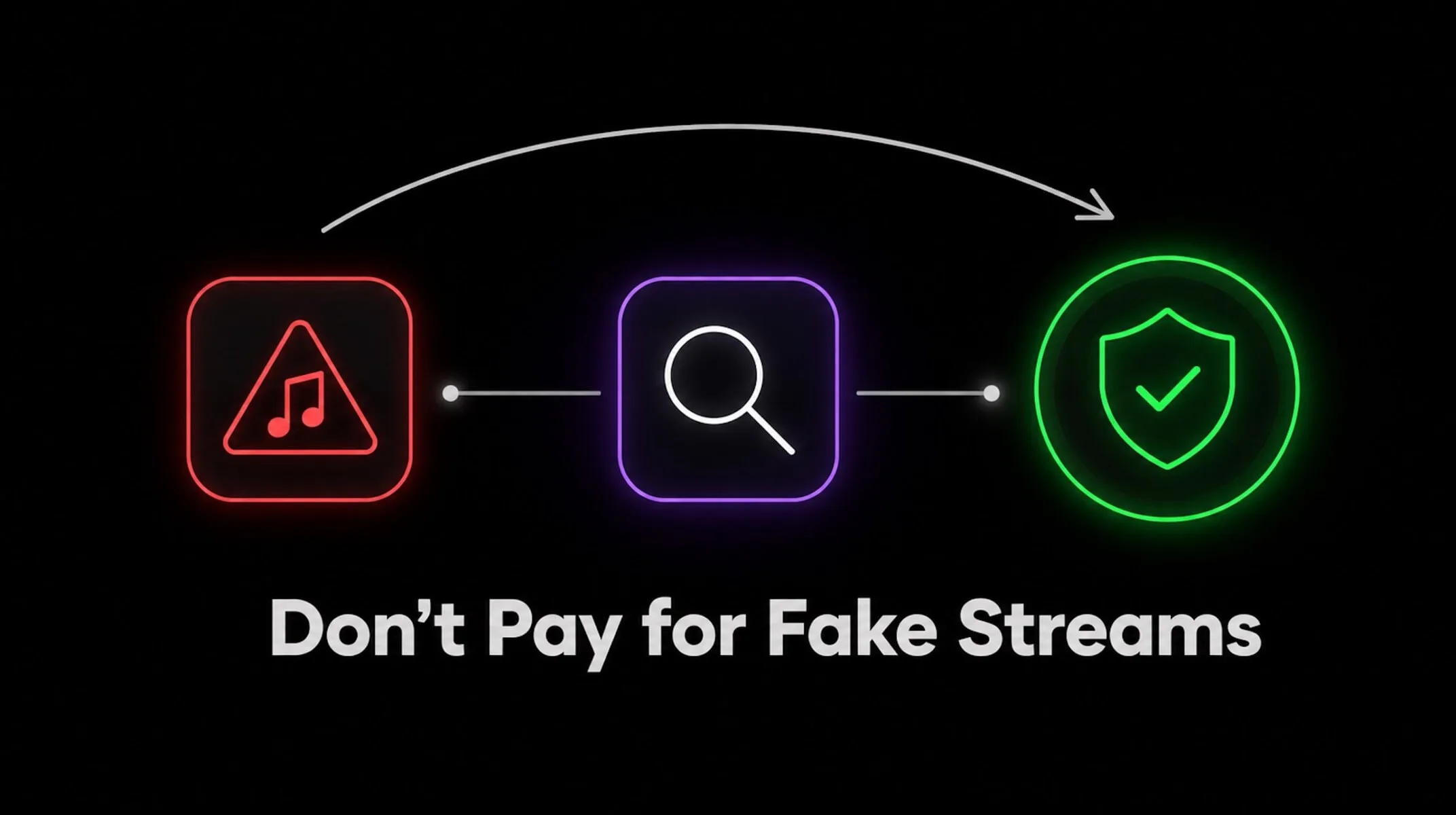
Pronto a far ascoltare la tua musica?
Unisciti a migliaia di artisti indipendenti che usano SoundCampaign per raggiungere playlist reali, creator e fan, con feedback sincero a ogni passo.
- Mai bot
- Programma di tutela dell'artistaSe un curatore o un creator non recensisce il tuo brano, ti restituiamo il credito. Il tuo budget è sempre protetto.
- Mantieni il 100% delle tue royaltySiamo un servizio di promozione, non un'etichetta. Non prendiamo mai una percentuale sui tuoi stream o royalty.