Spotify Promotion
How to Report Artificial Playlists on Spotify (Step-by-Step Guide)

Azfar
Updated · 11 min read
Want to know how to report artificial playlists on Spotify because your track got dropped into one? Keep reading for the solution you've been looking for.


On this page
- What Are Artificial Playlists on Spotify?
- How to Report Artificial or Fake Playlists on Spotify
- What Not to Do When Dealing with Suspicious Playlists
- How to Protect Yourself From Artificial Playlists
- How SoundCampaign Helps Artists Avoid Artificial Playlists
- Additional Tools & Resources for Safe Spotify Growth
- Conclusion
You ever scroll through Spotify and feel like some playlists are a little too perfect? You’re not imagining it.
Spotify’s total music payouts jumped from $1B dollars in 2014 to $10B in 2024.
With that kind of money on the table, fake playlists have become a real problem.
The solution is simple. Artists can push back. Spotify lets you report suspicious playlists inside the app or through support, and those reports help keep the system fair.
If you want steady and safe growth, stick to legit promotion services like SoundCampaign as we work with real curators and filter out fake traffic, so your music reaches actual listeners, and you avoid platform penalties. In fact, we've got a proven track record of successful artists who used our music promotion services.
Anyways, it's time to protect your releases. Let me tell you everything you need to know about reporting artificial playlists on Spotify.
What Are Artificial Playlists on Spotify?
Artificial playlists are Spotify playlists powered by bots instead of real listeners. They fake engagement, inflate streams, and never bring you a real audience.
How Fake Playlists Work
Fake playlists look legit on the surface with nice cover art, big follower numbers, maybe even a catchy name. But behind the scenes, they’re often run by bots or shady networks instead of real music curators.
They “boost” songs by stuffing them into playlists that don’t actually have real listeners. So artists see big stream counts but no real engagement, algorithmic push, and actual fans discovering their music.
Most of the time, these playlists charge artists for placement, deliver inflated bot streams, and can even put your Spotify account at risk.
Signs a Playlist is Using Bots or Fake Streams
Spotting a playlist quality is simple once you know what to look for in a fake playlist. Here are the biggest red flags:
- The playlist has tons of followers but barely any likes or saves on individual tracks
- Your streams spike suddenly, then drop just as fast which is a classic bot pattern
- Most listeners come from countries you’ve never targeted or promoted to
- The playlist’s curator has no online presence, socials, and real track record
- You’re getting streams, but no engagement, followers, or repeat listeners
In fact, your results will look like this:
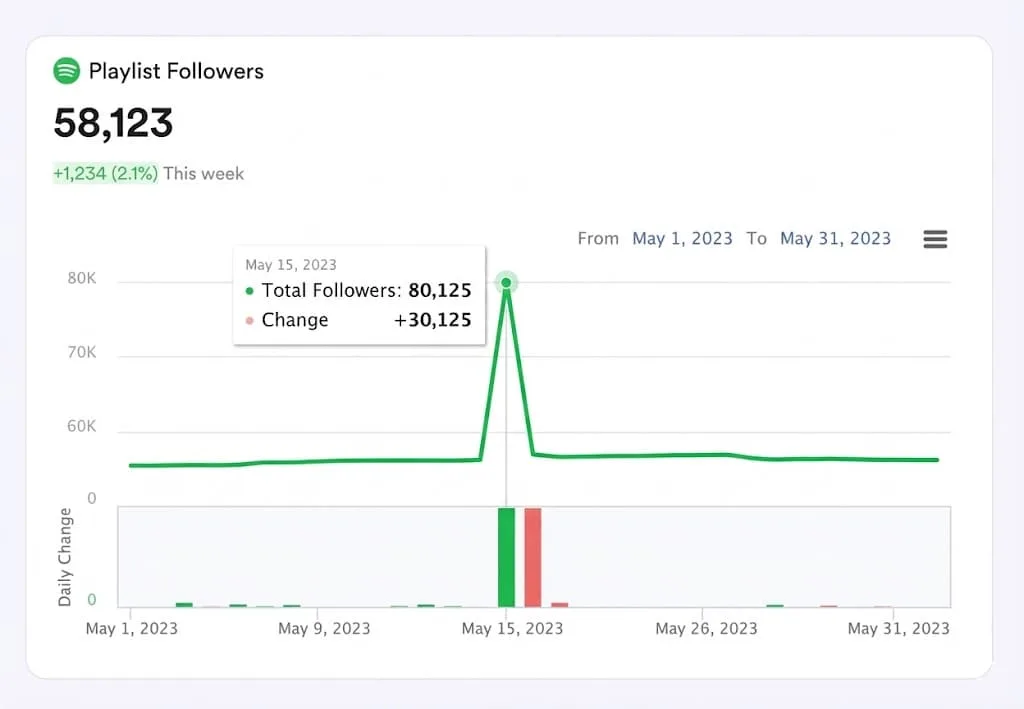
You see? A sudden boost then it's all gone!
Why Spotify Cracks Down on Artificial Streaming
Spotify wants streams to reflect genuine engagement, so they track down anything that looks artificial.
Fake streams make things unfair for real musicians and mess up Spotify’s royalty calculations.
When bots inflate numbers, genuine artists get less visibility, less pay, and sometimes even have their songs removed.
The issue has even led to legal action. Rapper RBX has filed a class-action lawsuit against Spotify, claiming billions of fake streams, especially for Drake’s songs. In fact, this case is ongoing since 2022.
Not only that, AI-generated spam is becoming a real problem for streaming platforms.
Every fake track streamed for more than 30 seconds earns scammers royalties and takes money from real artists.
This has led to the removal of 75M spam tracks on Spotify over the past year.
Real Risks for Artists (Account Flags, Removed Tracks, Ban from Editorial)
Fake streams and shady playlists can cause serious problems for artists:
- Account Flags: Spotify may mark your account for suspicious activity.
- Removed Tracks: Songs can be taken down from the platform.
- Ban from Editorial: You may lose access to official Spotify playlists.
How to Report Artificial or Fake Playlists on Spotify
Step-by-Step: Reporting Through Spotify’s Contact Form
#1 - Go to the Spotify for Artists Playlist Reporter and sign in using your Artists account.
#2 - Select yourself as an artist. Also, enter the playlist link you want to report.
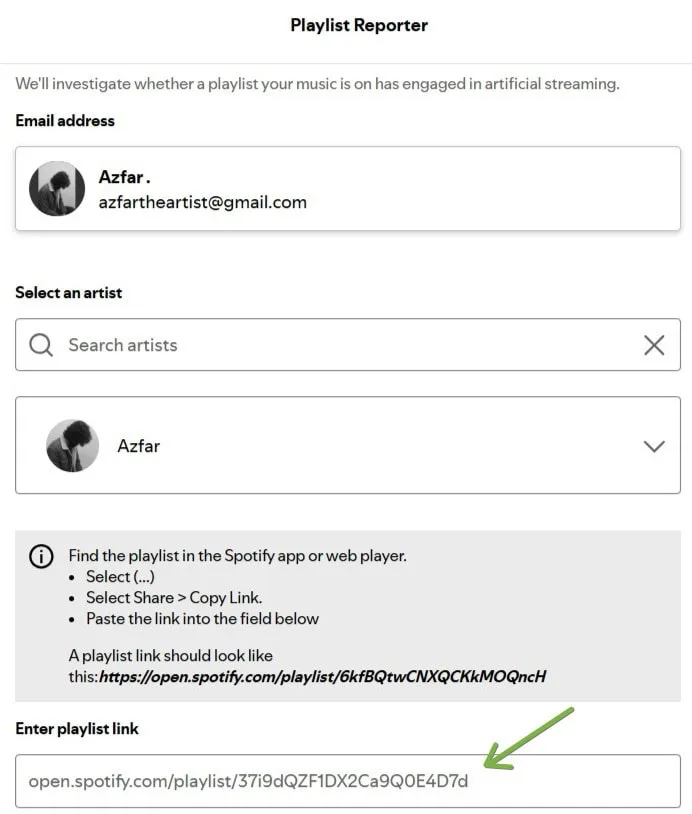
#3 - Select how your music got added to the playlist. If you didn't use any service, you can select 'others' and write down your problem. Once you're done, click on submit and your report will be submitted.
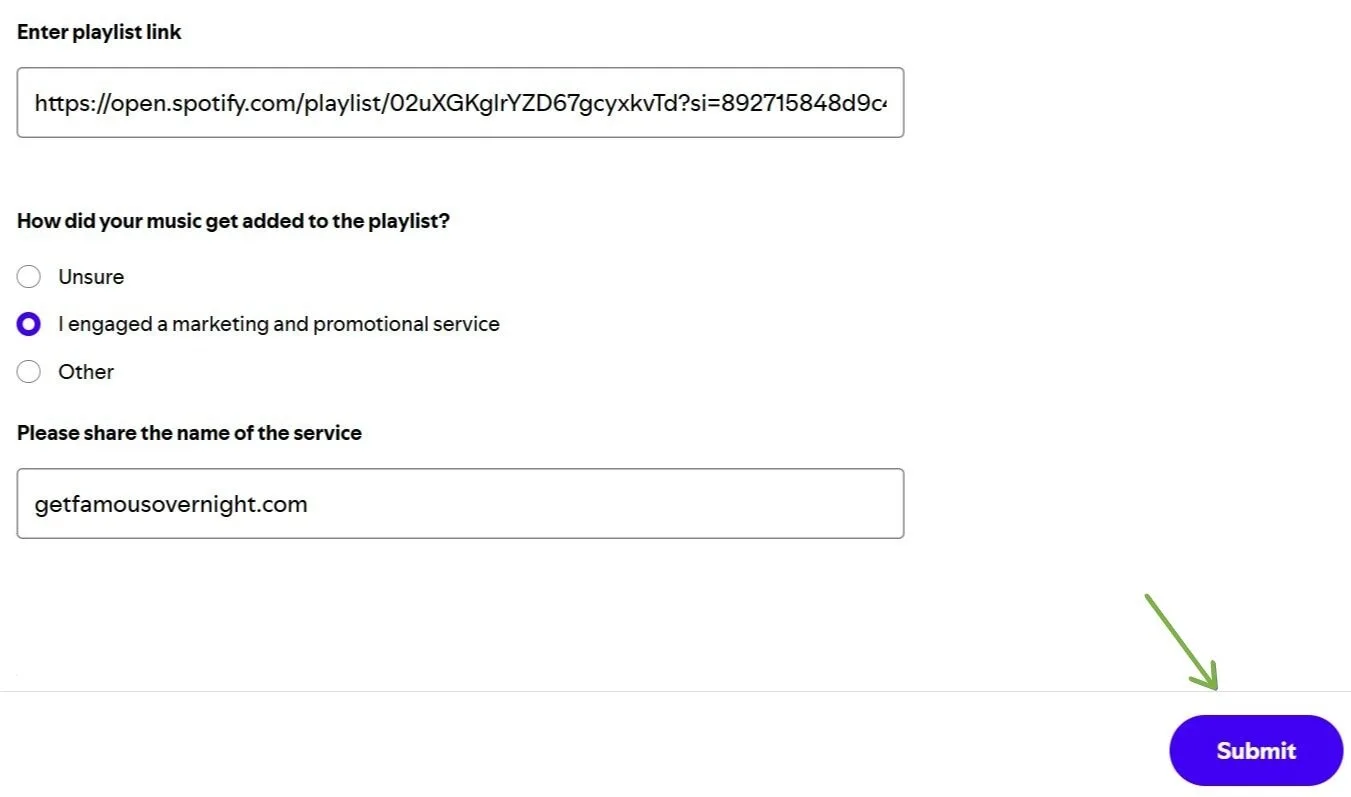
Note: You must claim an artist profile first on Spotify to be able to fill the form.
Reporting Fake Playlists as a Listener vs Artist
Listeners can simply flag suspicious playlists right from the Spotify app. Just tap the 3 dots on the playlist and hit “Report” for spam or misleading content.
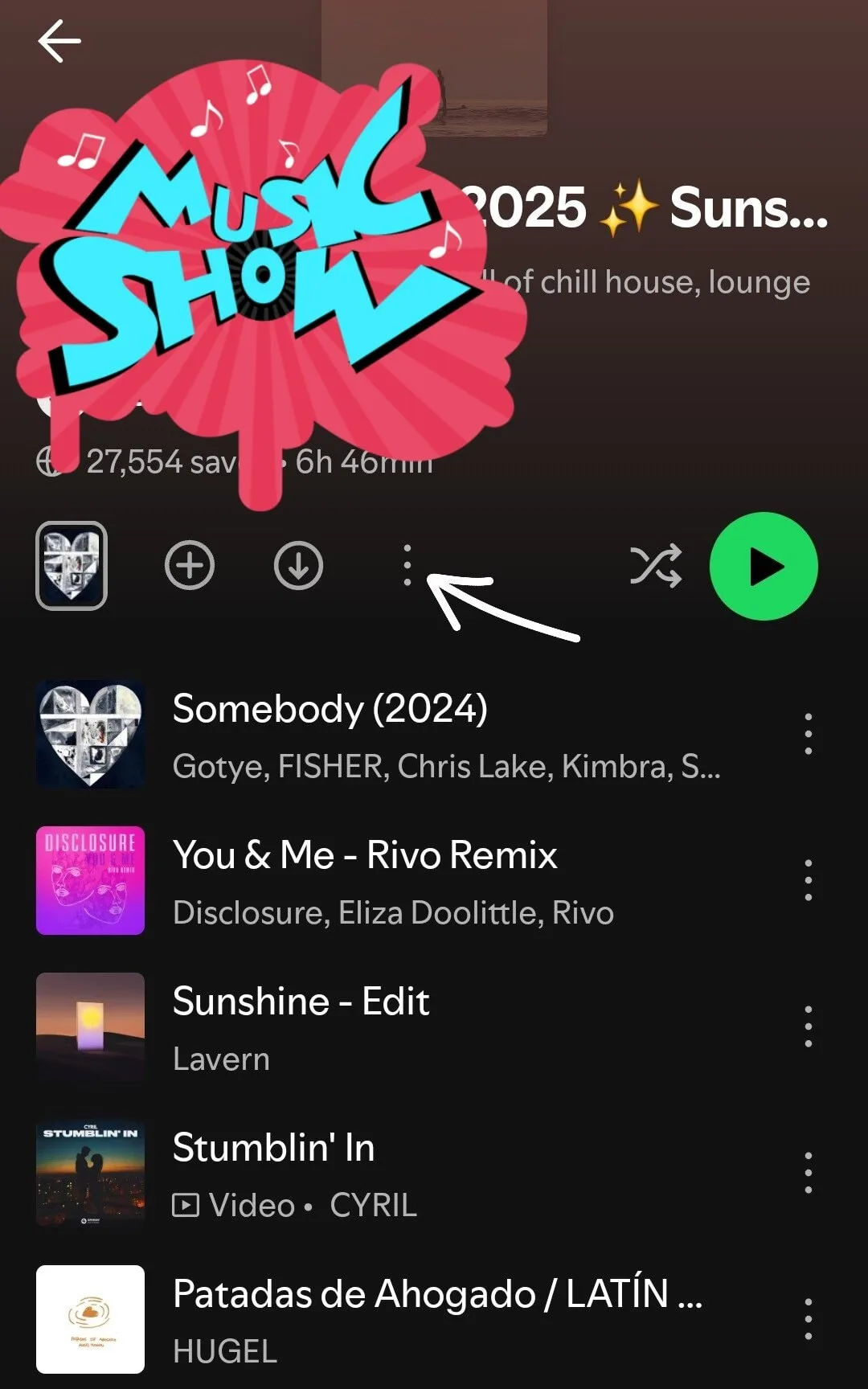
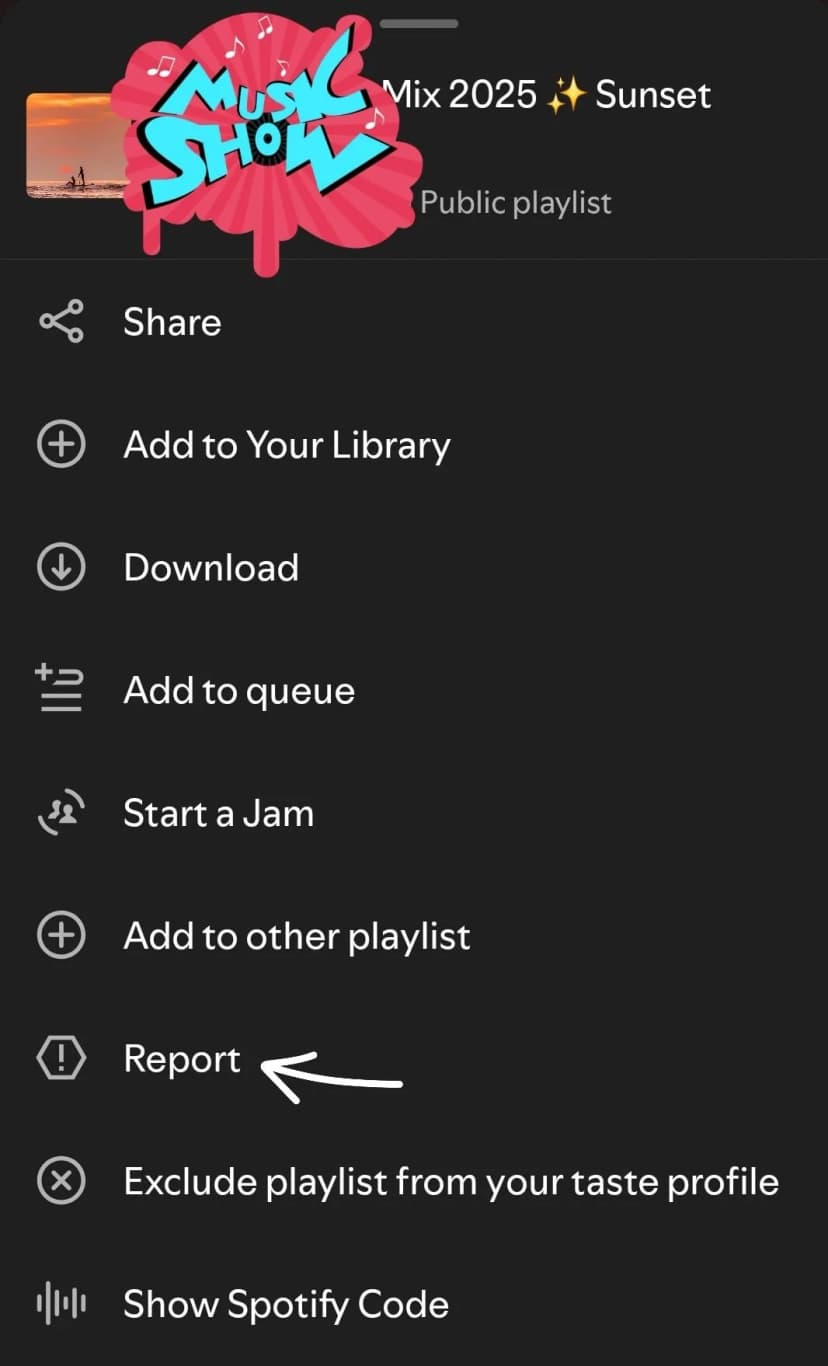
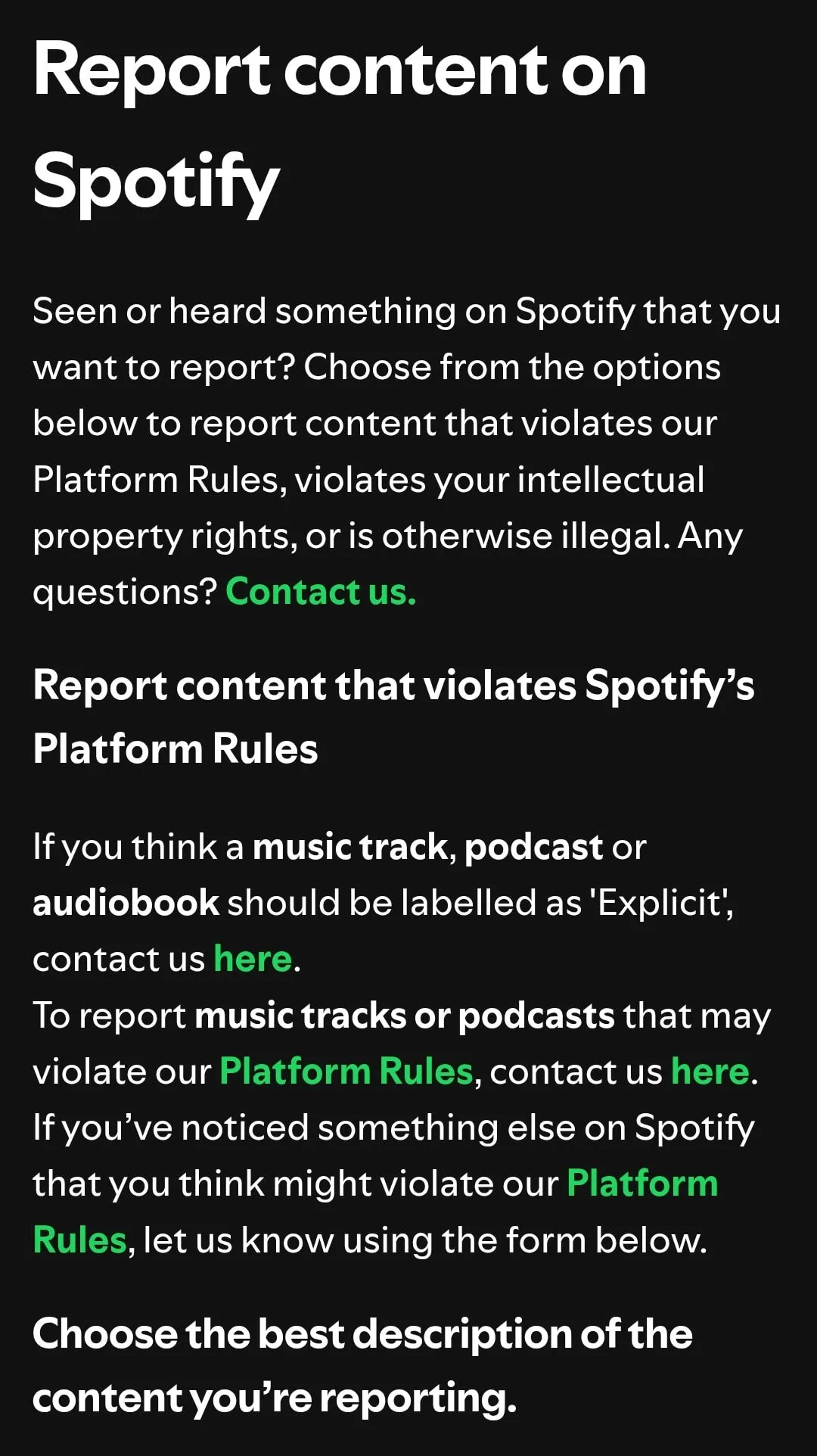
However, artist reports carry more weight.
With your 'Spotify for Artists' dashboard, you can dig into your stream data and see if anything looks fishy, like sudden spikes or unusual listener patterns.
When you spot something off, you can report directly through Spotify’s support channels and provide proof.
But what counts as solid evidence? Think screenshots of wild stream spikes, weird curator messages, and anything else that smells fishy in your Spotify analytics. These bits help Spotify dig into the problem faster.
Spotify typically responds within a few days or weeks, depending on how long it takes them to conduct a thorough investigation.
What Not to Do When Dealing with Suspicious Playlists
Avoid Paying Any Playlist That Guarantees Streams
These offers often involve bots or fake plays. That’s against Spotify’s rules and can get your account penalized or even banned.
Even the messages seem fake:
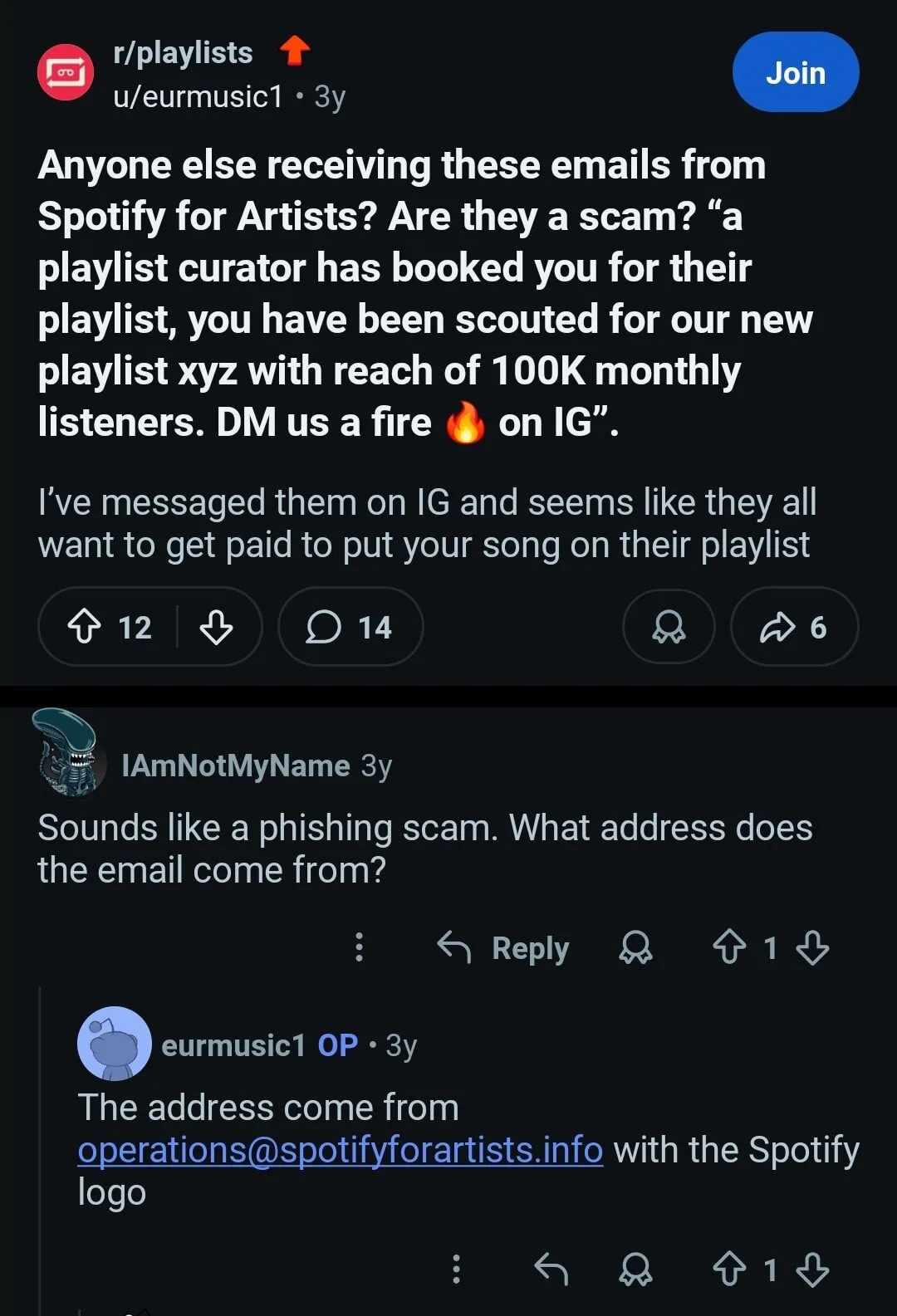
This artist was told to pay $20 for guaranteed placement on a playlist. That sounds like a scam right from the start.
Any curator who's legit will have a say about your track. They don't add tracks for granted. In fact, SoundCampaign has been working with over 10K+ curators. All of them have one thing in common, they either reject or approve a track based on how it sounds.
After all, a wrong track is a big turn off for their listeners. So, they're very picky.
Want to test if your song can make it to high-quality Spotify playlists? You can try here. You will only get charged when you get the feedback or the placement after the feedback.
Otherwise, you won't get charged.
How to Decline Playlist Offers Safely
Use this quick guideline to keep your approach professional and polite:
- Thank the curator for their offer and show appreciation for their interest
- Give a short, honest reason if comfortable, such as the track not fitting your current style or goals
- Optionally, suggest staying in touch or recommend another artist
- Keep the tone positive to preserve future opportunities
Example phrases you can use:
"Thank you for considering my music. I don’t feel this opportunity fits my current direction." "I appreciate the offer, but I’m focusing on other projects right now." "Your offer means a lot, but I’ll have to pass this time."
If the playlist offer is sketchy from the start, avoid engaging in back-and-forth that might encourage pushy curators. Keep evidence of your refusal, such as screenshots or messages in case you want to report suspicious activity later.
How to Handle a Track Already Added to a Questionable Playlist
As an artist, you do not have direct control to remove your music from user-curated playlists. Here's a simple checklist of what to do:
✅ Contact the Playlist Owner
Politely ask the curator to remove your track to stay professional.
✅ Report to the Platform
If there’s no response or the playlist seems fake, use official reporting tools like Spotify for Artists Playlist Reporter.
✅ Monitor Your Promotions
Review active campaigns to ensure they aren’t boosting the questionable playlist. Pause or cancel if needed.
✅ Avoid Engaging
Ignoring suspicious playlists can help platform algorithms reduce their visibility.
✅ Create Trusted Playlists
Promote your own or trusted playlists to direct listeners to legitimate placements.
How to Protect Yourself From Artificial Playlists
Researching Curators Before Pitching
The best defense is knowing who you’re pitching to before sending your tracks. These simple steps help you avoid shady playlists.
- Find the Right Curators: Search Spotify and on social media for curators matching your music and audience.
- Check Credibility: Review follower count, updates, and engagement to ensure their audience is real.
- Get Contact Info: Look for emails or social profiles; Instagram and Twitter help with direct outreach.
- Study Playlists: Note their genre preferences and song types to tailor your pitch.
- Ask Around: Use Reddit forums and Facebook groups for recommendations and feedback from real artists.
- Stay Safe: Avoid curators who charge for guaranteed placements.
And if you don't want to reach out to Spotify curators directly, use SoundCampaign to simplify the whole process and get yourself on real playlists.
Using Legitimate Promotion Services
One solid way to stay safe? Use legitimate promotion platforms like SoundCampaign to connect with verified Spotify curators.
Here's how it works:
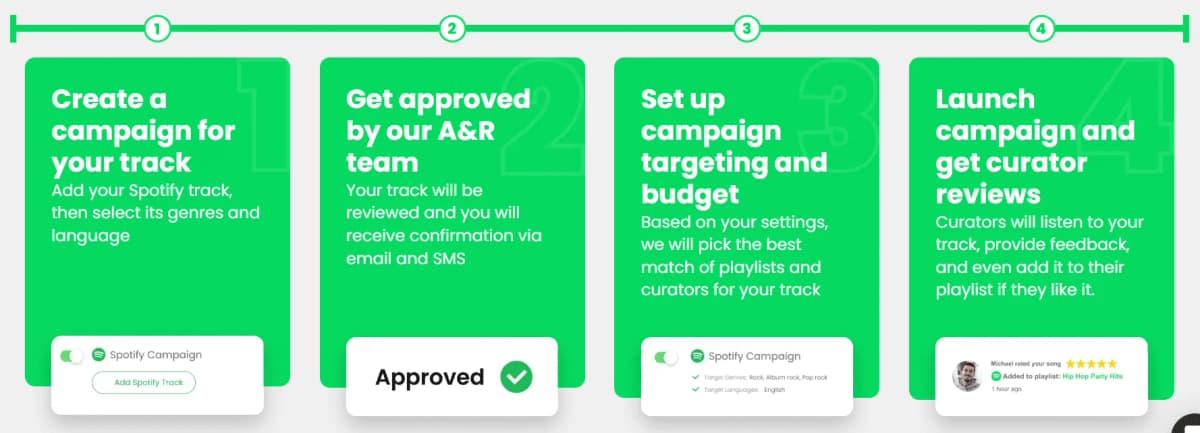
No fake promises of guaranteed streams, we don't do that here. Instead, SoundCampaign offers full transparency, honest curator reviews, and even refunds if curators don’t meet quality standards.
Campaigns start at $80 and scale with the number of curators you want to reach. Each campaign guarantees at least 6 reviews and runs for 14 days. After that, you get a detailed report with placements, curator notes, and engagement metrics.
With a zero-tolerance policy for playlist manipulation, your music has a real shot at genuine growth without risking penalties.
Using Spotify for Artists Data to Spot Red Flags
Spotify for Artists provides detailed analytics that can help you spot red flags in your streaming data.
Look for unusual stream spikes, sudden playlist additions, or engagement that doesn’t match your listener patterns. These can be signs of fake streams.
This helps protect your royalties and ensures that your growth reflects real fans, not fake streams or manipulative tactics. Regularly reviewing this data allows you to make smarter promotional decisions and maintain the integrity of your audience.
Why Real Growth Outperforms Artificial Streams
Authentic engagement not only sustains your career but also opens doors to official playlists and loyal fans. Genuine streams build loyal fans, algorithmic support, and long-term visibility.
Fake streams might boost numbers temporarily, but they don't lead to real engagement, playlist opportunities, or sustainable success.
How SoundCampaign Helps Artists Avoid Artificial Playlists
How We Vet and Verify All Spotify Curators
Each curator is verified to make sure they’re real music lovers with genuine playlists. This means your music lands in honest, well-crafted playlists where real listeners hang out.
Curators need to have at least 20 tracks and 1,000 real, organic followers. No bots allowed.
Our system monitors playlists for any suspicious activity, and if we spot even one fake follower, we can’t approve the playlist until it’s cleaned up. We run these checks regularly to keep everything legit.
Our Anti-Fraud System That Blocks Suspicious Activity
SoundCampaign's smart anti-fraud system blocks suspicious activity and flags anything that looks like fake streams or playlist manipulation. So artists don’t have to worry about their streams getting penalized by Spotify.
Guaranteed Safe & Legit Spotify Promotion
SoundCampaign guarantees safe and legit promotion. They never sell fake streams or guaranteed placements. Instead, curators get paid for honest reviews, not just adding any track. This keeps your Spotify growth organic and sustainable.
Plus, with our Artist Protection Program for Spotify campaigns, you get a credit anytime a curator doesn’t submit a review for your track.
Case Example: Artist Growth Through Legit Playlist Campaigns
Take Cameron Sage From, an 18-year-old pop artist who scored 35 real playlist placements through SoundCampaign. Her campaign helped her reach real fans and build lasting buzz, not just a flood of bot streams that disappear the next day.
Btw, here are more success stories from artists using SoundCampaign.
In short, SoundCampaign offers artists a trusted path to grow on Spotify without risking their reputation or account. It’s real playlists, real listeners, real results.
Additional Tools & Resources for Safe Spotify Growth
Spotify for Artists Analytics
Log into your Spotify for Artists analytics for real-time stats on your streams, listeners, and where your music is getting playlisted.
Plus, you get rich audience insights, like age, location, and listening habits, which help you craft smarter release strategies.
Reporting Suspicious Curators on Social Media
Whenever you notice a curator promoting fake streams or shady playlists, you can report them on the platform where you found them.
Look for options like “Report,” “Spam,” or “Fraud” and provide any evidence, such as screenshots or suspicious messages. Reporting helps protect artists and keeps music promotion honest.
Conclusion
From lost revenue to account flags and reduced visibility, fake playlists create real risks for artists like you.
Spotify works to keep streams genuine, but both artists and listeners play a role in spotting and reporting suspicious activity.
Tools like 'Spotify for Artists' make it easier to track suspicious patterns, while platforms like SoundCampaign help musicians grow their fanbase through real playlist placements and authentic engagement.
At last, I'd say it's your responsibility too to create a healthy environment on these platforms. Whether it's with you or someone you know, always report when you see something off.

Marketing brain, writer's heart, musician's soul. At SoundCampaign I run SEO, unclog whatever marketing bottleneck is in the way, and write the things that help artists actually get somewhere. I'm a musician too, so most of what I write comes from both sides. When I'm not doing any of that I'm in my broken office, writing and producing, still chasing a sound that might make the charts one day.
Promote your music
Real playlist placements, TikTok videos & Meta ads

Trusted by 100,000+ artists & labels
No bots, ever.
Real case study
How SoundCampaign Put Grant Knoche in Front of 460,587 Listeners for WOOHOO
Read the full story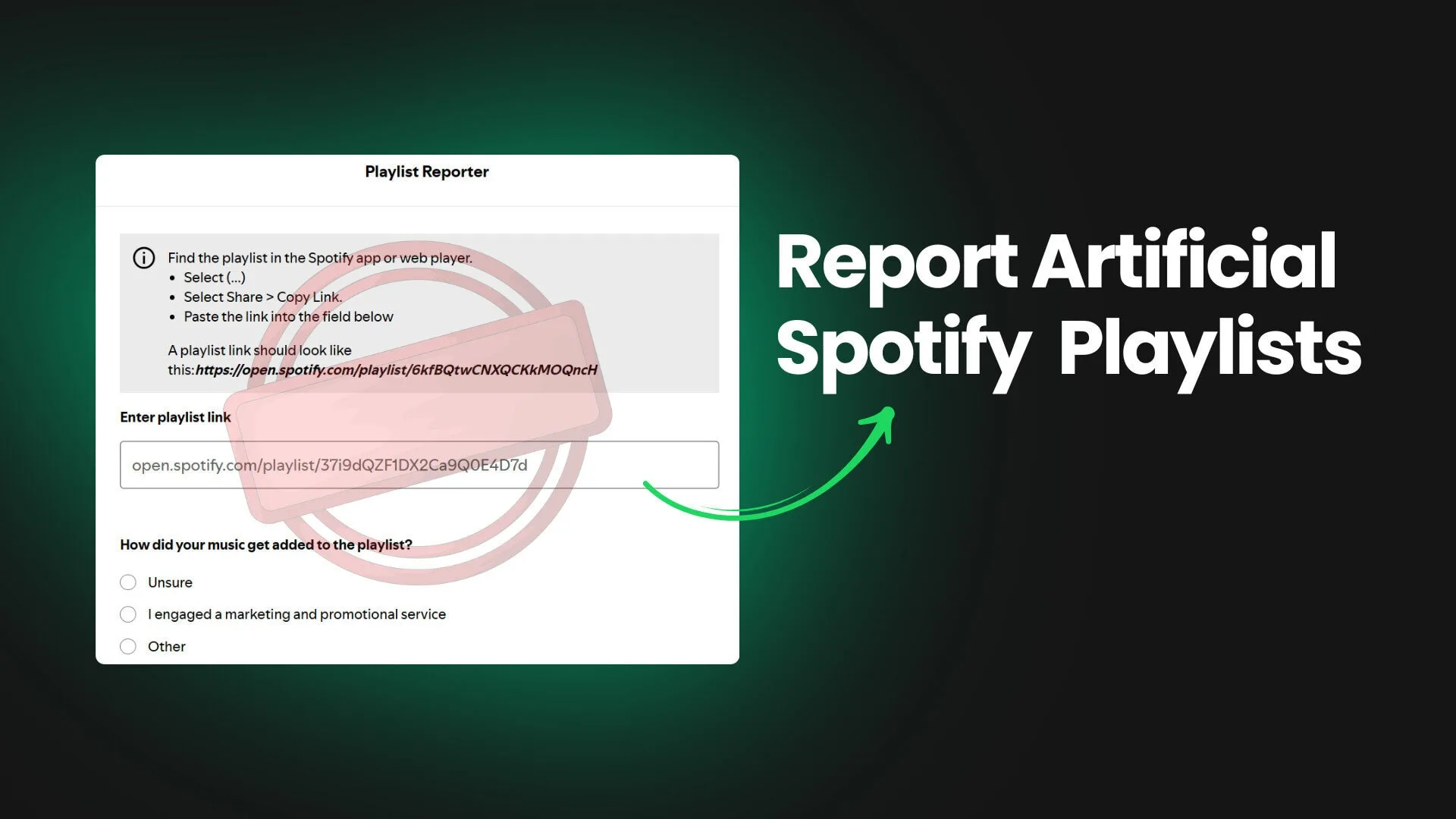
Ready to get your music heard?
Join thousands of independent artists using SoundCampaign to reach real playlists, creators, and fans, with honest feedback every step of the way.
- No bots, ever
- Artist Protection ProgramIf a curator or creator doesn’t review your track, we credit you back. Your budget is always protected.
- Keep 100% of your royaltiesWe’re a promotion service, not a label. We never take a cut of your streams or royalties.