음악 프로모션
How To Build A Fanbase from Scratch As An Indie Artist

Nadav Peleg
업데이트됨 · 12분 읽기
Learn how to build a fanbase as an indie artist from scratch with consistent releases, short-form videos, playlists, email, collabs, and smarter promotion.


On this page
- What Does it Mean to Build a Fanbase as an Independent Artist?
- How Are Fanbases Built Today?
- 5 Core Strategies to Build a Fanbase From Scratch
- What Tools Help You Grow a Fanbase Faster?
- What Are the Most Common Mistakes Indie Artists Make?
- How Do You Stay Consistent and Grow Long-Term?
- How Do You Choose the Right Promotion Strategy?
- Summary
- FAQs
Somewhere out there is a person who would play your music on repeat for a week straight. They just don't know you exist yet.
That's the strange part of starting out as an indie artist. Your people are already scattered across the internet, waiting for something exactly like what you make. Building a fanbase is really just the work of helping them find you.
So this guide is how that gets done from zero. This includes what a fanbase really is, how to build a fanbase from scratch, and the mistakes that keep the right people from ever hearing you.
What Does it Mean to Build a Fanbase as an Independent Artist?
A fanbase isn't your follower count. It's the people who actually care about you and stick together. They pre-save your drops and show up to the gig. They tell their friends. Everything else is just a number that looks nice on a dashboard.
A million streams off a passive playlist are worth less than a thousand people who'd buy a ticket. Followers mean nothing if they don't listen.
Look at Bryan Andrews.
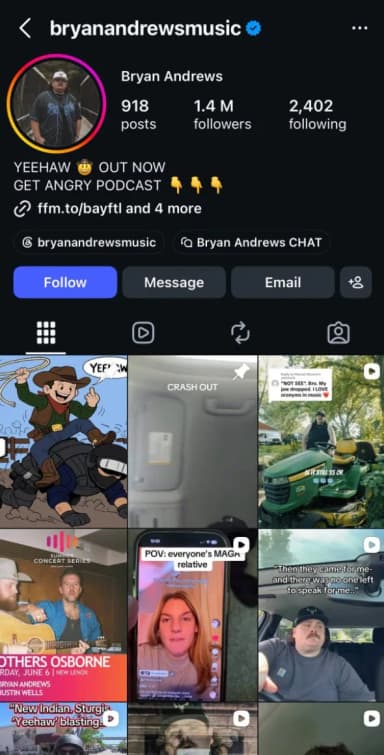
Bryan Andrews has millions of followers across TikTok and Instagram. But when he promoted a Midwest tour, he sold just two tickets in Chicago before pulling the show. That's the gap between his follower count and a real fanbase.
Part of that gap comes down to ownership too. When someone follows you on Spotify, you're renting that relationship from a platform. You're one algorithm away from losing your reach overnight. That's why the more people get onto your email list or your Discord, the stronger fanbase you'll have. This way you also learn who they really are, the city they're in, the song they replay on loop. That tells you where to tour and when to drop next, and the communication only gets better from there.
How Are Fanbases Built Today?
Fanbases get built from your phone. You post, the algorithm spreads it to strangers, and the ones who connect stick around.
You don't need a label anymore. DistroKid alone serves over 2 million artists and handles an estimated 30 to 40% of new releases worldwide.
Every platform plays a different role. TikTok is where new people stumble onto your music, and Spotify is where they come back to replay it. That first step matters most, the moment a stranger finds you for the first time, and it's where TikTok has an upper hand.
According to a TikTok and Luminate report, people who use TikTok are 74% more likely to find new music and share it with others than the average listener scrolling Instagram Reels or YouTube Shorts.
Let's do one thing today. Go to TikTok and type 'trends' there. You'll see at least 1 out of 5 videos with music in there.
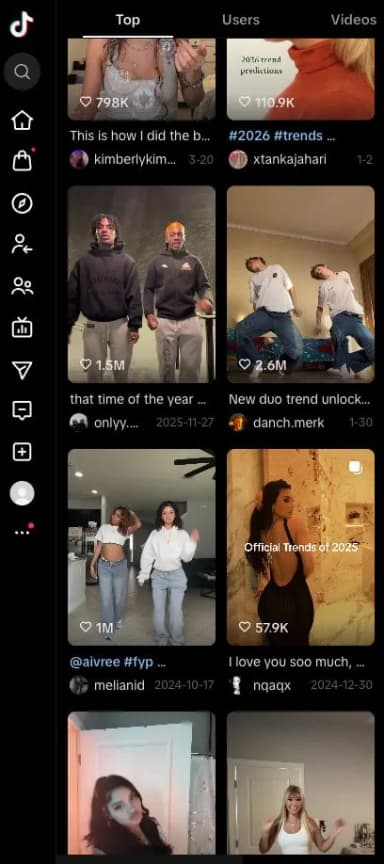
These days, most people find new music through the algorithm. Spotify's Discover Weekly playlist alone leads to over 56 million new artist discoveries every week. It decides who to recommend by tracking what people save and replay.
So when your fans save your songs and come back to them, the algorithm starts showing your music to other listeners with the same taste. That's how algorithm-driven discovery works in your favor.
None of this happens off a single post or release. Every song you put out gives the algorithm more to work with, so it pushes your music to more new people. That slow, steady build is how a small audience turns into a real fanbase.
5 Core Strategies to Build a Fanbase From Scratch
1. Release Music Consistently
Consistency matters more than volume. Every track you put out resets your spot in Spotify's Release Radar, which feeds your music to followers for a full 28 days. For most independent artists, a steady drip of singles beats saving up everything for one big album.
Each single is another shot at getting discovered and playlisted. Soundcharts notes that a regular rhythm builds momentum with listeners and with the recommendation engines at the same time. So skip the once-a-year album drop. Release a single every four to six weeks, then collect them into a project later. This way you get discovered 10 times instead of just one.
2. Post Short-Form Video Every Day
Right now, short-form video is the strongest discovery tool an independent artist has. A single clip on TikTok, Reels, or Shorts can reach millions for free. The artists who pull it off treat posting like brushing their teeth, a daily, non-negotiable thing. One artist on r/musicmarketing went from 50 monthly listeners to 13,000 in a year. Tbh, this is something most artists still don't get.
View original comment on Reddit ›Spend the least amount of effort possible on a post. Post consistently...
This artist's advice is more valuable than you think. Just put less effort into each post and keep the volume high. So drop the over-produced promo. Film the behind-the-scenes clip, the unreleased snippet, and add your music to your Instagram profile so anyone who visits can learn more about you right away.
3. Get Your Music on Playlists
Playlists still bring growth faster than almost anything else, and you don't need label connections to get into one. Editorial, algorithmic, community, they all send real streams your way.
Once I discovered an amazing thread where an artist talked about 10 ways you can pitch to Spotify curators. I think you should check this thread:
10 Underrated Ways to Pitch Your Music to Spotify Curators
A curator-pitching guide for indie artists. Find niche playlist curators through similar artists, give tracks early traction, keep pitches under three sentences, and target sub-genre lists over big ones.
They already bet on someone unknown once, so they might bet on you. Music blogs for independent artists are another door for you. And once hand-pitching every curator stops scaling, you can try SoundCampaign to get in touch with playlist curators. If they like your track, you'll get into one of the best playlists. If not, you'll at least get a constructive feedback. This is far better than cold DMs.
4. Build a Direct Line to Your Fans
The strongest fanbases are built on a direct way to reach your fans that you own. You keep it alive by replying to comments, answering DMs, and jumping on a live session now and then.
But the most important one is your email list. Email still gets a 42.65% open rate in music, which reaches far more of your fans than any social media post can.
This is why I see many artists on r/musicmarketing calling fan data collection as the backbone of a real fanbase. If a platform ever shuts down or bans you, your email list is the one thing you still keep.
View original comment on Reddit ›Every artist should be collecting fan data. No matter how big or small...
By the way, I'd recommend offering a free track to anyone who signs up. After that, email those fans when you release something new. This is how you communicate and build a connection.
5. Collaborate With Other Artists
Working with another artist is one of the quickest ways to grow. Their fans already trust them, so when you team up you also get the same trust.
Spotify looked at its biggest collaborations and found that 75% of the artists involved saw their streams go up by at least 10% in the six months after, and more than half saw them jump by 50% or more.
I agree those were the big names. But as much as I've seen, this works at any level since a collab puts your music in front of an audience that never knew you existed.
Find another artist with a similar style and a following close to your size. Release a song together or remix each other's tracks.
Even a shared TikTok series gets both of you in front of each other's fans.
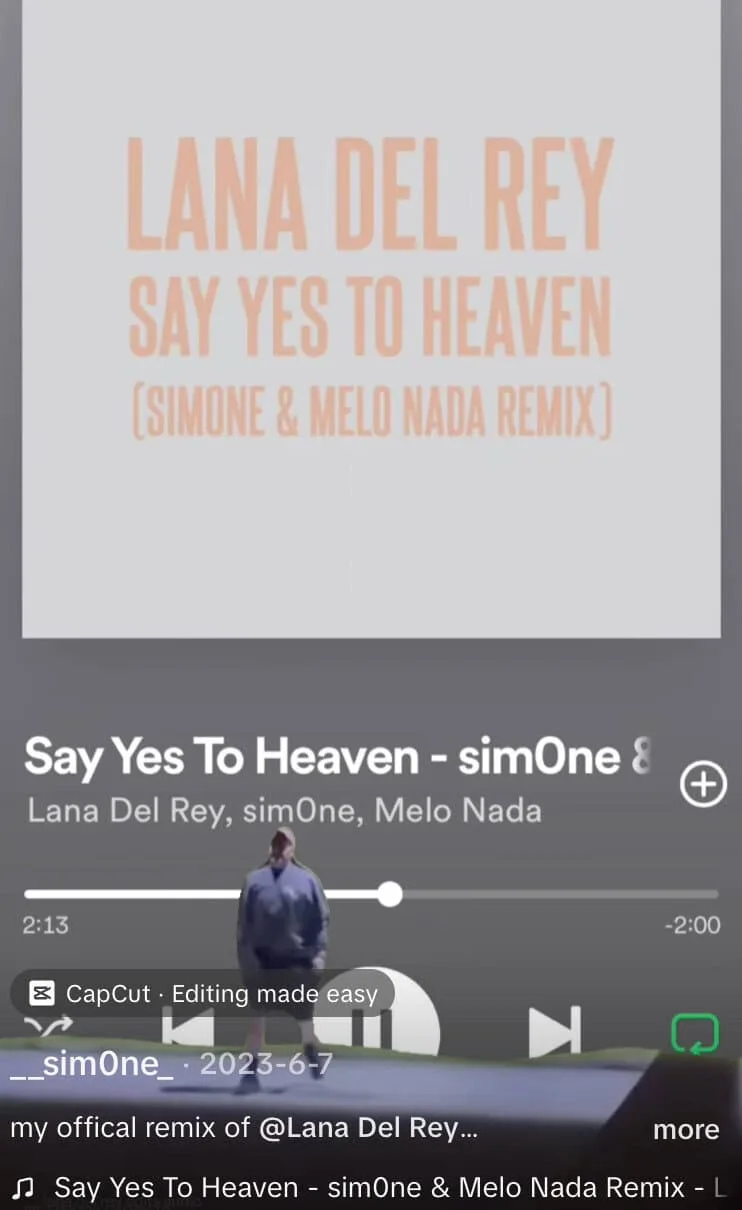
sim0ne is a good example. She was a techno producer almost nobody knew until she remixed Lana Del Rey's "Say Yes To Heaven" in 2023. Fans pushed it on TikTok, and once it blew up, Lana's team made it an official release. simOne announced it on her own TikTok, and that one track carried her from a hidden name to festival stages.
What Tools Help You Grow a Fanbase Faster?
Your tools fall into four groups, distribution, content, promotion, and data.
- Distribution: One upload through DistroKid, TuneCore, or CD Baby sends your song to Spotify, Apple Music, and everywhere else, with all your royalties landing in one dashboard. If you're still deciding which to use, my breakdown of the best music platforms for artists will definitely give you some options to choose from.
- Content: A scheduler like Later, Buffer, or Metricool lets you batch a full week of posts in one sitting, so you stay consistent without burning out.
- Promotion: SoundCampaign helps you run Meta ads, connects you with the right playlists and curators, and much more.
- Data: Spotify for Artists shows where your listeners are and which tracks they save. Chartmetric and Soundcharts track your growth across platforms over time. Use it to spot which songs and cities deserve more of your attention.
What Are the Most Common Mistakes Indie Artists Make?
- Chasing virality over consistency: A viral hit feels like the dream, but it rarely turns into people who stay, and you can't summon it on command. Steady releases, on the other hand, stack up over time.
- Going quiet on your own audience: Someone comments or slides into your DMs and you leave them on read. That was the exact second a casual listener might have converted. Gone.
- Releasing with nothing behind it: Since 2024, Spotify pays nothing on tracks under 1,000 annual streams, and 99.5% of all streams come from songs above that line. Upload and pray, and your track joins the silent pile nobody ever hears.
- Living on a single platform: One ban or algorithm shift can wipe out years of work. Spread yourself across streaming, socials, and a channel you own like email.
- No real branding: When your cover art, handle, and vibe look different on every app, people can't place you. Pick a look and a story, stick with it, and you become easy to spot and easy to recommend.
How Do You Stay Consistent and Grow Long-Term?
Treat the music like a decade-long build rather than a launch with a finish line. The artists who build a lasting career are the ones thinking in years. Learning how to build a fanbase as an artist has less to do with raw talent and more to do with refusing to quit.
Start by getting your expectations straight. Early on, growth is slow and mostly invisible. That's just how it goes. One artist on r/musicmarketing crossed 10,000 monthly listeners with zero ads or going viral.
...crossed 10K monthly listeners by only posting on social, no ads, no viral moment
An independent alt-pop artist hit 10,000 monthly listeners with no paid promotion, running multiple niche TikTok accounts and releasing steadily across about a year.
Watch the numbers that matter. Streams, followers, and engagement tell you something different, so track all three rather than fixating on one. Spotify for Artists and your social analytics show you which songs and platforms are pulling their weight.
Then change your approach. Put more into whatever you're releasing and drop whatever keeps flopping. Your fans show you what they want through how they behave, so read it.
Above all, stay in the game. Spotify says its artist payouts climbed more than 10% in 2025 and grew at more than double the rate the rest of the industry saw. The payoff is real, but it goes to the artists still standing once the early buzz fades.
How Do You Choose the Right Promotion Strategy?
Your promotion plan should be based on your goals, resources, and stage. There's no universal answer for how to start promoting your music, but there is a sane way to reason through it.
- Organic or paid: Organic growth is the slow way. It runs on content, posting consistently, and replying to the people who show up. Paid promotion means ads, campaigns, and outside tools that buy you speed. One costs time and the other costs money, and most artists use both, leaning more on organic when they start. If you've just put out your first track, spend a few months posting before you spend money on ads.
- Right platform, right job: Each platform does one job well. TikTok helps new people find you. Spotify turns those people into repeat listeners. YouTube and Instagram are where a casual listener slowly becomes a real fan. So use TikTok to catch attention, then ask people to save the song on Spotify so the algorithm keeps pushing it out.
- Spend money or spend effort: When you have more time than money, doing it yourself works fine. You handle the posting and the pitching on your own. But once your music starts catching on and you want to reach more people than you can by hand, spending money speeds things up. You can pitch ten playlist curators yourself. Reaching a thousand new listeners in one month is a different story.
- Build things that repeat: Cold outreach and posting only when you remember will not get you far. You need a fixed posting schedule. So a promotion system that keeps running in the background while you focus on the music is what makes sense here.
- Spot the moment to go bigger: You'll know it's time when your releases are steady, people are starting to notice, and you've reached as far as you can on your own. That's when a promotion with SoundCampaign can help you break all records. It gives you a way to reach far more curators and connect with new listeners.
Summary
Building a fanbase from scratch comes down to a few simple things. Go after real fans and not just numbers that look good. Put out music on a regular schedule. Use your socials, playlists, and email as separate tools. Each one does its own job.
Stay away from the usual mistakes. Don't chase one viral moment. Don't go quiet on your fans. Don't release music with no plan to promote it. And don't put everything on a single platform.
Then think long term. Growth is slow at first and then it builds. The win goes to whoever keeps showing up and keeps adjusting when the moment finally comes.
FAQs
What is a fanbase?
A fanbase is the group of people who truly care about your music and stick around. They pre-save your releases and show up to your shows. Even a small core of real music fans like that is what keeps an independent career alive.
How to get fans for your music?
Release music consistently and post short-form video so new people can discover you. Then turn those listeners into fans by replying to comments and DMs, and by getting them onto an email list you control.
How to build a fanbase as an independent artist?
It comes down to consistency, good content, and a direct connection you own. Put out regular singles, keep posting short-form video, pitch playlists, and collect emails so no single app controls your reach. Treat it as a long game and keep showing up.
How to start promoting your music?
Start organic. Post on a schedule, pitch independent playlist curators, and reply to everyone who engages. Once your releases are steady and you see early traction, add a tool like SoundCampaign to reach new listeners faster than hand-pitching can.

SoundCampaign 창립자 겸 CEO
저는 나다브입니다. 지금의 회사를 만들기 전에는 음악을 만들었고, 마케팅에 관심을 갖게 된 것도 거기서 비롯됐습니다. 제가 가장 좋아하는 부분은 분석 쪽입니다. 스트림이 어디서 오는지, 무엇이 움직였고 무엇이 움직이지 않았는지 보는 일이죠. 아티스트에게 진짜 의미 있는 노출을 주기 위해 SoundCampaign을 창업했습니다. 예상보다 훨씬 많은 시간과 노력이 들었고, 그 점은 지금도 크게 다르지 않습니다.

당신의 음악을 알릴 준비가 되셨나요?
매 단계마다 솔직한 피드백과 함께 실제 플레이리스트, 크리에이터, 팬에게 다가가는 수천 명의 인디 아티스트와 함께하세요.
- 봇은 절대 사용하지 않습니다
- 아티스트 보호 프로그램큐레이터나 크리에이터가 트랙을 리뷰하지 않으면 크레딧을 돌려드립니다. 당신의 예산은 항상 보호됩니다.
- 저작권료의 100%를 그대로 유지하세요저희는 레이블이 아닌 프로모션 서비스입니다. 스트림이나 저작권료의 일부도 가져가지 않습니다.