Spotify Promotion
10 Best Spotify Playlist Pitching Services in 2026

Nadav Peleg
Updated · 35 min read
Discover the best playlist pitching services to pitch your music. Get noticed by top playlist curators and boost your streams.


On this page
You've put enough soul in your track to make sure it reaches the right audience on Spotify. You get a few streams from your friends and the same 200 listeners who don't stick around.
Meanwhile some kid you've never heard of just landed on Fresh Finds with a track that took him a weekend in his bedroom. The difference is the fact that the kid has cracked how playlist works and you haven't.
Getting on them is a different kind of chaos. Curators ghost your DMs. The "10,000 streams for $50" guys take your money and send bots that vanish three months later. The legit services exist, they're just buried under the scams.
Here are the 10 Spotify playlist pitching services that actually take off your mental load in 2026.
Top Editor's Picks: 10 Spotify Playlist Pitching Services
|
Service |
Best for |
Price range |
Turnaround |
Guarantee |
|---|---|---|---|---|
|
Best overall |
$80 to $500+ per campaign |
~14 days |
Full refund if no curator reviews your track under the Artist Protection Program |
|
|
Education plus organic streams |
$347 for 10K streams |
2 to 4 weeks |
Refund on stream shortfall |
|
|
Data-driven targeting |
~$280 minimum |
2 to 4 weeks |
~35 playlist reviews guaranteed, refund if curators don't review within 14 days, unused budget returned |
|
|
Niche genres with guaranteed feedback |
~$2 per reply |
7 days for feedback |
Refund if no reply within 7 days |
|
|
Budget pitching |
~$10 for 10 credits (bulk discounts available) |
Days to 2 weeks |
Refund if no feedback within 48 hours (96 hours for labels) |
#1 - SoundCampaign: Best overall
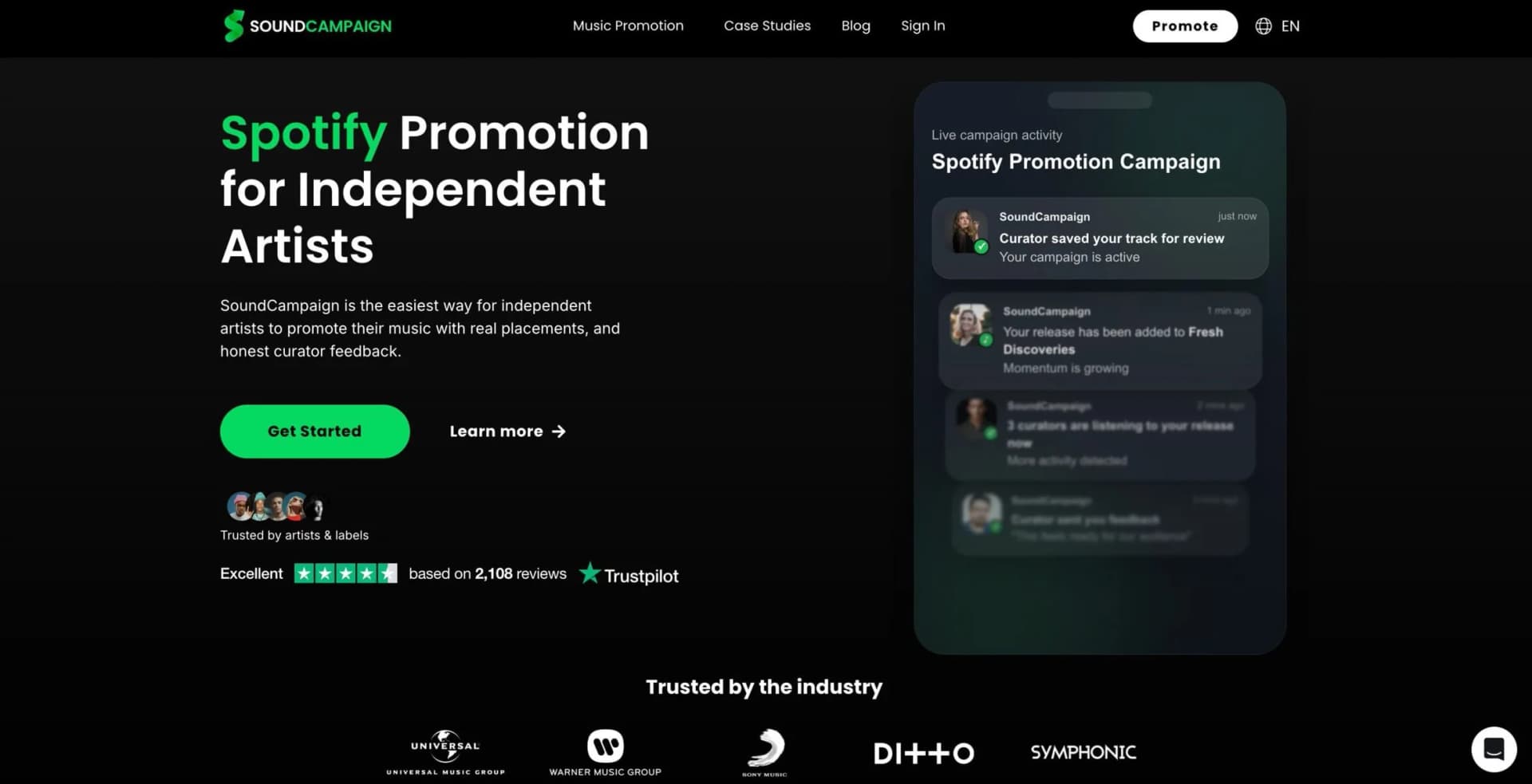
SoundCampaign is the one I keep recommending when artists ask which playlist service won't burn them. The curators are real people whose names show up on your dashboard. The pricing is upfront, and if no curator reviews your track in 14 days, you get your money back.
How it works
You drop in your Spotify link, pick the genres your music fits, and set a budget. SoundCampaign matches your track to curators whose playlists actually align, and the campaign runs for 14 days. You get notified every time a curator listens, places, or rejects your song.
- 157.2M streams generated for artists to date
- Every campaign guarantees at least 6 curator reviews
- Final report breaks down curator notes and engagement metrics
The Artist Protection Program
If your campaign ends without a single curator review, you get a 100% refund within 14 days. Most playlist services keep your money whether anything happens or not. SoundCampaign refunds it. You can get the full Artist Protection Program details here.
Pricing
Campaigns start at $80 and scale based on how many curators you want to reach. The system shows you the estimated curator count before you commit, so there's no guessing.
One indie-pop artist who ran a $900 campaign landed on 28 playlists. That pulled in over 500,000 streams and grew her monthly listeners past 25,000. More success stories here.
Best for
Indie artists testing playlist promotion for the first time, or anyone burned by "guaranteed streams" services and looking for something with a real safety net.
#2 - Indie Music Academy: Best for education plus organic streams
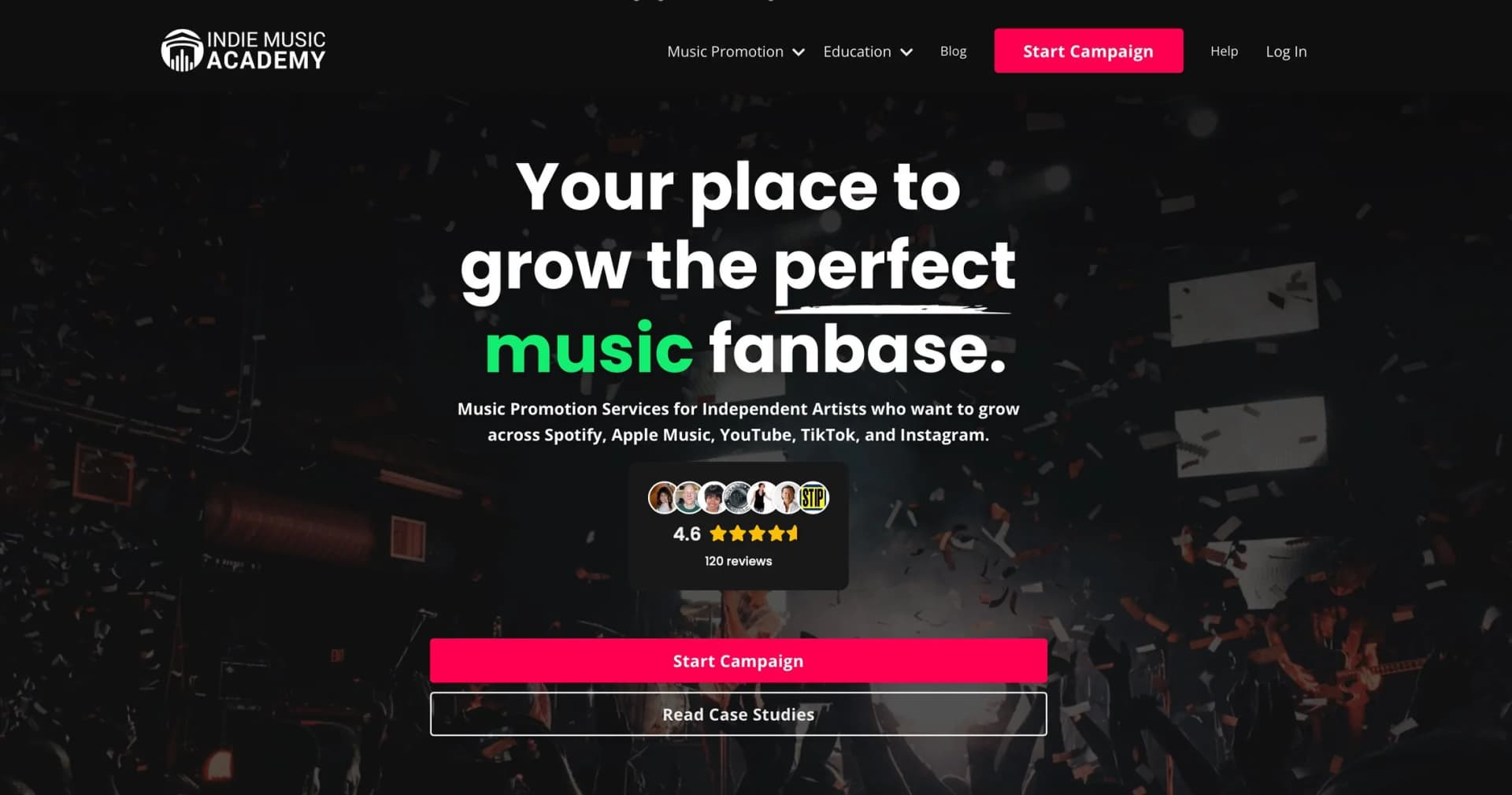
Indie Music Academy goes beyond standard playlist pitching. It pairs real curator placements with a training portal that teaches you how to market your own music long after the campaign ends. Founded by Ryan Waczek, the service has built a reputation for vetting playlists manually so your track never gets pitched to bot-driven accounts.
How it works
IMA pitches your track to a network of personally verified playlists that match your genre. Every playlist gets vetted to confirm the listeners are real humans. Campaigns deliver guaranteed stream counts, and if your campaign comes up short, you get refunded the gap.
- Manually verified playlists keep your campaign out of bot territory
- Guaranteed stream counts with refund policy for any shortfall
- Free training portal included with every campaign
Pricing
Entry-level packages start at $347 for 10,000 guaranteed real streams. Higher tiers scale up to $2,350 for 100,000 streams. Pricing sits on the premium end, but the guarantee structure means you don't pay for streams that never materialize.
In a documented case study, Two Story Melody reported one of their artists generated 31,000 real streams in a single month through an IMA campaign, with most plays coming from active listeners rather than passive playlist adds.
The education angle
Every campaign includes access to IMA's free training portal. That's the piece that separates them from most playlist services. Instead of just selling placements, they teach you how to build presence on Spotify yourself. The goal is sustaining momentum long after a single campaign ends.
Best for
Indie artists who want both immediate playlist exposure and the skills to keep growing after the campaign ends. The premium pricing makes it a better fit for artists with at least a $300 budget per release.
#3 - Playlist Push: Best for data-driven targeting
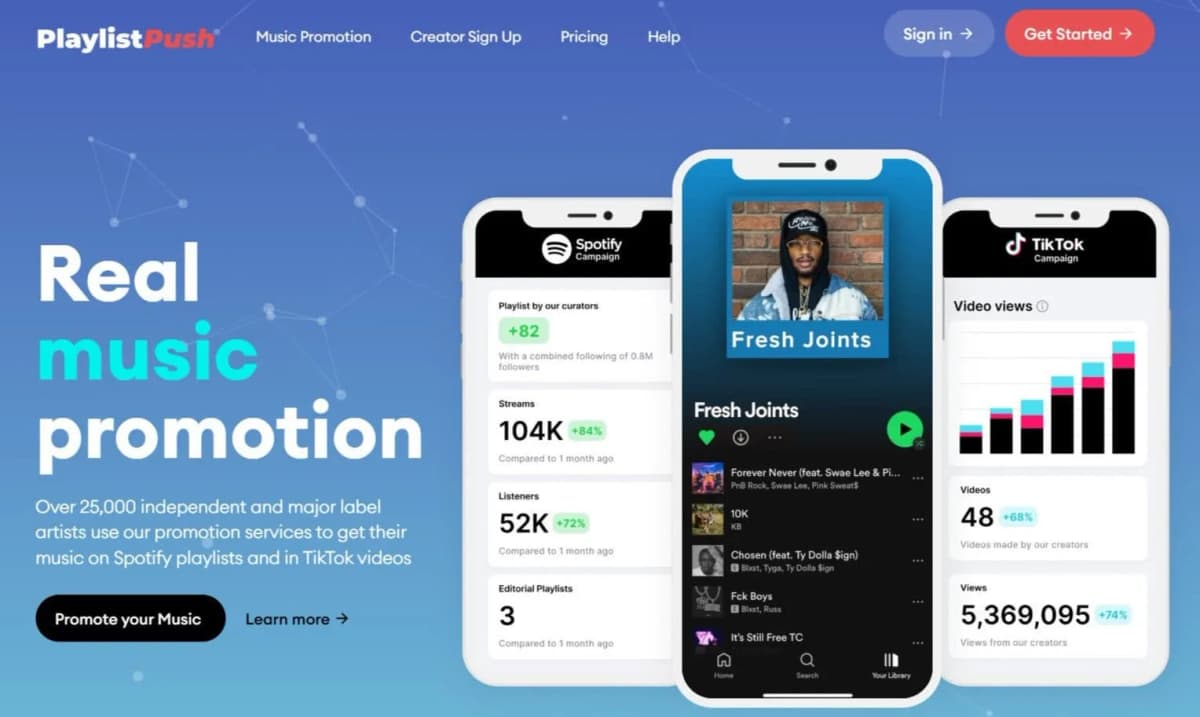
Playlist Push runs the biggest curator network in the playlist pitching space. With over 1,490 vetted Spotify curators on the platform, it gives you a wider net to cast than smaller services, plus written feedback from every curator who reviews your track.
How it works
You set up a campaign targeting curators within your genre. Playlist Push matches your track to curators whose playlists fit, and each curator either accepts or rejects with a written response either way. Curators get paid $1.50 to $15 per review depending on their playlist size, which incentivizes them to actually listen before deciding.
- 1,490+ vetted curators on the platform
- Curators receive payment per review, real listens required
- Detailed dashboard with real-time campaign tracking
Pricing
Campaigns start at $280 minimum. The service performs best in the $400 to $500 range where the curator pool is widest. Pricing isn't visible until you complete the setup, since multiple factors affect the total quote.
Curator feedback as the real product
The written feedback is what most artists say they value most about Playlist Push. Curators explain why your track got accepted or rejected, which gives you concrete data on what playlist owners are actually looking for. For artists planning multiple releases, that feedback loop is more valuable than any single placement.
Best for
Artists with at least $400 to spend on a single campaign who want maximum curator reach and detailed written feedback. Less ideal if you're testing playlist promotion for the first time on a sub-$300 budget.
#4 - Daimoon Media: Best for electronic and EDM artists
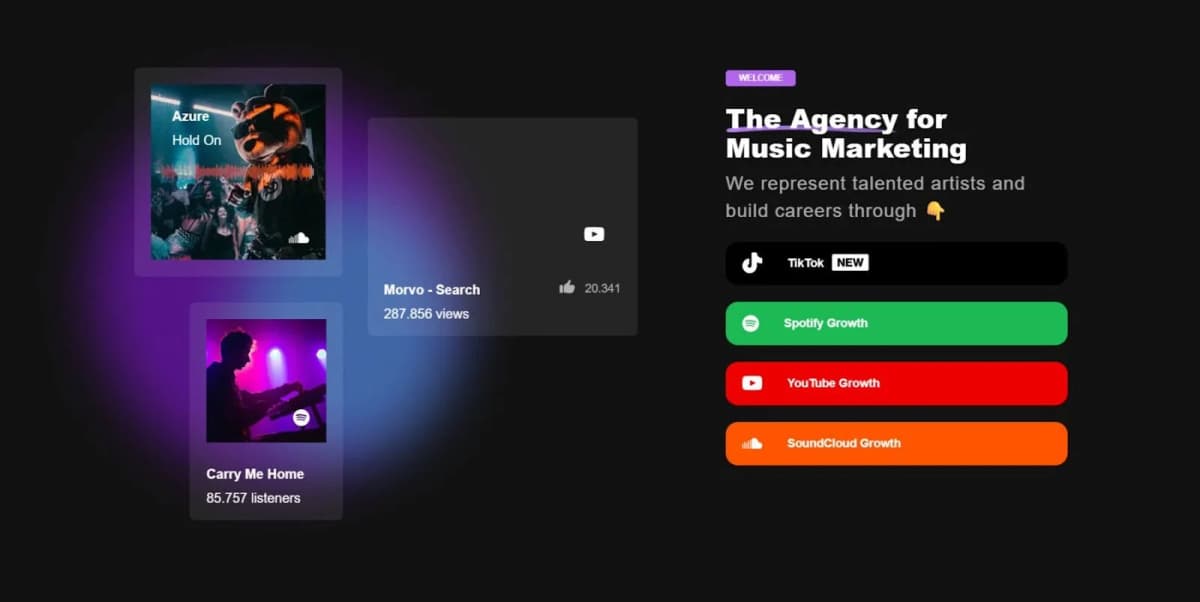
Daimoon Media built its reputation in the electronic and EDM scene. Based in Rotterdam since 2015, the agency has worked with over 10,000 artists and runs promotion across Spotify, SoundCloud, and YouTube. If your music is electronic or EDM-leaning, Daimoon's curator network is heavily weighted toward your audience.
How it works
Daimoon offers five campaign tiers (Bedroom Artist, One-To-Watch, Club Artist, Touring Artist, Festival Artist), each priced by the size of reach you want. Spotify campaigns pitch to their curated network of playlist owners. Their Spotify Play Campaigns extend further, reaching DJs and radio stations on top of playlists.
- Five campaign tiers with reach visualization shown before checkout
- Real-time client portal tracking placements and rejections
- DJ and radio network access on top of playlist pitching
Pricing
Campaigns range from $59 (Test Run) up to $1,797 (Festival Artist), depending on the tier you pick. The Test Run entry promises 1,000 to 2,000 additional streams, while the Festival Artist top tier promises 70,000 to 90,000 over a 30-day window. The checkout process is one of the fastest in the space, with each tier showing a growth visualization so you know what to expect before paying.
Where it falls short
Daimoon prioritizes playlist placements over written curator feedback. If you want detailed feedback on each curator's decision, services that center the feedback model (like Playlist Push) handle that better. Daimoon's strength is the reach and the multi-platform footprint, not the qualitative response.
Best for
Electronic and EDM artists who want playlist placements plus access to DJ and radio networks. Less suited for artists in non-electronic genres or those who prioritize curator feedback over reach.
#5 - Omari MC: Best for multi-platform promotion
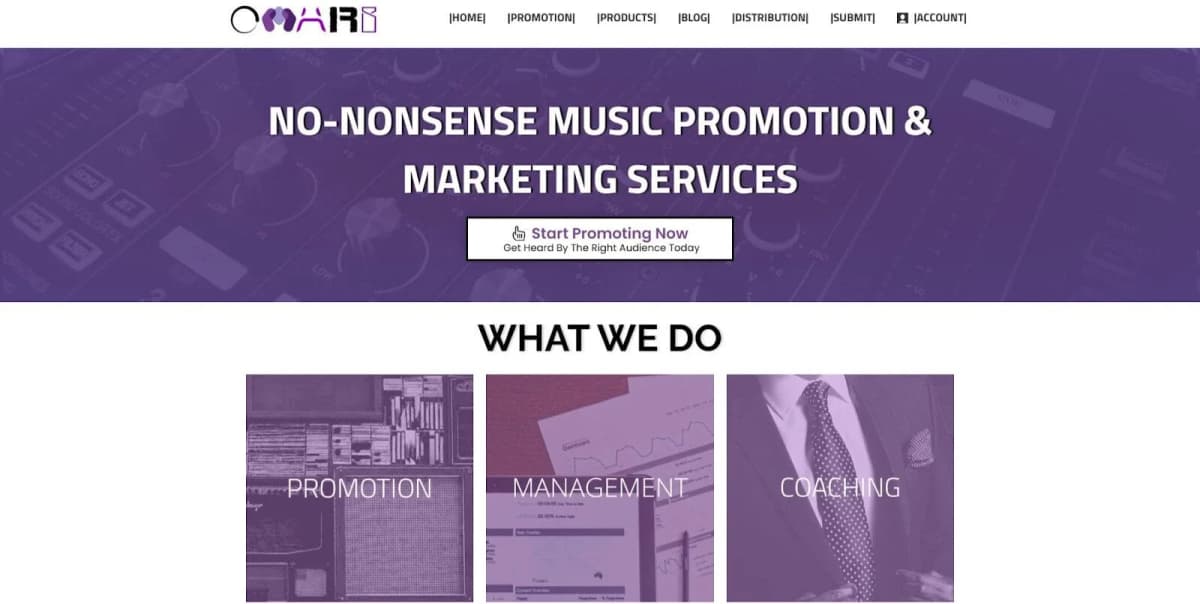
Omari MC has been running music promotion since 2014, making it one of the oldest services on this list. The agency has worked with over 21,000 artists and built a network that covers Spotify, TikTok, YouTube, Instagram, and Facebook all under one roof. For artists who want a bundled push across multiple platforms instead of just Spotify, Omari sits at the top of the category.
How it works
You pick a package based on your budget and goals, and the team runs campaigns across whichever platforms you target. Spotify campaigns place your track on a curated network of vetted user playlists. Reporting comes at the 30-day mark. If a campaign with a stream minimum doesn't hit the target, you can contact support with stream-count evidence to request a partial refund or a free campaign extension.
- 10+ years in the promotion space (since 2014)
- Over 21,000 artists served across multiple platforms
- 30-day campaign window with partial refund or extension if stream minimums aren't hit
Pricing
Omari MC offers three suggested campaign levels: $197 (test if your song resonates), $697 (build serious momentum), or $1,297 (every playlist that could blow up your track on the table). The $197 entry submits your track to roughly 17 to 28 curators/playlists. A separate rush option uses 1 to 4 credits per curator from your campaign budget to push response times down from the standard 7-day window. The wider result ranges at lower budgets mean managing expectations on what you'll actually get.
The education brand behind it
Omari runs one of the largest indie music marketing YouTube channels in the space, with 200,000+ subscribers. The promotion service grew out of artist demand for hands-on help applying strategies covered in his videos. That dual identity (half education company, half service) means you're paying for a brand with serious track record in indie music marketing.
Best for
Artists running multi-platform release campaigns who want a single team handling Spotify alongside their other channels. Less ideal if you only need Spotify playlist pitching and want the lowest cost-per-stream.
#6 - Playlist-Promotion: Best for scaled follower reach
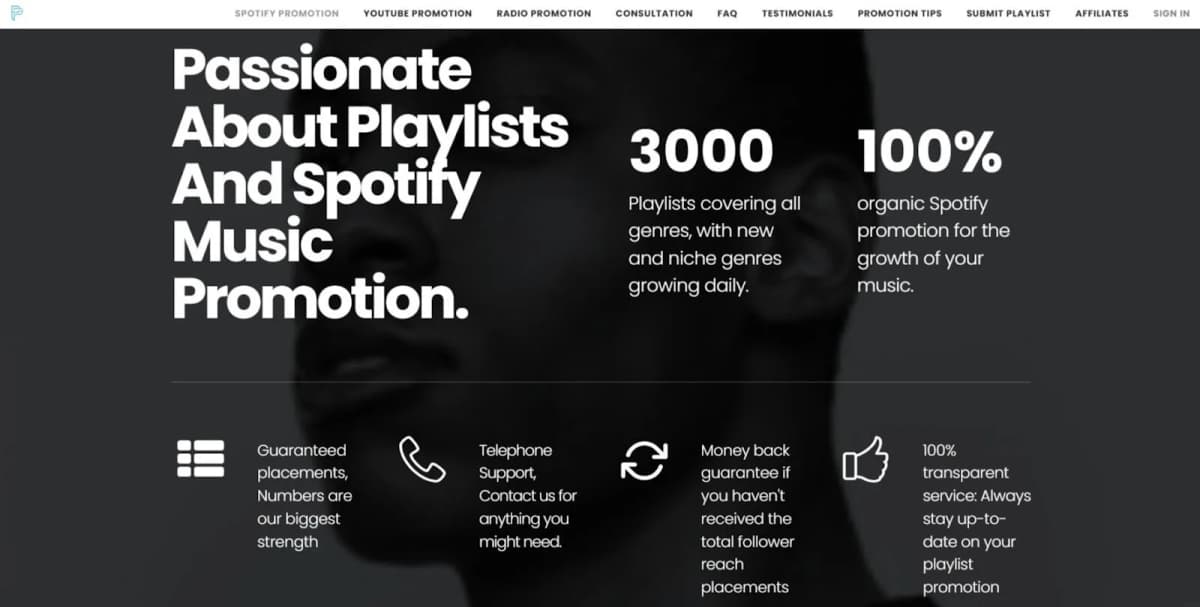
Playlist-Promotion takes a different approach to pricing than most services on this list. Instead of charging per curator or per campaign, you buy follower reach. A $350 package gets your track in front of playlists totaling 100,000 followers combined. Scale up from there if you want millions in reach. The network covers over 3,000 playlists across genres.
How it works
You submit your track and the team reviews it before accepting the campaign. Once approved, they curate placements based on your genre and mood, with most placements landing within a few days. Reports show playlist names alongside their follower counts. Direct links let you verify each placement yourself.
- 3,000+ playlists in the network across multiple genres
- Pricing based on combined follower reach instead of per-curator or per-stream models
- Detailed placement reports with verifiable playlist links
Pricing
Packages range from $350 (100K combined follower reach) up to $2,500 (1 million followers) as of May 2026. The follower-based pricing is straightforward, though it doesn't guarantee a specific stream count since stream-to-follower conversion varies by playlist activity.
Customer service angle
Andi, the manager, is mentioned by name in dozens of reviews and is personally involved in matching tracks to playlists. For artists who want a real human checking their submission instead of an automated marketplace, this matters. The downside is the smaller team means longer turnaround when they're booked up.
Best for
Artists with a $350+ budget who want straightforward follower-reach pricing and a hands-on team. Less ideal if you specifically want guaranteed stream counts or written curator feedback per submission.
#7 - Boost Collective: Best for all-in-one promotion
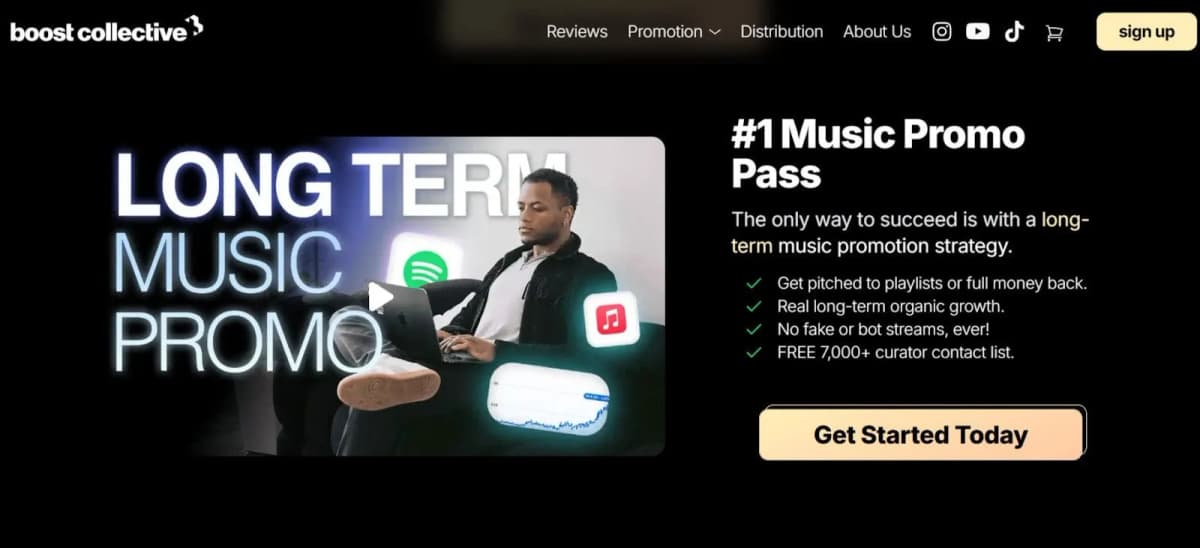
Boost Collective bundles Spotify promotion with free music distribution, mastering, cover art, and PR services under one platform. It's positioned as a label-level resource for indie artists who want multiple services without juggling separate vendors. Based in Canada, the platform runs an active Discord community of artists, curators, and producers that powers a lot of the playlist submissions.
How it works
You sign up for free, distribute your music through their platform (no upfront cost, you keep 100% of royalties), and access free playlist submissions through the Discord community. Paid campaign tiers add curator pitching and faster review queues. Placements often start within 24-48 hours after purchase.
- Free distribution to 150+ stores with 100% royalty retention
- Discord community connects you directly to curators and producers
- Bundled mastering, cover art, and PR services beyond just playlist promotion
Pricing
Boost Collective's Bronze tier starts at $59 during their current 60% off promo (regularly $150) and includes 3+ playlist pitches with an estimated 500 to 1,500 streams. All campaigns come with a 14-day free Pro trial. Discount levels rotate, so check the live pricing before committing.
What to watch out for
Some Trustpilot reviewers have flagged billing concerns with the Pro tier auto-renewal. If you opt into Boost Pro, set a calendar reminder for the renewal date so you don't get charged for months you didn't intend to keep. The standard campaign tiers don't have this issue.
Best for
Artists who want one platform handling distribution, promotion, and ancillary services together. Less ideal if you only want playlist pitching and don't need the bundled tools.
#8 - Groover: Best for niche genres with guaranteed feedback
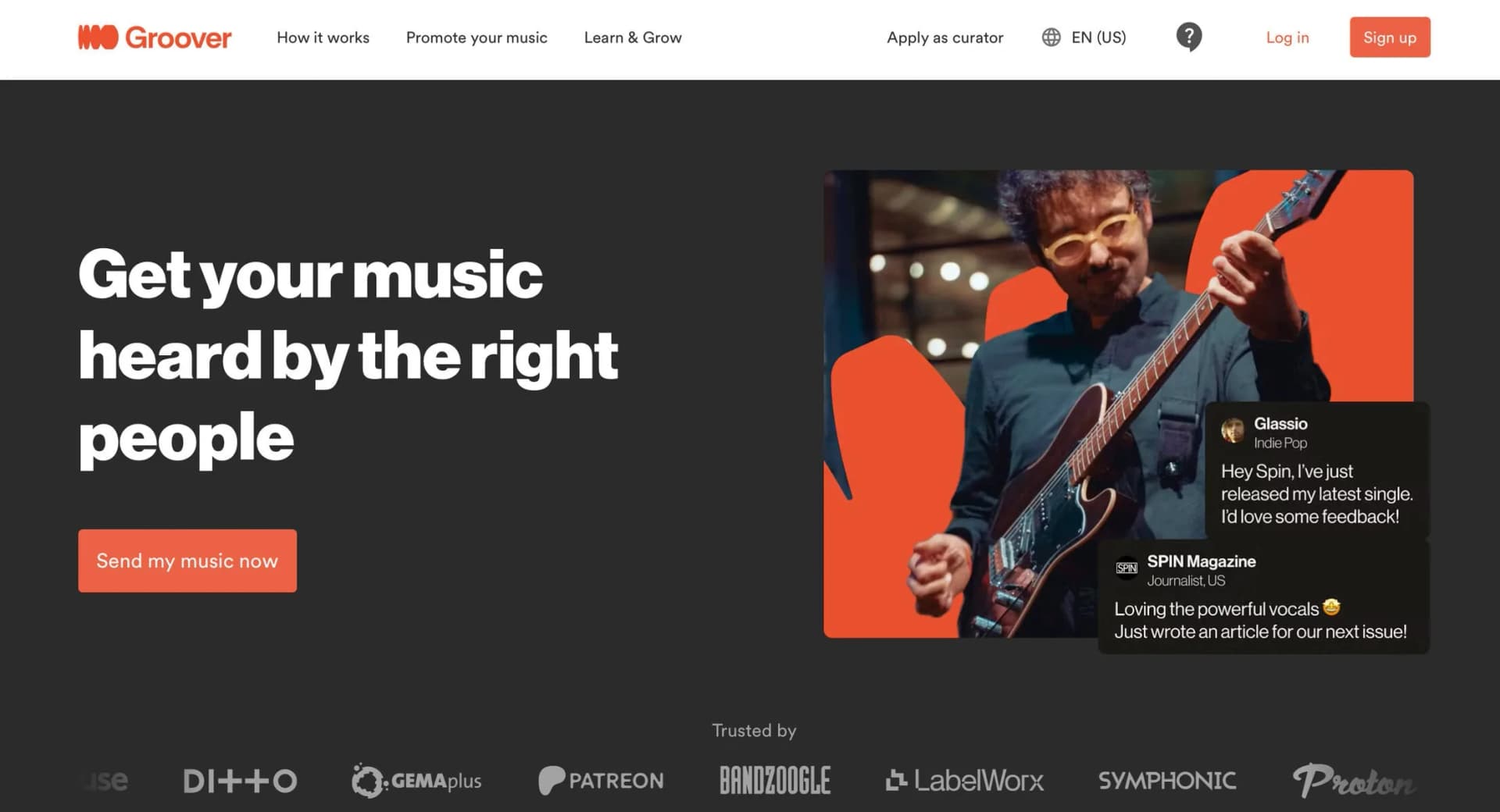
Groover launched in Paris in 2018 and has built one of the strongest curator networks in European music promotion. The platform's defining feature is a written feedback guarantee. Every curator either responds within 7 days or your credits are refunded automatically. With over 3,000 curators, bloggers, radio hosts, and label scouts on the platform, Groover sits in a category of its own for European reach and niche genre coverage.
How it works
You buy Grooviz (Groover's credit system), browse the curator directory, and pick exactly who you want to send your track to. Each curator gets a personal pitch from you, and each one either accepts the track or sends written feedback explaining why it didn't fit. There's no middleman and no automated matching. You pick every contact yourself.
- 3,000+ curators, bloggers, radio hosts, and label scouts available
- Written response from every contact within 7 days, or credits refunded
- A&R reps and label contacts included beyond just playlist curators
Pricing
1 Grooviz costs €1 (~$1.07 USD) as of May 2026. Sending your track to one curator costs 2 Grooviz (~$2.14 USD), with top-tier curators charging 4 to 6 Grooviz. Groover recommends a 50-curator campaign for serious results, which works out to roughly $107 USD. Discounted Grooviz packs reduce the per-credit cost when you buy in volume.
Where Groover sits
Acceptance rates run 20-30% on average, so a 50-contact campaign typically lands 10-15 placements. The real strength is the feedback loop. Even rejections include written explanations from real industry pros, which builds long-term knowledge about how curators actually evaluate music. For artists serious about learning the pitching game rather than just renting placements, Groover is the strongest classroom in the space.
Best for
European artists and anyone in niche genres who values written curator feedback over volume of placements. Less ideal if you specifically need US-focused curators or a hands-off automated campaign.
#9 - SubmitHub: Best for budget pitching
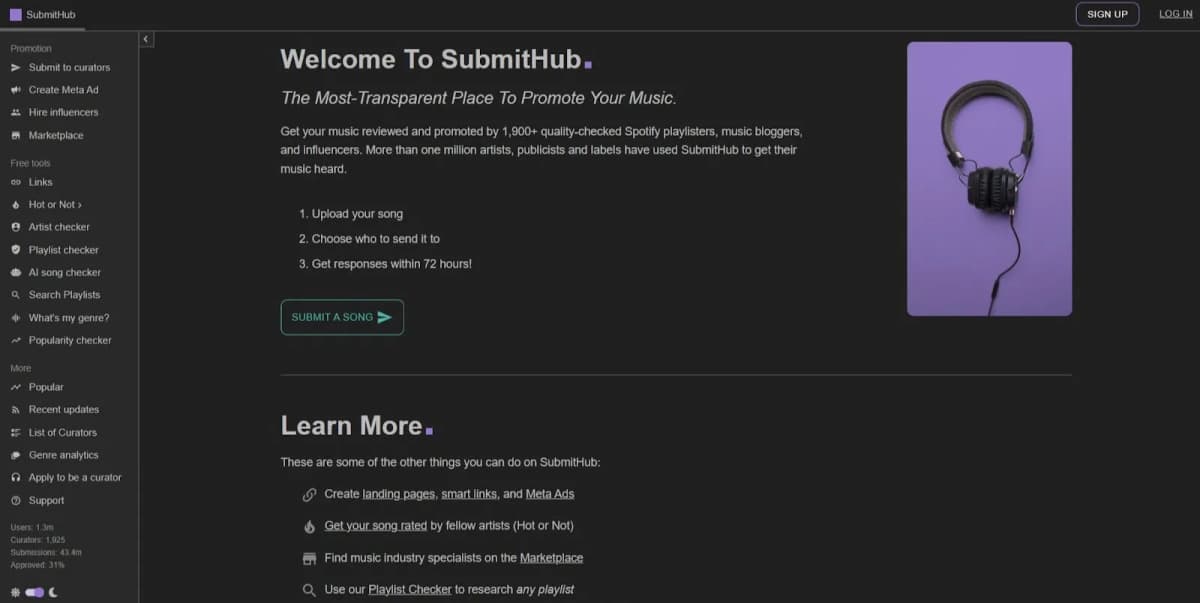
SubmitHub launched in 2015 and has grown into one of the longest-running pay-to-pitch platforms in the indie music world. The platform's appeal is the credit-based pricing model: instead of paying $300+ for a managed campaign, you spend $4 to $10 on a small batch of submissions and pick exactly who reviews your track. For artists testing playlist promotion on a tight budget, SubmitHub remains the entry point of choice.
How it works
You buy credits, browse the curator directory, and submit your track to specific curators within your genre. Premium credits guarantee a curator listens for at least 20 seconds and provides written feedback if they don't accept your track. Standard credits unlock cheaper outlets but with weaker guarantees. The whole system runs on you doing the work, no campaign manager, no automated matching.
- 10,000+ verified outlets across playlists, blogs, YouTube, TikTok, and radio
- Premium credits guarantee written feedback within 48 hours
- You pick every curator yourself, no automation between you and the outlet
Pricing
Credit packs are priced in bulk: 10 credits for $10 ($1 each), 30 credits for $27 ($0.90 each), or 100 credits for $80 ($0.80 each) as of May 2026. Each submission costs 1 to 4 credits depending on the curator's tier. A single pitch ranges from $0.80 to $4. A serious test campaign with 20-50 submissions runs roughly $20 to $50.
Realistic expectations
Site-wide acceptance rates hover around 20-30% on average, though individual curator results vary widely. Some pop and hip-hop submissions sit under 15% acceptance. The platform doesn't promise streams or placements. You're paying for curator attention and feedback, and the placements happen when the music fits.
Best for
Artists with a sub-$100 budget who want hands-on control over each submission and aren't afraid of rejection. Less ideal if you want managed campaigns or stream guarantees.
#10 - Soundplate: Best for DIY marketing tools alongside playlist submissions
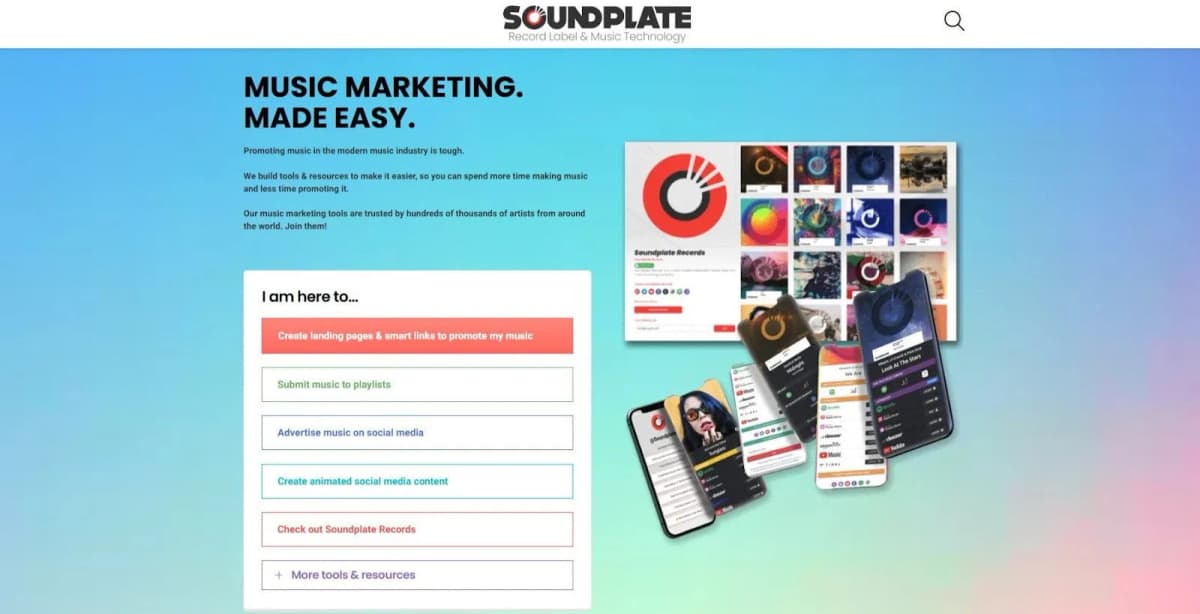
Soundplate sits in a different category from the rest of this list. It's a music marketing platform first, with playlist submission as one feature among many. The core product is Soundplate Clicks, a smart link and pre-save campaign tool. Playlist submissions through soundplate.com are free, which makes it a solid complement to a paid campaign elsewhere rather than your only promotion play.
How it works
You submit tracks for free through Soundplate's playlist submission system. Finding suitable playlists takes time and acceptance isn't guaranteed. Beyond submissions, Soundplate Clicks lets you build smart links for music releases, pre-save campaigns, bio links, and event promotion. Everything connects to a single Artist Page that consolidates your music and social presence.
- Free playlist submissions with no upfront cost
- Smart links and pre-save campaigns through Soundplate Clicks
- Customizable Artist Page that consolidates streaming and social profiles
Pricing
Soundplate Clicks Free Plan covers 2 smart links or pre-save campaigns with basic analytics. The Pro Unlimited plan runs $20/month or $180/year (25% savings) and unlocks unlimited links plus advanced marketing features. Label/Enterprise pricing is custom. Playlist submissions stay free across all tiers as of May 2026.
Where Soundplate fits
Most artists won't use Soundplate as their primary pitching service since the playlist submission system requires you to find playlists manually and acceptance varies. Where it earns a spot on this list is the complementary toolset. If you're running a paid campaign with another service, Soundplate Clicks handles the pre-save and smart link side that other pitching services don't cover.
Best for
Artists who want DIY marketing tools (smart links, pre-saves, Artist Pages) alongside free playlist submissions. Less ideal if you want managed playlist pitching as your primary service.
How to Choose the Best Spotify Pitching Service
Before you pay anyone, here's what actually separates a service worth your money from one that'll burn it. Here are 6 checks to run on any platform before committing.
1. Pricing model fit
Services charge in completely different ways. Per submission (SubmitHub, Groover). Per campaign (Playlist Push, Indie Music Academy). Per follower reach (Playlist-Promotion). Per tier package (Boost Collective, Omari MC). The right model depends on your release cadence and budget. One $300 Playlist Push campaign covers a single release. A $27 SubmitHub pack of 30 credits lets you test 7 to 30 different curators across multiple songs, depending on whether you spend standard or premium credits. Although this is the same approximate spend, the kind of output you get is quite different.
2. Curator transparency
A legit service shows you who reviewed your track. Curator names alongside playlist follower counts. Direct links to verify each placement. If a service only reports "your song was added to 12 playlists" without naming them, that's a red flag. You should be able to click through and confirm every placement yourself.
3. Refund or guarantee structure
Several services on this list offer refund structures if curators don't respond or stream minimums aren't hit (SoundCampaign, Indie Music Academy, Playlist Push, Daimoon Media, Groover, SubmitHub). Read the refund policy before you pay. Services that won't put a guarantee in writing rarely deliver one.
4. Real user reviews
Testimonials on the service's own homepage are picked for a reason. The real reviews live on Trustpilot and Reddit threads where artists shared screenshots of their actual results. Search "{service name} Reddit" or "{service name} review" and read the disappointments alongside the wins. Both matter.
5. Genre fit
Some services skew electronic and EDM (Daimoon Media). Some lean European and niche (Groover). Some are broad and genre-agnostic (SubmitHub, Playlist Push). Your genre matters because the curator network determines whether the right ears will hear your track. A great service for hip-hop is a waste of money on a folk release.
6. Stream realism
If a service promises "10,000 guaranteed streams in 48 hours" for $50, those are bots. Real curators take days or weeks to review. Real listeners save your songs and add them to their own playlists. Watch the difference between "we'll get you streams" (vague, often bot-driven) and "we'll get your track in front of curators who decide" (transparent, no false guarantees).
Budget Planning Guide
Playlist pitching only works if you budget smartly. Spending too little spreads you too thin. Overspending on the wrong service is the fastest way to waste money. Here's how to think through it, based on typical campaign pricing across the services in this article rather than any industry-standardized framework.
Step 1: Define your goal
- Test a new single: $100 to $300 covers entry-level campaigns or credit-based pitching.
- Grow monthly listeners steadily: $300 to $700 per release with a managed campaign service.
- Push for algorithmic traction (Discover Weekly, Release Radar): $700 to $1,500 spread across multiple services and platforms.
- Aggressive growth or label-level push: $2,000+ with bundled promo (PR + playlisting + ads).
Step 2: Match your budget to a service tier
- Tight budget ($50 to $150): SubmitHub or Groover. Credit-based, low-risk, you control every submission.
- Moderate budget ($150 to $500): Managed playlist campaign services with refund guarantees and scalable curator reach.
- Larger budget ($500 to $1,000): Playlist Push or Indie Music Academy. Data-driven targeting and premium placements.
- Big budget ($1,000+): Combine platforms. Run one managed campaign for curator reach, layer Omari MC for multi-platform exposure across TikTok and social.
Step 3: Spread across releases
Don't blow your whole budget on one track. Spotify rewards consistency over single bursts. Three or four smaller campaigns across singles build more long-term algorithmic momentum than one large push on a single release. Chartlex's 2026 analysis of over 2,400 campaigns found that artists releasing on a regular 6 to 8 week schedule see roughly 3x more algorithmic playlist placements than those with sporadic releases.
Step 4: Track ROI on what matters
Budget planning only works if you measure outcomes:
- Saves and follows alongside streams
- How many listeners return after the campaign ends
- Whether algorithmic playlists (Release Radar, Discover Weekly) start adding your track on their own
Use that data to adjust your next spend. A $200 test campaign with curator feedback teaches you more about your audience than a $2,000 gamble with a service that hides its process.
Genre-Specific Recommendations
Not every playlist pitching service works equally well for every style of music. Here's how the services match up to common genres, based on documented platform strengths and case studies from real campaigns.
- Pop and Indie Pop: SoundCampaign and Playlist Push both perform well here. SoundCampaign delivers low cost-per-stream rates with curators who specialize in pop. Playlist Push uses AI-driven Playlist DNA targeting across 4,600+ active playlists reaching 172M+ followers, with strength on polished pop tracks.
- Hip-Hop and Rap: Omari MC has been running music promotion since 2014 and reports having served over 21,000 artists, with hip-hop and rap consistently among its strongest-performing genres. Playlist Push covers hip-hop in its broader curator network.
- Electronic and EDM: Daimoon Media is the clear specialist here, delivering tens of thousands of streams for EDM tracks.
- Rock and Alternative: Playlist Push's targeting works well for rock and alt artists. SubmitHub gives direct access to indie rock curators for more niche placement. Both cover the broad and underground rock scenes.
- Singer-Songwriter and Folk: Groover has strong ties to indie acoustic curators and guarantees feedback within 7 days. SubmitHub connects you directly with folk and acoustic playlist owners. Both work well for intimate, lower-volume genres.
- R&B and Soul: Daimoon Media covers R&B and soul alongside its electronic roots. Playlist Push has dedicated R&B curators in its network too.
- Country: Playlist Push has documented country curator presence and a track record in the genre. The campaign-based targeting model fits country artists well.
- Jazz and Instrumental: Groover is one of the few platforms with active jazz and instrumental curators (the genre tags appear in its top-level navigation). The feedback guarantee and European network make it the go-to for non-mainstream genres.
If your sound blends genres, split your budget across two platforms. Run a managed campaign for the broader genre angle and pair it with a specialist like Daimoon Media for electronic or Groover for niche European reach.
How to Maximize Your Playlist Pitching Success
Getting the most from a playlist pitching service takes more than just sending your track. Think of it as a campaign with three phases: preparation, execution, and follow-up.
Before you launch
- Research services carefully. Compare pricing, success rates, and refund policies. Read independent reviews on Trustpilot and Reddit before committing.
- Polish your music and metadata. Submit only professional-quality recordings with correct metadata (artist name, song title, genre, ISRC code). Bad metadata kills your chances before a curator even hears the track.
- Define what success looks like. Are you testing a new single? Building credibility? Pushing for algorithmic traction? Each goal needs a different campaign type and budget.
During the campaign
- Follow submission guidelines. Every service has rules for file formats, bios, and pitch language. Skip a required field and you look unprofessional before a curator clicks play.
- Be patient. Curators don't accept instantly. It can take days or weeks before responses roll in. Keep promoting your track on social media and TikTok in the meantime.
- Stay open on placements. You might want a specific playlist, but services often find opportunities in adjacent genres or unexpected niches. Take the exposure.
After the campaign
- Track your outcomes. Use Spotify for Artists to see if placements drove saves, follows, and algorithmic picks. Streams alone aren't enough data.
- Evaluate what worked. Did certain playlists drive better engagement than others? Use those insights to guide your next submissions.
- Build relationships with curators who accepted you. A thank-you message and follow on their profile opens the door to future placements.
Common mistakes to avoid
- Paying for guaranteed streams. That's bot territory. Spotify's official artificial streaming policy states the consequences range from warnings and penalty fees to track removal and account suspension in repeat cases.
- Submitting unfinished or poorly mixed tracks. Curators reject instantly. Spend the mastering money first.
- Ignoring metadata. Typos or missing ISRC codes break royalty tracking even when placements succeed.
- Expecting instant fame. Playlist pitching boosts exposure. It doesn't manufacture careers. Consistency across multiple campaigns matters more than any single push.
- Not tracking results. Without data, you'll repeat the same mistakes on every release.
Treat playlist pitching as an ongoing campaign rather than a one-time gamble. Preparation, execution, and learning from results turn submission fees into real audience growth.
Spotify Playlist Statistics You Should Know
Before you commit a budget to playlist pitching, here's the data that shapes what's actually possible.
- Spotify hosts approximately 8 billion user-curated playlists globally, with 725 million created in the first half of 2024 alone (per Music Business Worldwide reporting CEO Daniel Ek's comments, July 2024). On top of that, Spotify runs more than 3,000 official editorial playlists. The vast majority of user playlists sit in the long tail with a few thousand followers or fewer.
- Playlists are the single largest discovery channel on Spotify. Spotify's own filings disclose that roughly 31% of all listening on the platform happens through Spotify-programmed playlists (Spotify SEC filing, 2018), and 33% of new artist discoveries happen in personalized "Made for You" sessions (Spotify for Artists, 2022).
- Roughly 106,000 tracks are delivered to streaming services daily as of 2025, according to Luminate's 2025 Year-End Music Report, up 7% from 99,000 per day in 2024. The discoverability problem is structural, not personal. Promotion exists because the volume of new uploads drowns out organic discovery.
- Editorial playlists deliver the biggest stream spike per placement when you land them, but you can't pay for editorial placement. Spotify's own team curates those, and the pitching happens through Spotify for Artists rather than third-party services. Algorithmic playlists like Discover Weekly and Release Radar drive a larger total share of platform-wide streams.
- Independent and algorithmic playlists are where paid services compete. Discover Weekly, Release Radar, and the thousands of independent curator playlists are where playlist pitching services drive measurable results.
- Saves are the engagement signal that compounds. Spotify's Ad Studio data shows that listeners who save a song or add it to a playlist are 1.4x more likely to keep listening to that artist a month later. Chartmetric's 2025 analysis went further: tracks with save rates above 4.2% are 5.8x more likely to land on Discover Weekly than tracks with save rates below 2%.
The takeaway: playlist placement gets you in front of new ears, but what those listeners do next (save, follow, return) determines whether the campaign builds real audience growth or just a temporary spike.
Why Use Playlist Pitching Services?
You can technically pitch playlists yourself. Open Spotify, find playlists in your genre, hunt down curator emails, send cold pitches, follow up. The reason most artists pay for a service comes down to four things.
Curator access you can't replicate
Most independent curators don't list their contact info publicly. Pitching services have spent years building relationships with curators who only accept submissions through verified platforms. A $250 campaign typically gets your track in front of curators you'd never find through Google or Spotify alone.
Time savings that compound
Done properly, manual outreach takes serious time. MusicPulse's 2026 SubmitHub analysis estimates 5 to 10 minutes per pitch for a 50-curator campaign, which works out to 4 to 8 hours of writing alone. Once you add curator research, bot-vetting playlists, and tracking responses, a serious DIY campaign can consume 20 to 40 hours. Most working artists don't have that time. Outsourcing it lets you focus on writing, recording, and live performance, which is where your actual career growth happens.
Curator feedback you actually get back
Cold outreach to curators rarely gets a response. Backlinko's analysis of 12 million outreach emails found that 91.5% go unanswered, and Instantly's 2026 Cold Email Benchmark Report puts the average reply rate at 3.43%, which means 96.6% of cold emails get ignored. Music curators who receive hundreds of weekly submissions typically respond at the lower end of that band. Paid services like Groover (7-day written response guarantee) and SubmitHub (48-hour premium credit guarantee) flip the math by paying curators to engage. Even rejections give you useful information about what's working in your track and what needs adjustment.
Relationship building over time
Curators who place your track once are far more likely to consider you again. Pitching services create the first introduction. After that, you can follow curators on Spotify, thank them, and stay on their radar for future releases. Building those relationships through services compounds faster than going it alone.
FAQs
Where can I pitch to Spotify?
Pitch directly through Spotify for Artists for a chance at editorial playlists, or use trusted playlist pitching services to reach independent curators. The key is matching your track to the right playlists rather than blasting it everywhere.
How do I write a good Spotify pitch?
Be specific and authentic. Tell the story behind your track, name the mood and genre clearly, and explain why it fits a specific playlist. Curators see hundreds of submissions, so personalization beats template copy every time.
How far in advance should I pitch to Spotify?
Spotify's official recommendation is to deliver your music at least 7 days before its release date so editors have time to listen. Pitching at least 7 days before release also gets your song on your followers' Release Radar playlists automatically. Most industry guides suggest 2 to 4 weeks for better odds on editorial consideration.
How much should I budget for playlist promotion?
A good starting point is $80 to $300 for independent playlist pitching campaigns. Larger budgets unlock data-driven services with refunds, but even small budgets work if the campaigns are well-targeted. Aim for real placements with engaged listeners over inflated stream numbers.
How long does it take to see results?
Most campaigns deliver noticeable results in 2 to 4 weeks. Some placements bring streams within days, while others build momentum slowly. Consistency across multiple campaigns drives the strongest long-term growth.
Can I use multiple services simultaneously?
Yes, but be strategic. Running campaigns across different services expands reach only if all platforms use real curators. Doubling up with shady services just multiplies your risk of fake streams.
What metrics should I track?
Look beyond raw streams to saves, follows, and listener retention in Spotify for Artists. These metrics show whether listeners are connecting with your music. Saves in particular feed algorithmic playlists like Release Radar and Discover Weekly. Release Radar gets your track in front of your followers automatically when you pitch through Spotify for Artists 7+ days before release; Discover Weekly placement depends on save rates and other engagement signals accumulating after the track goes live.
How do I avoid getting my Spotify account flagged?
Stay away from companies offering "guaranteed streams" or suspiciously cheap deals. Spotify's artificial streaming policy spells out the consequences: warnings, penalty fees, track removal, and account suspension in repeat cases. Stick with transparent services that use real curators and focus on organic growth.
Final Thoughts
Playlist pitching sits somewhere between a real opportunity and a minefield. The legit services on this list connect you with curators who genuinely listen and place tracks based on quality. The scam services drain your budget and damage your algorithmic standing on Spotify. The difference between the two is rarely obvious from the homepage.
If you're starting from zero, the practical move is to pick one credit-based service for a small test campaign ($80 to $300), watch what happens, then scale to a managed campaign once you know what works for your genre. Don't blow your whole annual budget on one release. Spread the spend across three or four campaigns over the year and let the data guide your next move.
Whatever you choose, treat each campaign as a learning loop. Track saves and follows alongside streams. Note which curators responded and what they said. Build relationships with the ones who placed your track. The artists who win at playlist pitching aren't the ones with the biggest budgets. They're the ones who keep iterating until the targeting clicks.

Founder & CEO at SoundCampaign
I'm Nadav. I made music before I built any of this, and that's really where the interest in marketing came from. The analytics side is the part I like most: where streams come from, what moved, and what didn't. I founded SoundCampaign to give artists exposure that's actually real. It took far more time and effort than I planned for, and that part hasn't changed much.
Promote your music
Real playlist placements, TikTok videos & Meta ads

Trusted by 100,000+ artists & labels
No bots, ever.

Real case study
How SoundCampaign Put Grant Knoche in Front of 460,587 Listeners for WOOHOO
Read the full story
Ready to get your music heard?
Join thousands of independent artists using SoundCampaign to reach real playlists, creators, and fans, with honest feedback every step of the way.
- No bots, ever
- Artist Protection ProgramIf a curator or creator doesn’t review your track, we credit you back. Your budget is always protected.
- Keep 100% of your royaltiesWe’re a promotion service, not a label. We never take a cut of your streams or royalties.