Musikpromotion
10 Social Media Music Promotion Strategies for Independent Artists

Nadav Peleg
Aktualisiert · 15 Min. Lesezeit
Looking to grow audience? These 10 social media music promotion strategies show what works to build fans, boost engagement, and increase your streams.


On this page
- #1 - Build a Cohesive Brand World Before You Post Anything
- #2 - TikTok Signature Series Tied to Your Music World
- #3 - Instagram Reels With Authentic Behind-the-Scenes Content
- #4 - Spotify Playlist Pitching Done Right
- #5 - Build an Email List and Own Your Audience
- #6 - YouTube as a Long-Term Discovery Asset
- #7 - Micro-Influencer Collaborations in Adjacent Niches
- #8 - Meta Ads After Your Fundamentals Are in Place
- #9 - Build a Superfan Community Hub
- #10 - Live Streaming and Virtual Release Events
- Frequently Asked Questions
- One Thing to Do Before Your Next Release
Social media has made more music careers than labels ever could. That's not a hot take anymore. It's just what the data shows.
When I started building SoundCampaign, I saw this firsthand.
Artists with no label, manager, or industry connections were building real fanbases only through social media strategies.
But for every artist who figured it out, dozens were burning time and money chasing views that never translated into anything meaningful.
After running thousands of campaigns with independent artists, the pattern became clear. The ones who break through aren't doing more. They're doing the right things.
In this blog, I'll share 10 social media music promotion strategies pulled straight from what we've seen working across Spotify, TikTok, Instagram, and more.
#1 - Build a Cohesive Brand World Before You Post Anything
Before you think about posting frequency or platform strategy, get clear on one thing: what world does your music live in?
Posting consistently doesn't help if nobody remembers you after scrolling past. Identity is the real distribution advantage. And most independent artists skip it entirely.
NF's entire career is proof. His every song title or thumbnail clearly portrays what he’s up to.
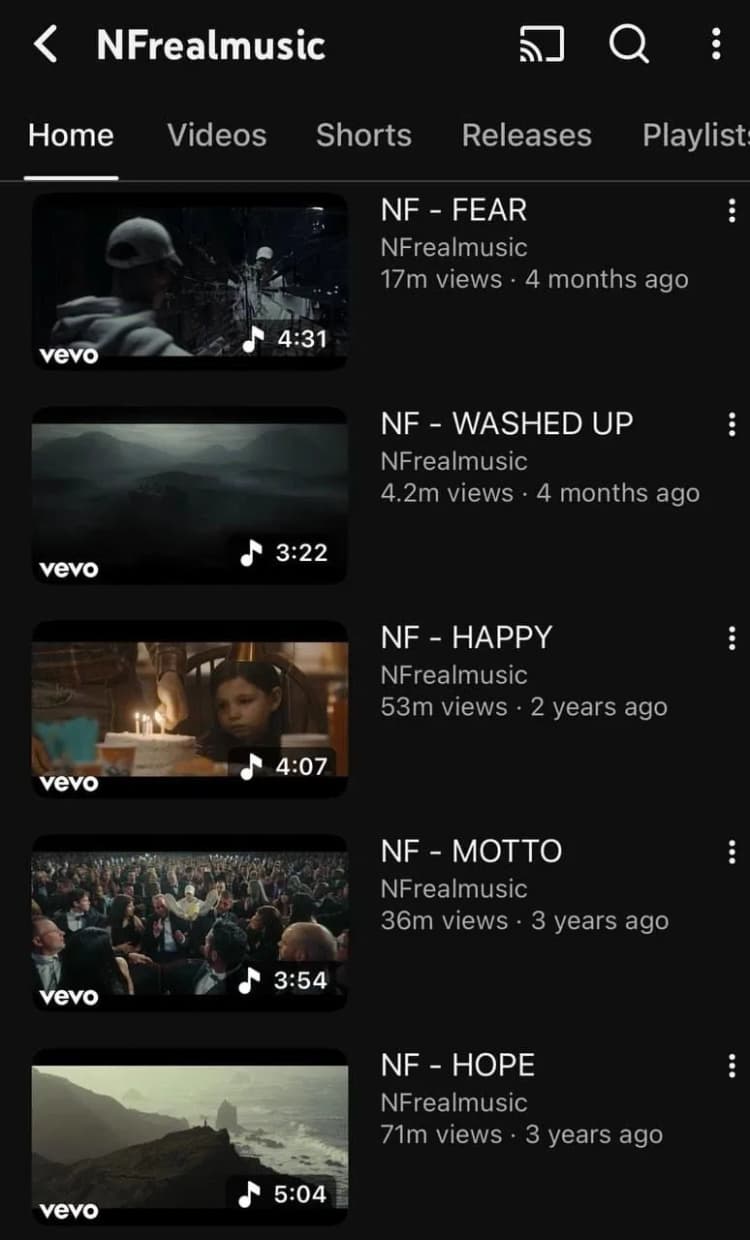
That coherence doesn't just make the music more memorable. It makes fans feel like they've entered somewhere specific when they show up.
The same goes for Hanumankind. By just reading titles, you can tell his rap is all about the style and vibes.
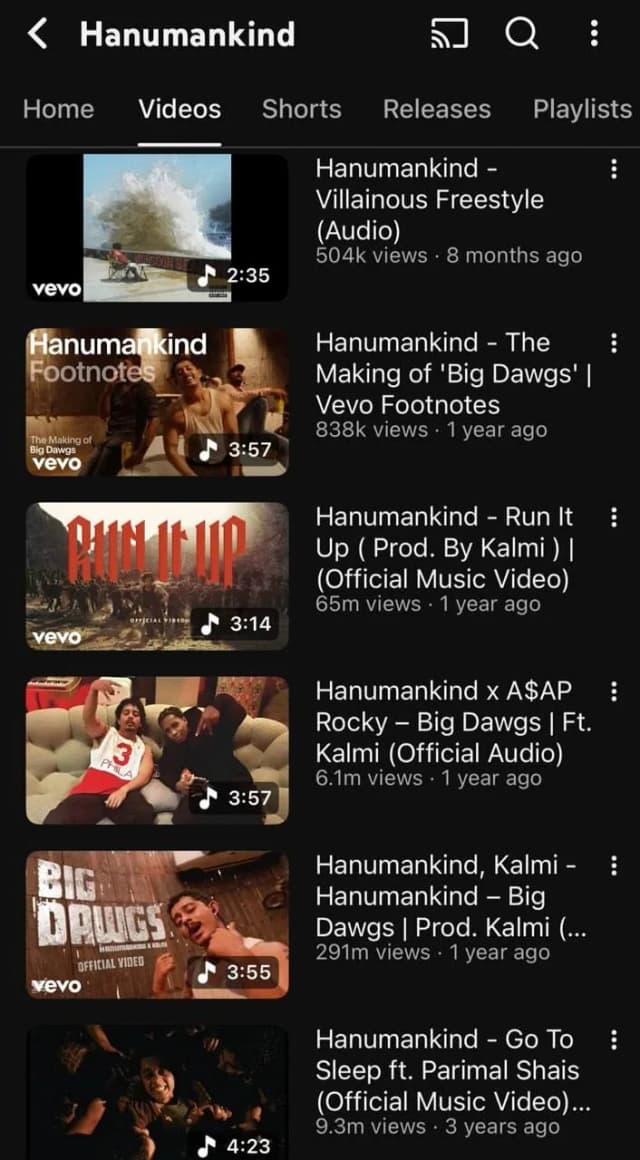
You don't need a major label budget to do this. You need a color palette, a visual tone, and a story for what this music represents. Every post, thumbnail, piece of artwork should feel like it lives in the same place.
Do that first. Then worry about your posting schedule.
Wait, you don’t know how to do it, do you? No worries, you can use this prompt to get your vibe:
You can use this prompt in ChatGPT to identify your style.
Hey, I’m [Artist Name]. I create music in the [Your Genres] space. My latest tracks are X, Y, and Z.
Based on my music style, titles, and emotional tone, create a cohesive visual identity for my brand.
Include:
- A primary and secondary color palette (with hex codes)
- The mood and psychological feel of each color
- Suggested visual themes (dark, gritty, cinematic, futuristic, etc.)
- 3–5 adjectives that define my brand world
- References to artists or aesthetics with a similar vibe
Make sure everything feels consistent and could translate across album covers, social media, and thumbnails.
#2 - TikTok Signature Series Tied to Your Music World
Random posts don't build audiences. A recurring content format gives people a reason to come back.
The biggest mistake I see indie artists make on TikTok is chasing trends. You spend three days on a trending sound video, it gets 200 views, and you move on. Nothing compounds.
What works is a serialized format tied to your music's identity. Not just pushing a song, but building something your audience can follow.
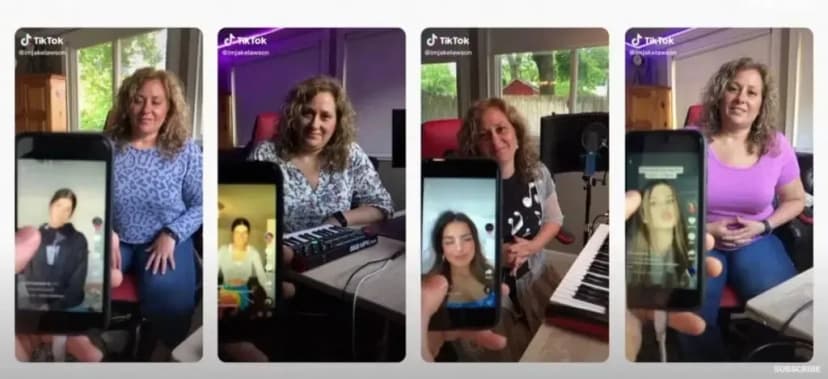
Some artists have done this brilliantly:
- JVKE filmed his mom (as you can see in the above image) and piano teacher hearing his new tracks for the first time
- BoyWithUke posted unfinished 60-second ukulele songs and let his audience vote on which ones to officially release
- Connor Price spun a globe on camera and collaborated with an indie artist from whatever country his finger landed on
- Charlie Puth recorded random everyday sounds and filmed himself building full pop beats around them in real time
- Tai Verdes documented his life working at Verizon and asked viewers to stream his car songs so he could quit his 9-to-5
Every one of these pulls the audience into the world behind the music. That's what a signature series does. It turns passive viewers into participants. And participants become fans.
Pick one format. Post at least 10 times before you evaluate anything.
#3 - Instagram Reels With Authentic Behind-the-Scenes Content
The finished song is not the most interesting thing you have. The process is.
From what we've seen, I can say artists who post nothing but "new song out now" content lose their audience fast.
The accounts that grow consistently mix in process content, studio moments, and personality. People follow you for you, not your release calendar.
And you don't need production quality to make this work. Charlotte Awbery was approached at a London tube station and asked to finish the lyrics to "Shallow."
She sang it. Someone filmed it on a phone. That one raw, unproduced moment gave her a platform overnight. In fact, PRs started calling her ‘London Tube Singer.’
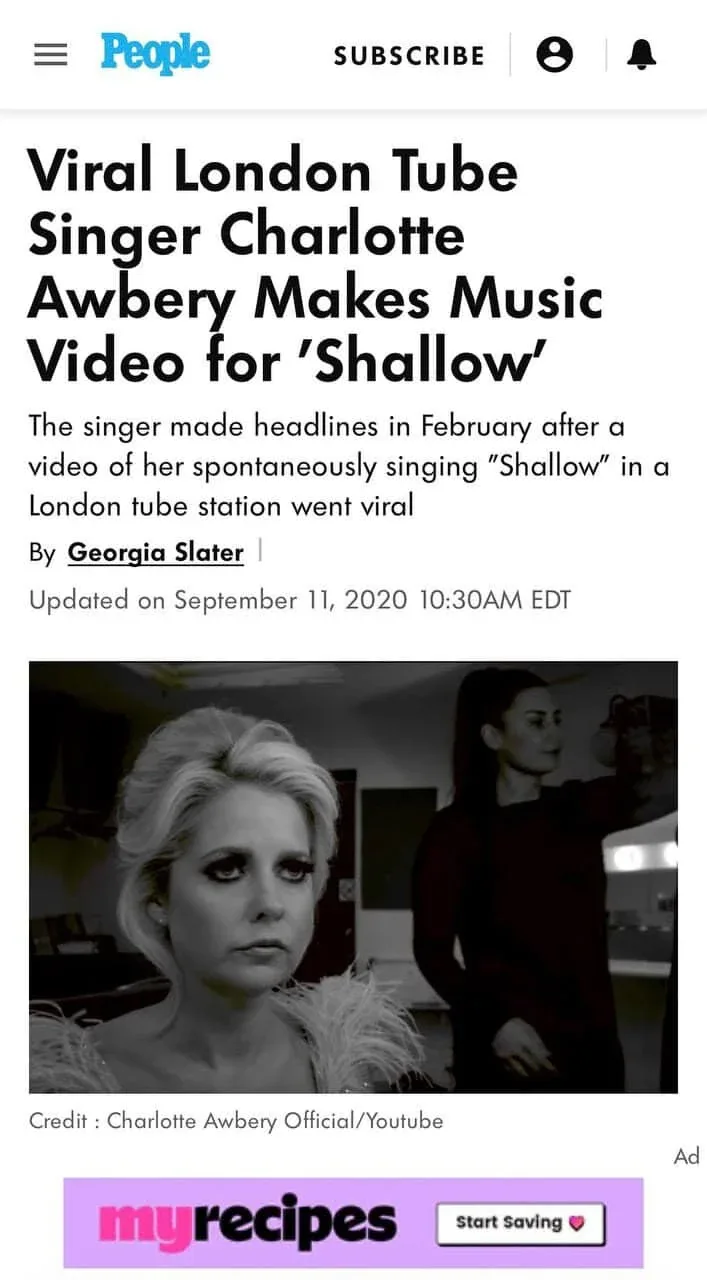
A clip of you writing verses at 1am, a 30-second loop of a melody you're building, a look at how you constructed a beat from nothing. That content works because it feels real. For instance, take a look at Lauv. He’s also pretty much doing the same thing.
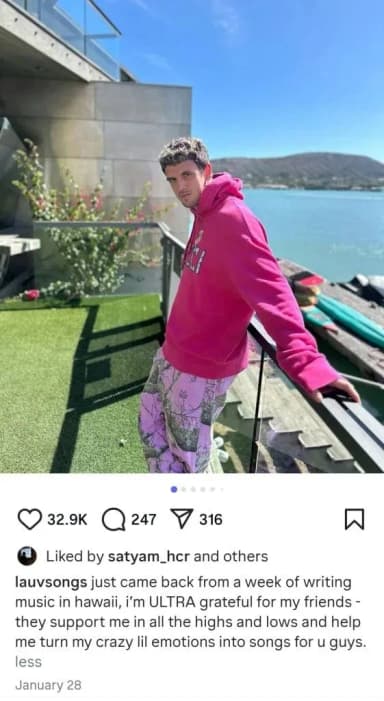
So, post the mess. That's what people connect with.
#4 - Spotify Playlist Pitching Done Right
Playlist placements still drive discovery. Most indie artists just approach them wrong.
The first mistake is timing. Editorial playlists require you to pitch through Spotify for Artists at least 4 to 6 weeks before your release date. Most artists submit the week of release. By then, you're locked out.
The second is genre. A huge number of artists choose the wrong genre when submitting. If your track lands in front of curators who cover a completely different sound, the pitch doesn't matter. This is something we focus on improving at SoundCampaign every day. This is why we built our own music genre analyzer that helps artists identify the actual genre of their track before they submit.
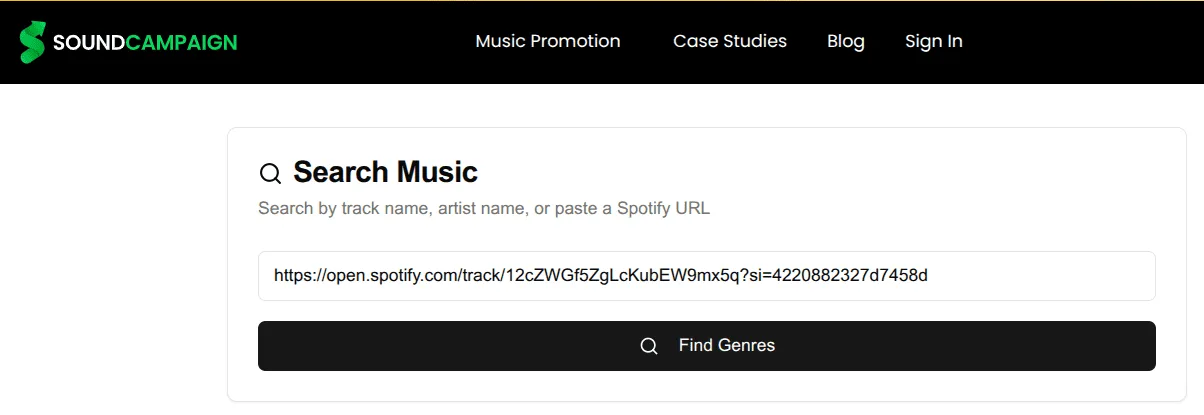
The third is the pitch itself. Curators get hundreds of submissions a week. Generic messages get ignored. A short, personal note that references a specific track already on their playlist goes much further. We put together a set of Spotify pitch examples that break down what works and why.
And the last is chasing quantity over quality. You want playlists with engaged, real listeners who save the track and add it to their own collections. That signals Spotify's algorithm to push you into Discover Weekly and Release Radar. A bot-filled playlist does the opposite. Before you submit anywhere, screen for genuine engagement.
Back in 2018, I saw a lot of playlist promotion agencies running payola scams and generating fake streams for artists. That's what pushed me to build SoundCampaign. I wanted to fill that gap with something that actually works the way music should work.
The process is simple. You create a Spotify campaign using SoundCampaign for the track you want to push, and curators review it. If they like it, that leads to real playlist adds. If not, you still get honest feedback on your track. So if you don't have time to play the DM game with curators one by one, you can run a campaign with us instead.
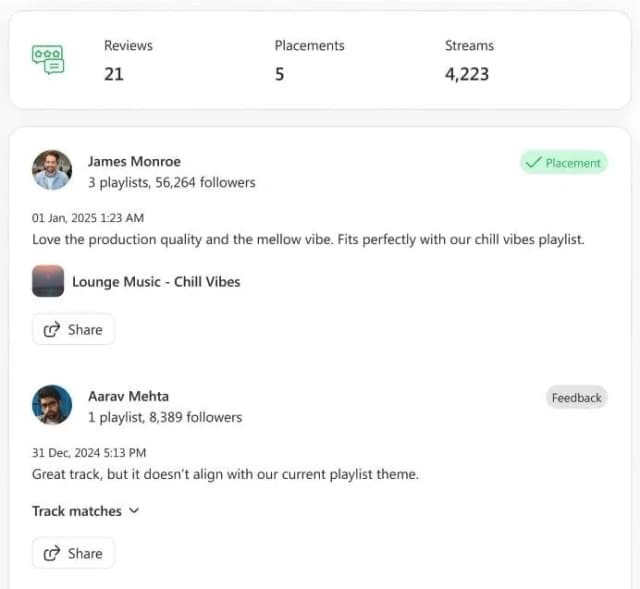
See? The conversation and the transaction is natural. Just the way it should be.
Every curator on our platform is carefully vetted by our team. And if you want to see what this looks like in practice, we've got a whole section of artist case studies worth checking out.
Once you start landing on relevant playlists, everything improves: listener retention, skip rate, follow ratio, saves, etc. Those signals compound. And eventually, they lead to more success on both algorithmic and editorial playlists.
#5 - Build an Email List and Own Your Audience
Every social platform can cut your organic reach overnight. Email can't.
Most indie artists still don't have an email list. That means every fan they've built lives on a platform they don't control. That's a career built on rented land.
You can run the best playlist campaign in the world, but if you have no way to reach those listeners directly when your next track drops, you're starting from scratch every time.
Just take a look at Dax’s email. He reached out to me once.
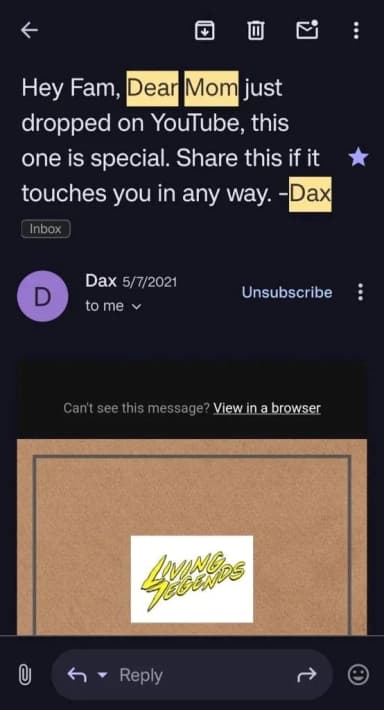
I get it, setting up email capture isn't the most exciting part of being an artist. But spend a week going through YouTube tutorials and testing things out. Trial and error is the fastest way to learn it. And once you have that skill, it's yours forever.
#6 - YouTube as a Long-Term Discovery Asset
Instagram posts disappear in 48 hours. TikTok posts live a little longer. YouTube videos get indexed by Google and discovered years after you uploaded them.
Most indie artists I see don’t leverage this enough. They think publishing tracks with consistency, tags, and a great description is what YouTube is all about.
In reality, it’s about a lot of things.
First, some artists match titles of the popular tracks. Even popular and already famous artists do so. It can’t be a coincidence every time.
For example, Stay by Rihanna was published 13 years ago.
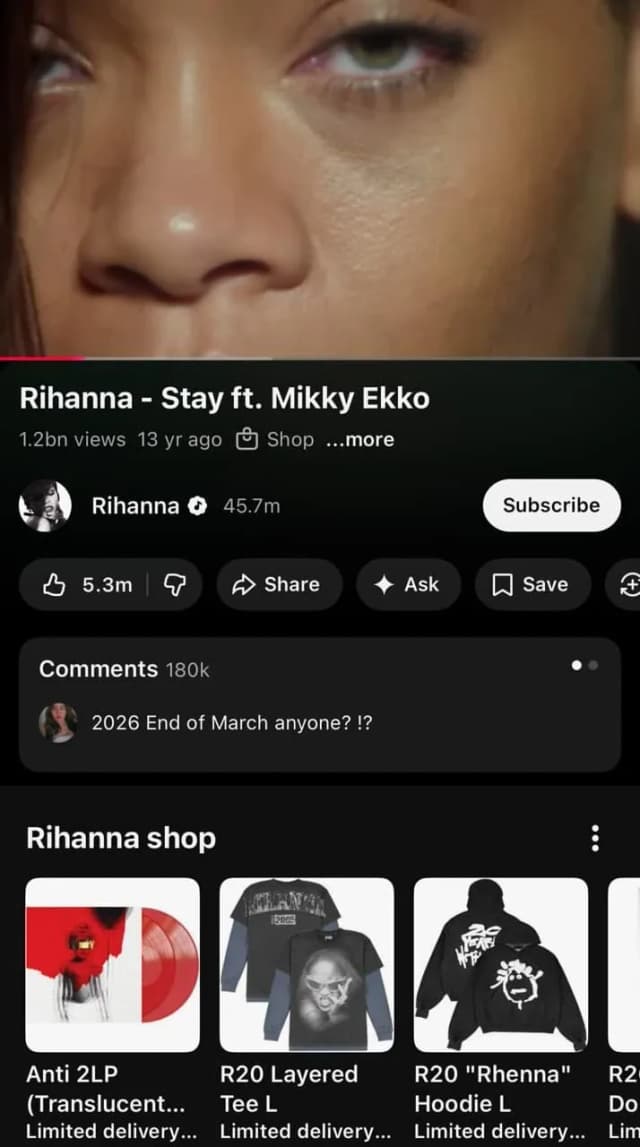
You can see another ‘Stay’ in 2021 by Justin Bieber.
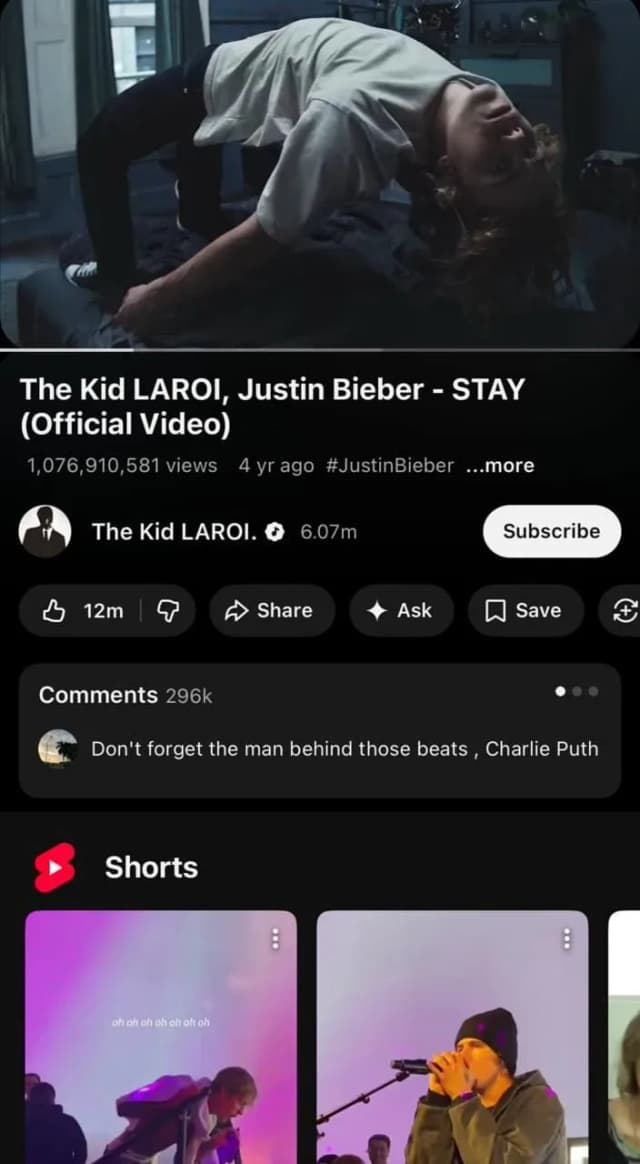
I’m not saying this is not a coincidence. But, things like this happen a lot in the music industry. You can see Perfect by both One Direction and Ed Sheeran. Another one is Sorry by Justin Bieber and Beyoncé.
Whenever a listener searches ‘Sorry’ or ‘Perfect’ on YouTube without an artist name, they’ll immediately see two tracks and might listen to another one too.
Apart from matching titles, you can see how artists create [Song Name + Cover/Remix] a lot.
You can see how they get millions of views like this:
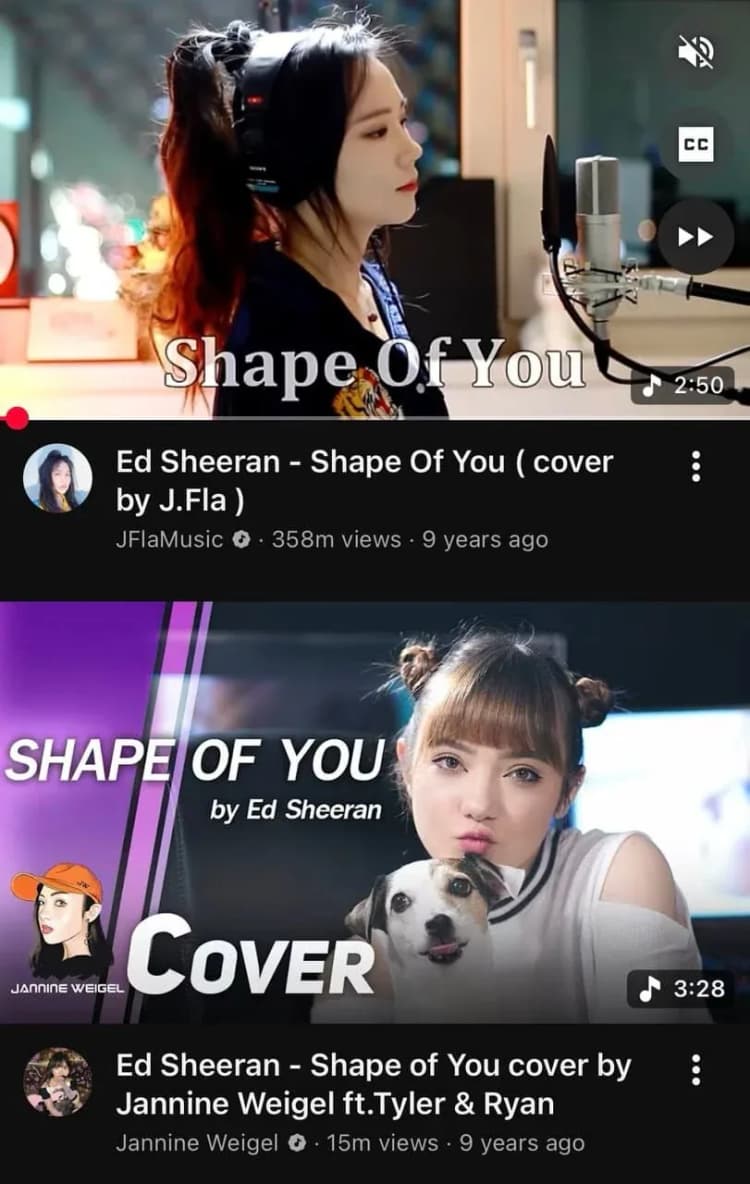
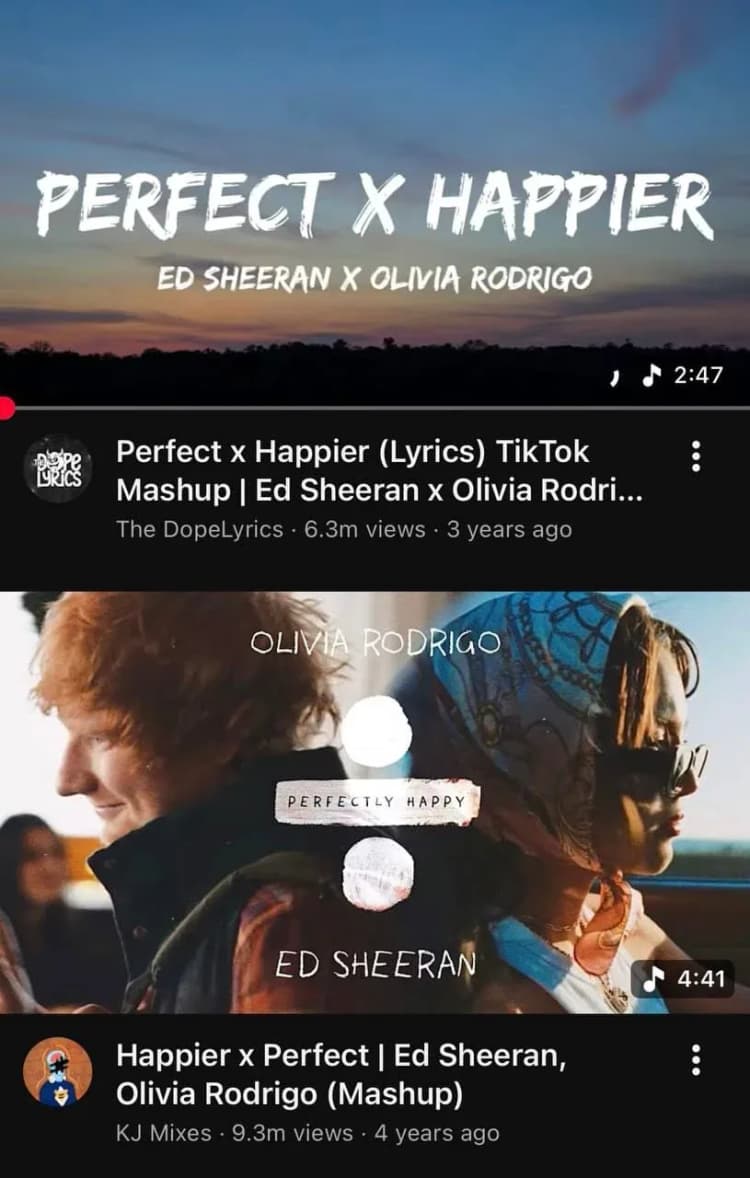
So on YouTube, you leverage SEO with matching titles, what’s already in trend, covers, remixes, etc. That’s how the algorithm shows you in both searches as well as suggestions.
#7 - Micro-Influencer Collaborations in Adjacent Niches
The fastest way to reach new fans is to borrow someone else's trusted audience.
Not a celebrity. A micro-influencer. Creators with 10,000 to 100,000 followers in niches that overlap with your music's identity: fitness, fashion, gaming, travel, lifestyle.
Their audiences are engaged. Their collaboration costs are reasonable. And their recommendation carries real weight because their followers actually trust them.
Now the question is how to find them. There are two ways to do it.
The first, you already know. Search Instagram or TikTok manually, build a list of creators, and start reaching out one by one. It works, but it takes time and you'll spend a lot of energy on the negotiation back and forth.
The second is running a campaign through SoundCampaign. We've built a large pool of vetted creators for both Instagram music promotion and TikTok music promotion. You set your budget, pick your platform, and get your music in front of real creators who actually fit your sound.
Here's an Instagram campaign one of our artists ran.
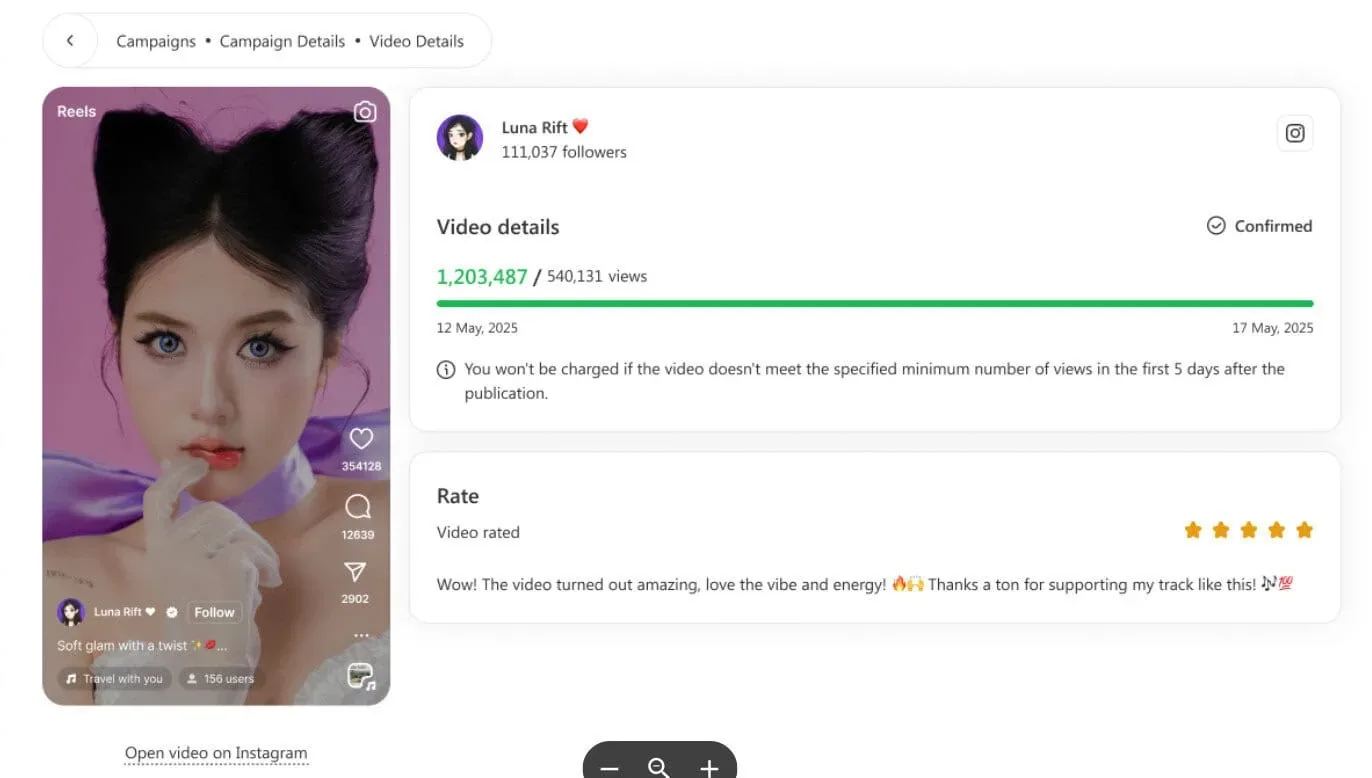
For Instagram, we don't charge artists if the video doesn't hit the minimum view count in the first five days.
And here's a TikTok campaign from another artist that pulled in over 8 million views.
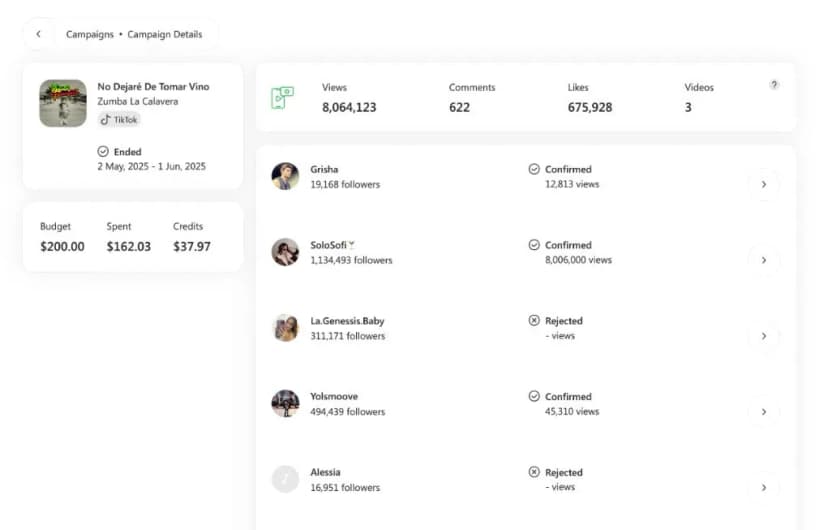
Results like these are possible when the right creators hear the right music. That's what we've built SoundCampaign to do.
#8 - Meta Ads After Your Fundamentals Are in Place
Most indie artists run ads wrong. They show them to the wrong audience, don't have the right creatives, and then conclude that paid promotion doesn't work.
To make it work, you need to understand what audience segment fits your genre, what hooks grab attention, what trends are worth riding, and basically everything that involves the marketing psychology that makes a song go viral.
Meta Ads is not something I recommend doing on your own. So many artists kept asking me to build a solution for this that last year, I finally did.
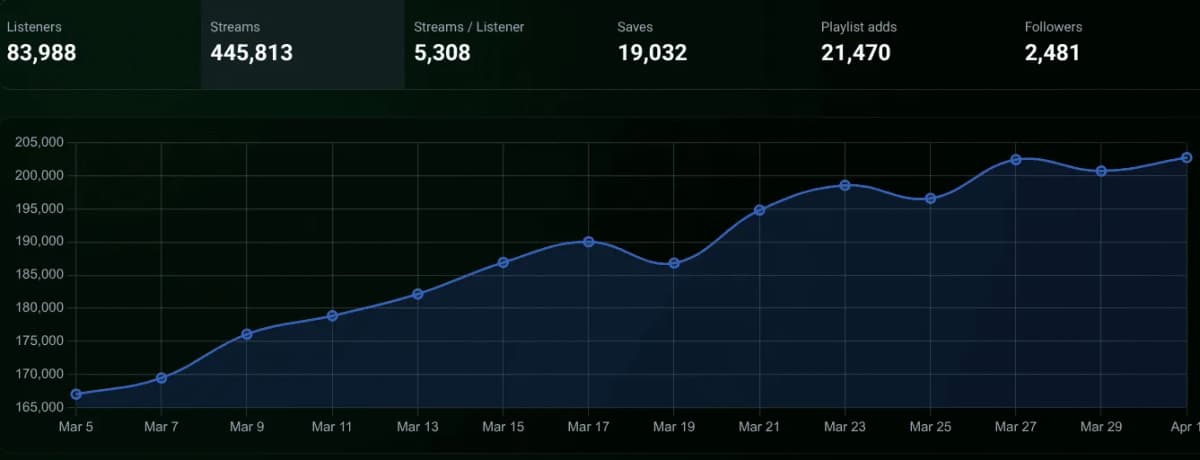
When you run Meta Ads through SoundCampaign, you get an easy way to filter your campaign and choose an audience. You also get free ad creatives from our team. On top of that, you get expert analysis and a full audit of your campaign.
That’s something no music marketing agency is doing.
Let me show you how it works:
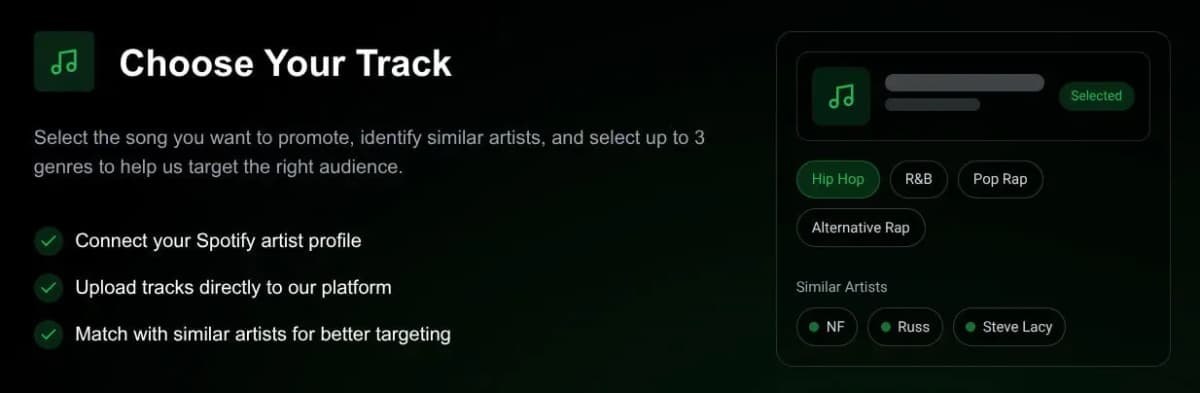
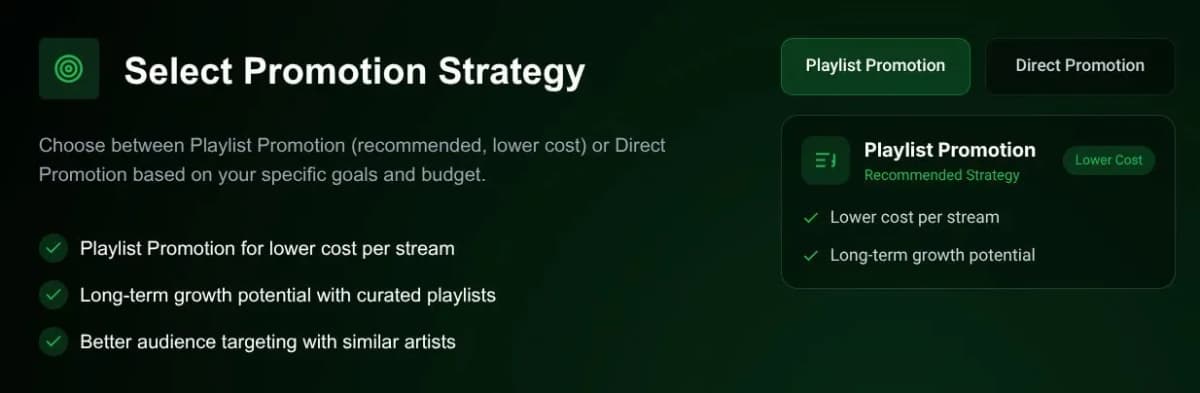
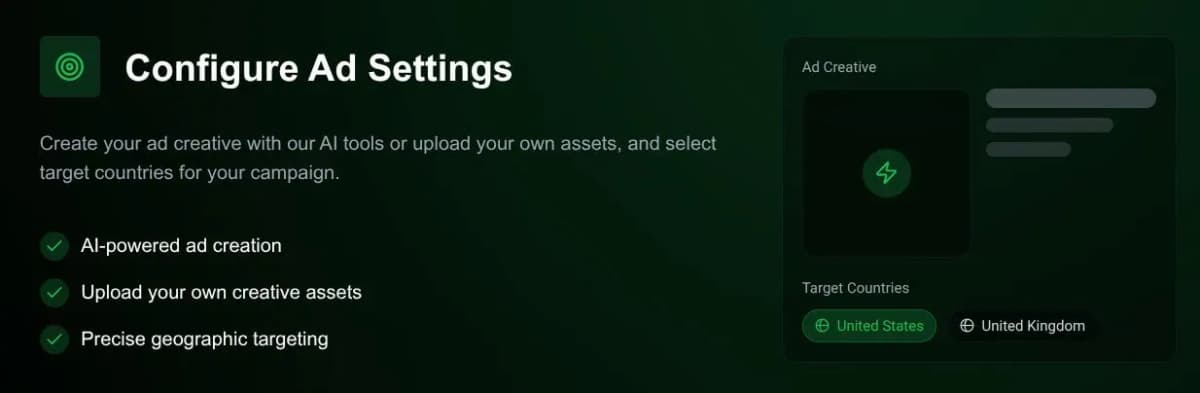
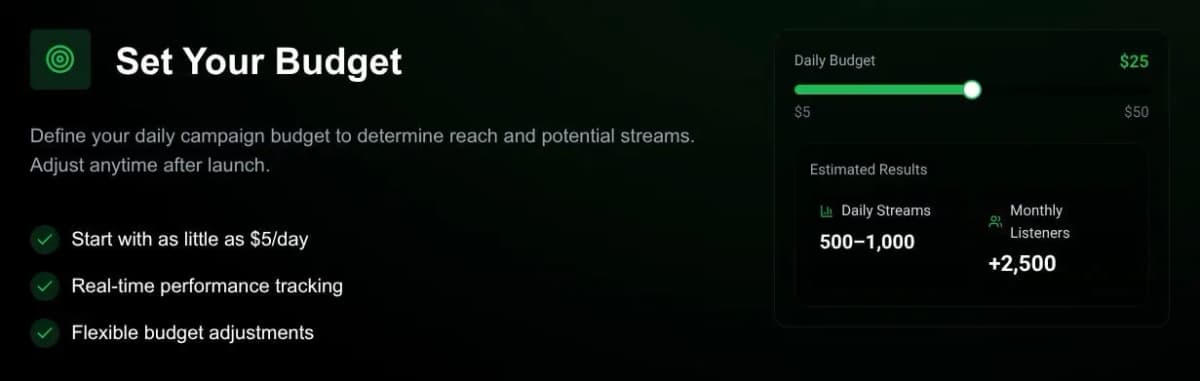
That's it. It took us a long time to build it, but it's the easiest way for an artist to run Meta Ads.
#9 - Build a Superfan Community Hub
A small percentage of your listeners drive most of your streams. Most artists ignore them completely.
I've seen this play out over and over. An artist has 10,000 monthly listeners and obsesses over getting to 50,000. Meanwhile, the 200 fans who stream every track on repeat, share every release, and buy every piece of merch get zero attention. Those are your superfans. And they're worth more than the other 9,800 combined.
Some bigger artists have figured this out. Keane built a Facebook Group called "Thread" with over 23K members where band members operate as admins and interact with fans directly. That group drives more consistent promotion than any ad campaign could, because the fans actually want to be there.
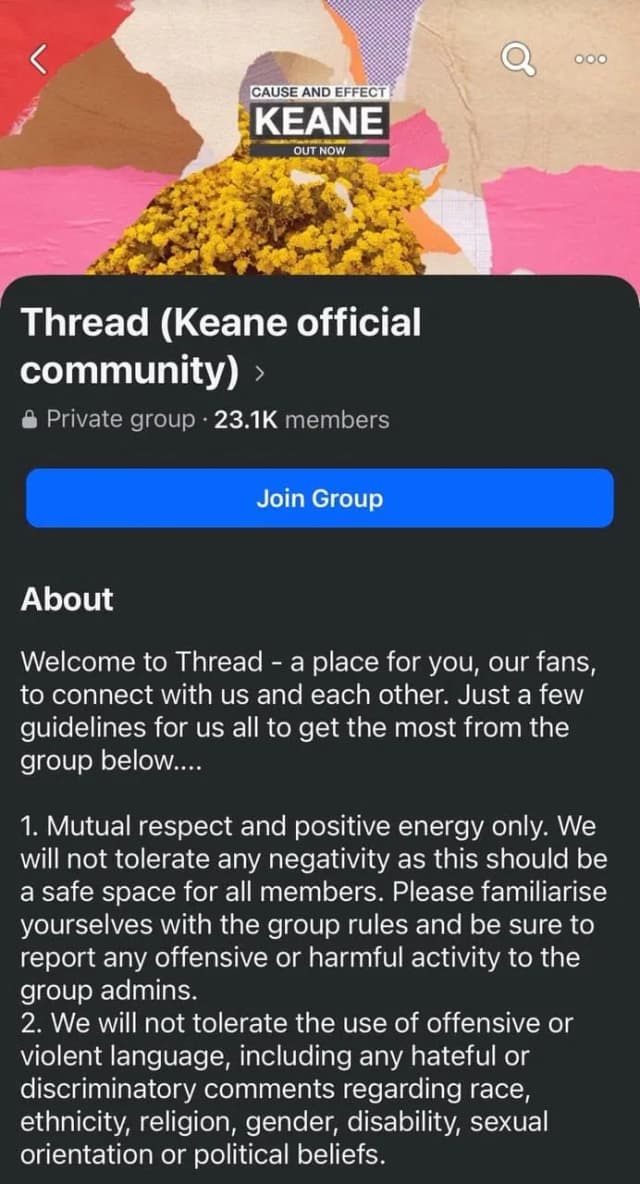
But you don't need 23K people. You need 50 fans who feel like insiders.
Create a Discord server or a private Facebook Group. Give your most engaged listeners early access to unreleased tracks, a vote on cover art, first dibs on tickets. It costs you nothing. The return is a core audience that promotes your music because they feel like they're part of something real.
Sounds crazy, right? In that case, you haven’t discovered what Patreon can do for musicians.
#10 - Live Streaming and Virtual Release Events
A tour requires money, logistics, and a booking agent. A live stream on Instagram Live, YouTube Live, or Twitch costs nothing and reaches fans anywhere in the world in real time. That's one of the clearest advantages independent artists have right now.
Platforms like Eventbrite and StageIt let you run ticketed virtual concerts with built-in tipping and merch sales.
You can also create something like this:
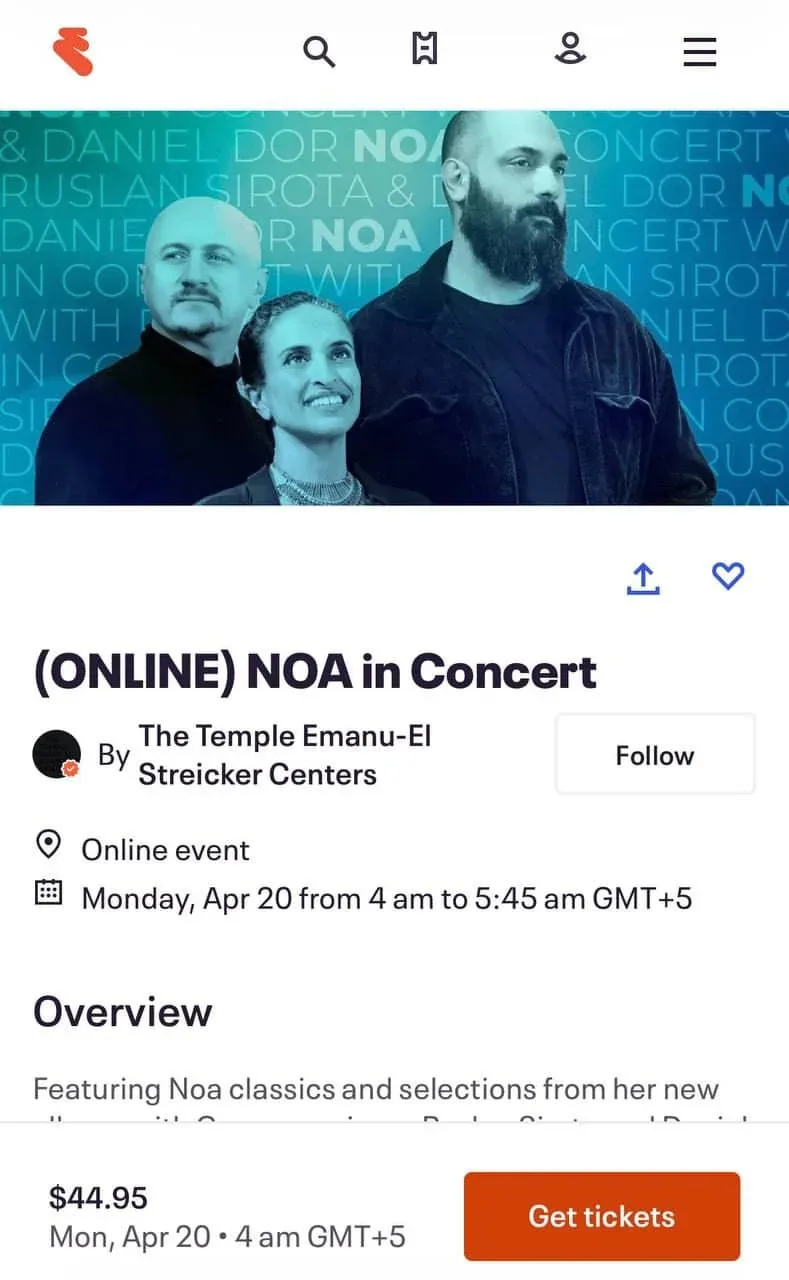
That turns a free-to-host event into real revenue. You don’t have to worry about the venue, travelling expenses, or anything at all. Just you, your music, and fans. That’s all.
And here's the part most artists don’t even have an ide about.
What if I tell you every live stream is also a content creation session?
Yes, clip the best 30-second moment for TikTok. Pull a quote from the Q&A for an Instagram caption. I’m sure one or two-hour stream can give you 10 pieces of short-form content that work for weeks afterward.
Frequently Asked Questions
What is the best social media platform for independent artists this Year?
TikTok for discovery, Instagram for depth of relationship, YouTube for long-term indexed content. The best platform is the one you will actually use consistently for 12 months. Consistency beats platform selection every time. Pick one, commit, then add others.
How much should an independent artist spend on social media promotion?
You need to spend something. The "just grow organically" advice almost never works on its own anymore. Algorithms reward momentum, and momentum costs money.
Start with $100 to $300 per month on playlist promotion or a Meta Ads campaign. Once you've got some traction, scale to $300 to $500 split between playlists, social ads, and TikTok. The artists who wait until everything is perfect before spending a dollar are the ones who stay stuck.
Does Spotify playlist placement actually work for indie artists?
Yes, when the playlist has engaged real listeners who save the track and add it to their own playlists. Those actions trigger Discover Weekly and Release Radar placements, which compounds the effect. Playlists with bot or passive listeners send negative algorithmic signals. Quality of placement matters more than quantity.
How do you get noticed on TikTok without going viral?
Create a recurring content series tied to your music's identity. Virality is unpredictable. A recognizable format people look forward to is repeatable. Build the series, not the viral moment.
How do independent artists build superfans?
Identify who comments on everything, buys merch, and streams on repeat. Then give them a private space: a Discord server, a Patreon tier, or a private Facebook Group. Exclusive early access to unreleased material converts engaged listeners into advocates who promote your music because they feel like insiders.
Is email marketing still worth it for musicians?
Yes. It's the only fan channel no platform algorithm controls. TikTok can reduce your reach tomorrow. Instagram already has. Email lands directly in the inbox of someone who opted in. That relationship is worth building before you need it.
How far in advance should I pitch to Spotify editorial playlists?
At least 4-6 weeks before your release date, through the Spotify for Artists dashboard. Missing this window means waiting until the next release. This is the one deadline in music promotion where being late has a hard cost.
One Thing to Do Before Your Next Release
Before you drop your next track, pick one strategy from this list that you're not doing yet. Just one. Run it properly for 30 days. See what happens.
Most artists read articles like this and try to do all 10 at once. That's how you end up doing nothing well. The artists I've seen win with SoundCampaign didn't have bigger budgets or better connections. They just picked a lane and stayed in it long enough for things to compound.
Social media is not going to promote your music for you. But if you use it right, it will put your music in front of people who were already looking for something exactly like it. That's the whole game.

Gründer & CEO von SoundCampaign
Ich bin Nadav. Bevor ich das hier aufgebaut habe, habe ich selbst Musik gemacht, und genau daher kommt mein Interesse an Marketing. Am liebsten beschäftige ich mich mit den Analytics: woher Streams kommen, was sich bewegt hat und was nicht. Ich habe SoundCampaign gegründet, um Artists echte Reichweite zu geben. Das hat deutlich mehr Zeit und Aufwand gekostet, als ich geplant hatte, und daran hat sich bis heute nicht viel geändert.
Bewirb deine Musik
Echte Playlist-Platzierungen, TikTok-Videos & Meta-Anzeigen

Vertraut von 100.000+ Künstlern & Labels
Keine Bots, niemals.
Echte Case Study
Wie SoundCampaign Grant Knoche vor 460.587 Hörer für WOOHOO brachte
Ganze Geschichte lesen
Bereit, mit deiner Musik gehört zu werden?
Schließe dich Tausenden unabhängigen Künstlern an, die mit SoundCampaign echte Playlists, Creator und Fans erreichen, mit ehrlichem Feedback bei jedem Schritt.
- Keine Bots, niemals
- KünstlerschutzprogrammWenn ein Kurator oder Creator deinen Track nicht bewertet, erstatten wir dir dein Guthaben. Dein Budget ist immer geschützt.
- Behalte 100% deiner TantiemenWir sind ein Promotion-Service, kein Label. Wir behalten niemals einen Anteil deiner Streams oder Tantiemen ein.