Promoción Musical
How to Promote Rap Music in 2026

Nadav Peleg
Actualizado · 14 min de lectura
Not sure how to promote rap music? Discover 10 tactics that actually work for rappers to grow listeners, land opportunities, and build a loyal fanbase.


On this page
- #1 - Get on AudioMack Before You Do Anything Else
- #2 - Post Your Tracks in r/makinghiphop's Daily Feedback Thread
- #3 - Use SoundCampaign to Get In Front of the Rap Listeners
- #4 - Submit to Spotify Editorial Playlists Before Your Track Goes Live
- #5 - Your Hook is Your TikTok Ad. Write It That Way.
- #6 - YouTube is the Long-Term Game for Rap Music
- #7 - DM YouTubers and Vloggers to Use Your Music for Free
- #8 - Collab Across Genres, Not Just Within Rap
- #9 - Pitch Hip-Hop Press Before the Big Blogs
- #10 - Play Every Show That Has Your Audience in the Room
- Final Advice
- Some FAQs You Might Have
Rap music is the most amazing genre I’ve ever seen. This is the one of those genres where you can see artists killing their throats or making melodies that can leave you with goosebumps.
The most interesting thing is rappers create their own genre blending different kinds of elements. But as good as it sounds, it gets really tough to stand out because of this.
Rap fans are aware of what they want to listen and what good music means. They want a lyrical track, emotional one, and anything that’s not mainstream and makes you sound different.
Before I started building SoundCampaign, I have been a former music producer and a great fan of rap music. In fact, NF is the one I listen to all the time. So, I’ve got enough knowledge and experience to show you how to promote rap music this year.
Sounds cool? Let’s get into it.
#1 - Get on AudioMack Before You Do Anything Else
You've heard of SoundCloud and Spotify. Nobody ever tells you about AudioMack.
That is a mistake.
AudioMack was built for urban music. The platform skews heavily hip-hop and R&B, and the user base is made up of rap fans, not indie music listeners or EDM producers.
It’s free to upload music there. It tracks downloads and has its own trending pages and discovery features designed specifically for rap and R&B subgenres.
The reason to be on AudioMack before you're on anything else is the audience.
Spotify and Apple Music are broad. SoundCloud tilts toward electronic producers and indie artists.
AudioMack tilts toward rap fans who are specifically looking for new music in the genre. If someone is searching AudioMack, they are looking for rap. You want to be the rap they find.
Upload your full catalog. Fill out your profile. Tag your music correctly by subgenre.
AudioMack's search is keyword-based. A properly tagged track in "trap" or "drill" or "conscious hip-hop" shows up in those searches. Most rappers ignore this. That means the ones who don't have a smaller competitive field on the platform where their audience already is.
It takes 20 minutes to set up.
#2 - Post Your Tracks in r/makinghiphop's Daily Feedback Thread
The r/makinghiphop subreddit has over 80,000 members. It runs a daily feedback thread where rappers and producers post their music and get honest, peer-level critique from people who actually know what they're listening to.
This is valuable for two reasons.
First, feedback tells you what's not working before you spend money promoting it. If your track is getting skipped at the hook every time, that's data.
Second, the community is your audience. People on r/makinghiphop are fans of rap who also make rap. When someone on that forum genuinely likes your track, they tell people. That is organic discovery from a qualified listener. So, you get love from the hood.
Post once or twice a week. Include a direct link, a note about what you were going for with the track, and ask for specific feedback. Don't just say "check this out." Saying "I'm experimenting with this cadence in the second verse, trying to hit a different pocket" invites a real response.
The rappers who avoid this thread are scared of negative feedback. The ones who use it every week are getting better and getting discovered at the same time.
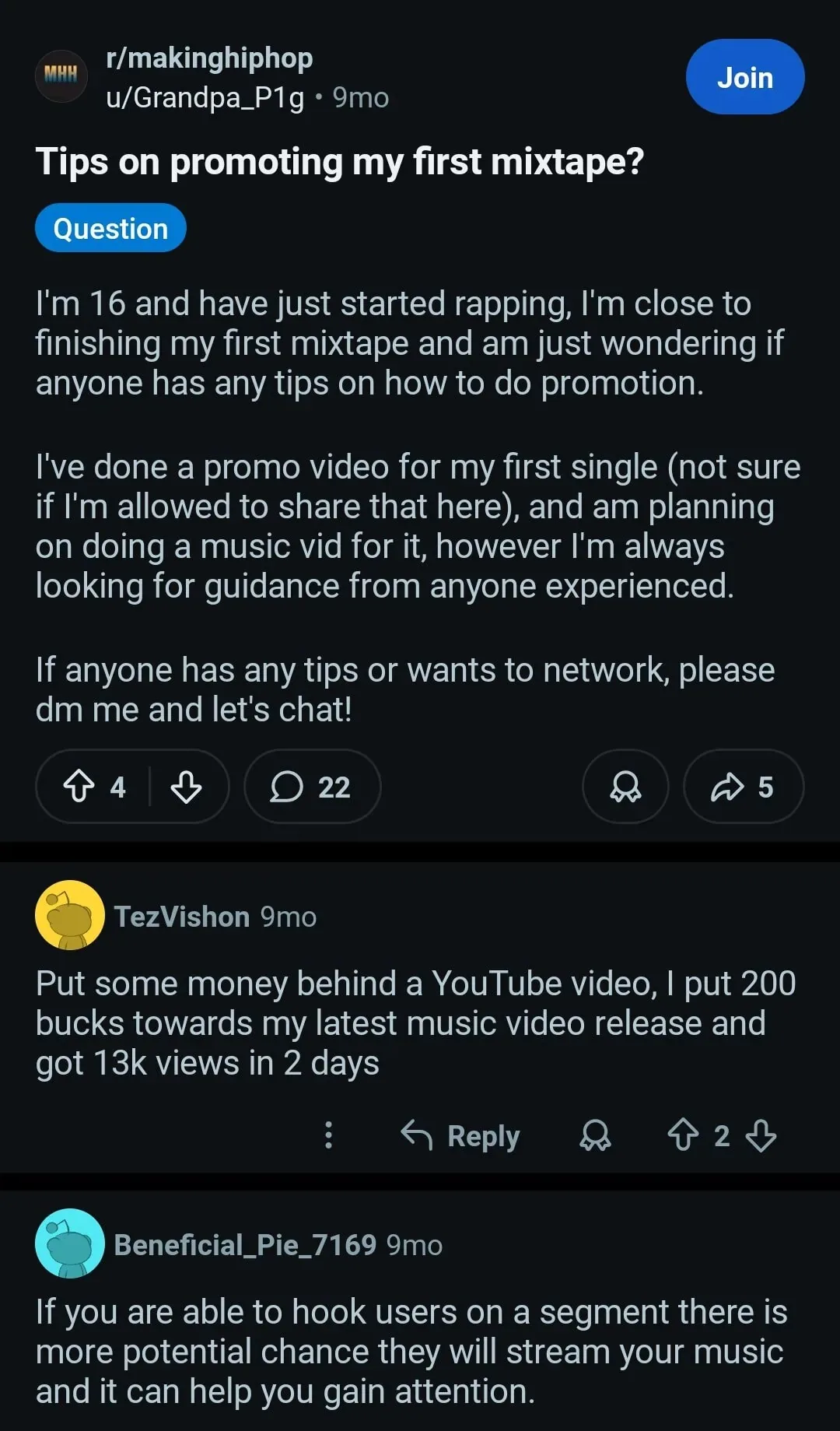
For instance, this 16 year old young OG got 20+ comments. That's helpful, isn't it?
#3 - Use SoundCampaign to Get In Front of the Rap Listeners
You and I both know that Meta platforms like Instagram have been really helpful for rap music. From Old Town Road to Marry On a Cross, there’s a lot of rap tracks that got attention from these social media platforms.
What if I tell you with a little budget you can get access to some of the most popular influencers in your niche? Not only that, what if you get our ads expert who will pick the right filters for your music so that it gets shown in front of the right listeners?
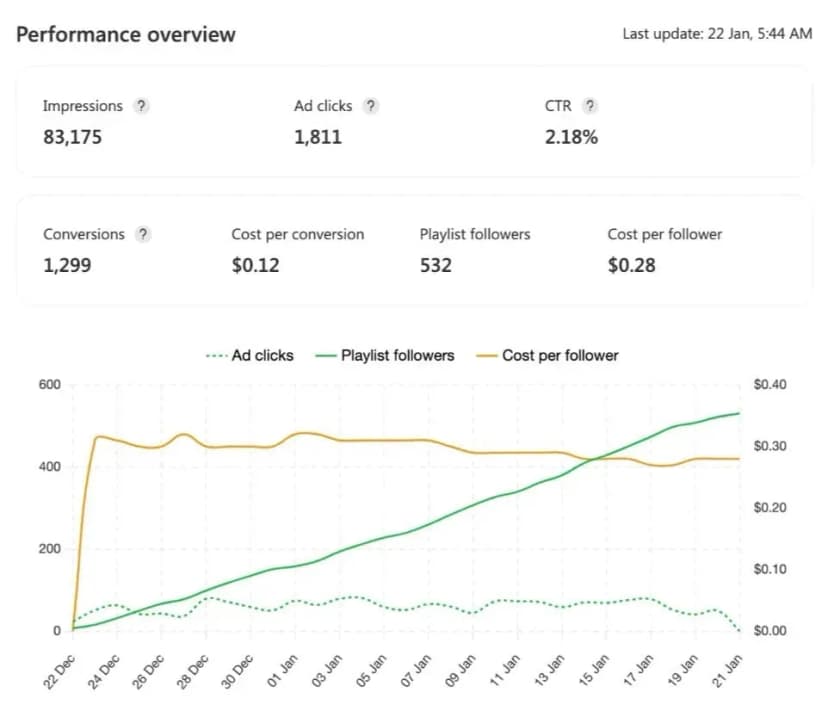
That’s what we do. Let me show you results from a couple of artists who used SoundCampaign in the past.
#4 - Submit to Spotify Editorial Playlists Before Your Track Goes Live
Spotify for Artists has a built-in tool that lets you pitch an unreleased track to the Spotify editorial team for playlist consideration.
You must submit at least 7 days before your release date. If you miss that window, you can’t submit for that release. You wait for the next one.
Most rappers don’t know this exists. The ones who do know about it miss the deadline because they release music impulsively. They finish a track, distribute it immediately, and try to promote it after. The editorial pitch is a pre-release process. The track has to be in DistroKid or TuneCore before you can submit it, but it can’t be live yet.
A placement on an editorial playlist adds streams passively for months. It also signals to the Spotify algorithm that the track is worth pushing through Discover Weekly and Radio. That compounding effect is significant for catalog growth.
Claim your Spotify for Artists profile if you haven't. Submit every release 7 days early from now on. Every time.
#5 - Your Hook is Your TikTok Ad. Write It That Way.
TikTok surfaces 8-15 seconds of audio. The moment that gets used as a sound, replicated by content creators, and pushed through the ‘For You’ page.
Your hook is the thing that either becomes a TikTok sound or doesn't.
Look at the rap tracks that blew up on TikTok in the last two years. They have specific things in common. A distinctive vocal delivery that makes the artist immediately recognizable. A punchline or quotable line that people want to lip-sync. Or a production element (a specific sample, a specific vocal chop, a specific beat pattern) that makes creators want to build video content around it.
You can start with this list:
- Old Town Road (Lil Nas X)
- Say So (Doja Cat)
- Savage (Megan Thee Stallion)
- Million Dollar Baby (Tommy Richman)
- Abcdefu (GAYLE)
- Boy's A Liar Pt. 2 (PinkPantheress, Ice Spice)
- Dreams (Fleetwood Mac)
- Bloody Mary (Lady Gaga)
- Running Up That Hill (Kate Bush)
- Mary On A Cross (Ghost)
#6 - YouTube is the Long-Term Game for Rap Music
On Spotify, the algorithm stops pushing your track, the streams stop. You get pushed by Discover Weekly or by a playlist. If your engagement signals are strong, it continues. If not, your era and the track sits in catalog limbo.
On YouTube, someone searches for "aggressive rap songs" and your music video from 18 months ago shows up in results.
Listeners watch it, find your channel, and go three videos deep. In the end, they subscribe. That one search drives catalog streams indefinitely because YouTube's search is keyword-indexable and your old videos don't expire.
Rap audiences specifically use YouTube as a listening platform. People put on rap mixes, full albums uploaded to YouTube, lyric videos, and visualizers while they drive, work out, and study.
The platform is where rap catalog lives long-term in a way Spotify doesn't replicate.
While most rap artists who start in their career upload their first track, I’d highly recommend YouTube if you haven’t created your channel yet.
Every track needs a music video, a lyric video, or a visualizer. Titles should be search-optimized: "song name artist name genre year."
Descriptions should include every keyword your listeners would use to find that sound.
#7 - DM YouTubers and Vloggers to Use Your Music for Free
This is one of the most underused distribution plays. Social media creators need background music constantly.
Vloggers, travel creators, lifestyle channels, daily content machines. They can’t use mainstream tracks without copyright issues, so they actively look for music they can use safely.
You can be that music.
Gary Vaynerchuk put it bluntly: give your music to creators for free and let distribution compound over time.
The practical move is simple.
Find 50 creators whose content matches your sound. Not random. Not mass outreach. Fit matters.
Here’s a quick map:
|
Your Style |
Creator Type |
Where It Fits |
|---|---|---|
|
Melodic Rap |
Lifestyle, couples, beauty |
GRWM, chill vlogs, emotional moments |
|
Trap |
Travel, cinematic vloggers |
Montages, transitions, storytelling |
|
Drill |
Fitness, gym, urban creators |
Workout clips, high-energy edits |
|
Conscious Rap |
Commentary, documentary channels |
Storytelling, voiceovers, narratives |
|
Lo-fi Rap |
Study, productivity creators |
Background loops, calm segments |
|
Hype / Party Rap |
Nightlife, party vloggers |
Event clips, transitions |
|
Street / Raw Rap |
Day-in-the-life, street vloggers |
Real-life sequences, intros |
Now your outreach has direction.
DM them with:
- A direct link
- One line on why it fits their content
- Clear permission to use it for free
Your track in 100 vlogs reaching 200K real viewers beats 5K random passive Spotify streams every time at this stage.
One builds recognition. The other inflates a number no one remembers.
#8 - Collab Across Genres, Not Just Within Rap
When rappers think about features, they think about other rappers. Someone at their level or slightly above. Maybe someone in another city with a regional audience they want access to.
That’s the minimum-return approach to collaboration.
The maximum-return approach is going outside rap entirely.
In 1986, Run DMC did "Walk This Way" with Aerosmith. Hip-hop moved into mainstream rock radio and MTV for the first time. One collaboration changed the trajectory of an entire genre's mainstream accessibility.
Kendrick Lamar and Taylor Swift performed together at the Grammys. Kendrick's DAMN. sold 603,000 units in its first week, his biggest commercial week ever. That is not a coincidence.
You don’t need to collab with Taylor Swift. You need to find one artist at your level in a different genre, whose audience has never heard rap framed in the way you frame it, and make something together.
A rapper working with an indie singer. A rapper collabing with an R&B artist whose listeners are women who wouldn't usually click on a rap track. A rapper and a producer who crosses into grime or trap metal.
Every collab with another rapper gives you access to rap fans who already follow rap. Every collab outside the genre gives you access to people who have never clicked on a rap link in their lives. Those are the ones who become fans for life when you're the first rapper who ever hit them right.
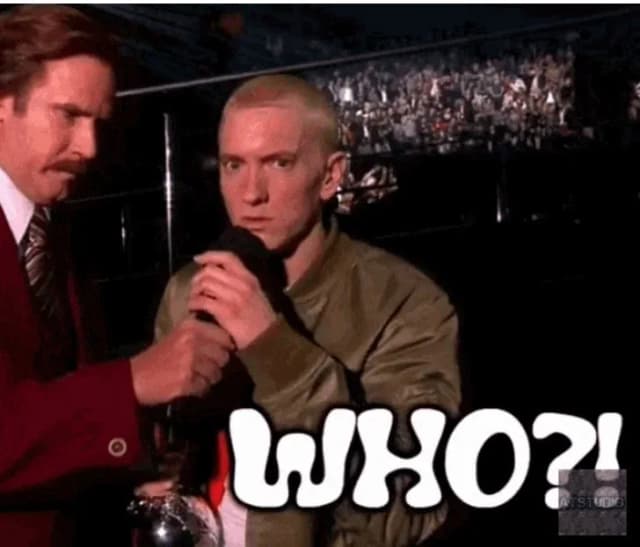
I can tell you this guy knows how to step into any genre and earn fans as a rapper. Study him. Those who don’t listen to rap music listen to Eminem, and there’s a reason for that.
#9 - Pitch Hip-Hop Press Before the Big Blogs
Most rappers, when they think about press, think about XXL, Complex, and Pitchfork.
Those are not where unsigned rappers get covered.
HotNewHipHop, DJBooth, Pigeons & Planes, etc, are rap-endemic publications that actively run features on independent artists.
DJBooth in particular has an "artist to watch" section that has introduced listeners to artists years before those artists became widely known.
The readers of these outlets are specifically there because they want to find new rap. They are hip-hop fans who use the publication as a source, not casual music listeners who happen to land on a review.
Pitch these outlets the same way you'd pitch a label: a short, professional email, a link to your best track, a brief bio that explains your sound without cliches, and any notable context (a strong live following, a specific story behind the music, a viral moment).
Build the pitch list in order. Five small local blogs or regional rap outlets first. Then mid-tier endemic outlets like DJBooth and Pigeons & Planes. Then HotNewHipHop.
XXLmag and Complex are for when you already have a story. The smaller endemic outlets are where the story gets built.
#10 - Play Every Show That Has Your Audience in the Room
Before DaBaby signed to Interscope, he was playing every show he could get in Charlotte, North Carolina. Not one or two shows. More than two a day, at the peak of that grind. He released music independently, with no label support, and built a local fanbase so deep and so loyal that it became a national story.
Charlotte is not New York. It is not LA or Atlanta. DaBaby built a career there because he showed up to every room that had his people in it.
Open mic nights. Local venue residencies. Rap battles. Ciphers at events. College campus showcases. Bars with late-night lineups. These are the live formats where rap fans show up and where actual fans are made. A person who watches you rap in a room full of people, who feels the energy, who hears the crowd react, becomes something no playlist placement can manufacture: a fan who tells people.
Live performance has the highest conversion rate of any promotion channel for rap specifically. The community aspect of hip-hop, the cipher culture, the call-and-response dynamic between performer and crowd, that is built in real rooms. You can’t simulate it.
If your city has nothing, create something. Book the show yourself. Rent the space. Invite five other local rappers and split the cost. Throw a cipher night. DaBaby didn't wait for the industry to find him. He made himself impossible to ignore.
Final Advice
Go the DaBaby way.
Don't try all 10 at once. The rappers who grow pick one or two channels, get better at them than everyone around them, and let the results compound.
DaBaby played every show he could get. That was the strategy. One thing, done intensively, until it became impossible to ignore.
Pick the two tactics that fit where you are right now. Work them for 90 days before you add a third. Two things done well beats ten things done poorly every time.
Just in case you want to try out something that works faster than anything, you can explore SoundCampaign. I’ve been working on it since 2018 to help artists like you.
Since then, we’ve earned a lot of love from the hood:

Here you can create a Spotify playlist, TikTok, and Meta campaigns for your next release.
Some FAQs You Might Have
What is the best platform to promote rap music?
There is no single best platform, but the stack that matters for rap specifically is: AudioMack for hip-hop community discovery, YouTube for long-term catalog streams and search-based discovery, TikTok for new listener acquisition through hook-based virality, and Spotify for passive algorithmic streams. Build in that order.
Is AudioMack still relevant for rap?
Yes. AudioMack is specifically built for hip-hop and R&B and skews toward the core rap audience more than SoundCloud or Spotify. Free downloads, trending pages, and a community that is specifically there for rap. Most promotion guides don't mention it, which means it's still an underutilized channel.
How does SoundCampaign promote rap music?
SoundCampaign helps you promote your rap music in several ways including Spotify playlist placement, Instagram and TikTok influencers, Meta Ads, etc. To get started, you can learn more here.
How do I get my rap on Spotify playlists?
Two routes. First: submit your unreleased track to Spotify's editorial team through Spotify for Artists at least 7 days before your release date. Free to do, no label required. Second: use SoundCampaign to get feedback from independent playlist curators in hip hop genre. Target niche playlists over large generic ones. If your verses really make sense, I'm sure you'll definitely get into some great playlists.
How do I promote rap music without spending money?
AudioMack (free), r/makinghiphop feedback threads (free), Spotify editorial pitch (free), YouTube channel (free), vlogger outreach (free), community building on Twitter/X and Reddit (free), and live shows (often break even or profit). None of the ten tactics in this article require a budget.
What was DaBaby's independent marketing strategy?
Before signing with Interscope, DaBaby played as many shows as possible in Charlotte, NC, often two or more per day at peak. He released music independently and consistently, and built a local fanbase so embedded in the community that it attracted national attention. Volume of live performance combined with consistent independent releases.
How do I get my rap music on blogs like HotNewHipHop?
Build your pitch list in order. Start with smaller local and regional rap blogs to establish a press trail. Then pitch mid-tier endemic outlets: DJBooth, Pigeons & Planes, NahRight. Then HotNewHipHop. Write a short professional pitch with a direct link to your best track, a two-sentence bio, and any relevant context. Major outlets like XXL are for artists who already have a story, not for building one.
Does spamming SoundCloud links in comment sections actually work?
No. It triggers unfollows and blocks, and it damages the name recognition you're trying to build. Real promotion is being known in the communities where your audience already lives so that when you do share a link, it lands as an invitation rather than an interruption.

Fundador y CEO de SoundCampaign
Soy Nadav. Hacía música antes de construir todo esto, y de ahí viene realmente mi interés por el marketing. La parte de analítica es la que más me gusta: de dónde vienen las reproducciones, qué se movió y qué no. Fundé SoundCampaign para darles a los artistas una exposición realmente genuina. Me llevó mucho más tiempo y esfuerzo del que había previsto, y eso no ha cambiado demasiado.
Promociona tu música
Playlists reales, videos de TikTok y anuncios en Meta

La confianza de más de 100,000 artistas y sellos
Sin bots, nunca.
Caso real
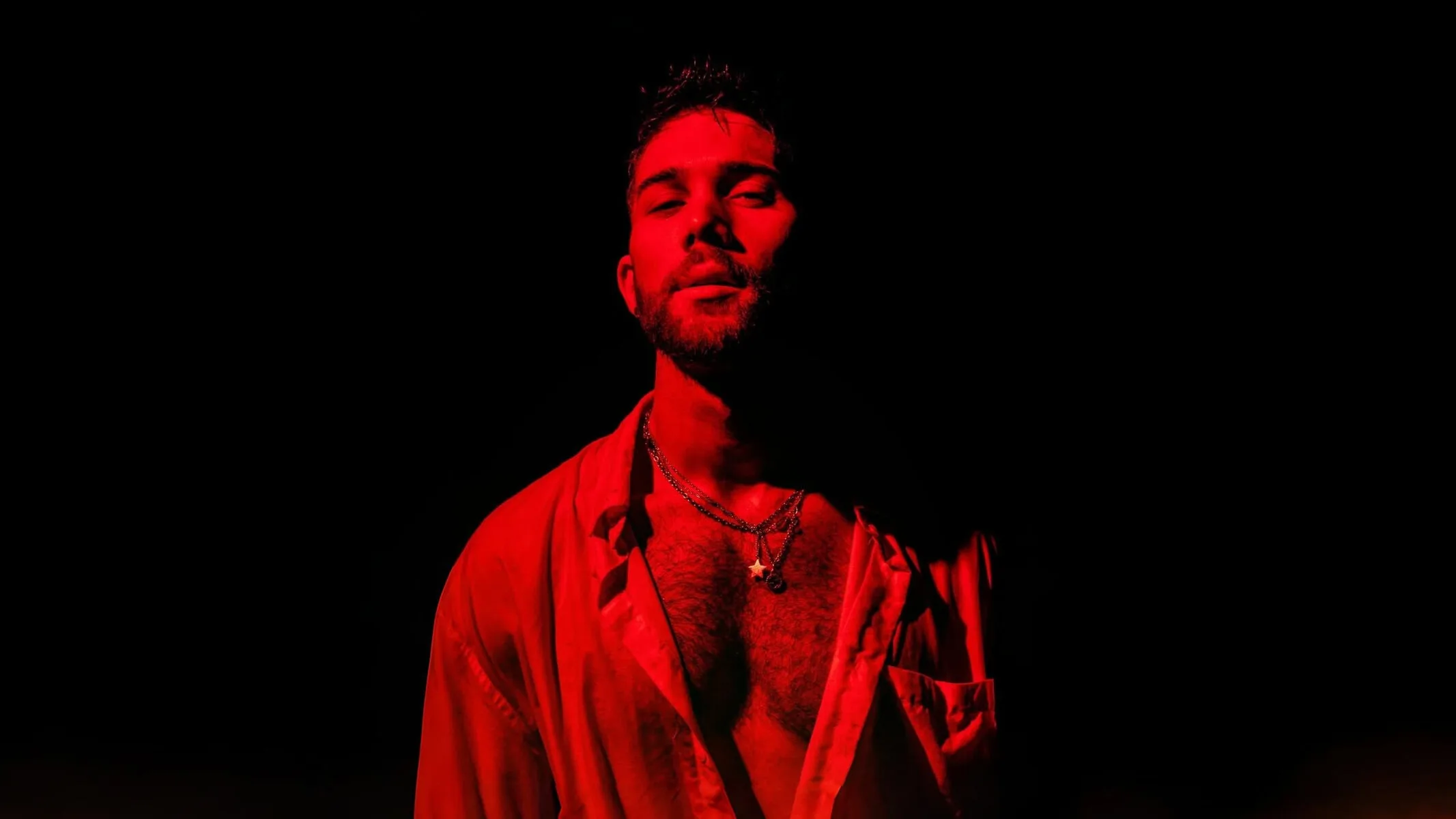
Cómo SoundCampaign puso a Grant Knoche frente a 460,587 oyentes con WOOHOO
Leer la historia completa
¿Listo para que escuchen tu música?
Únete a miles de artistas independientes que usan SoundCampaign para llegar a playlists reales, creadores y fans, con comentarios honestos en cada paso.
- Sin bots, nunca
- Programa de Protección al ArtistaSi un curador o creador no reseña tu tema, te devolvemos el crédito. Tu presupuesto siempre está protegido.
- Conserva el 100% de tus regalíasSomos un servicio de promoción, no un sello. Nunca nos quedamos con un porcentaje de tus streams o regalías.