Promoción en Spotify
Spotify SEO: How to Optimize Your Music for More Streams

Azfar
Actualizado · 17 min de lectura
Learn Spotify SEO and optimize your music for search, playlists, and algorithmic growth. Boost discoverability and streams.


On this page
- What is Spotify SEO?
- Essential Spotify SEO Elements to Optimize
- Keyword Research for Spotify SEO
- How Engagement Impacts Spotify Search Rankings
- Spotify Playlists as a Major SEO Driver
- How SoundCampaign Can Support Your Spotify SEO
- Advanced Spotify SEO Techniques
- Common Spotify SEO Mistakes to Avoid
- Tools & Resources for Better Spotify SEO
- Final Spotify SEO Checklist
- Conclusion
Growing on Spotify takes more than great music. If listeners can't find your songs, they can't stream them. That is where Spotify search optimization matters.
Spotify SEO is one of the most overlooked tools artists have. When done right, it helps your tracks appear in search results, reach algorithmic playlists, and connect with listeners already looking for your sound.
You don't need a big team or a massive budget to make this work.
This guide shows you how to optimize your titles, metadata, keywords, artist profile, and release strategy so your music reaches people actively searching for something new.
Let’s get your music discovered.
What is Spotify SEO?
How Spotify’s Search Algorithm Works
Spotify’s algorithm is quite simple once you understand behind the scenes.
Think of it as SEO for musicians. Just as search engines use keywords and content to decide what to show, Spotify uses data to decide which songs to surface. It is the digital version of putting your music in front of the right people at the right time.
In traditional SEO, you optimize websites, social profiles, and content to rank higher in search results. On Spotify, the idea is similar but the inputs are different. Instead of web pages, Spotify relies on audio analysis, listener behavior, and text signals to understand your music.
Spotify uses 2 main systems.
- Content based filtering analyzes the sound of your track and the descriptive signals around it.
- Collaborative filtering looks at real listener behavior, including who plays your song, what they skip, and what they save.
Together, these systems help Spotify understand your music and recommend it accurately, even if you are a new artist with little or no platform history.
Why Spotify SEO Matters for Independent Artists
Spotify SEO levels the playing field, even without a paid promotion budget. Small, smart optimizations can turn one release into playlist placements and steady fan growth.
A simple search like “I feel like Christmas” surfaces dozens of playlists, showing how search intent can open the door to real discovery.
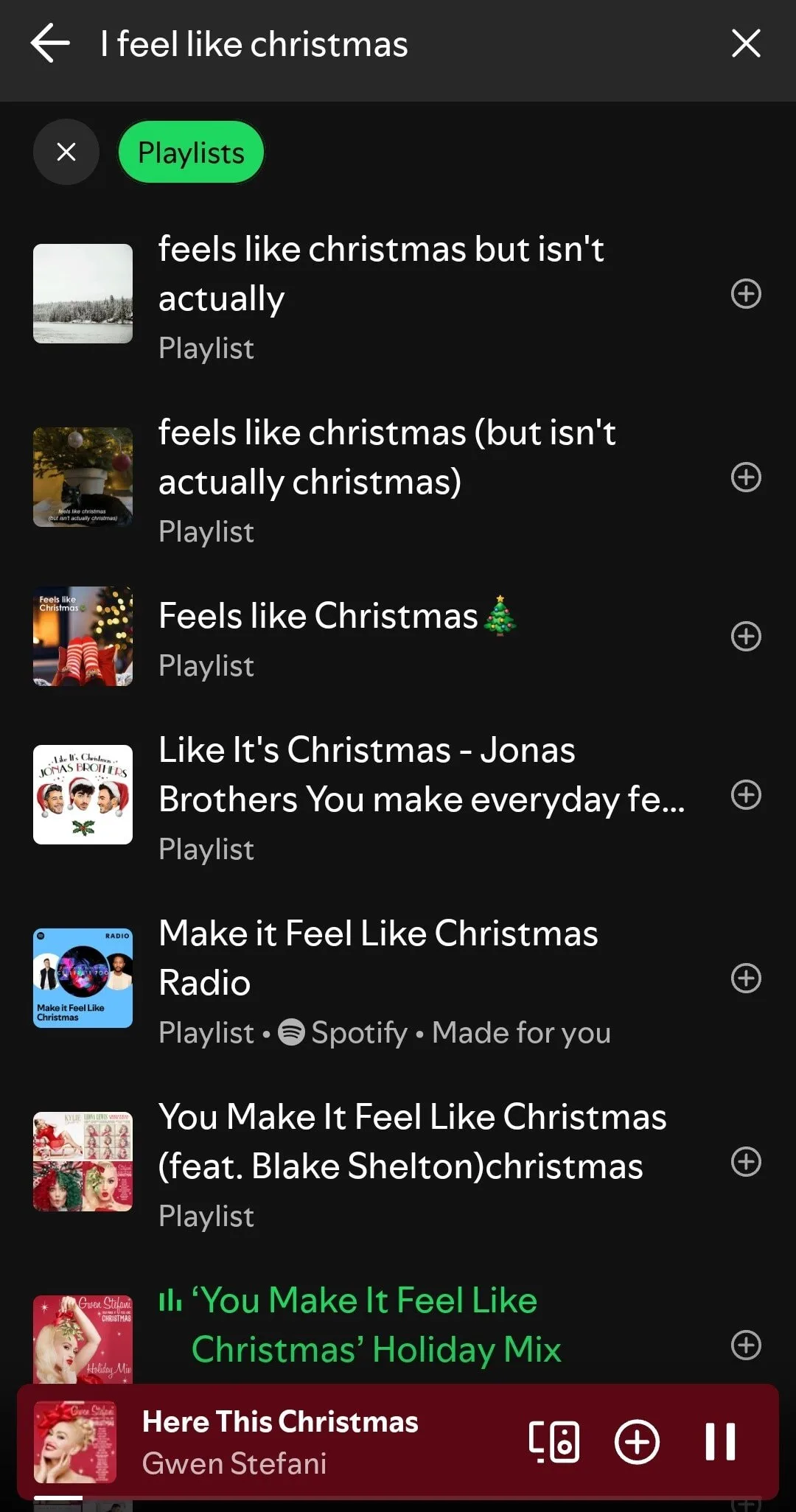
Now picture your song appearing in those results. That means free streams and new listeners without extra effort.
No label required. Strong metadata and listener engagement become your advantage. This guide breaks that down in more detail later.
Core Ranking Factors Inside Spotify Search
Spotify’s search algorithm may feel complex, but it relies on a few clear signals to decide which songs appear first. These factors matter most.
Metadata accuracy
Your title, artist name, genre tags, and release details tell Spotify what your song is. Clean and accurate metadata improves how well your track matches search queries.
Keyword relevance
When your song title, album name, or artist name matches what listeners search for, Spotify increases visibility. Clear and intentional naming makes a real difference.
Listener behavior
Spotify tracks how people interact with your song. Saves, playlist adds, repeat plays, and full listens signal value and help your track rank higher.
Popularity score
Streams matter, but context matters more. Spotify looks at recent growth, momentum, and how your engagement compares to similar artists.
Profile strength
A complete artist profile builds trust. Updated photos, a clear bio, pinned playlists, and regular activity help your catalog perform better.
External traction
Traffic from outside Spotify, such as social shares or direct links, signals momentum and can improve placement.
Pro Tip: Text relevance and engagement signals carry the most weight. Direct searches and listener intent matter, and audio similarity helps Spotify place your music correctly. Together, these signals decide which songs rise to the top.
Sources: Spotify, Music Tomorrow
Essential Spotify SEO Elements to Optimize
Track Title Optimization
Your track title is the first thing fans and Spotify notice. Keep it clear, readable, and true to the song so people instantly know what they’re clicking on.
Use standard formatting like “Song Name (feat. Artist)” or “Song Name Acoustic Version” to help Spotify group releases and index properly. Keep spelling consistent across singles, remixes, and albums.
Can fans type your song and find it instantly? Great. That discoverability plus strong engagement drives growth.
Cardi B gets it with the titles of her latest album:
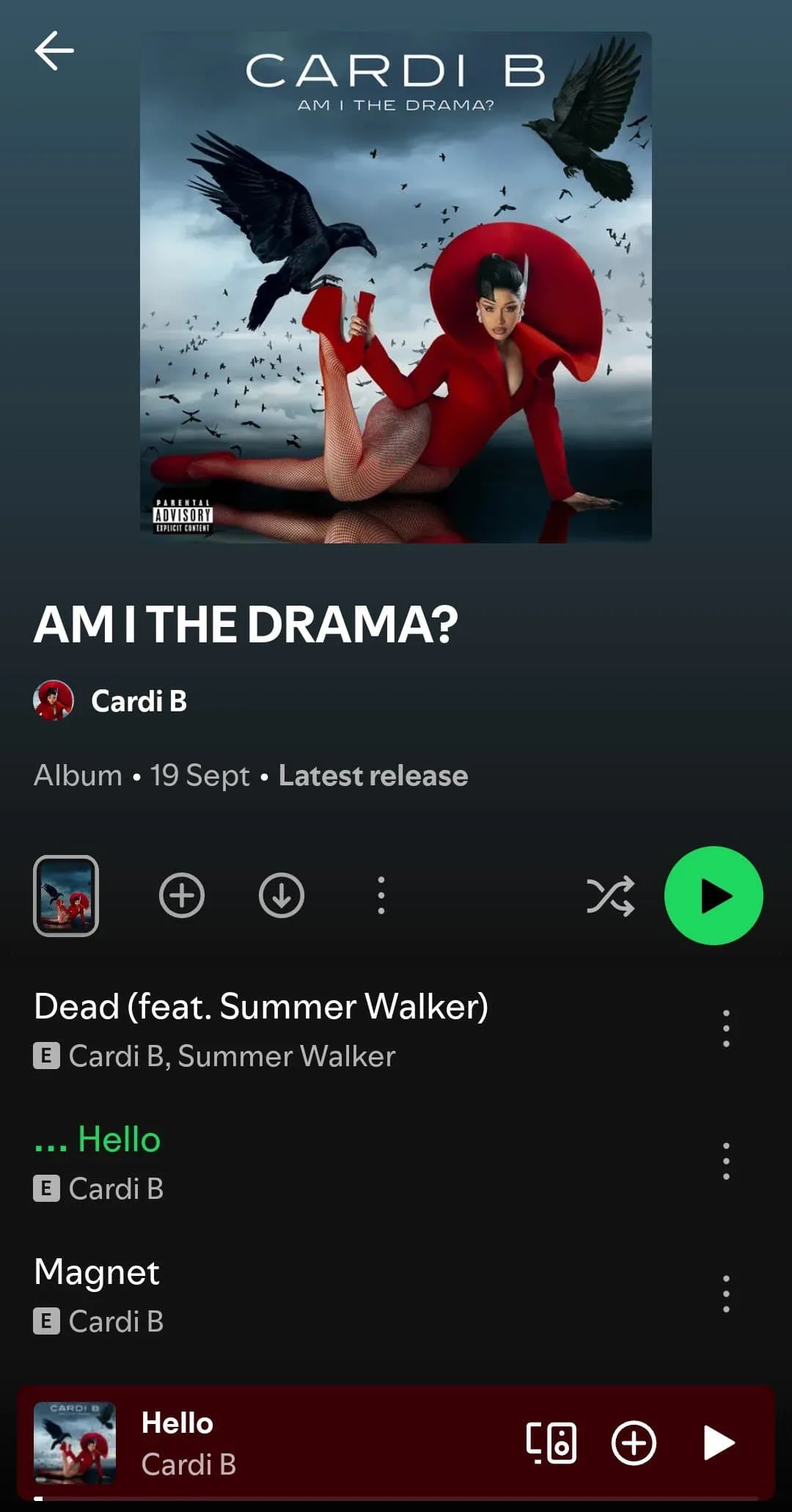
Pro Tip: Do not stuff keywords. Titles like “sad lofi chill study sleep vibes best focus music” turn listeners off. High skip rates tell Spotify your track is not relevant, and it is not pushed to new listeners.
Artist Name & Profile Optimization
Your artist's name is your core keyword on Spotify. If your name is too generic or clashes with a bunch of other artists, search gets messy fast.
Choosing a distinct, searchable name gives you a clean foundation for everything else.
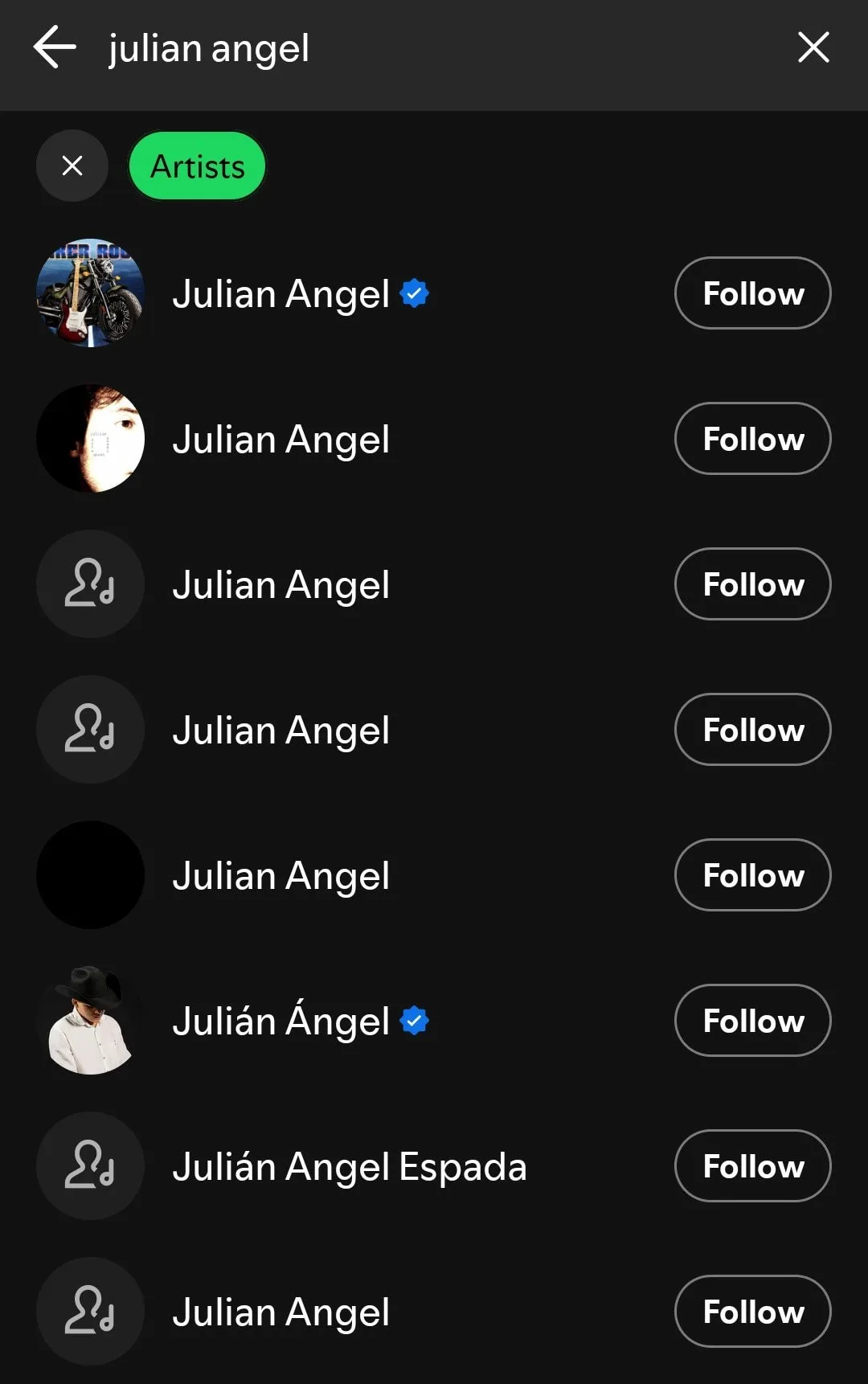
Look at Julian Angel, for example. With multiple artists using the same name, it's hard to know who you're looking for just from the search results.
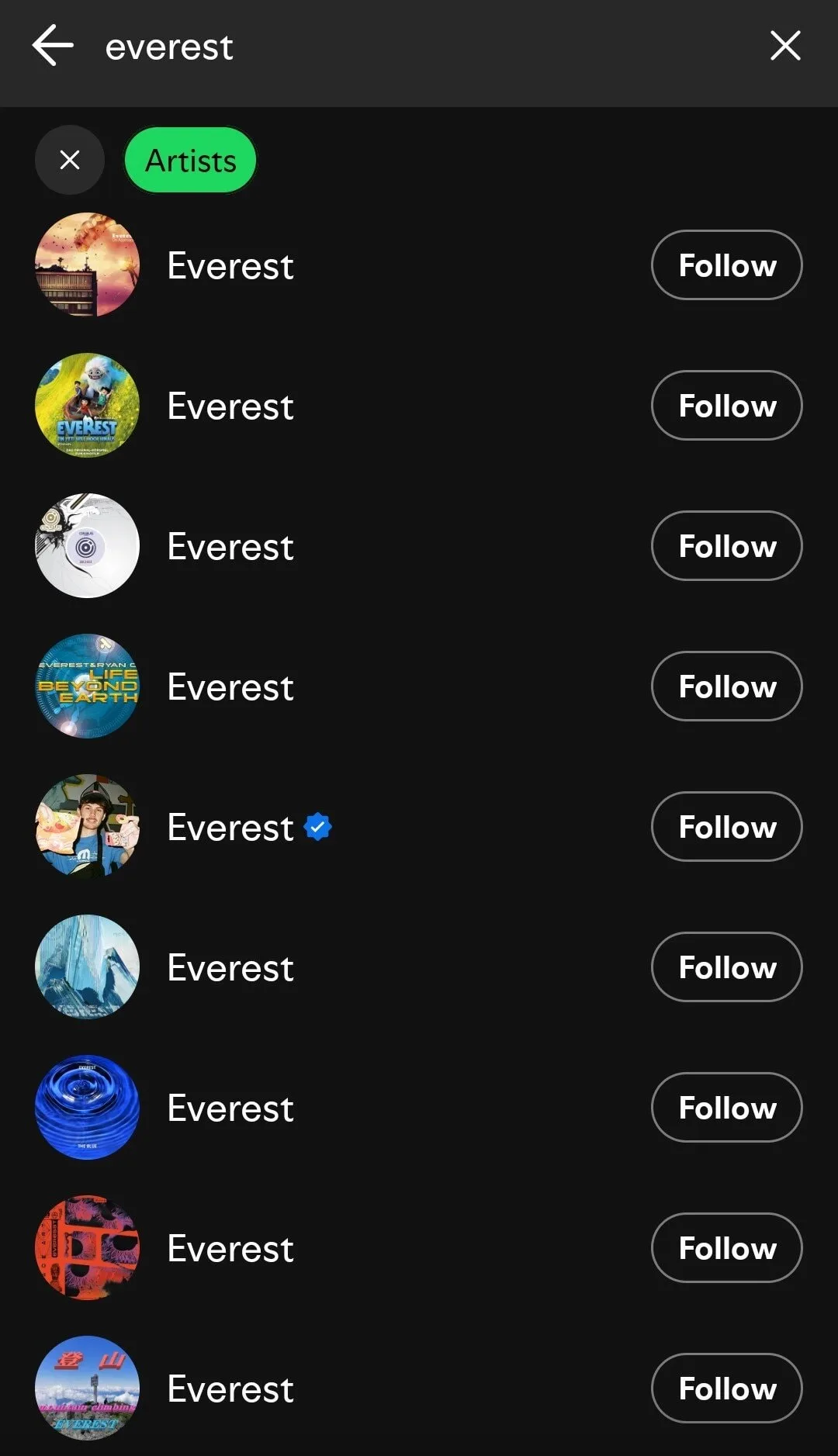
Or how about Everest? Unless you know the song title, which artist do you choose here?
Pro Tip: Keep your artist name consistent across Spotify, other platforms, and social media as it helps fans find you and lets algorithms connect your releases. Changing spellings or branding only makes that harder.
Next, tighten up your profile. Good photos, a clear header, a solid Canvas, and proper links help new listeners stay longer. More time on your page, follows, and saves all send positive signals.
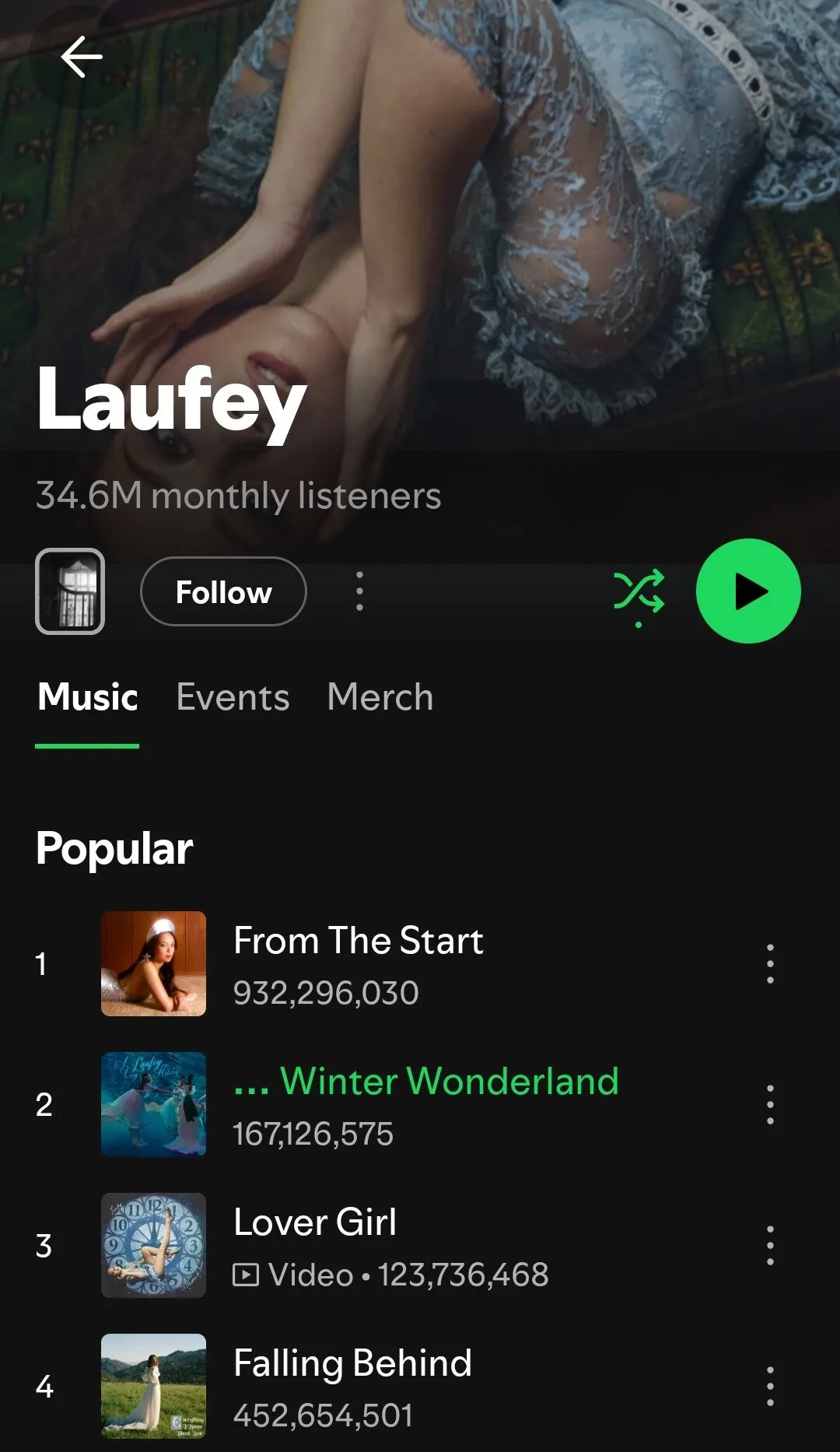
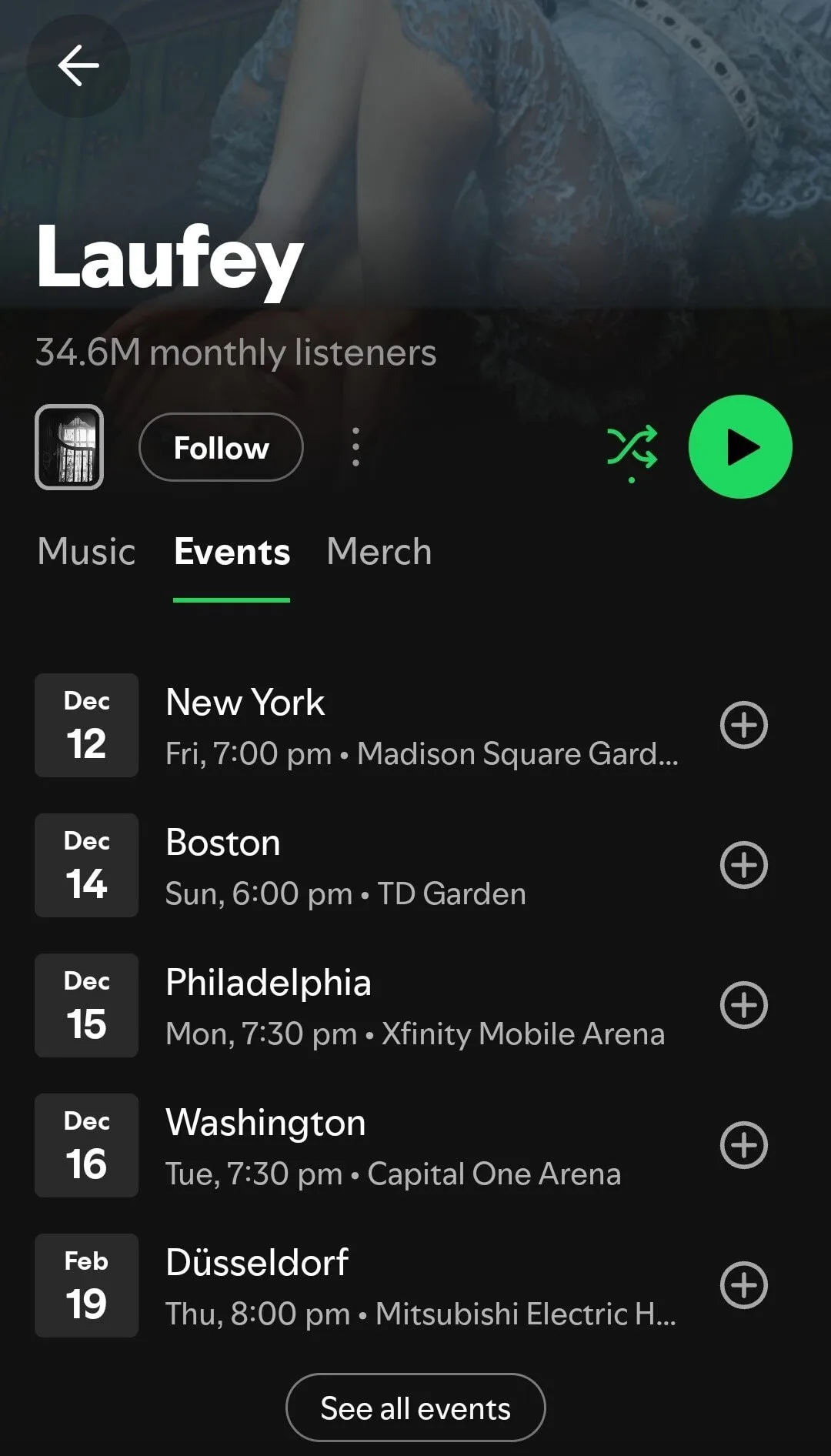
Laufey does this well by adding links to her upcoming events and merch at the top of her profile, making everything easy to find in one place:
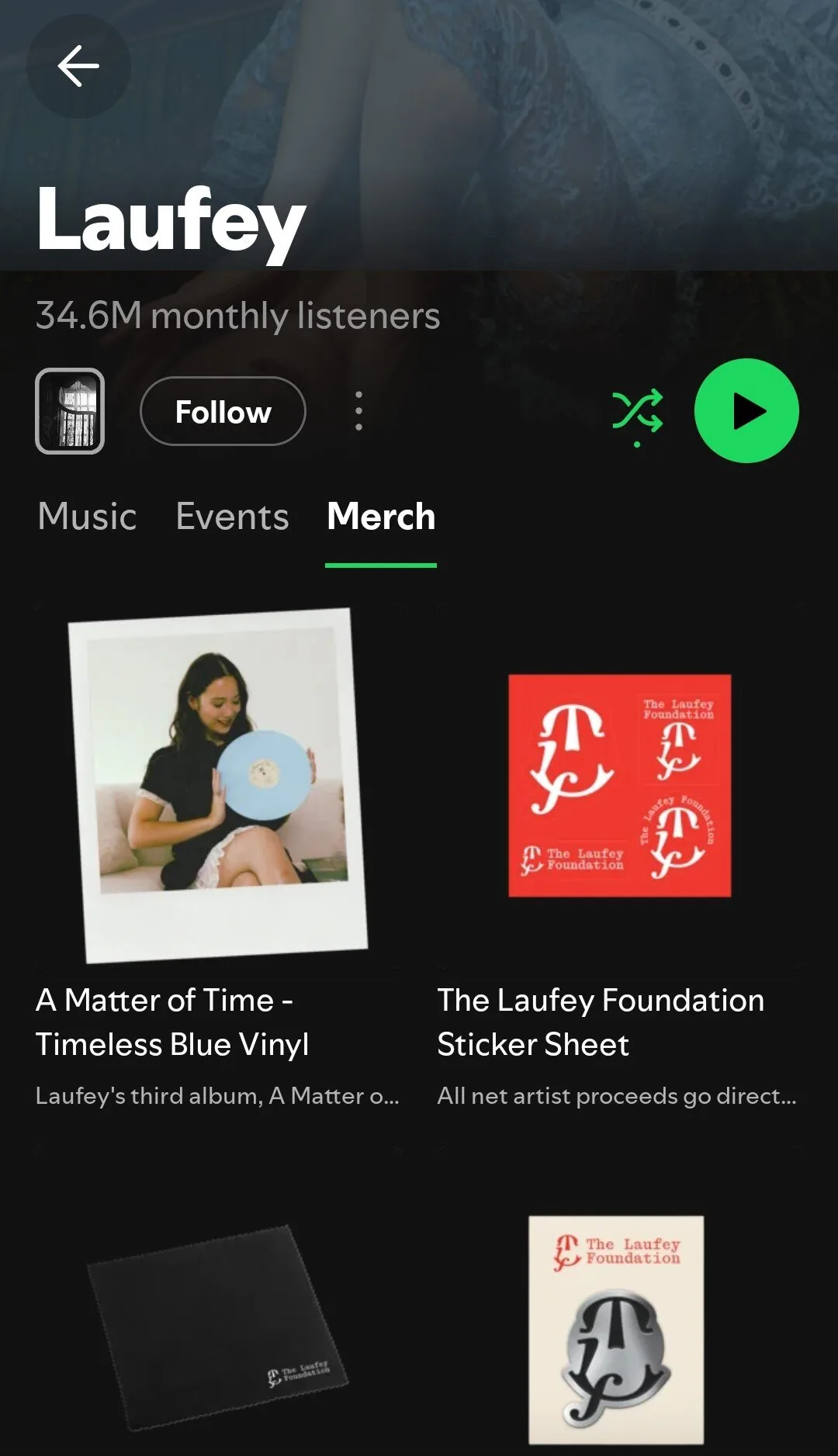
Your profile is your artist homepage. When it looks intentional, people are more likely to stick around.
Album Title & Release Metadata
Album titles and metadata guide how Spotify understands your music. Accurate titles, track order, ISRCs, genres, moods, and language help the system place your songs in the right context.
Good metadata also improves your chances with radio and algorithmic playlists because Spotify knows exactly where your music fits.
So how do you do this well?
Keep titles clean and on-brand. Avoid keyword stuffing and use consistent formatting across releases.
The “hidden” fields also matter a lot.
Correct genre and subgenre tags, mood choices (like “chill”, “energetic”, “romantic”), and language settings help Spotify group your songs with similar tracks and audiences. Mislabel these and you might end up on the wrong playlists with high skips and low saves.
Keyword-Rich Artist Bio
Your bio is one of the few places you can deliberately write in “Spotify language” while still sounding human.
Here, you can weave in the genres, moods, and scenes you’re part of in a natural way.
Think like a fan searching for music. Use clear descriptors that match your sound. For example, you might stumble onto MARINA's music if you're searching for “disco-lit electro pop”:
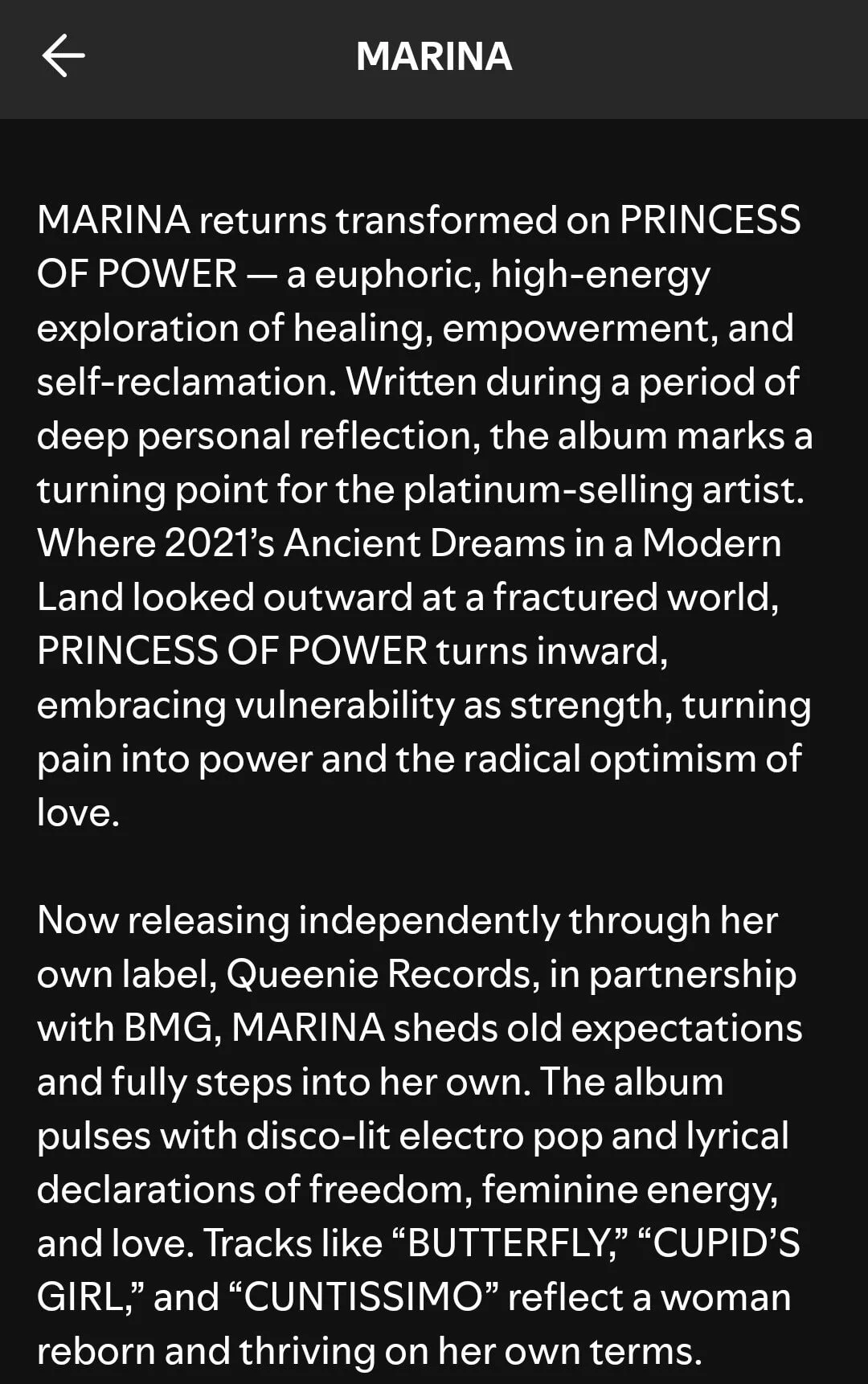
You can also mention location, influences, or key themes, such as “Berlin‑based techno producer inspired by 90s trance and modern melodic house.”
Keep it concise, story-driven, and natural. Avoid keyword stuffing as too many tags feel fake and can turn listeners away. Your bio should be interesting even without keywords.
Extra Elements Worth Tweaking
Beyond the main four, a few other elements boost your Spotify SEO:
- Playlists you create: Use relevant keywords and feature similar artists, giving listeners more ways into your catalog.
- Visuals: Strong cover art, consistent branding, and engaging Canvas loops encourage clicks and keep listeners around, and those small interactions add up.
Source: Spotify for Artists
Keyword Research for Spotify SEO
Keyword research for Spotify is about figuring out what your ideal listeners type, tap, and click on before they find music like yours.
You don’t need a giant SEO stack to find good Spotify keywords.
Start with:
- Autocomplete suggestions in Spotify search when you type your genre, mood, or niche.
- Phrases from top playlist titles in your genre (e.g., “sad rap”, “chill lofi sleep”).
- Search terms fans use on YouTube, TikTok, and Google around your sound.
Then sprinkle those phrases into your bio, pitch forms, social captions, and sometimes release titles or subtitles where it makes sense. The goal is alignment, not stuffing.
If your bio, visuals, and catalog all scream the same niche, Spotify’s systems have a much easier time figuring out who to recommend you to. That consistent targeting is what makes Spotify keywords actually move the needle.
How Engagement Impacts Spotify Search Rankings
Skip Rate, Save Rate & Completion Rate
Spotify tracks hundreds of data points for each song, but some carry more weight than others. Here’s what really makes sense.
|
Data Point |
Impact Level |
Why It Matters |
|---|---|---|
|
Skip Rate |
Critical |
Affects future playlist placements |
|
Save Rate |
High |
Shows listener intent |
|
Completion Rate |
Very High |
Indicates song quality |
These metrics help Spotify decide whether a track deserves to remain visible in search results after initial exposure.
Skip rate is the fastest way to lose search momentum. High early skips tell Spotify that the result was technically relevant but experientially wrong. Over time, tracks with poor early retention are less likely to appear near the top when users search for the artist or song title.
Save rate strengthens search authority. Saves indicate that listeners want to return to the track, which increases Spotify’s confidence in surfacing it when users search the artist name, browse the artist profile, or encounter partial or ambiguous queries. Higher save rates help a track persist in search results instead of decaying.
Completion rate confirms search satisfaction. When users complete a track they intentionally selected, Spotify treats it as validation that the search result delivered what the listener wanted. Tracks with strong completion rates are more likely to hold or improve their position in branded and related searches.
Together, these signals help Spotify decide which tracks remain visible and prioritized once relevance has been established.
Listener Intent Signals Spotify Tracks
Spotify weighs how a listener engages because intent reveals whether a search result truly solved the user’s query.
High intent actions include:
- Direct searches for an artist or track
- Clicking through an artist profile before playing
- Following the artist after listening
When a listener searches for an artist, selects a track, and stays engaged, Spotify gains confidence in that result for future searches. When this behavior repeats across many listeners with similar tastes, Spotify is more likely to surface the same track higher for those users when they search again.
In short, strong intent signals help Spotify trust that your track is the correct answer to a search query.
Playlist Adds & Repeat Listening Metrics
Personal playlist adds act as long term validation signals. When users add a track to their own playlist, Spotify interprets it as evidence that the track should remain easily discoverable.
Repeat listening reinforces this effect. Returning to a track through search, profile visits, or playlists tells Spotify that the result has lasting value, not just initial curiosity.
Tracks with consistent repeat engagement are more likely to:
- Appear prominently on artist profiles
- Be surfaced when users search the artist name
- Be included in auto populated search results and recommendations tied to search behavior
This does not create new keyword rankings, but it strengthens the track’s position wherever it already qualifies.
Social Sharing & External Clicks
External traffic contributes to Spotify SEO when it leads to intentional listening behavior.
When users arrive from social platforms and then:
- Search for the artist again later
- Save the track
- Visit the artist profile
- Replay the song
Spotify treats this as proof of growing brand demand. Increased branded searches and returning listeners help reinforce the artist and track’s authority in search results.
In effect, off platform activity fuels on platform search behavior, which Spotify can directly measure and reward.
Spotify Playlists as a Major SEO Driver
Editorial Playlists vs Algorithmic Playlists
Spotify has 3 main playlist types:
|
Playlist type |
What it is |
Why it matters |
|---|---|---|
|
Editorial |
Curated by Spotify’s in-house editors for genres, moods, and moments, e.g., RapCaviar and New Music Friday |
Can create major spikes in streams and followers when you land a spot |
|
Algorithmic |
Personalized playlists powered by listener data, such as Discover Weekly, Release Radar, Radio, Daily Mix, and On Repeat |
Continuously recommends your music to listeners who enjoy similar tracks |
|
Community |
Playlists created by regular users or brands, with a wide range of niches and follower sizes |
Useful for keyword targeting and organic discovery, though less powerful than the other two |
For SEO purposes, editorial and algorithmic playlists are the heavy hitters. They expose your music to large, targeted audiences and signal to Spotify’s algorithms that your tracks are engaging and relevant.
Why Playlist Activity Boosts Spotify SEO
When your song appears on playlists, the system learns which listeners and tracks it fits with. Each playlist add, save, repeat play, and strong stream-to-skip ratio signals the algorithm that your track has replay value.
This engagement increases your chances of landing in algorithmic playlists like Discover Weekly and Release Radar, which boosts streams, followers, and visibility across search and recommendations.
How to Get on More Playlists Naturally
This is how you make your song an easy win for both listeners and curators:
- Pitch every release on Spotify for Artists at least a week before it drops to provide metadata, story, and context, and trigger Release Radar
- Focus on independent and niche playlists where curators notice clean metadata, good cover art, and a track that fits their theme
- Drive real listeners outside Spotify using social media, email, and legit promo, encouraging saves and playlist adds to boost algorithmic reach
Sources: Spotify for Artists, Soundcharts Blog, Attract Group
How SoundCampaign Can Support Your Spotify SEO
Increase Playlist Exposure Through Real Curators
SoundCampaign fits right into your Spotify SEO game like a perfect playlist drop.
We work only with real curators, filtering out fake traffic so your music reaches genuine listeners and avoids platform penalties.
All curator accounts and playlists go through manual and automated quality checks, with periodic reviews to ensure authenticity.
Improve Algorithmic Signals with Targeted Campaigns
Target campaigns that boost saves, streams, and engagement signal to Spotify that your music connects with listeners.
More saves, playlist adds, and repeats increase your chances of appearing in algorithmic playlists, strengthening your Spotify SEO and organic reach.
You can start your first campaign at $80, run 14 days, and guarantee at least 6 reviews.
Promote Your Track Through Influencers
SoundCampaign connects you with TikTok and Instagram influencers who use the sound in their videos, driving fans straight to your Spotify.
When clicks turn into real plays, it is a big boost. It tells the algorithm that your track is gaining traction beyond the platform, increasing your discoverability.
Analytics & Reporting That Inform Your SEO Strategy
SoundCamaign gets you direct curator feedback, real-time campaign insights, and tailored opportunities to grow your audience and advance your career.
You get detailed reports for every campaign, showing which curators added your tracks, listener behavior, and your top-performing songs.
You can use this data to refine your SEO, update bios with effective keywords, and improve future metadata. Each release becomes smarter, helping your music grow organically.
Here are some interesting case studies from our artists that can give you a clear idea of how it worked out for others.
Advanced Spotify SEO Techniques
Strategic Release Sequencing
Instead of releasing singles randomly, use a “waterfall” strategy and drop a series of connected tracks.
Each new release drives listeners to older songs, compounding streams and building stronger artist affinity. This steady activity boosts your presence in Release Radar, Radio, and other recommendations.
For example:
- Week 1: Release Track A as a single
- Week 6: Release Tracks A & B together
- Week 12: Release Tracks A, B & C together
- Week 18: Release the complete EP/album with all tracks
Smart Use of Discovery Mode
Discovery Mode is a Spotify for Artists tool that gives select tracks extra exposure while Spotify takes a higher cut on those streams.
You can focus on songs with strong engagement like high saves, low skips, and good retention, so the extra reach converts into real fans. Track performance during the campaign window and adjust which songs to promote next.
Building Algorithm‑Friendly Catalog Clusters
Spotify groups track into “neighborhoods” based on audio, metadata, and listener behavior. You can help the algorithm by creating clear catalog clusters instead of mixing styles.
For example, keep one lane of chill tracks for sleep or study playlists and another of high-energy songs for workouts or parties. Consistent, well-packaged lanes make it easier for Spotify to match songs with listeners and boost algorithmic playlist placements.
Sources: Spotify for Artists, ThorneLabs
Common Spotify SEO Mistakes to Avoid
Keyword Stuffing in Titles and Bios
Overloading your track titles, playlist names, or bio with keywords can look spammy and hurt discoverability. Use keywords naturally and only where they make sense.
Mislabeling Genre or Mood
Choosing the wrong genre, sub-genre, or mood confuses both listeners and Spotify’s algorithm. Make sure your labels accurately reflect your music.
Ignoring Profile Optimization
A half-finished profile with missing photos, links, or an Artist Pick reduces credibility and listener retention. Treat your profile like your artist homepage.
Neglecting Engagement Metrics
Saves, streams, playlist adds and follows all feed Spotify’s algorithm. Ignoring these signals can limit your reach and reduce opportunities for algorithmic playlist placement.
Tools & Resources for Better Spotify SEO
Spotify for Artists Tools
Your Spotify for Artists page shows how your songs and audience are performing in near real time, tracking streams, saves, skips, and playlist adds.
It also gives you audience insights like countries, cities, age ranges, and genders for your listeners. That data helps you decide where to focus ads, tours, collabs, and even what kind of content to post because you actually know who you’re talking to.
You can also manage your profile, pitch releases for editorial playlists, and track streams from algorithmic playlists like Discover Weekly and Release Radar.
SEO Keyword Tools for Musicians
Tools like artist.tools’ Spotify Keyword Checker help you track playlist rankings for keywords across countries and over time, spot gaps, and monitor trends to see if your SEO is improving.
SEO tools like Google Keyword Planner, Keywords Everywhere, and KeySearch help find long-tail phrases like “indie pop love songs”, while Google Trends, YouTube, and TikTok search suggestions reveal the phrases fans use.
Adding these naturally to your bio, playlists, and content aligns your branding with real searches.
Analytics Platforms (SoundCampaign, Chartmetric, SpotOnTrack)
Once you’ve mastered the basics, these third-party analytics tools give a clear view of how your music performs:
- SoundCampaign: Tracks campaign performance, showing placements, curator responses, and results so you can refine your SEO and promotion strategy.
- Chartmetric: Monitors playlists, charts, follower growth, and social buzz, helping you see how campaigns impact momentum and spot trustworthy playlists.
- SpotOnTrack: Tracks chart positions and playlist placements across markets, letting you measure the effect of releases, PR, and campaigns over time.
Together, these tools help you understand your audience, target better keywords, and track whether your Spotify SEO is working.
Final Spotify SEO Checklist
|
Task |
Details |
|---|---|
|
Consistent Artist Name |
Use the same name across Spotify, other streaming platforms, and social media to help fans and algorithms find you |
|
Profile Optimization |
Complete your profile with photos, header image, Canvas, links, and an Artist Pick to keep listeners engaged |
|
Keyword Research |
Identify relevant genre, mood, theme, and use-case keywords; apply them naturally in track titles, playlists, and descriptions |
|
Playlist Strategy |
Create or contribute to playlists with targeted keywords and similar artists to increase discovery |
|
Engagement Signals |
Encourage saves, streams, follows, and shares to strengthen algorithmic signals and boost placement in algorithmic playlists |
|
Metadata Updates |
Use campaign insights and curator feedback to refine track titles, descriptions, and profile information |
|
Discovery Mode |
Promote tracks with strong engagement (high saves, low skips) to convert extra exposure into real fans |
|
Catalog Clustering |
Group tracks into consistent lanes by style, mood, or use-case to help Spotify recommend your songs accurately |
|
Avoid Common Mistakes |
Don’t stuff keywords, mislabel genre or mood, leave profiles incomplete, or ignore engagement metrics |
Conclusion
Now you know the ropes.
But here’s the thing: Spotify SEO isn’t a one-time task. Every title, playlist, and profile tweak adds up over time.
So, what should you do next? Start small. Pick one or two strategies from this guide and put them into action. Track the results, learn from the data, and keep refining.

Cerebro de marketing, corazón de escritor, alma de músico. En SoundCampaign me encargo del SEO, destrabo cualquier cuello de botella de marketing que aparezca, y escribo lo que realmente ayuda a los artistas a avanzar. También soy músico, así que casi todo lo que escribo viene de los dos lados. Cuando no estoy haciendo nada de eso, estoy en mi estudio destartalado, escribiendo y produciendo, todavía persiguiendo un sonido que algún día quizás llegue a las listas.
Promociona tu música
Playlists reales, videos de TikTok y anuncios en Meta

La confianza de más de 100,000 artistas y sellos
Sin bots, nunca.

Caso real
Cómo SoundCampaign puso a Grant Knoche frente a 460,587 oyentes con WOOHOO
Leer la historia completa
¿Listo para que escuchen tu música?
Únete a miles de artistas independientes que usan SoundCampaign para llegar a playlists reales, creadores y fans, con comentarios honestos en cada paso.
- Sin bots, nunca
- Programa de Protección al ArtistaSi un curador o creador no reseña tu tema, te devolvemos el crédito. Tu presupuesto siempre está protegido.
- Conserva el 100% de tus regalíasSomos un servicio de promoción, no un sello. Nunca nos quedamos con un porcentaje de tus streams o regalías.