Industria Musical
What is an EP? A Complete Guide for Musicians & Fans

Nadav Peleg
Actualizado · 13 min de lectura
You have no idea what is an EP? In that case, thsi complete guide can show you how it came into the real world and what criteria makes it an EP. Keep reading.


You’ve been dropping singles and thinking, “Maybe it’s time for an album.” Then suddenly you hear about something called an EP.
And now you got serious about it because you know it's shorter than an album and easier on the budget, right?
Well, let me show you what is an EP, how long is it, and why artists love it all the time.
Definition & EP Criteria
An EP, short for Extended Play, is a music release that sits between a single and a full-length album.
It typically includes 1 to 8 tracks and runs about 15 to 30 minutes in total.
Despite the name, it is not "extended" compared to an album. It's "extended" compared to a single.
Think of it as a bite-sized project that gives you more room to experiment and showcase variety without the time or cost of a full LP.
Industry Standards
According to the Recording Industry Association of America (RIAA), an EP is defined as:
- 3 to 5 songs
- Total runtime must be 30 minutes or less
This matters for distribution and certifications.
Anything longer might be treated as an album, which affects how your release is categorized on platforms or charts.
In the UK, the rules are even tighter. According to the Official Charts Company, a release qualifies as an EP if it:
- Contains 4 tracks or fewer
- Runs 25 minutes or less
If your release exceeds either of those limits, it’s officially considered an album for chart purposes.
That means a 3-track release that’s 28 minutes long would be considered an album. Yeah, that’s true!
So, a 6-track release that’s only 18 minutes is still an album. But a 4 track release that’s below 25 minutes? That's just an EP.
Single vs EP vs LP
A single is usually one or two songs, though up to three tracks is common, especially if one is a remix or alternative version of the main track.
It’s used to promote upcoming projects or keep listeners engaged between bigger drops.
An EP is more than a single but less than an album. Usually 3 to 8 tracks, with a runtime under 30 minutes.
It gives you flexibility to try new sounds, introduce your style, or keep momentum going.
An LP (Long Play) is a full-length album.
Usually 7 or more tracks, typically running 30 to 60 minutes or longer. This is your big statement, your complete body of work.
History & Format Evolution of EPs
Vinyl Beginnings: RCA’s Clapback to Columbia
Let’s rewind. In 1919, a label called Grey Gull Records found a clever way to fit more music on a single record.
They used tighter grooves to press two songs onto what was normally a one-song disc.
These became known as “2-in-1” 78s and gave listeners more music without needing new equipment.
But the real format battle started in 1952.
Columbia Records introduced the 33 and a third RPM LP, a longer-playing vinyl that could hold full albums.
In response, RCA came up with something shorter, faster, and just as innovative: the 7-inch, 45 RPM Extended Play record, or EP.
This new EP format could hold around seven and a half minutes of music on each side by using tighter grooves and slightly compressed audio.
The best part was that it worked with the same turntables people already owned.
RCA wasn’t just reacting to Columbia. They were reshaping the way music was packaged and released.
The EP offered something fresh. A shorter, more affordable way to deliver more than a single but less than a full album.
EPs and Jukeboxes: A Love Story
In the 1960s and 70s, EPs found a new home inside jukeboxes.
Record labels started pressing small 7-inch vinyl records that played at the same speed as full albums, which was 33 and one-third revolutions per minute.
These were called Little LPs. Each one could hold up to six songs, usually the best tracks from a full album.
They were designed specifically for jukeboxes in diners, bars, and other public hangouts.
At the time, jukeboxes worked like music vending machines. You’d insert a few coins and pick your song to play.
Here’s an AI-generated representation of what it used to look like back then:
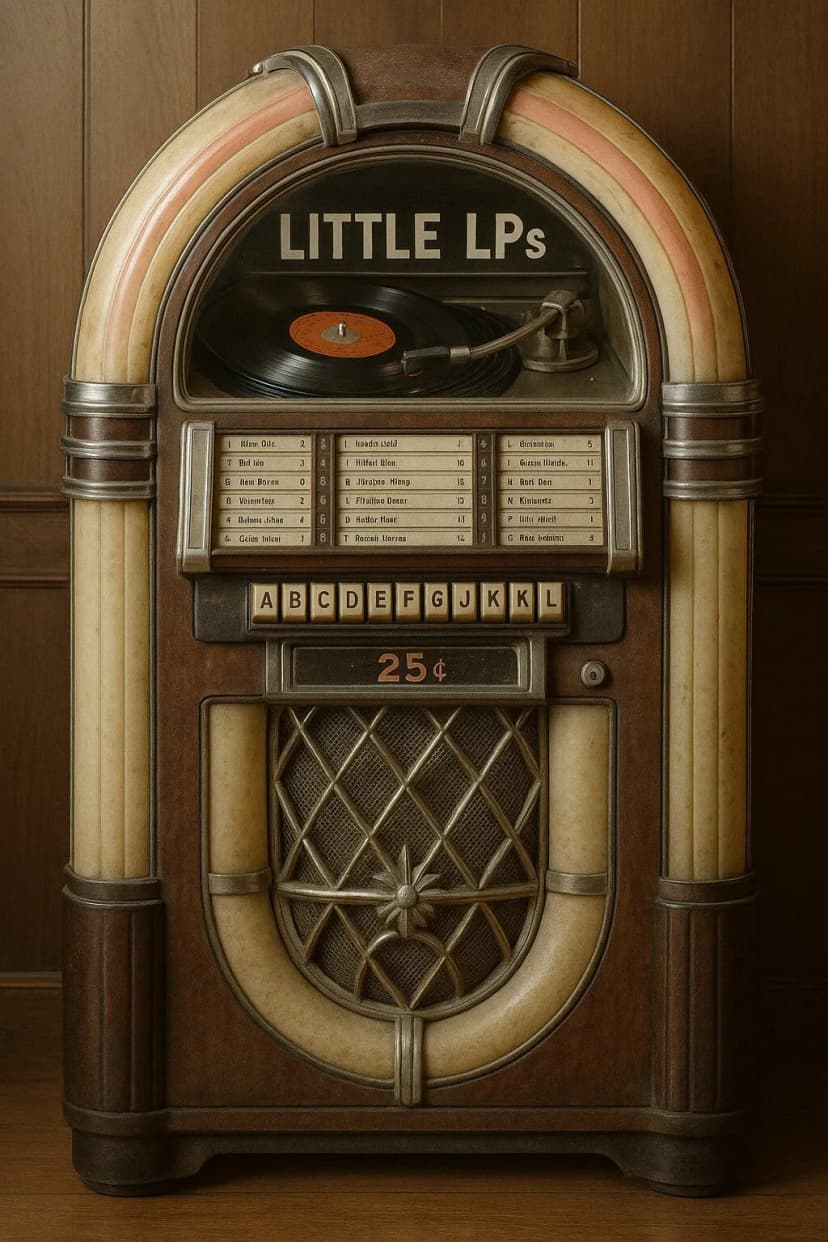
These compact EPs gave listeners more music per coin, making them a crowd favorite.
By 1966, more than a thousand of these titles were in rotation.
They let people hear the hits without needing to own the whole album, and gave artists a way to reach new fans track by track.
2010: Warner Bros. Rolls Out the Six-Pak
Jump to the CD slump of 2010. Attention spans were shrinking, album sales were dropping, and Warner Bros. needed a new play.
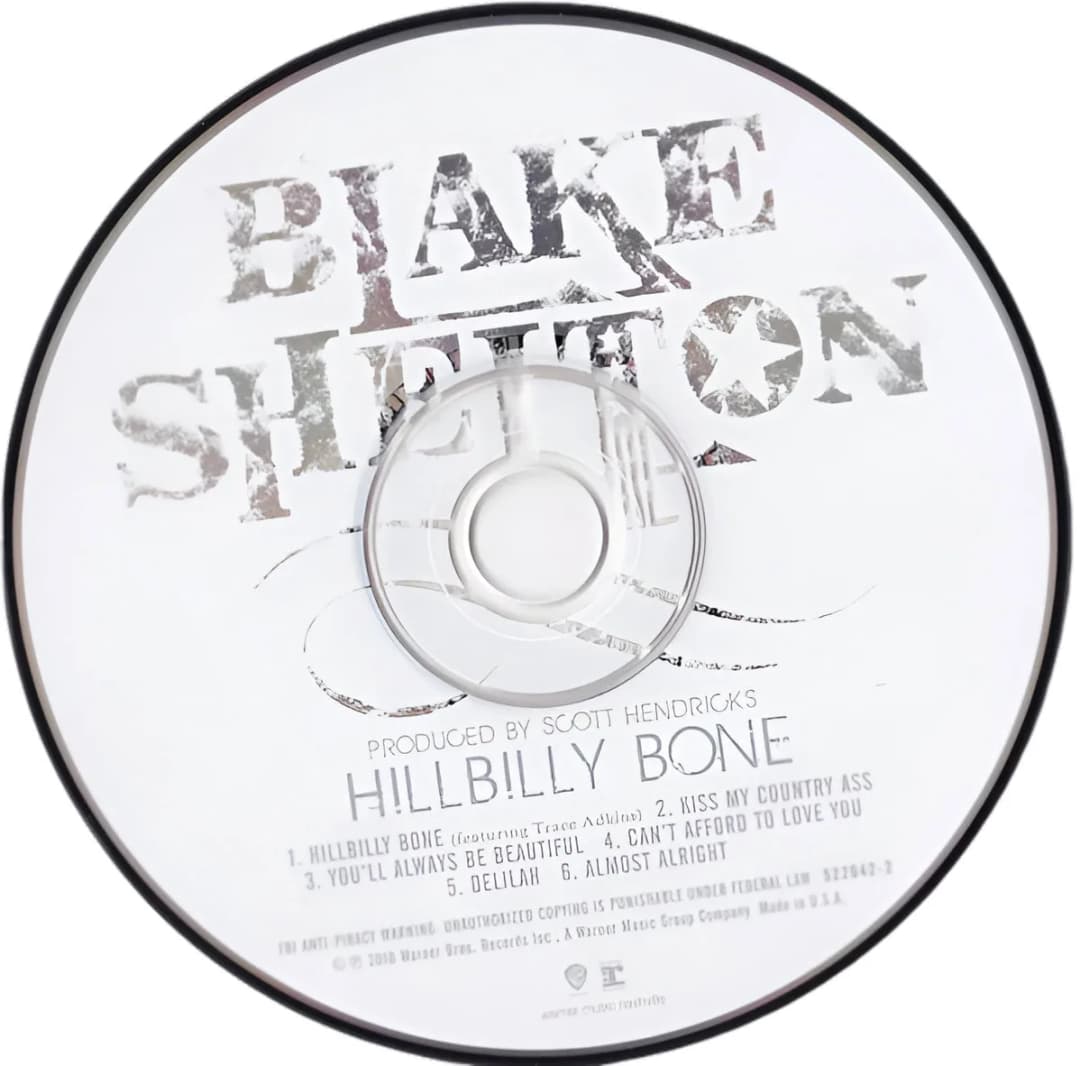
The answer was the Six-Pak, a six-track disc priced around six bucks.
Blake Shelton's Hillbilly Bone led the charge and proved that a mid-sized release could move units without the cost or commitment of a full album.
Streaming Era: The EP Renaissance
When streaming took over, the rules of releasing music shifted.df
Playlists became the new radio. Getting featured in a playlist meant more streams, more visibility, and more fans.
To stay active and show up regularly in these feeds, artists began releasing music more often and in smaller batches.
That made EPs the perfect format for the moment.
Listeners no longer wanted to wait a year for a full album. They preferred shorter, more frequent releases.
EPs allowed artists to share 3 to 6 songs at a time, keeping their name in rotation without the long gaps between major projects.
Some artists used EPs to extend the life of a successful album.
Lady Gaga released The Fame Monster after The Fame, and Kesha followed Animal with Cannibal. These EPs added new songs and gave the original albums a second wave of attention.
Other artists, like Miley Cyrus, used a different strategy. Instead of one long album, she released a series of EPs over time.
This let her spread out engagement across months, keeping fans interested with each new drop.
EPs became more than a side release. In the streaming era, they turned into a powerful tool for staying relevant, testing new ideas, and staying in the loop of music discovery.
Deluxe EPs: The “Wait, There’s More” Move
Now we have the deluxe EP. It starts with the core release, then quickly follows with bonus content: demos, live recordings, alternate takes, and updated artwork.
Artists like Lil Uzi Vert blurred the line between album and EP by using deluxe drops as creative extensions.
It is part fan service, part strategy, and fully built for the streaming economy.
EP vs Single vs Album (Quick Comparison)
Not all releases are built the same, and knowing the difference is more than just trivia.
It shapes your strategy, affects how platforms treat your music, and even decides whether your drop gets playlisted or ignored.
Here’s table that can give you a quick comparison between EP, Single, and album:
- Track Count
- 1 to 3 tracks
- Total Runtime
- Under 30 mins (each track under 10 mins on Apple)
- Best For
- Quick drops, teasing a bigger release, staying active
- How Platforms Label It
- Apple: 1–3 tracks, each < 10 minsSpotify: Up to 3 tracks, < 30 minsTuneCore: 1–3 tracks
- Track Count
- 3 to 6 tracks (up to 8 sometimes)
- Total Runtime
- 15 to 30 minutes
- Best For
- Showcasing range, testing new sounds, bridging albums
- How Platforms Label It
- Apple: 1–3 tracks (if one is > 10 mins) or 4–6 tracks < 30 minsSpotify: 4–6 tracks < 30 minsTuneCore: 4–6 tracks < 30 mins
- Track Count
- 1 to 3 tracks
- Total Runtime
- 30 minutes or more
- Best For
- Full creative statements, storytelling, long plays, touring
- How Platforms Label It
- Apple: 7+ tracks or > 30 minsSpotify: 7+ tracks or > 30 minsTuneCore: 7–100 tracks, up to 2.5 hours
Why Artists Release EPs?
Not all releases are built the same, and knowing the difference is more than just trivia.
It shapes your strategy, affects how platforms treat your music, and even decides whether your drop gets playlisted or ignored.
Here’s table that can give you a quick comparison between EP, Single, and album:
#1- Build Early-Stage Momentum
EPs help new artists make a stronger entrance by showcasing more than one sound.
For instance, PinkPantheress debut EP To Hell With It (2021) featured viral tracks like “Pain” and “Just for Me.”
The project cemented her aesthetic and boosted her recognition after TikTok traction long before her debut album dropped.
#2 - Test the Market & Build Buzz
EPs are perfect for experimenting. Artists use them to try new sounds or styles without committing to a full album.
Giveon’s Take Time EP (2020) proves this quite well. Even after releasing without making any noise, it blew up after “Heartbreak Anniversary” went viral, ultimately earning him Grammy nominations and massive streaming traction.
#3 - Bridge Between Albums
Another smart reason artists release EPs is forming the bridge between albums both musically and strategically.
Whether it’s testing a new sound or keeping fans engaged, EPs help artists stay visible between major drops.
Lady Gaga followed The Fame with The Fame Monster, which is an EP designed to extend the era and test darker pop themes.
#4 - Cost-Effective Production
EPs are way cheaper to produce than full albums.
Fewer tracks mean less time in the studio, smaller mixing/mastering bills, and fewer visual assets to create.
That’s why so many indie artists use EPs as their first real body of work. Even major artists scale back sometimes
#5 - More Frequent Releases = More Algorithm Love
Streaming platforms reward consistency.
Releasing shorter projects more often keeps your artist profile active, your fans engaged, and the algorithm interested.
Just look at Brent Faiyaz. He dropped F** the World* (EP) before his full album, and that steady momentum helped build his cult following.
An EP keeps the machine moving without burning you out. And in today’s attention economy, that’s everything.
How to Plan & Release an EP
Production & recording tips
One of the biggest hidden wins with EPs is that you can cut studio costs in half without losing quality.
Because you’re working with just 3–8 tracks, you spend way less time in the studio.
That means lower bills for recording, mixing, and mastering, and more room in your budget to invest elsewhere.
Put those savings toward better gear, a great producer, or even a killer marketing campaign.
According to Planetary Group, this structure lets you focus more energy on each song, making sure every track hits harder and sounds polished.
And for new artists or indie musicians, that’s a game changer.
You can release music more often, stay relevant between major drops, and still build your catalog with intention.
Instead of chasing a 12-track album that takes a year, you can stay consistent and visible by dropping a tight 4-6 song EP every few months.
Use EPs to experiment with sounds and test what resonates without the pressure of an album rollout.
Promotion Methods
The smartest artists treat EPs like a mini-era:
They tease a lead single, build anticipation, then use the full drop to create momentum across platforms.
Think of it like a 3-step rollout:
- Drop a single
- Build buzz with visuals, TikToks, behind-the-scenes
- Release the full EP and ride the wave
Streaming playlists are key, too.
Services like Spotify and Apple Music often feature well-packaged EPs especially if your visuals and story are dialed in.
A lead single with traction can land you in Discover Weekly, Fresh Finds, or even a niche editorial playlist.
Look at how Omar Apollo promoted his Friends EP.
He rolled out multiple singles. “Trouble” dropped Jan 30, 2019 and “Ashamed” on Feb 27 before the full EP release on April 10, 2019.
By releasing those tracks early, he built buzz, gave journalists and fans something to talk about, and created momentum around the EP.
That steady drip of content helped carry Friends from a solo independent drop into playlist rotations and even festival conversations.
And don’t forget deluxe editions.
Dropping a deluxe version of your EP with one or two bonus tracks can extend its shelf life and re-engage your audience without needing a full new project.
Plan your visuals early. A solid EP cover, short promo clips, and even IG Reels can go a long way when you’re ready to pitch playlists or do press outreach.
Notable EP Examples
Let’s talk about two EPs that actually changed the game for the artists behind them.
First up: Eminem’s Slim Shady EP from 1997.
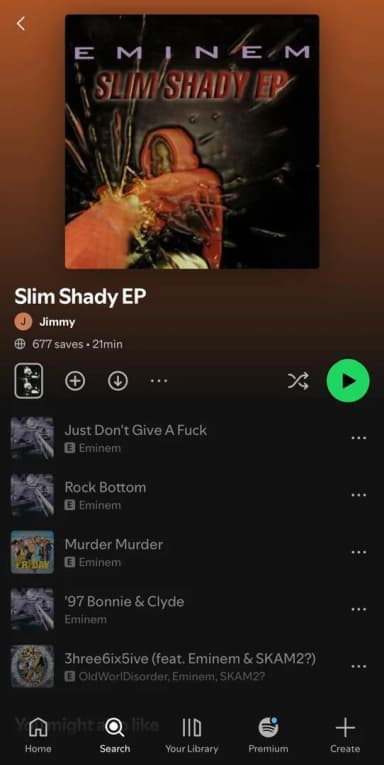
This wasn’t just some early project, it was the project that introduced his dark, chaotic alter ego to the world.
The EP dropped independently, but it caught the ear of Jimmy Iovine and Dr. Dre.
That one release landed Em a deal with Aftermath and Interscope.
From there, everything changed. The Slim Shady LP came next, and the rest is hip-hop history.
Now let’s fast-forward to 2014 with Meghan Trainor’s Title EP.
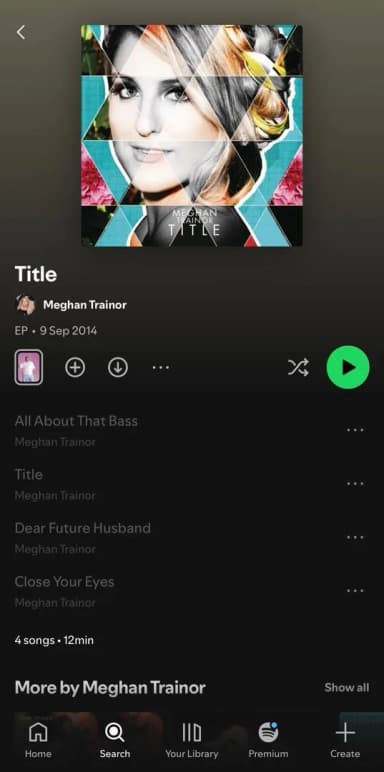
You probably remember "All About That Bass”? It was everywhere.
But what a lot of people forget is that it started as part of an EP, not a full album.
That single went viral before her debut LP even dropped.
The EP itself hit #15 on the Billboard 200, and the single topped charts in over 50 countries and sold 11 million units globally.
EP Strategy for You
The extended play format is more than just a stepping stone. It is a full strategy.
With streaming leading the charge, EPs give you the power to stay consistent without the heavy lift of a full LP.
Just ask any K-pop fan. Mini albums with 5 to 7 tracks are dominating the charts and social media feeds.
Every single day artists are leaning into digital-first extended play releases and smart, staggered drop schedules to keep fans engaged and algorithms happy.
So how do you use this?
Think like your audience. If your fans are playlist-driven or love short, high-quality drops, the EP length of 15 to 30 minutes is ideal.
You get more replay value, faster feedback, and a tighter creative vision.
When comparing EP vs album, the EP wins for flexibility.
It costs less to produce, takes less time to complete, and lets you release music more often. That is perfect if you are still building momentum.
If you are ever unsure about what format to use, let your marketing goal lead the way. Want to test your sound? Go for an EP.
Want to tell a longer story? That is where an album fits better.
Either way, understanding the EP definition in music terms and not just as a short release, but a smart one, can change how you approach your career.
FAQs
How many tracks make an EP? An extended play usually has 3 to 8 songs. It is longer than a single but shorter than a full album. Most EPs run between 15 to 30 minutes total.
Is an EP an album? Not quite. An EP is its own format. While it can be part of your album rollout strategy, it does not meet the length or track requirements to be considered a full-length album.
Can singles be on EP charts? Yes. If a song released as a single is also included in your EP, it can help boost overall streams and visibility for the entire project.
Charts like Billboard and Spotify track EPs as their own category, but singles within them still count toward performance.
Conclusion
So let’s bring it all together.
An EP is more than just a small project. It is a strategic move.
A way to build momentum, test your sound, and stay consistent without burning out.
Whether you are in the early stages of your career or between albums, an extended play might be exactly what you need.
Take a second to think about your next release.
Does an EP make sense for your goals right now? If yes, now you know exactly how to make it work.

Fundador y CEO de SoundCampaign
Soy Nadav. Hacía música antes de construir todo esto, y de ahí viene realmente mi interés por el marketing. La parte de analítica es la que más me gusta: de dónde vienen las reproducciones, qué se movió y qué no. Fundé SoundCampaign para darles a los artistas una exposición realmente genuina. Me llevó mucho más tiempo y esfuerzo del que había previsto, y eso no ha cambiado demasiado.
Promociona tu música
Playlists reales, videos de TikTok y anuncios en Meta

La confianza de más de 100,000 artistas y sellos
Sin bots, nunca.
Caso real
Cómo SoundCampaign puso a Grant Knoche frente a 460,587 oyentes con WOOHOO
Leer la historia completa
¿Listo para que escuchen tu música?
Únete a miles de artistas independientes que usan SoundCampaign para llegar a playlists reales, creadores y fans, con comentarios honestos en cada paso.
- Sin bots, nunca
- Programa de Protección al ArtistaSi un curador o creador no reseña tu tema, te devolvemos el crédito. Tu presupuesto siempre está protegido.
- Conserva el 100% de tus regalíasSomos un servicio de promoción, no un sello. Nunca nos quedamos con un porcentaje de tus streams o regalías.