Spotifyプロモーション
Spotify Playlist Pitch Examples That Work (And Why They Do)

Nadav Peleg
更新日 · 14分で読了
Master the art of Spotify playlist pitch! Explore expert tips, examples, and best practices in our comprehensive guide.


Spotify rejected your pitch for editorial playlists? Well of course they did!
And here’s why.
Most artists write pitches like they’re submitting a school assignment. Safe. Vague. Designed not to offend.
But Spotify editors aren’t grading you. They’re scanning for a reason to care. If your pitch doesn’t hook in the first line, forget about it.
Getting playlisted isn’t about luck. It’s about clarity. About knowing how to frame your sound and your story so it hits fast.
Give me 15 minutes and I’ll show you how to write a pitch Spotify can’t ignore.
Why Most Spotify Pitch Gets Ignored?
#1 - Forgettable
Your pitch sounds like background noise. That’s why no one listens.
According to Spotify, approximately 20% of tracks pitched through Spotify for Artists are placed on at least one playlist.
This means 80% of submissions don't ever make it.
So, the picture looks like this:

Most artists try to sound polished, but end up saying nothing that matters.
Their pitches are filled with generic phrases. Filled with lines that could belong to any track from any artist.
Spotify editors scroll fast. If the first sentence doesn’t make them feel something or see something, they move on.
Your job is to cut through that noise. Not by writing perfectly, but by writing clearly. One mood. One feeling. One reason to care.
If they don’t get that in two lines, you’re out.
#2 - Emotionless
Your pitch says what the song is, but not what it feels like.
Spotify curators aren’t moved by structure, genre, or production notes.
They’re moved by how a track lands emotionally. If your pitch reads like a tech spec, you’ve already lost.
Saying it’s “an upbeat track with catchy melodies” doesn’t mean anything unless it makes the editor feel something.
You’re not pitching facts. You’re pitching a feeling or memorable experience.
When your pitch lacks emotion, it lacks connection. And no one adds what they don’t connect with. I think this makes it more clear for you:
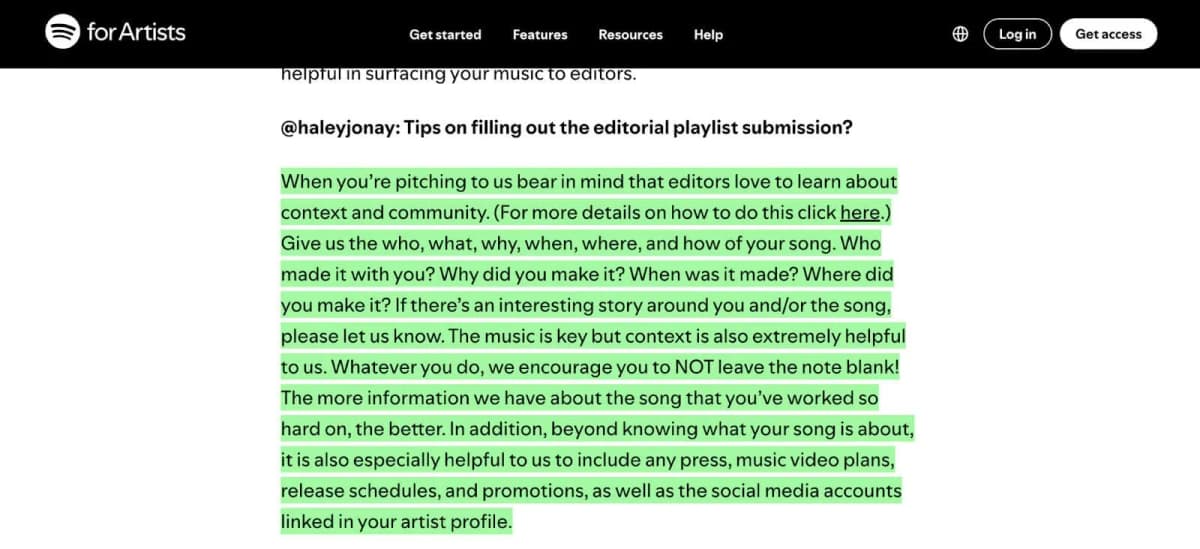
#3 - Incomplete
Your pitch lacks essential details. Make sure it doesn’t look like this.
Spotify editors need context to understand your track.
When you forget to add key information like genre, mood, or the story behind the song, they're left guessing.
And they don't guess, they move on.
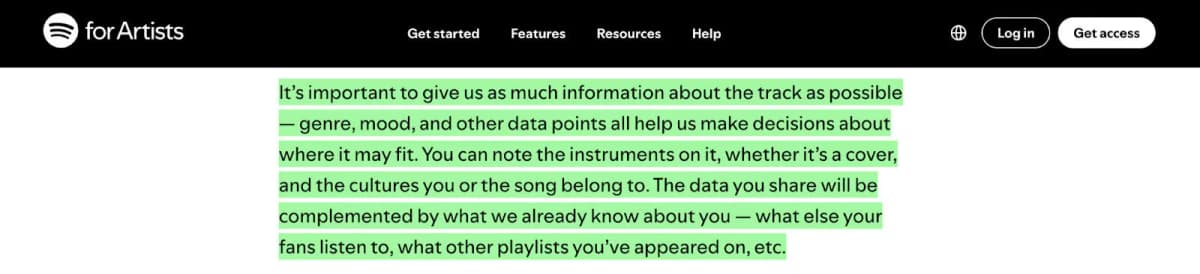
Spotify wants you to come up with detailed information when pitching your music.
According to their support article on pitching music to playlist editors, it’s specific, emotional, and visual.
Spotify doesn’t want your biography. They want to feel the song before they hear it.
4 Spotify Artists That Got Their Pitch Right!
#1- Nic Van Graan(The Creative Genius)
Nic Van Graan got 3 of his tracks into Spotify editorial playlists.
If you watch his video: Steal My Spotify Pitch Formula (Real Examples)
You can skip to the 2nd artist who managed to get listed on Spotify playlists.
If you really wanna know my thoughts behind his process, you can still read further.
So, here we go!
“Summer's Our Forever Now”
Nic Van Graan's "Summer's Our Forever Now" is a great example of how the right pitch can get you real exposure.
The track was featured on Fresh Finds: Folk and New Music Friday South Africa, both curated by Spotify's editorial team.
These placements gave the song a critical push, helping it reach more ears and expand Nic’s audience.
Since the feature, his monthly listeners have grown to over 10,900, signaling strong engagement and discovery through those editorial spots.
Btw, this is the pitch he used:
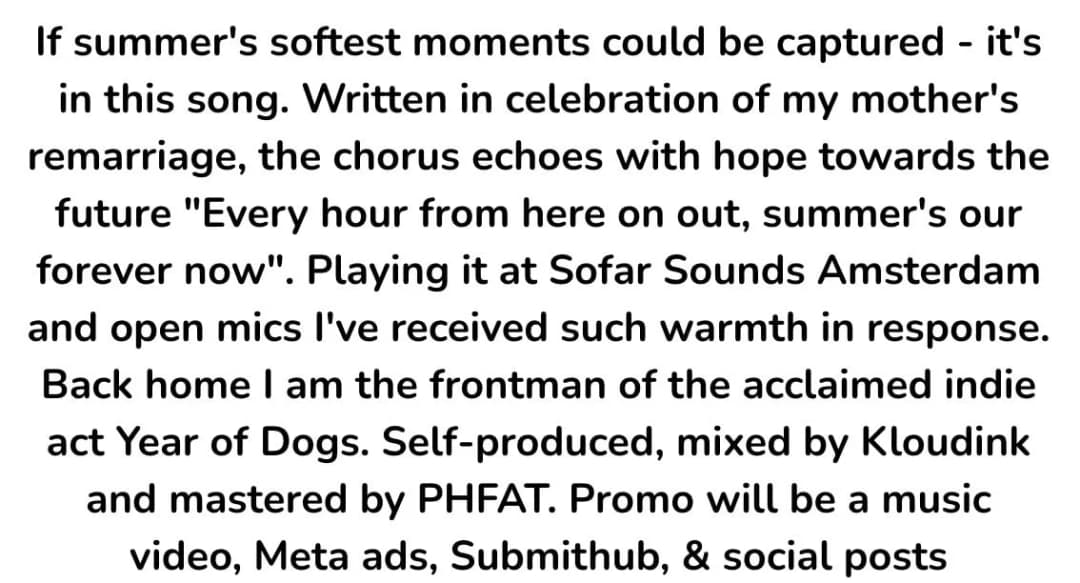
Why it Worked?
The Opening Starts with a Feeling “If summer's softest moments could be captured, it's in this song.”
That first line pulls you into an emotional space. It doesn’t describe the track technically.
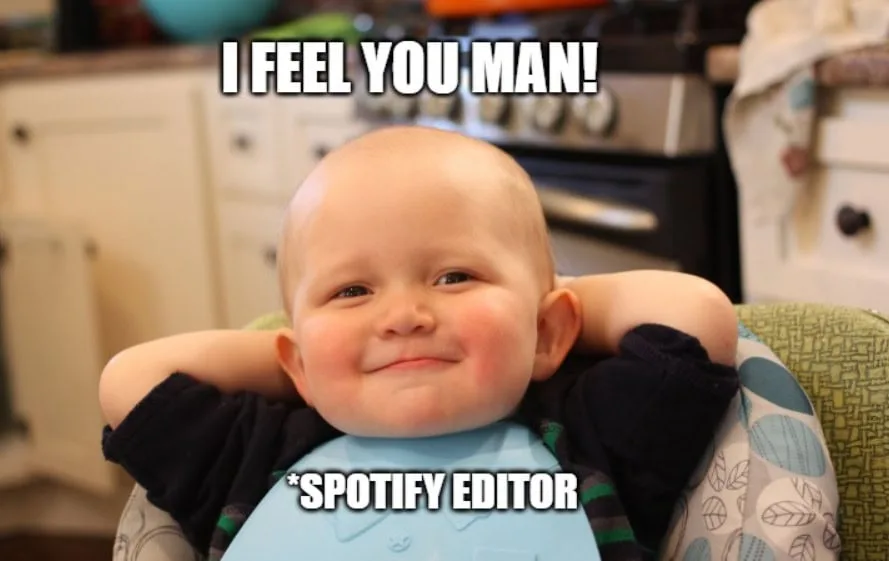
Since it delivered the emotional hit and struck the right chord, editors felt the vibe before they even hit play.
So, they’re like:
There’s a Personal, Unique Angle “Written in celebration of my mother’s remarriage...”
This isn’t just another love song. It has a real-life anchor.
It’s personal, hopeful, and specific. That gives it weight and sincerity, two things that make a pitch memorable.
Shows Real-World Resonance “Playing it at Sofar Sounds Amsterdam and open mics, I've received such warmth in response.”
This proves the song has already touched people. It signals that there’s something worth listening.
Establishes Credibility without Bragging
“Frontman of the acclaimed indie act Year of Dogs. Self-produced, mixed by Kloudink, and mastered by PHFAT.”
Name-dropping is useless unless it adds value. Here, it does. These names anchor the track in a known creative world and hint at quality.
Ends with a Clear Promo Strategy (Shows Win-Win)
Editors want to know the artist is doing their part too. Mentioning a video, Meta Ads, Submithub, and social content shows that this release has momentum behind it.
This was the biggest playlist he ever landed.
Year of Dogs’s “My Lover’s on the Run”(One Of Nick Van Graan’s Bands)
Year of Dogs' track "My Lover’s on the Run" has achieved great success on Spotify, securing placements on several editorial playlists, including Indie Halloween, New Music Friday South Africa, SA Rock, and Indie Songs from 2024 You May Have Missed.
These features have contributed to the band's growing presence on the platform.
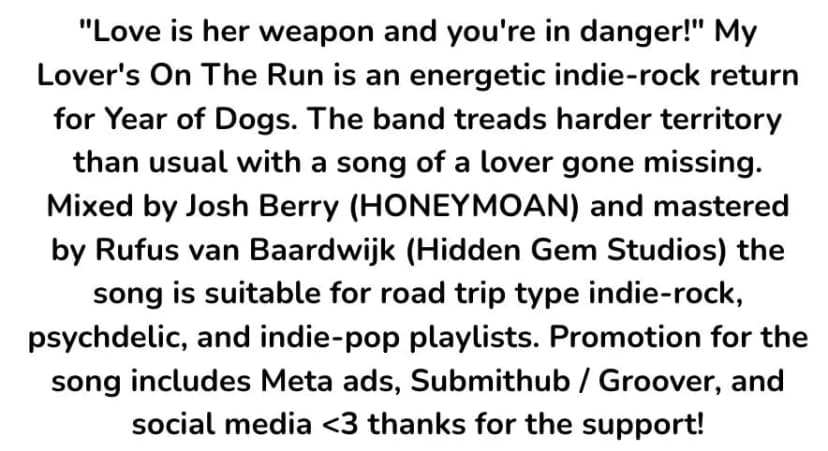
This was the pitch they used:
Why it Worked?
There’s a Hook with Drama
“Love is her weapon and you're in danger!”
That opener isn’t passive. It’s cinematic. It drops you right into the story. It teases mystery, danger, and emotion all in one punchy line.
That’s how you grab attention fast.
I’d rather say…
Got the Sound & Energy
“An energetic indie-rock return... the band treads harder territory than usual...”

This gives the editor a clear sense of what to expect both musically and emotionally. It tells them the track isn’t just filler. It’s a deliberate shift, a bold release.
Name-Drops Shows Where You Stand
“Mixed by Josh Berry (HONEYMOAN) and mastered by Rufus van Baardwijk (Hidden Gem Studios)”
The pitch doesn’t linger here, but the credits add credibility. Editors know these names and what kind of sound to expect.
Fits Right Into Playlists I must say it’s suitable for road trip type indie-rock, psychedelic, and indie-pop playlists.
That’s why this pitch helps editors visualize where the track fits.
They don’t have to guess. It speaks their language and aligns the pitch with Spotify’s actual playlist categories.
Closes with the Promo Strategies Adding your post release promotion strategy really helps. It shows commitment to building buzz.
After all, this is the 2nd time it worked for Nic Van.
Nic van Graan, LNDE - May I Please Rest My Head Upon Your Shoulder
Nic van Graan's collaboration with LNDE on "May I Please Rest My Head Upon Your Shoulder" has achieved significant success on Spotify.
The track has been featured on several editorial playlists, including Indie Brandneu, Indie Go, and New Music Friday South Africa.
These placements have contributed to the song's growing popularity, with over 76,000 streams to date.
Here’s the pitch Nic used:
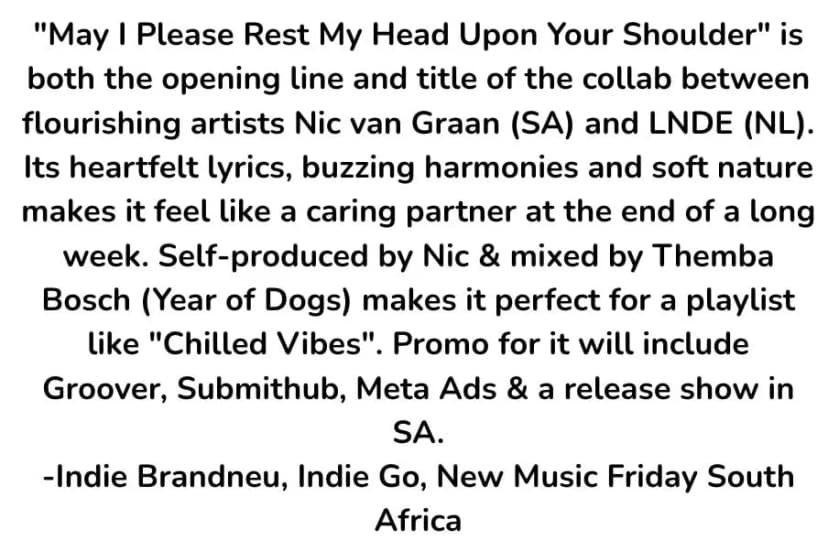
Why it Worked?
There’s Some Sort of Identity
“‘May I Please Rest My Head Upon Your Shoulder’ is both the opening line and title...”
This gives the pitch an immediate emotional anchor. Starting with the title as a lyrical hook creates continuity and draws the editor in with intention.
Frames a Mood, Not Just a Genre “Its heartfelt lyrics, buzzing harmonies and soft nature makes it feel like a caring partner at the end of a long week.”
This line is gold. It doesn’t describe the song mechanically. It describes the feeling it delivers.
That’s what editors are curating: moments, not metadata.
Leaning into Collab Credibility “Flourishing artists Nic van Graan (SA) and LNDE (NL)... Self-produced by Nic & mixed by Themba Bosch (Year of Dogs)”.
These details give editors a reason to trust the quality. They signal experience, artistic vision, and a track that’s handled with care.
There’s a Context & Vibe-Check for the Track
“Perfect for a playlist like ‘Chilled Vibes’.”
This is directly suggesting a playlist helps Spotify’s editorial team imagine the track in context.
You’re guiding the placement, not leaving it up to guesswork.
Again, Ending with a Clear Promo
Here we go again. Just like last time, he again mentioned the promo plan. And looks like it really worked. Every. Single. Time.
#2 - Signature D (The Artist Who Found The Formula)
“Peace”
When lo-fi producer Signature D landed his first editorial placement with “Peace” on Lo-fi Garden, he didn’t just celebrate, he studied the win.
The track pulled in more than 60,000 streams, and it wasn’t even placed high up on the playlist.
This is where he said some more cool stuff about this release: How I write pitches to land on Spotify Editorials (Works for all genres)
For “Peace,” he wrote this pitch:
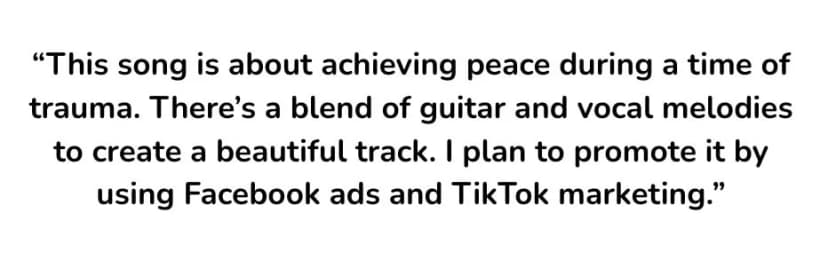
Why it Worked?
Not exactly Shakespeare. But it worked because it gave Spotify editors everything they needed within a few seconds.
“Seashells” AND “Endless”
He followed it up with “Seashells”, which landed on Lo-fi Beats, bringing in 261,000 streams.
Then “Endless” took it even further with 270,000.
You know what’s common? He stuck to a pitch formula that worked, refined it, and used it again with small upgrades.
Why it Worked?
His pitch wasn't fancy. It was short, clear, and hit the three things that matter:
- What the song is about
- What it sounds like
- How he plans to promote it
Later, when he pitched “Endless,” he doubled down on that same structure. And here’s the key:
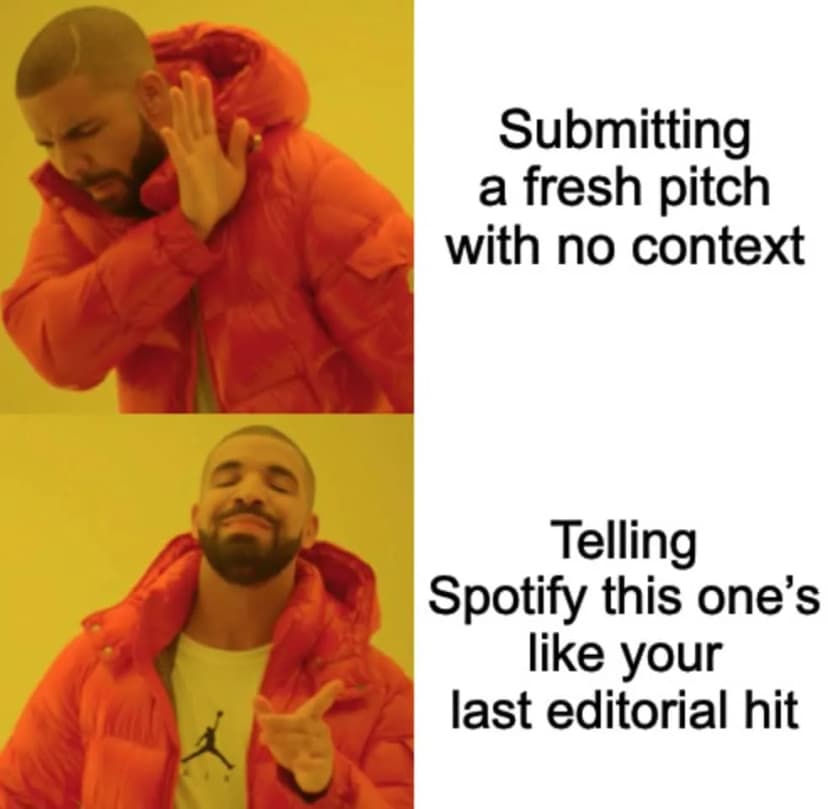
He linked it back to “Seashells”, telling Spotify it had a similar vibe.
That familiarity might’ve helped push him up the ranks Endless hit #7 on Lo-fi Beats.
I think this Drake explains the perks of this idea better than I could:
He also learned to say exactly where he wants the track to go. In his pitch for “Eventually”, he wrote:
“This song would fit perfectly on the official Spotify Lo-fi Beats playlist.”
It’s like reducing the editor's workload.
Signature D’s biggest lesson is to make it easy for editors. Tell them what the song is, what it feels like, where it belongs, and why it matters.
And don’t overthink the writing. Overthink the clarity.
#3- PLV (Miss Consistent)
PLV didn’t just land one editorial playlist. She landed two: Electromix and Spotify Asia.
You might be wondering, what’s the big deal? Nic did three, right?
Nope, what Nic did was inconsistent. She got two back to back. And that means something.
Personally, I think she found some surefire way. Or maybe, it could be luck.
Whatever it is, not many people get that lucky.
Let’s see what she’s been up to.
To The Finish Line
This was the first track that made it onto Spotify’s Electromix playlist. No pitch paragraph was submitted. Her label just filled out the basic submission boxes in Spotify for Artists: genre, mood, instrumentation, and that was it.
Wanna hear the story from her directly? There you go:
BEST Strategy To Get A Spotify Editorial Playlist!
Why it Worked?
PLV changed her entire strategy in 2022.
First, she got consistent. One new song every 4 to 6 weeks. No more dropping random singles whenever she felt like it.
The goal was to show Spotify that she’s serious and committed.
Second, she made sure her artist profile looked sharp.
She updated banners, bios, and artist photos to reflect her current releases.
If an editor checked her out, everything was current and professional.
Third, she focused hard on promotion.
That meant releasing through labels for wider reach, contacting playlist curators, and building social proof through DJ support.
Big names like Nicky Romero and Protocol Recordings helped a lot.
PLV also points out something huge here.
It’s not always about the pitch. Once your music sounds professional, it is about showing up consistently.
The more tracks you drop, the more chances you create for getting hits.
#4 - Best Friends Club (The Artist With Over a Million Streams!)
This guy cracked it.
Best Friends Club landed on not one, not two, but over seven Spotify editorial playlists with his track "Lo Fi Nights.”
That includes Lounge Soft House, House Focus, Poolside Lounge, Coffee Beats, Electronic Focus, Pilates Lounge, and Hola De Pilates.
That’s literally insane. Here’s his take about everything he did:
Spotify Editorial Playlists: What They Are & How I Got On 7 Of Them
What makes it wild? None of it happened by chance.
He didn’t game the system. He let the algorithm take the wheel. And when the algorithm caught on, so did the editors.
Before "Lo Fi Nights", he had flops. Songs that barely cracked a thousand plays. But he kept going. Month after month. Song after song.
This is what his strategy looks like:
- Release every 4 to 6 weeks
- Run smart Facebook and Instagram ads
- Target real listeners, not bots
- Get that save rate up
- Keep the skip rate low
At last… If people listen, save, and follow, the algorithm notices.
"Lo Fi Nights" didn’t blow up overnight.
The first week, it did around 10 to 30 streams per day. But then? It exploded. Getting over 14,000 streams a day.
To date, it has over 1.4 million streams.
I’m sure this guy probably felt like this after getting noticed.

And it didn’t stop there.
The next few singles; "Midding", "Weighted", and more all got editorial placements too.
Because once Spotify sees a pattern of performance, they keep watching.
His biggest flop came right before his biggest win. That’s the kind of artist journey Spotify actually respects. The raw truth!
You don’t have to win every time. You just have to keep releasing long enough to let one track take off.
Keep the pipeline alive, and let the algorithm do what it’s built for.
Final Checklist You Can Follow to Pitch Spotify Curators
Now that you’ve seen what worked in the past, here’s a checklist based on everything these pitches have in common:
#1 - Lead with emotions Start with a feeling, not a fact. The first line should make the editor feel something before they hit play.
#2 - Frame a moment Describe the vibe. Is it for driving at night? A breakup? A 6 AM walk home? Make it visual and relatable. So, be passionate!
#3 - Be specific Avoid words like "unique" or "genre-bending." Instead of that, explain how it's different and what it actually sounds like.
#4 - Show real-life response Mention any feedback from shows, listening sessions, or fans. This adds credibility and proof that the track resonates.
#5 - Keep it short and sharp Get to the point in 2–3 sentences. Respect the editor’s time and attention span. You don’t want them end up saying this:
#6 - Include production details only if they matter If you worked with someone notable or if the mix is key to the track’s sound, include it. Otherwise, skip it.
#7 - Suggest fitting playlists Name a few Spotify playlists where your track would feel at home. Show you understand how the platform works.
#8 - Show your promo plan Tell them how you’ll be pushing the track socials, ads, press, video, etc. Editors love to see momentum.
#9 - Submit early Pitch at least 7 days before release. If it’s too late, you’re reducing your chances automatically.
#10 - Write it like it matters This isn’t a formality. It’s your shot. Treat it with the same care as your music.
What if You Couldn’t Make it to Spotify Editorial Playlists After Trying Everything?
There are chances you might not get accepted in those editorial playlists. But, hear me out. That doesn’t mean the end of the story.
Back in 2018, I kinda went through a similar situation.
Ads were expensive, playlist curators were not in my reach, and let’s just not talk about Spotify editors.
So the same year, I thought about starting SoundCampaign. An affordable, fast, and easy for artists to get on community playlists.
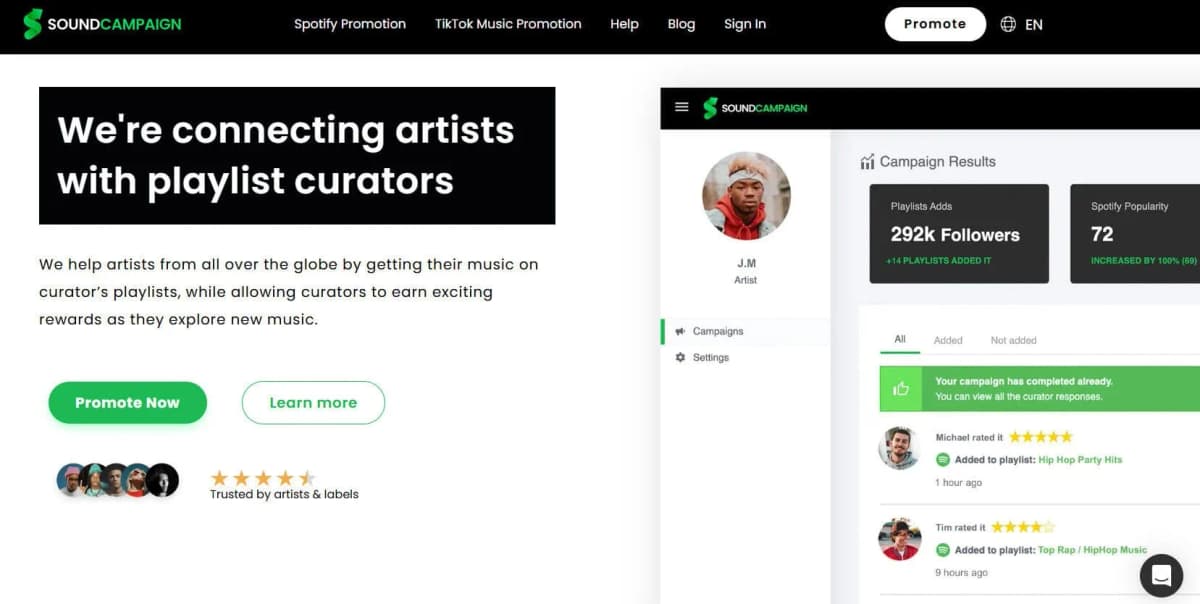
Here’s how this works. You submit your track, wait for feedback, and then get placed when approved.
Now… If you’ve actually cared to read all the way down here, I’ve got two little bonuses for you:

SoundCampaign 創業者兼CEO
ナダブです。今のこの会社を作る前は音楽を作っていて、マーケティングへの関心はそこから生まれました。一番好きなのはアナリティクスの部分、つまりストリームがどこから来て、何が動いて、何が動かなかったのかを見ることです。 SoundCampaignを設立したのは、アーティストに本当の意味での露出を届けるためです。想定していたよりはるかに多くの時間と労力がかかり、それは今もあまり変わっていません。
音楽をプロモーションする
実在するプレイリスト掲載、TikTok動画、Meta広告

100,000以上のアーティスト・レーベルに信頼されています
ボットは一切なし。
あなたの音楽を届ける準備はできましたか?
SoundCampaignを使って、実在するプレイリストやクリエイター、ファンにリーチしている何千人ものインディーアーティストに加わりましょう。すべての段階で正直なフィードバックが届きます。
- ボットは一切なし
- アーティスト保護プログラムキュレーターやクリエイターがあなたの楽曲をレビューしなかった場合、その分のクレジットを返還します。あなたの予算は常に保護されています。
- ロイヤリティは100%あなたのもの私たちはレーベルではなく、プロモーションサービスです。あなたの再生数やロイヤリティから手数料を差し引くことはありません。