Indústria Musical
How to Become a Singer: Step-by-Step Guide for Beginners

Azfar
Atualizado · 14 min de leitura
Becoming a singer is easier and harder than ever: no gatekeepers, but more competition too. Here's a step-by-step guide to building a real singing career.


Becoming a singer today is easier and harder than ever.
You no longer need permission. You can release music, build an audience, and grow a career from your laptop. But so can everyone else.
Talent still matters, but it is not enough. The singers who move forward understand how the game works and know which strings to pull.
Since the beginning of SoundCampaign, I’ve seen singers rise from rock bottom by doing the right things at the right time. This guide breaks those steps down for you.
Quick answers (so you do not overthink this)
- Can anyone become a singer? Yes. Most people can improve a lot with consistent practice and basic technique.
- Do you need natural talent? It helps with speed, not possibility.
- How long does it take? Expect noticeable improvement in months, a strong foundation in 1 to 2 years, and pro level polish over several years.
What Does it Mean to Be a Singer?
There is no single path to becoming a singer. The route matters less than showing up and staying consistent.
Some artists start online, like Justin Bieber and Shawn Mendes, while others build their foundation performing live, like Ed Sheeran. Many move between online releases, live shows, and studio work as their careers evolve.
The singers who last do not stay in one lane. They adapt, stack experience across platforms, and keep showing up long enough for momentum to catch.
Let me tell you a few paths you can take to get started.
Independent artist
An independent artist releases music under their own name and makes most of the creative decisions themselves. You can grow as an indie singer by putting music on streaming platforms, performing live, and using social media to connect with listeners.
As an indie artist myself, the upside is creative freedom. The tradeoff is that you handle a lot on your own, because you are both the artist and the business.
Chance the Rapper is a well known example. He built a massive audience and released music independently without relying on a traditional label.
Session singer
A session singer works mostly behind the scenes. They record vocals for other artists, producers, ads, or films.
The work is usually freelance, so you'll often juggle different clients, styles, and genres. It requires versatility, quick learning, strong pitch, and professionalism in the studio or from a home setup.
Siedah Garrett is a classic example. She sang background vocals and co-wrote major hits, including songs for Michael Jackson.
Live performer
A live performer sings in front of audiences at bars, weddings, theatres, tours, or festivals. You can do original music, or focus on covers or tribute acts.
Success comes from stage presence, stamina, and connecting with the crowd. Many live performers earn mostly from weekend and evening shows. They may also teach or do studio work during the week.
Adele performed extensively in small venues early in her career. Live shows helped her build confidence and a loyal audience.
Online/content-based singer
An online or content-based singer grows primarily through platforms like YouTube, TikTok, Instagram, or Twitch.
This can include covers, original songs, livestreams, or short-form clips. Income can come from ads, tips, sponsorships, or by directing listeners to streaming platforms.
Consistent posting can attract labels, brand deals, or support a strong independent career. Some singers even sell vocals or session work online without leaving their home studio.
PinkPantheress is a clear example of this path. She built an audience by posting short song snippets online, allowing her music to spread organically before turning that attention into major streaming success and label backing.
The Core Skills You Need to Become a Singer
Singing Technique (Your Actual Voice)
Before anything else, focus on your voice. Getting the basics of vocal training right helps you build a strong foundation and avoid strain as you sing more.
To begin with, I’d suggest practicing diaphragmatic breathing to support steady notes
- Use lip trills to relax your voice and improve control
- Hum scales gently to build pitch without strain
I also found this daily vocal exercises video really helpful for warming up and staying consistent.
Finding Your Vocal Range and Style
Next, find your vocal range. This is simply the set of notes you can sing comfortably and consistently, from your lowest possible note to your highest.
Knowing your vocal range helps you choose songs that fit your voice and discover the style that feels most natural. Here’s how to do it:
- Warm up with sirens or lip trills
- Sing down from Middle C to your lowest comfortable note
- Sing up from Middle C to your highest strain free note and note it down
Daily Practice Routines
Make singing a daily habit. It’s better to do a little every day than to push too hard once in a while.
Focus on exercises, songs, and experimenting with your tone. Even 20 to 30 minutes a day can add up fast.
To keep things simple, here’s a sample weekly practice plan that works well for me:
|
Day |
Practice Time |
Focus |
|---|---|---|
|
Mon / Wed / Fri |
45 min |
Warm up (10), technique (20), repertoire segments (15) |
|
Tuesday |
30 min |
Warm up (8), slow-motion phrasing / score study (22) |
|
Thursday |
Rest |
Listening and analyzing professional recordings |
|
Saturday |
1 hour |
Full run-through or mock performance with video |
|
Sunday |
Rest |
Mental and vocal recovery |
Source: The School of Voice
Build Confidence and Performance Skills
You step on stage to sing and your heart starts racing. Your voice wobbles. You just want to cry or run away.
This is stage fright. And it’s completely normal.
Even singers with decades of experience feel it. Barbra Streisand, for example, avoided live shows for 27 years because of it. She came back slowly, with careful preparation and by rebuilding her confidence step by step.
On stage confidence doesn’t come overnight. So how can you overcome stage fright?
This is what works for most singers:
- Try deep breathing: Inhale for 6 counts through your nose, exhale for 6 through your mouth, hand on belly to feel it rise.
- Positive affirmations: Pick a mantra like "It's okay to feel anxious and still perform" and repeat it backstage or on stage to rewire your brain.
- Visualize success: Close your eyes, picture the lights, the crowd cheering, and you finishing strong.
Singing Live vs Recording Vocals
Some singers love the energy of live performance. Others prefer the control of the studio. I enjoy both.
Live singing is one take and there are no fixes. You rely on practice and the crowd’s energy. Recording lets you polish vocals, but it also raises the bar for perfection.
T-Pain proves you can do both. Beyond Auto-Tune, his live voice is strong. He even won the first season of The Masked Singer in 2019 while performing in a monster costume.
Performing Consistently
When you are starting out as a singer, perform as often as you can. Open mics. Small gigs. Live streams. Anywhere your music can be heard.
Consistency builds skill and confidence. The more you perform, the more natural it feels.
Lady Gaga once described her early days like this: “No sleep. Bus. Club. ’Nother club. ’Nother club. Plane, next place. No sleep. No fear. Nobody believed in me.”
That quote captures how intense the grind can be. Relentless shows. Constant movement. Total commitment.
This shows how she built momentum before her debut album The Fame changed everything.
You don’t need to go that hard. But, you definitely need a plan:
- Practice your full setlist until it feels automatic
- Take care of your stamina with hydration and simple pre-show routines
- Engage the crowd by sharing song stories or asking for quick feedback
Choosing a Genre and Sound
What kind of music do you actually want to make?
Start there and make what excites you. Experiment as you go. Pull ideas from different genres until your own sound starts to form.
Getting your song’s genre right matters more than most people think. It helps listeners find you, get better approval rate from Spotify community playlist curators, and makes marketing much easier.
Don’t chase trends. Pick a sound you can grow with and stay consistent so listeners recognize you.
Artist Name and Branding
Your artist name is your music identity, so it should be easy to remember and easy to search.
While you can definitely go with your real name, think about how it looks on streaming platforms and social media.
If your name is too generic or clashes with a bunch of other artists, search gets messy.
See what I mean?
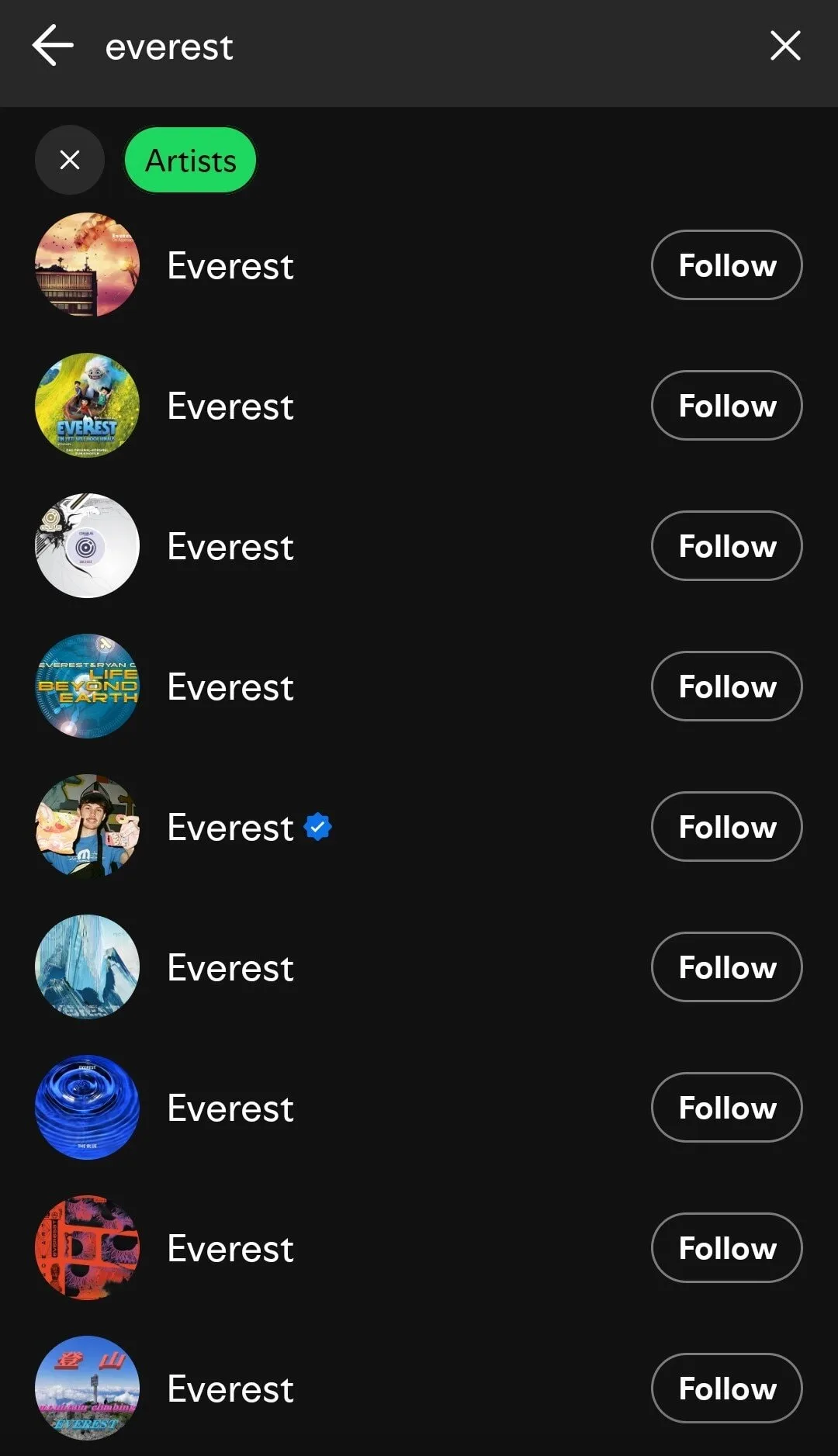
Pick the name once and stick with it. Here are a few pointers you can work on:
- Choose a short, memorable name (one or two words)
- Add personal touches, cultural references, or hints of your genre
- Make sure it is easy to spell and pronounce
- Check trademarks, domains, and social handles to make sure it is available
Image, Visuals, and Messaging
When your look and message match your music, it all clicks and fans recognize you instantly.
Your photos, videos, and graphics should all feel connected. Pick colors, fonts, and styles that match your sound.
Think about your messaging too. What do you want fans to feel or know about you? Keep it consistent across social media, streaming profiles, and promotions.
Sabrina Carpenter's visuals and messaging are usually consistent with lots of Hollywood references, cheeky humor and romance.
Start Recording and Releasing Music
Home Studio vs Professional Studio
A home studio works for demos and small releases. A professional studio gives you a polished sound.
Many artists start at home, build confidence, then move to a pro studio for official releases.
You don’t need much to get started. Just pick a:
- Laptop
- Audio Technica microphone and interface-friendly headphone
- And a Focusrite interface (earlier I had Behringer, but Focusrite is better)
That’s it. That’s all you need to make good music.
Releasing Music on Streaming Platforms
Streaming platforms are where people listen today. Uploading your tracks there gets you discovered.
To do this properly, you need a music distributor that takes your songs and delivers them to platforms like Spotify, Apple Music, and more.
If you are uploading independently, slow down and do it right. Make sure your metadata is clean. Use the correct artist name and upload the best version of your track. Once your music is live, don’t stop. Share it. Pitch to Spotify playlist curators the right way. Release again.
Preparing Your First Single Properly
When preparing a single for release, Spotify plays a major role. There is no video involved, so listeners judge your music purely on the song itself.
If your track reaches the wrong audience and your skip rate climbs, Spotify stops recommending it quickly. That is why playlists are one of the biggest drivers of discovery. Getting your song in front of the right curators leads to real listeners, steady streams, and long-term momentum instead of a release that fades out.
This is where SoundCampaign helps. Thousands of SoundCampaign artists have landed on playlists with 100K+ followers, gaining exposure that is difficult to reach through manual pitching. It removes the guesswork and connects your music with curators actively looking for new tracks.
If you are new to SoundCampaign, these resources will help you get set up correctly:
One strong song, promoted the right way, opens more doors than multiple unfocused releases.
Promoting Yourself as a Singer
Instead of thinking about going viral, you should focus more on being consistent on social media. Here are a few ideas that can help you promote better:
|
Strategy |
What You Can Do |
Tip |
|---|---|---|
|
Consistency |
Post regularly to keep fans engaged |
Create a content calendar and stick to it |
|
Show your process |
Share behind-the-scenes clips of songwriting, recording, or rehearsals |
Keep it authentic and relatable |
|
Engage fans |
Reply to comments, ask questions, and encourage interaction |
Make fans feel part of your journey |
|
Use Stories & Reels |
Short, frequent video content reaches more viewers |
Experiment with trends while staying true to your brand |
|
Collaborate |
Work with other artists or creators to expand your reach |
Cross-promote each other’s audiences |
Building a Fanbase from Scratch
While you may not be famous yet, you can start growing your fanbase at any time.
Start with the people who actually hear your music. Share your songs with friends, family, and local communities.
Post consistently on social media and show who you are, not just your music. Host Q&A sessions or contests like fan covers.
Engage with everyone who interacts with you. Reply to comments and say thank you. Track what works with analytics and build real connections.
Collaborate with other artists when you can. Even small collaborations can introduce you to new listeners.
Playlist Pitching and Music Discovery
Getting your music heard takes more than posting it online. Playlists are a huge part of music discovery and help new listeners find your songs.
Playlist pitching can speed up your growth. The more your music reaches the right playlists, the more streams, fans, and opportunities you get. It’s all about putting your songs where people are already listening and paying attention.
With SoundCampaign, you can skip all the hassle of manual pitching. Just upload your track, set up a campaign, and let SoundCampaign help your music reach real listeners and earn genuine streams.
Sounds good? Start your first campaign today.
Grow Your Singing Career Long-Term
Connect with other singers, producers, and songwriters and work on projects together. You never know who you might meet or where it could lead.
Collaborations help you grow your skills and reach new audiences. They also open doors to opportunities you might not find on your own.
Even online, you can find communities to join. Here are some subreddits I’d recommend:
Little connections can turn into big breaks over time. Keep an open mind, be genuine, and show up consistently.
Consistency and Release Strategy
The Spotify algorithm favors consistent artists, so drop singles every 4-6 weeks.
Showing up regularly keeps your audience engaged. It also helps you improve faster as an artist.
Think about a release strategy. Don’t drop everything at once and disappear.
Plan your songs, videos, or content in a way that keeps people coming back. Even small, regular releases can build momentum over time.
The key is to stay steady. Keep creating. Keep sharing. Your audience will grow with you.
Monetization Opportunities
The #1 key to make money from your music is to mix multiple income streams. Relying on just one is risky.
With an average pay of $0.003-$0.005 per play, streaming platforms can bring in steady income if you build an audience.
Selling your music, merch, or tickets to live shows adds another layer.
You can also offer services like songwriting, session vocals, or teaching lessons.
Apart from this, crowdfunding and fan subscriptions let your supporters invest in your journey.
Common Mistakes and Myths Aspiring Singers Should Avoid
- Rushing releases: Putting out music before it’s ready can hurt your reputation. Take the time to make each song the best it can be.
- Ignoring promotion: A great song won’t get far if no one hears it. Share it, post about it, and connect with your audience.
- Not investing in skills: Your voice and craft are your biggest tools. Keep learning, practicing, and improving. Growth takes time, but it pays off.
- You need a perfect voice to start: Many successful singers began with average or untrained voices. What matters is practicing, gaining control, and learning to use your voice well.
- You have to be discovered by a label: Today, artists build audiences on their own through streaming and social media. Labels often come later, after momentum already exists.
- Singing talent alone is enough: Talent helps, but it does not replace consistency, branding, networking, and effort. Singing is only one part of a music career.
- If you are good, success will happen fast: Most singers grow slowly. Progress often looks quiet at first, with small wins building up over months or years.
- You can only make money as a famous artist: Many singers earn through gigs, teaching, session work, or online content without being household names.
- There is only one right path to success: Every singer's journey is different. Some start online, some perform live, and most mix paths to fit their goals.
Conclusion
This is how journey of a singer looks like:
Step 1: Voice
Step 2: Confidence
Step 3: Career
If you do it in order and stay consistent for long enough, you won’t have to wonder if you can become a singer. You will be one.

Cabeça de marketing, coração de escritor, alma de músico. Na SoundCampaign cuido de SEO, destravo qualquer gargalo de marketing que apareça e escrevo o que realmente ajuda os artistas a avançar. Também sou músico, então quase tudo que escrevo vem dos dois lados. Quando não estou fazendo nada disso, estou no meu estúdio bagunçado, escrevendo e produzindo, ainda atrás de um som que talvez um dia chegue às paradas.
Promova sua música
Posicionamentos reais em playlists, vídeos no TikTok e anúncios no Meta

A confiança de mais de 100.000 artistas e gravadoras
Nunca usamos bots.

Caso real
Como a SoundCampaign Colocou Grant Knoche na Frente de 460.587 Ouvintes com WOOHOO
Ler a história completa
Pronto para fazer sua música ser ouvida?
Junte-se a milhares de artistas independentes que usam a SoundCampaign para alcançar playlists, creators e fãs reais, com feedback honesto em cada etapa do caminho.
- Nunca usamos bots
- Programa de Proteção ao ArtistaSe um curador ou creator não avaliar sua faixa, devolvemos seu crédito. Seu orçamento está sempre protegido.
- Fique com 100% dos seus royaltiesSomos um serviço de promoção, não uma gravadora. Nunca ficamos com uma parte dos seus streams ou royalties.