Spotify Promotion
Spotify Playlist Promotion Benchmark Report 2026

Nadav Peleg
Updated · 16 min read
Read the 2026 Spotify playlist promotion benchmark report. See what placements cost, why acceptance rate claims are unreliable, and what can go wrong.
On this page
- How much does Spotify playlist promotion services cost in 2026?
- Are there any famous artists who do Spotify playlist promotion?
- What is the real Spotify playlist acceptance rate?
- What's the difference between community, editorial, and algorithmic Spotify playlists?
- How do independent Spotify playlist curators work?
- How does Spotify editorial playlist submission work?
- How does Spotify's algorithm pick songs for Discover Weekly and Release Radar?
- Is paying for Spotify playlist placement against Spotify's rules?
- What nobody has measured about Spotify playlist promotion?
- What do artists themselves say about Spotify playlist promotion?
- Frequently asked questions
- Final Thoughts
After having conversations with artists and curators I know, spending my time on Reddit, and looking into our own SoundCampaign campaigns, I'm writing this Spotify playlist promotion benchmark report to help you understand the state of Spotify.
By the time you're finished reading this report, you'll wish you had something like this before. This guide will help you know the real cost of a placement, your odds of getting playlist adds, and what could go wrong.
Be ready for the mindset you need as an artist to survive in this creator economy. This one will help you understand Spotify's business side of things as well.
How much does Spotify playlist promotion services cost in 2026?
Somewhere between a dollar to a few thousand, depending on whether you're buying single pitches or building a campaign. To be more precise, I think this is what it looks like:
|
Platform |
Entry cost |
Typical range |
|---|---|---|
|
$80 |
$80 to $500 and up |
|
|
SubmitHub |
$0.79 to $1.00 per credit |
$0.80 to $4 per pitch |
|
Groover |
About $2.14 |
$2.14 to $6.42 per contact |
|
Daimoon Media |
About €49 |
No public tier table |
|
Playlist Push |
$280 |
$450 average, up to $4,780 |
|
Omari MC |
$197 |
$197 to $1,297 |
|
YouGrow Promo |
$106 (€49 tester package) |
$106 to $2,062 |
|
One Submit |
$6 per submission |
$55 minimum on popular genres |
|
Boost Collective |
£49 (promo) |
£125 to £800 |
|
Indie Music Academy |
$347 |
$347 to $2,350 |
|
Playlist-Promotion |
£350 |
£350 to £2,500 |
|
Moonstrive Media |
$197 |
$197 to $5,127 |
|
Members Media |
£119 |
£119 to £662 |
|
SubmitLink |
Free (2 per day) or $2 |
$2 to $5 per playlist |
Just in case you’re curious and want to learn more about these Spotify promotion services, I’ve got a separate blog for it where I did a proper Spotify promotion services comparison.
Are there any famous artists who do Spotify playlist promotion?
Yes, we had many artists at SoundCampaign who already made a name for themselves in this industry. Without any doubt, this definitely validates the fact that artists, their labels, or marketing teams still believe in Spotify playlist promotions.
Here's a list of those artists:
|
Artist |
Credential, independent of any campaign |
Track |
Lifetime streams |
|---|---|---|---|
|
Bruno Martini |
2.5 billion career streams; credits with Katy Perry, Lady Gaga, Jennifer Lopez, Timbaland |
No Secrets |
381,319 |
|
Joantony |
Co-wrote "Netflix" for Bad Bunny; 2 Diamond and 58 Platinum RIAA certifications |
Iniciales |
137,236 |
|
Florian Picasso |
Ranked #38 on DJ Mag's Top 100 DJs in 2016; collaborations with Martin Garrix and Steve Aoki |
When I Saw You |
178,886 |
|
Tonny Tun Tun |
Two decades in Latin music; Latin Grammy stage; work with Daddy Yankee and Wisin y Yandel |
Noche De Copas |
1,833,232 |
|
Grant Knoche |
Writing and production credits for Christina Aguilera and Victoria Justice; 4th on NBC's American Song Contest |
WOOHOO |
364,563 |
|
Young Grey |
Featured with Snoop Dogg on "Celebrate"; founder of GreyLyfe Entertainment |
Country Boys Never Learn |
343,844 |
|
Zeke Pujols |
Viral TikTok covers; "La Voz Kids" auditions |
Every Night |
4,069,472 |
|
Alina |
Runs her own label, ALINA RECORDS |
I Know, I Know, I Know |
16,631,844 |
|
Sara Pelayo |
Spotify editorial support (New Music Friday Denmark, Fresh Pop Finds) and NRK P3 radio airplay |
Please Don't Make Me Cry |
67,569 |
|
Lila Holler |
Studying songwriting at the Liverpool Institute for Performing Arts |
Be a Ghost |
187,194 |
|
August Royals |
Studio songwriting sessions drawing label and mainstream-artist attention |
American Spirit |
43,383 |
What you see above is amazing. There's a producer with 2.5 billion career streams ran a community playlist campaign. So did a DJ Mag Top 100 name, a writer holding RIAA Diamond plaques, and an 18-year-old at music school in Liverpool. Across this entire range, community playlists show up as one of the marketing channels that many artists from different lives picked for themselves.
What is the real Spotify playlist acceptance rate?
Nobody knows. Every number in circulation is self-reported by a company with something to sell.
Curator marketplaces claim anywhere from 5% to 32%, self-reported, unaudited, sometimes conflicting about the very same platform.
Spotify's own editorial figure is 20%, from 2020. Everything claimed since then, from under 0.5% to 18%, comes from blogs and rumors with no real methodology. So in this case, we have to trust what Spotify gave us in 2020. No research has been published after that.
Also, you can ask ChatGPT, Gemini, or Claude and you'll get three more confident, unsourced answers that don't agree with each other either.
Here's what helps instead of chasing that number. Ask the platform two things. How many curators will genuinely receive your track, and what happens to your money if none of them add it. Both are verifiable before you pay. An acceptance rate isn't.
What's the difference between community, editorial, and algorithmic Spotify playlists?
At SoundCampaign, we see many artists every single day who have no clue about what community, editorial, or algorithmic playlists are. As long as you don't understand the difference between these, your efforts might go to waste or worse you can get scammed. I'm being real. Just look at the difference, I'll tell you why you can get scammed too if you don't understand the difference between these three.
|
Factor |
Community |
Editorial |
Algorithmic |
|---|---|---|---|
|
Who decides |
Independent curators, often through a paid marketplace |
Spotify's in-house editors, 100+ staff listeners |
A ranking system with no human gatekeeper |
|
How you get in |
Pay per pitch or per campaign, or message curators directly |
Free pitch through Spotify for Artists, one unreleased song at a time |
No submission exists. Earned through engagement |
|
Typical cost |
$0.80 to $4 per pitch, or $80 to $4,780 per campaign |
$0 |
$0 |
|
Lead time |
Days |
7 days minimum, 28 days recommended |
Continuous, after release |
|
Scale of one placement |
Median indie playlist holds 806 followers |
"Thousands" of playlists, current totals undisclosed |
Discover Weekly alone has passed 100 billion streams |
|
Main risk |
Bot playlists, dormant lists, exposure to Spotify's policy |
Rejection with no feedback and heavy major-label competition |
No lever you can pull directly |
Now you get it why I said you could have been scammed if you don't understand the difference between these three? Let's suppose anyone DMs you saying that they can get you on Today's Top Hits or RapCaviar for $10K or something like that. Would you believe it? Now you won't. You know who got the levers. Same goes for Discover Weekly.
Now you must be wondering what helps artists go on such playlists? In that case, you can read this in-depth guide where I mentioned how you can submit your track to every type of Spotify playlists and what it takes to have a spot in those places.
How do independent Spotify playlist curators work?
Curators run this economy for their own reasons, not as a favor to artists. Three models exist, and each one pays or rewards a curator differently.
- Paid marketplaces. Curators get paid to review a track, whether or not they add it.
- Direct outreach. Costs an artist time. Costs a curator nothing, and earns them a track that actually fits their list.
- Swap networks. Curators trade adds with each other. No artist money touches this one at all.
The marketplaces are the visible part. SubmitHub, Groover, Playlist Push, and SoundCampaign all run a version of the same model.
An artist finds curators whose playlists genuinely fit their sound and pitches them with something that proves they actually listened. A curator taking that pitch gets a stronger playlist out of it, a track that fits and keeps their own listeners around.
Curators trade adds with each other through Discord groups, Telegram channels, and dedicated trading tools, each one padding out the other's playlist so it looks active and worth submitting to. No public data exists on how big that economy is, and it carries real risk, because a swap network where both sides bot their listens turns into artificial streaming quickly.
Before you pay for anything, check when a playlist was last updated and whether its follower count still moves. "Combined playlist following" numbers add up ten placements into one big total, but if several of those lists went quiet, a chunk of that figure is historical rather than live. Our breakdown of how Spotify curated playlists work goes deeper on reading those numbers properly.
One number nobody publishes is cost by playlist size. No platform ties a price ladder to follower count. The one follower-linked figure that is public is what curators earn per review, which is the real unit of this economy, not the placement itself. If you're comparing options, my rundown of the best Spotify pitching services shows what each model buys.
How does Spotify editorial playlist submission work?
You pitch one unreleased song at a time through Spotify for Artists. You must submit your track at least 7 days before release. And that's not enough, you've got more requirements to fulfil:
|
Requirement |
Detail |
|---|---|
|
Where |
Spotify for Artists, under Music then Upcoming |
|
Minimum lead time |
7 days before release |
|
Recommended lead time |
28 days, per industry practice |
|
Eligibility |
Unreleased tracks only. No compilations, no songs where you're a featured artist |
|
Volume |
One song at a time |
|
What the form asks |
Genre, mood, culture tags, the song's story, promotion plans, instrumentation, tempo, language. Around 500 characters |
|
Bonus for pitching early |
Hitting the 7-day window auto-adds the song to your followers' Release Radar |
|
Rejection notice |
None. Spotify sends no rejection emails |
That Release Radar line is worth pitching for even when you expect a flat rejection. Pitch early enough and Spotify guarantees your existing followers see the release the day it drops, straight to their Release Radar.
Discover Weekly is the one that can put you in front of strangers. Release Radar just protects the audience you already have. Miss the 7-day window and you lose that guarantee along with the pitch. For better understanding about these things, I'd suggest you read this music release checklist from SoundCampaign. It can help you figure out what to do or not to do for your next album, EP, single, etc.
What do Spotify's editors look for when picking a song for an editorial playlist?
Fit, context, and how listeners behave once the song is live, according to Spotify's own editorial leadership.
In an April 2025 Billboard interview, Spotify's editorial leadership put over 100 staff on listening duty, all reviewing pitches submitted through the same tool every artist uses. J.J. Italiano, who heads global music curation, described New Music Friday as being built through "a process of democracy and a little bit of chaos."
Editors also say follower counts and monthly listeners don't factor into their decisions. Carl Chery, who leads RapCaviar, pushed back hard on the idea that placements run on favors. "That's never been the case," he told Billboard.
Spotify's global head of editorial, Sulinna Ong, used the same interview to recommit to human curation, saying the company is "doubling down as human music editors in music discovery and trend forecasting in 2025."
How does Spotify's algorithm pick songs for Discover Weekly and Release Radar?
Through a recommendation system trained on listening behavior, audio analysis, and the text people write about music.
Spotify's own engineering blog is the only reliable window into this. Discover Weekly launched in 2015 as "clever algorithms with human curation". By 2020 the company described personalizing its Home feed with a multi-armed bandit framework that balances showing you safe picks against testing new ones.
Three model families do the work.
- Collaborative filtering: Learns which tracks travel together across hundreds of millions of playlists.
- Audio models: Analyze the waveform itself.
- Language models: Read playlist titles, descriptions, and music writing to catch context that sound alone misses.
The signals that matter are saves, skips, completion rate, and playlist adds. Spotify confirms it tracks these.
Spotify publishes no thresholds for any of them.
Every specific number you've seen quoted, the 20% save rate that supposedly triggers Discover Weekly, the 15% skip ceiling, the "83 implicit signals," comes from marketing blogs rather than from Spotify. Treat all of them as invented until somebody produces a primary source.
One figure you'll see quoted constantly is that Spotify algorithmic playlists drive 31% of streams against 9% from editorial, credited to Spotify's Loud & Clear report. That split doesn't appear on any primary Loud & Clear page. Spotify has never published a clean breakdown between editorial, algorithmic, and search-driven listening.
For a deeper walkthrough of all this, I put together a full breakdown on how the Spotify algorithm actually works.
Is paying for Spotify playlist placement against Spotify's rules?
Paying for a guaranteed placement breaks the rules. Paying for a curator's review sits in a gray area Spotify hasn't closed.
Spotify's artificial streaming policy prohibits any third-party service that promises streams or playlist placement in exchange for money. Streams from those services earn no royalties, stay out of chart counts, and don't influence recommendations.
Curator marketplaces argue they sell consideration instead of guarantees, which is how they operate at all. That line has never been tested publicly, and artists have still been hit with artificial-streaming penalties after using promotion services.
This breaks Spotify's rules. Spotify and your distributor handle it, no courtroom involved. Track pulled, royalties held back.
The enforcement side got real in 2024. Spotify now charges labels and distributors a per-track penalty, around $10 per track per month, when flagrant artificial streaming shows up. Electronic artist Benn Jordan had all 23 of his albums pulled by TuneCore in February 2024 after Spotify flagged streaming he says he never bought.
Then came the big sweep that destroyed many profiles. In September 2025 Spotify announced it had removed over 75 million spammy tracks in twelve months, alongside a new music spam filter and a tightened impersonation policy.
Any service promising you a specific number of streams or a guaranteed placement is selling you a policy violation with your name on it. We keep a running comparison of the promotion services worth considering and what each one actually commits to.
What nobody has measured about Spotify playlist promotion?
A lot of numbers get thrown around here, and you can't trust most of them. Here's what I've figured out and have a doubt about.
- Marketing blogs credit Chartmetric for the 4.8% vs 2.1% save-rate split, but it's not in Chartmetric's own 2025 report
- Blogs trace the 200 to 500 extra streams per placement number to Luminate, but no public Luminate material contains it
- The claim that artists spent $400 million on playlist promotion in 2025 with an 18% return is credited to Water & Music, and it isn't on their site
- No curator marketplace has ever published an audited acceptance rate
- No platform publishes pricing based on playlist size
- Spotify's last published editorial playlist count is still just "thousands"
- Spotify hasn't published an editorial acceptance rate since 2020
- No real number exists for the editorial vs algorithmic stream split
- Spotify has never published the exact numbers that get a song added or skipped
- No measured save or skip rate exists for community placements
- No comparable playlist size data exists to check against 2023
What do artists themselves say about Spotify playlist promotion?
Company data and industry reports only tell part of the story. Here's what real artists say on Reddit. Every account below is one person's experience, and even the best stories carried more doubt than praise.
|
Theme |
Mechanism |
Artist's account |
Source and date |
|---|---|---|---|
|
Cost |
Paid marketplace |
Fees ranged from $1.50 up to $1,000. One example, $500 for a month, brought around 7,000 streams. |
r/spotify, Sep 2020, 783 upvotes |
|
Fit over volume |
Paid marketplace |
One genre-matched placement kept listeners around. Three broader, generically-named placements from the same campaign did nothing. |
r/musicmarketing, May 2026, 99 upvotes |
|
Direct outreach |
Free, artist DM'd curators directly |
Found a niche playlist, emailed the curator, gained roughly 500 extra streams a month. A commenter on the same thread went from zero to 6,500 monthly listeners over 6 months the same way. |
r/musicmarketing, Aug 2025, 174 upvotes |
|
Editorial |
Free Spotify for Artists pitch |
Landed top 10 in a 150,000-follower editorial playlist five weeks after pitching. |
r/WeAreTheMusicMakers, Apr 2022, 604 upvotes |
|
Acceptance rate |
Paid marketplace |
76% approval on one track. $40 spent, added roughly 5,000 monthly listeners. |
r/musicmarketing, June 2026 |
|
Acceptance rate |
Paid marketplace |
20% approval (2 of 10) on a deliberately selective batch. |
r/musicmarketing, March 2024 |
|
Fraud |
Botted playlists |
Track landed on a botted playlist with no action taken by the artist. Generated 8,000 to 9,000 fake streams in one week. |
r/musicmarketing, January 2024, 164 upvotes |
|
Does it work |
General validation |
"yes it does work, with some criteria... you gotta spend real money." |
r/musicmarketing, June 2026 |
|
Does it work |
General skepticism |
"the whole thing feels like a racket wearing a Spotify lanyard." Same question, another artist's ~25,000 streams barely moved followers, while a third artist's ~30,000 streams reached 22,000 monthly listeners. |
r/musicmarketing, Dec 2025 / Apr 2026 |
Frequently asked questions
Does Spotify playlist promotion work?
Paid community placements reliably deliver placements and reach. What happens after that depends on the song. No independent study has ever isolated campaign-driven streams from organic, editorial, and algorithmic sources, which means anyone quoting you a guaranteed return is quoting a number nobody has measured.
Does paying more for playlist promotion mean more streams?
No. In our own published campaigns, the biggest spend at $2,929 across 49 placements produced fewer streams than campaigns costing a tenth of that. Placement count and budget scale together. Streams follow the song.
What's a good save rate for a Spotify playlist placement?
Spotify has never published one. Blog advice usually lands on 3% to 5% as healthy, though those benchmarks come from marketing sites rather than Spotify, and none of them measure community placements specifically. Track your own baseline across releases and compare against yourself.
Are Spotify playlist bots and fraud still a problem in 2026?
Yes, Spotify removed over 75 million spammy tracks in the year to September 2025 and now charges distributors a per-track penalty for flagrant artificial streaming. Deezer separately reported that up to 70% of plays on fully AI-generated uploads were fraudulent.
How long does a song usually stay on a curated playlist?
No verified figure exists. A commonly quoted 11-day median traces back to a blog citing Chartmetric, and it doesn't appear in any actual Chartmetric publication. Ask any curator for their own rotation policy before you pay, because that answer is at least verifiable.
Final Thoughts
There's no doubt that playlist promotion has been one of the most used marketing channels in 2025-26.
Artists with 2.5 billion combined career streams still run community Spotify playlist campaigns. So does an 18-year-old just starting out at music school. The range says everything about how trusted this channel still is.
It works when you pick curators who fit your sound. One Redditor spent $40 and picked up roughly 5,000 monthly listeners. Another went from zero to 6,500 monthly listeners in six months through direct outreach alone. Fit beats volume every time.
Checking playlist activity and follower counts before you pay turns a risky bet into a real campaign. Do that homework, and you're running the same play as artists with Grammy credits and DJ Mag rankings.

Founder & CEO at SoundCampaign
I'm Nadav. I made music before I built any of this, and that's really where the interest in marketing came from. The analytics side is the part I like most: where streams come from, what moved, and what didn't. I founded SoundCampaign to give artists exposure that's actually real. It took far more time and effort than I planned for, and that part hasn't changed much.
Promote your music
Real playlist placements, TikTok videos & Meta ads

Trusted by 100,000+ artists & labels
No bots, ever.
Real case study
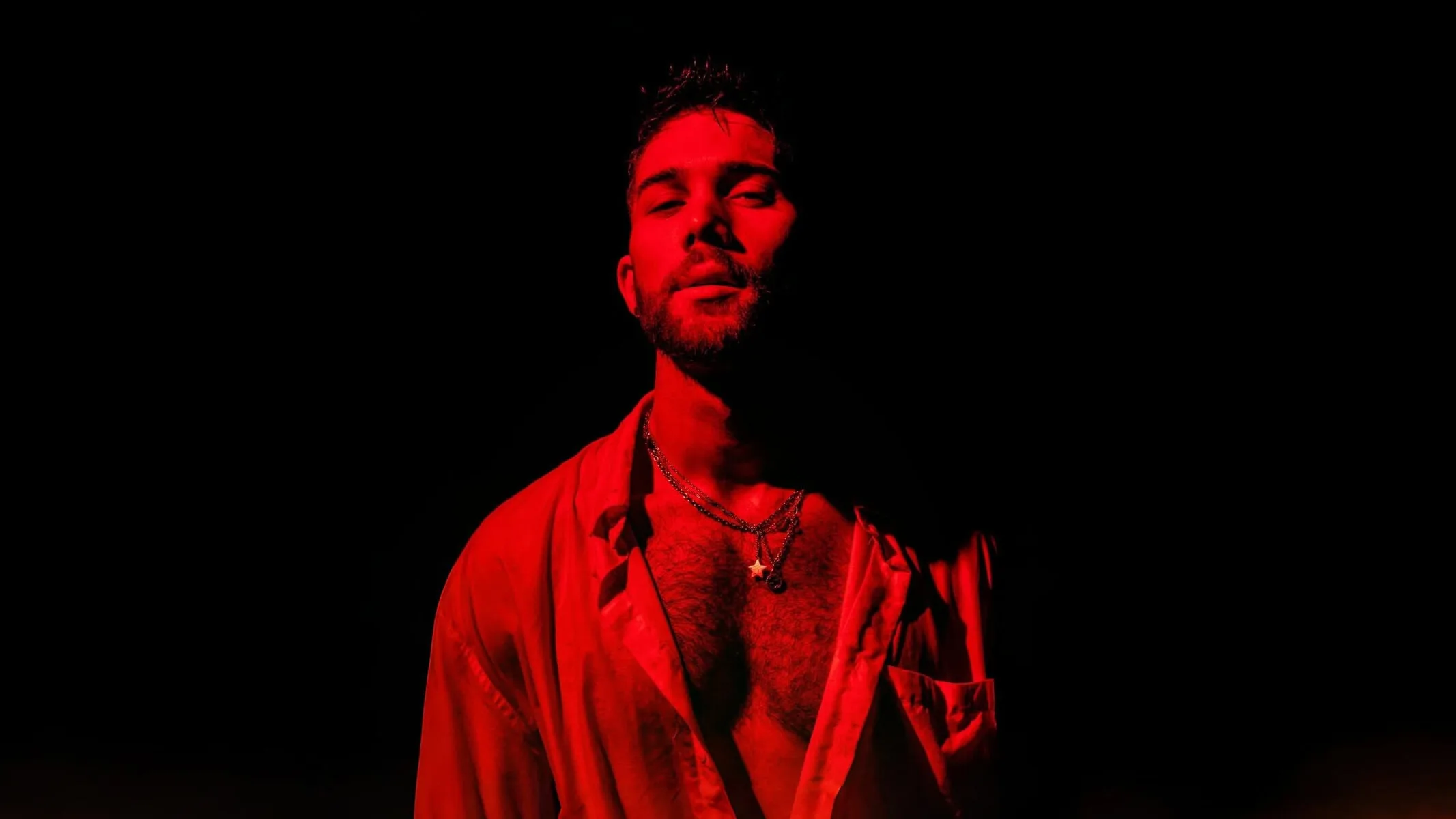
How SoundCampaign Put Grant Knoche in Front of 460,587 Listeners for WOOHOO
Read the full story
Ready to get your music heard?
Join thousands of independent artists using SoundCampaign to reach real playlists, creators, and fans, with honest feedback every step of the way.
- No bots, ever
- Artist Protection ProgramIf a curator or creator doesn’t review your track, we credit you back. Your budget is always protected.
- Keep 100% of your royaltiesWe’re a promotion service, not a label. We never take a cut of your streams or royalties.